History of Decoration Day (Memorial Day)

Memorial Day is a national holiday in the United States of America. It was originally known as Decoration Day until the First World War. While many States claim to have been the first to commemorate the holiday, and the exact year of its founding is disputed, most sources officially recognize the holiday as founded in 1868. The holiday was established by the Grand Army of the Republic, a veteran organization founded by Union soldiers who had fought in the Civil War, three years after the Confederates surrounded in 1865.

Memorial Day visitation
Many visit the graves of fallen loved ones on Memorial Day to pay their respects.

Nevertheless, there were memorial services in the spirit of holiday as early as 1866. In the city of Columbus, Mississippi, four women took the time to adorn the local cemetery with flowers where Union and Confederate soldiers killed at the Battle of Shiloh were equally honored as fallen warriors who died fighting for a cause they believed, and buried side-by-side as Americans. The celebration of this holiday was divisive and controversial until WWI when it was changed to honor all fallen American service members who had died in combat.

Nevertheless, even the earliest celebrations of it carried that mutual respect inherent to the memorial service in Mississippi back in 1866. Decoration Day spurred different, if not competing commemorations in the Northern and Southern States, as each saw the conflict differently. This changed after the last of the veterans of the Civil War had passed on and the First World War came to fruition. After that, and with the changing of the holiday to recognize all American service members killed in battle, the sentiment surrounding the holiday changed and became more universal.

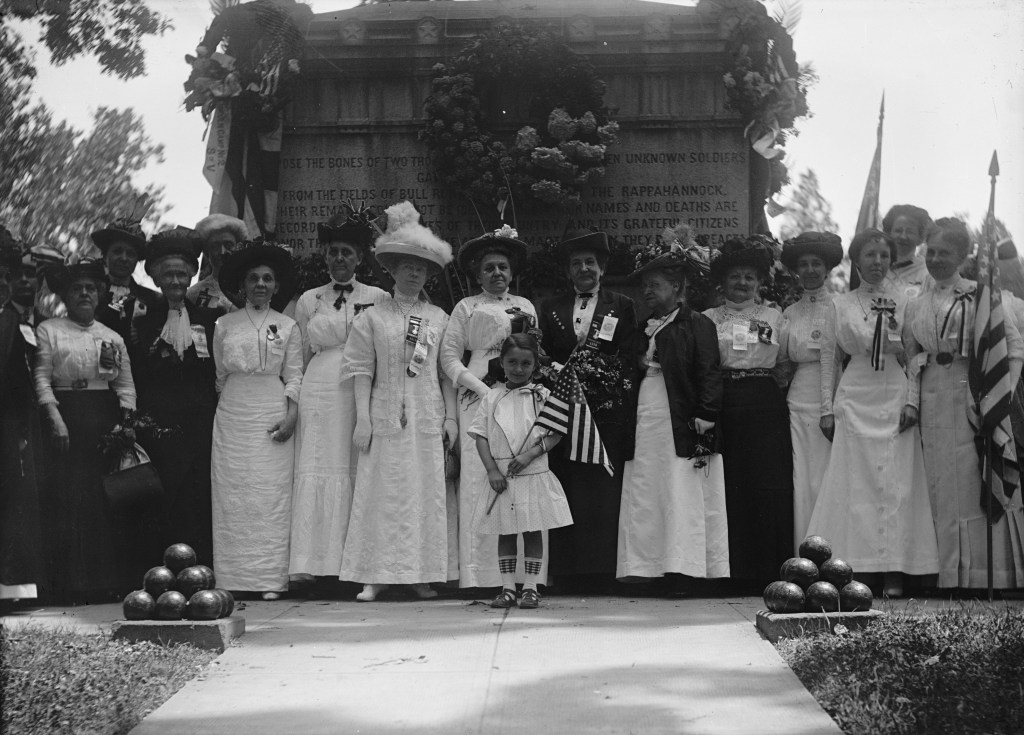
Civil War Unknowns Monument
A Memorial Day ceremony circa 1915 at the Civil War Unknowns Monument.

Memorial Day unofficially marks the start of the summer season. It was originally declared to be the 30th of May by Major General John A. Logan, but was later changed to the last Monday of May with a federal act of Congress in 1971. It was believed that plenty of flowers would be in bloom around this time, which was conducive to the human practice of placing flowers on the graves of fallen warriors and honoring their sacrifice which dates back to Ancient Athens, if not earlier. In the United States, the President is expected to place a wreath at the Tomb of the Unknown Soldier at the Arlington National Cemetery.

Burial of the Unknown Soldier
The Unknown Soldier was an unidentified American serviceman who was killed in action in France during WWI and was buried in 1921.

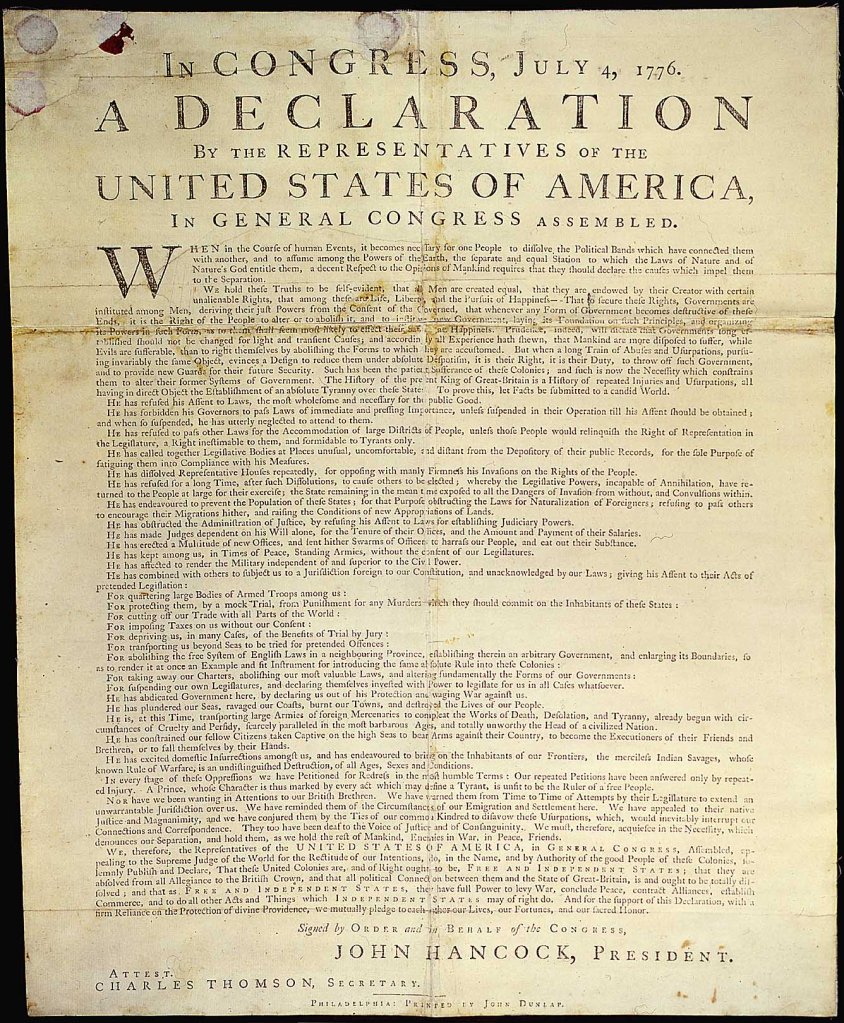
In the year 2000, the National Moment of Remembrance Act was passed. This established the White House Commission on the National Moment of Remembrance, tasked with fostering reverence and honor for all the fallen American heroes who have died in service of the United States, and to encourage people to give back something to their country which has given them the freedom to enjoy life, liberty, and the pursuit of happiness. Americans are encouraged to stop what they are doing at 3:00 p.m. in their local time and have a moment of silence where they reflect on the ultimate sacrifice of American warriors who have died across the centuries to protect the United States, from the Revolutionary War to the modern day.

Memorial Day is a special day to me. It gives me a chance to reflect on the heroes who fought in the Revolutionary War, who had their homes burned to the ground, their names slandered by their neighbors, and their family members slaughtered for daring to resist and stand against the Empire. It reminds me of the Union soldiers who fought in the Civil War to foment the vision of the Founding Fathers like Thomas Paine who criticized slavery as morally incompatible with the word of God, fighting for a world where all people were free from the chains of chattel slavery.

It also makes me stop and think about the battles which have been waged since, and those yet to come. It also makes me think back to the Bushido Code of the Japanese Samurai which existed from 1185 to 1868. The Samurai respected the enemies and did not strike them down out of anger. They showed reverence to those who had died in battle, and their sense of loyalty was absolute. The Buddhist Samurai also believed they would be condemned to eternal damnation in the afterlife since they were trained to kill, yet they still accepted the burden because they were loyal to the cause of protecting those who could not protect themselves. That level of service and devotion is worthy of respect.

Gravestones at Arlington
Gravestones at Arlington National Cemetery decorated on Memorial Day.

This reminds me of the original spirit of what we now know as Memorial Day. Americans have never been entirely united on the causes we fight for, yet are expected to respect those warriors who have fallen in service of these United States. Soldiers do not often choose the battles they fight, nor do they fight for anyone other than the survival of those beside them. They fight even when they disagree with the cause at hand. That level of service and devotion is admirable and worthy of the sincerest respect. Without that dedication, Humanity would likely not have the U.S. Constitution and Bill of Rights as a guiding framework which will no doubt be used by future generations as a baseline for the framework of new nations.

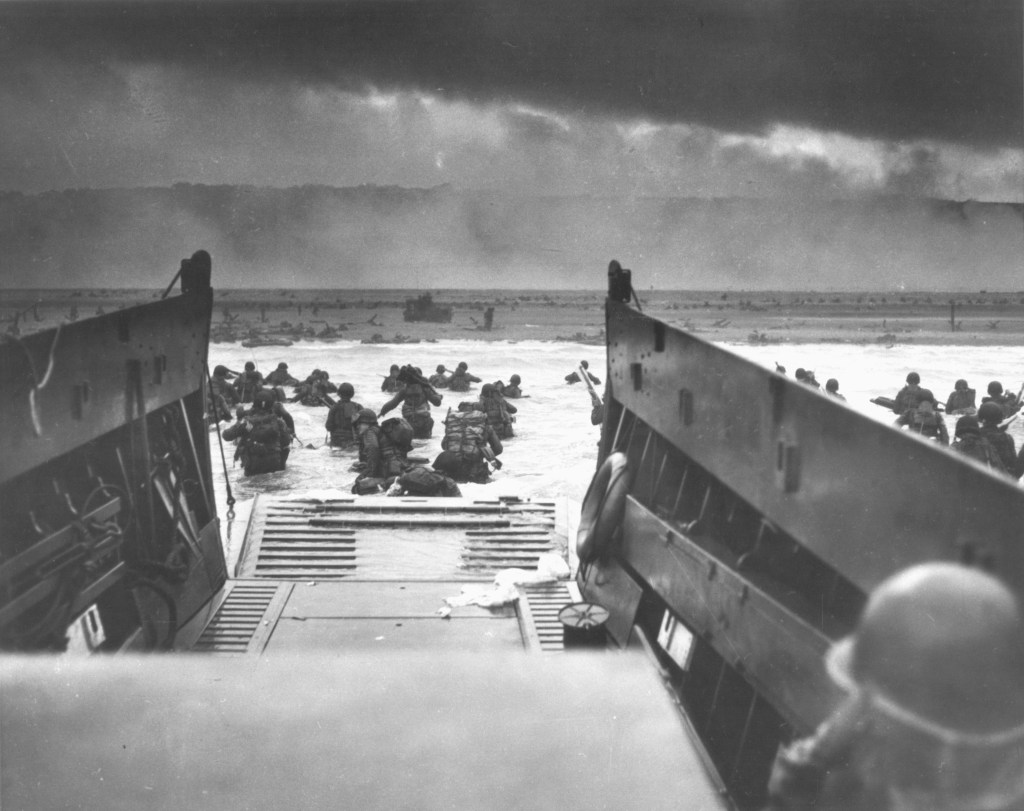
Memorial Day is a day for Americans to appreciate the ultimate sacrifice which many fallen American warriors have made in order to protect the Land of the Free and the Home of the Brave. This sentiment is timeless and carries itself across the entire span of human history. From hunter-gatherers who would have defended their families from saber tooth tigers with sticks and stones, to the Allies who stormed the beaches of Normandy in the Second World War, we all likely have someone whom we are grateful to for giving their life in battle to defend others. For that, we should pay our respects on this day and honor their sacrifice.

May you all have a peaceful Memorial Day tomorrow.


Creative Commons License

All posts by The Pen and Sword are licensed under a Creative Commons Attribution-NonCommercial-NoDerivatives 4.0 International License.

The Trials of Humanity: A Haiku Series

As I was reflecting on how far Humanity has come and how much further we have yet to go, I pondered how corrupt empires and authoritarian regimes have risen up throughout history, time and time again. Every time, one way or another, they do seem to be self-defeating and lead their followers – who they control through fear and pain – to turn against them sooner or later. Humanity trends toward greater liberty as we learn and grow. Defenders of light are eventually forced from their homes, brought out into the fray while they just wish to be left alone. This haiku series reflects on that cycle of darkness rising and light to meet it with a few images of conflicts which have shaped Human History in significant ways over the past few centuries.

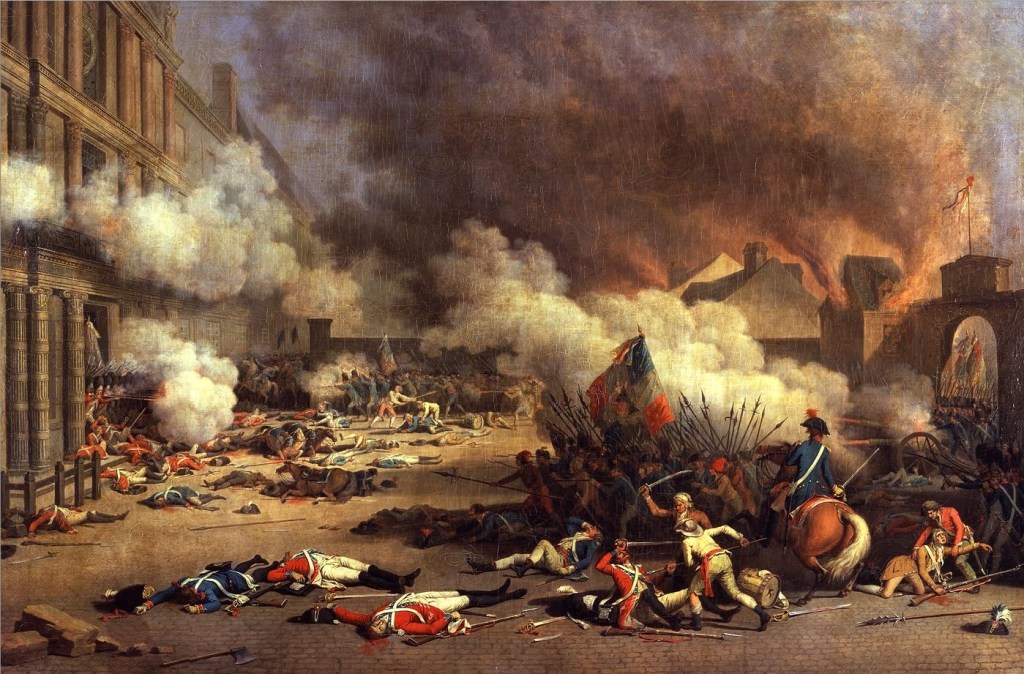
French Revolution
The French Revolution is widely considered to have marked the end of major monarchies and the idea of divine right to rule.
Born into bounty
A land full of life and lush
Never left wanting

Darkness defeated
Retreating into shadow
Light abound once more
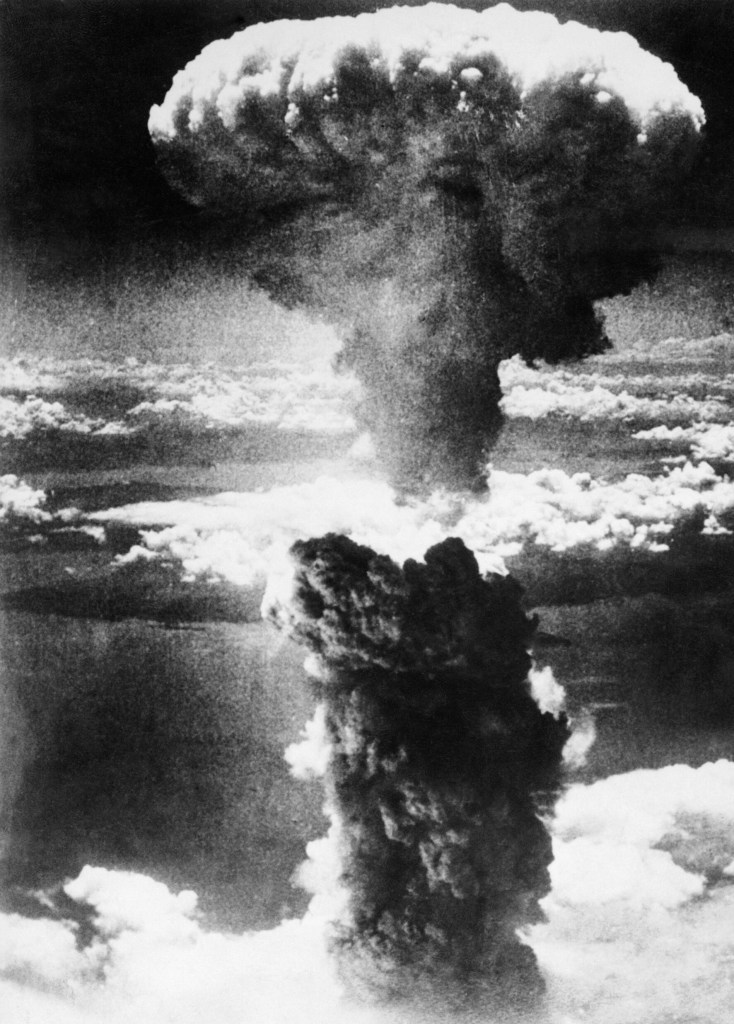
Mushroom cloud over Nagasaki
The Second World War saw the first and only combat deployment of thermonuclear weapons to date, as well as the United Nations emerging as a successor to the League of Nations.
A sea of plenty
Generations of good times
The strong grow weaker

The shadow returns
In the absence of challenge
Giants fall corrupt
Korean refugee during the Cold War
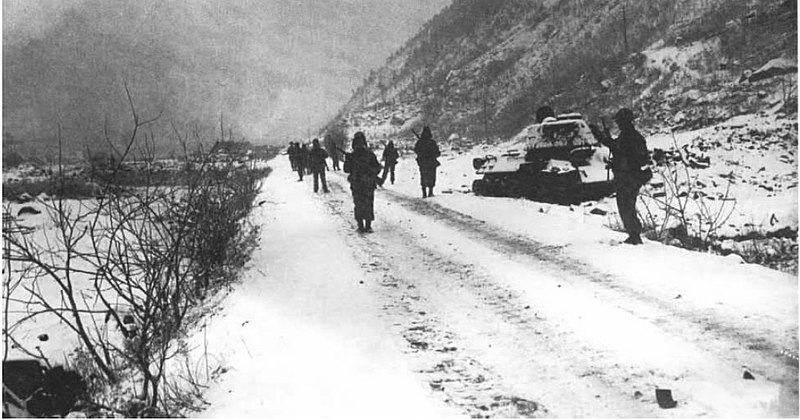
The Cold War saw many battles that followed after WWII as new conflicts took shape and competing regimes wrestled around the ideas of socialism versus capitalism.
Guardians fall asleep
Evil finds its place once more
A new threat will rise

The sheep lose their hope
Where is the sheepdog to fight?
Who will protect them?
Quad Naval Formation
Naval vessels from the U.S. Japan, Australia, and India conducting a joint exercise as part of the Quadrilateral Security Dialogue in what is being referred to as the Second Cold War.
The cycle repeats
Darkness rises once again
And Light to meet it

The Great War, often referred to as WWI was thought to be the war to end all wars. Perhaps, one day humans will develop cyberwarfare capabilities so advanced that bloodshed will become obsolete as a means of upsetting corrupt power structures. I have doubts that war itself will ever become obsolete because war can take many forms. An information war – such as an election – can be used to unseat a corrupt official. A world without war would be a world where the status quo is maintained indefinitely, and that is not a world I would imagine anyone would want to live in. Still, we know not what the future will hold, and it will be interesting to see where Humanity goes regardless of the path it takes to get there.

What do you think of Humanity’s long and storied history with conflict? How do you think cyberwarfare will shape the coming conflicts? Also, what do you think conflict will look like far into the future?


Creative Commons License

All posts by The Pen and Sword are licensed under a Creative Commons Attribution-NonCommercial-NoDerivatives 4.0 International License.

Heroes From History: Valeria Panlilio

Valeria Panlilio was a spy and guerilla fighter for the Allies during the Second World War. Commonly referred to as “Colonel Yay,” she is considered to have been the brains behind the “Marking Guerillas,” a notorious resistance group in the Philippines which fought against the Japanese occupation during the war. She was born in Denver, Colorado to an Irish-American father and Filipino mother. As an adult, she left the United States and moved to the Philippines to become a journalist. She worked as a news reporter for the Philippines Herald. When the war broke out, she was enlisted as a U.S. intelligence agent for the Allies and fed them information about Japanese movements in the Philippines.

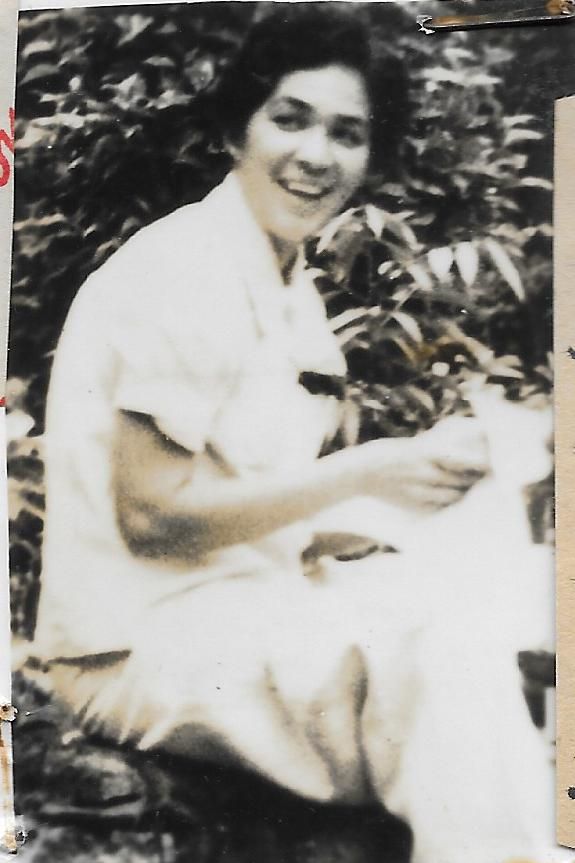
Yay before WWII
Valeria “Yay” Panlilio before WWII

Valeria Panlilio was part of the U.S. military’s S-2 intelligence unit during WWII. She worked as a radio broadcast operator for the KZRH radio station. Her official job at the station was to broadcast Japanese propaganda to support the occupation. Unofficially, she used her position at the radio station to send intelligence reports to the Allies about Axis activity in the Philippines. She would send coded messages detailing Japanese troop movements using the radio station, and she also fed false information to the Japanese intelligence officer at the station about Allied movements. However, the Japanese military would eventually find out someone was feeding the Allies information from the radio station, putting Panlilio in danger of being exposed.

She repeatedly requested the U.S. Army transfer her to the fight in Baatan, but was consistently denied and ordered to remain in Manila to gather intelligence on the occupation there. Eventually, suspicions of her mounted to the point where the Japanese tried to have her arrested. With the threat of her cover being blown, and a desire to get more involved in the fight, Panlilio eventually decided to strike out against the Axis on her own terms. Locals sympathetic to the resistance helped her escape capture and flee into the mountains. There, she joined the Marking Guerillas and began fighting directly on the ground in the Filipino resistance against the Axis. Panlilio became an influential figure in the resistance and even married Marocs Agustin, leader of the Markings.

Panlilio and Agustin
Valeria Panlilio and her husband, Marcos Agustin

In the Markings Guerillas, she was sometimes referred to as “Mammy Yay” due to her vital role. She was second-in-command of the group, handling critical operations involving training of new members, treating the sick and wounded, and coordination of anti-propaganda. Yay created and strategized the dissemination of media to counter the propaganda coming from the Axis-controlled mainstream media during the Japanese occupation. This helped the resistance keep morale up as the Second World War raged on and people began to feel all hope may be lost of ever defeating the Nazis and the Empire of Japan. There were many dark times during WWII when hope for the Allies seemed slim, and it was difficult to keep spirits high.

Panlilio became known as “Colonel Yay” as she also led fighters into combat on the island of Luzon. Female guerilla fighters were referred to as “guerrilleras.” Due to the harsh realities of the Second World War, women across Europe and Asia often had to pick up a rifle and enter the battlefield. From France under Nazi occupation, to the Philippines under Imperial Japanese occupation, men, women, and children were pulled into the fray to stand against the forces of darkness. Panlilio was one of those people pulled into fhe fight during the darkest hours before the dawn when fire and rage threatened to consume all of Humanity.

Yay Panlilio with camera equipment
Yay Panlilio (left) was a journalist and reporter before, during, and after WWII.

She survived the Second World War and eventually returned to the United States to resume her work as a journalist there. She wrote her autobiography, “The Crucible,” and detailed her time as a spy and guerilla warfighter. She was quoted as saying: “It is true women are soft. It is also true that women can be the most bloodthirsty and cruel of creatures. I want to be neither. It is enough to do my duty.” After the Axis powers all surrendered and Panlilio laid down her arms, she returned to civilian life as a hero. She was awarded the United States Medal of Freedom for her service and settled down in New York. Eventually, she passed away in January of 1978.

Heroes like Yay Panlilio remind us of the duty of all humans to be at the ready to stand against the forces of darkness whenever and wherever they arise. I am sure she would have preferred to live her life as a journalist and reporter, informing people about the news in peace without fear of death or capture. However, as humans, we do not always get to choose when we are called upon to serve and protect Humanity from the forces of darkness. Evil always finds a way to rise up again, no matter how many times it is beaten back down. It is the duty of all of us to remain vigilant and at the ready for when we are called to serve in whatever capacity that is required of us. After all, a wise man once said that the price of liberty is eternal vigilance.

What do you think of Valeria “Yay” Panlilio? Have you ever heard of her? Also, what skills do you have that may be of use during a time of crisis? How do you think you would help during Humanity’s darkest hours?

If you’re interested in reading more about the relationship between America and the Philippines, check out this article and poem commemorating our history: “Family Found and Forged.”


Creative Commons License

All posts by the Pensive Warrior are licensed under a Creative Commons Attribution-NonCommercial-NoDerivatives 4.0 International License.

Celebrating the Bow: National Archery Day

It’s National Archery Day! The second Saturday of May is recognized as National Archery Day, an obscure holiday meant to celebrate the iconic duo of the bow and arrow. Archery is the application of the bow in combat and recreation across history. An “archer” is an individual armed with and wielding a bow. People can celebrate National Archery Day by learning about the history of archery, practicing archery on their own, or seeking out programs where they can learn to use the bow under the guidance of a professional. In the age of the Internet, people can even record or livestream themselves practicing with virtually any type of weapon and share the video with a professional for critique and advice.

Picture of a modern archer
Archery is still widely practiced in the modern age

Compound bows were invented in the 1960s, and archery became a regular Olympic sport in 1972 after making a few early appearances at the games. National Archery Day was founded in Louisiana, Kentucky by the National Archery in the Schools Program (NASP) back in 2015 to celebrate their annual archery competition. While archery has become arguably obsolete in warfare and self-defense – at least in the presence of firearms – it is still popular in hunting and as a recreational activity. Archery is also a practical skill involving a weapon one can craft with simple materials and use to survive in a desperate situation.

A bow is a very humble tool, although more complex variations have been invented, such as the previously mentioned compound bow. In its simplest form, a bow is a short, wooden staff which is strong, but flexible. The two ends are connected by a shorter piece of string which bends the wooden staff into a curve. The arrow is a shaft made of wood or a comparable material with feathers or feather-like vanes on the end, and a sharp arrowhead on the tip. The arrowhead may be made of metal, bone, stone, or another comparable material capable of forming a sturdy, cutting edge.

Arrow Feathers
Arrows use feathers for enhanced accuracy in flight

The arrow is notched against the bowstring and the string pulled back until the arrowhead is just ahead of the bow itself. The archer grips the end of the arrow in between their fingers and hooks the bowstring with the same hand to pull it back. Pulling on the bowstring creates a tension referred to as potential energy. When released, the potential energy stored in the bow is converted to kinetic energy and launches the arrow at the target. The sharp arrowhead allows the arrow to penetrate the target and makes the arrow useful as a projectile.

Today, there are many different types of bows. The traditional bow is what started it all and has been used historically by hunters, warriors, and athletes in every part of the world except for Australia. The longbow is also a very prominent design which, as the name implies, is longer than a traditional bow and enables more powerful shots over longer distances. The recurve bow is a lighter bow with modularity for travel over longer distances and greater ease of replacing or swapping out parts. Eventually, the compound bow incorporated multiple strings and wheels which enhance the functionality and effectiveness of the weapon.

Recurve Bow
A recurve bow consists of multiple modular components which can be easily replaced.

The staff forming the body of a bow must be springy. It cannot break when bent, and this limits the kinds of materials which may be used in its construction. Before modern materials enabled easy manufacturing of strong, flexible materials, inventors of bows had to be creative with their designs. Bamboo offered a natural wood which served well as a flexible body for bows. Composite bows were also invented which involved gluing multiple sheets of wood together into a flexible whole. Sapwood and heartwood could be put together to form a durable, yet flexible staff for the bow.

Historically, arrow shafts have often been made of wood. The arrowheads have been made of a wide variety of materials. Hardwood, animal bone, flint, bronze, and eventually steel have all been implemented. Anything which can cut and keep an edge will do. The bowstring has historically been made of animal guts such as tendons, as well as fibrous plant materials. The stringy, flexible material is strong but can bend as well, providing tension that creates energy for the shot. Silk and rawhide have also been used. Out of all the materials, fibers made from plants were arguably the best, as they were not affected by wetness or dampness when rained on, submerged in water, or carried threw damp, tall grass.

Archery from Horseback
Samurai were famous for using archery on horseback, an artform still preserved today in recreational archery.

The bow is a revolutionary tool from human history which has been wildly influential. Later on, we will explore the influence of archery on human history in another blog post. I have tried archery once before as a child, but never dedicated myself to learning the artform. One day soon, I hope to do so. Archery is a very practical skill and a human practice which should certainly be maintained.

What do you think about archery? Have you every trained with the bow? What is your favorite kind of bow and why? Feel free to share your thoughts.


Creative Commons License

All posts by The Pen and Sword are licensed under a Creative Commons Attribution-NonCommercial-NoDerivatives 4.0 International License.

Warm Weather Motivations: A Haiku Series

It is springtime where I live, and that means the weather is getting warmer. Each day, I find myself feeling the heat of the sun on my skin. Something about the warmer months has always made me feel more eager to exercise. My blood just feels like it’s running hotter and I want to get out and do more, even though the heat often makes things harder. I suppose it is a challenge that naturally elicits my desire to overcome.

That motivation has not only led me to go outside and start training with a longsword, but also to write more poetry. To that end, I wrote this series of haiku about springtime, exercising, and the life-long journey of training. May we all be happy warriors finding ourselves well along that path.

training with a longsword
Louis Martinez training with a longsword
Time flows day by day
Seasons changing as years pass
Warmer months arrive

Soft winds stir gently
Spring heat teases summer fire
Hotter days ahead
Practicing a strike
Practicing a strike with a longsword
A flame fills my veins
Passion born of blood and sweat
Burning from within

Blood pumping harder
The sun demanding action
Heat pushing me through

training with a longsword
Still practicing the fundamentals
Sweat drips down my skin
Eager to reach new levels
Ever rushing forth

Waiting for that day
When wisdom dawns upon me
Always out of reach

training with a longsword
Practicing another strike
Grasping at nothing
An intangible insight
I seek without end

What is your favorite way to get some exercise? Do you enjoy the hot weather, or do you prefer the cold? What inspires you to do some writing? Feel free to share your thoughts.


Creative Commons License

All posts by The Pensive Warrior are licensed under a Creative Commons Attribution-NonCommercial-NoDerivatives 4.0 International License.
Iconic Weapons: The M1 Garand

Since we looked at two iconic swords from history this month and one firearm, I thought it appropriate to look at another firearm in keeping with his month’s theme. That firearm we will explore today is the famous M1 Garand. Known officially as the “United States Rifle, Caliber .30, M1,” the M1 Garand is one of many iconic weapons from history that changed the way battles were fought and moved tactics forward by introducing new ways to fight.

John C. Garand presenting the M1
John C. Garand (left) presenting the M1 Garand to Major General Charles M. Wesson (center) and Brigadier General Gilbert H. Stewart (right).

The M1 Garand was originally designed by John Cantius Garand. It was made of steel and black walnut wood, machined and assembled at the Springfield Armory in Massachusetts – one of the first two arms manufacturing plants commissioned by George Washington to rectify American dependence on foreign arms imports centuries earlier. The receiver of the rifle was forged and machined with an assembly line which could produce several hundred M1 rifles per day at their peak. Simultaneously, the stocks were woodworked at the facility on a separate line. At the end, the steel and wood were assembled together to produce a finished M1 Garand.

The weapon was prominent among the U.S. military in WWII and the Korean War. During the Cold War, stockpiles of the weapon were handed down to U.S. allies as the American forces began phasing the M1 out for the M14. The weapon was officially in service between the years of 1936-1958 in the United States, and other countries still use it as their standard issue service weapon to this day. The weapon is also still used in drills and training among many countries in the modern age, including the United States.

M1 Garand with two-point sling
M1 Garand with a two-point sling

The M1 Garand replaced the M1903 Springfield bolt-action rifle, although the M1903A4 variant remained in service as a sniper rifle. The M1 Garand provided a higher rate of fire and greater accuracy than the M1903. It was a semi-automatic weapon with less recoil. The ammunition was lighter and allowed more to be carried, and the semi-auto fire enabled more rounds to be fired in a shorter period of time. Overall, it made for a superior infantry weapon, allowing the slower, heavier hitting M1903A4 to be delegated to a long-range role.

The M1 Garand makes a distinctive ping noise when the last round is fired and the empty clip is ejected. This was reportedly used to the advantage of both the combatants facing Americans equipped with the weapon, and by the Americans themselves to deceive their adversaries. During WWII and the Korean War, combatants facing the M1 Garand would listen for the distinctive ping to know when there may be an opportunity to charge the position of the ones wielding the weapon. On the other side, sometimes soldiers with an M1 Garand would fire one round and throw an empty clip to feign being out of ammo and lure combatants into a charge.

Soldier with an M1 Garand
A soldier with an M1 Garand

Looking at the muskets and cannons of centuries past; the M1 Garand still in use today but on its way out; and the modern weapons which have replaced it like the M16 rifles based off the AR-15 design, I marvel at how far humans have come and wonder what we will make next. After all, it was not that long ago in our history that we were training with swords, spears, and bows not as recreational endeavors and a way to preserve the past, but to familiarize ourselves with the conventional defense tools of the day. Now, those tools have passed from the conventional class to the historical. I wonder what will come next, and when the day may come when the firearms of today are displaced by some new tool which makes them obsolete.

I also wonder which weapons may stand the test of time and remain in common use, such as how the knife has remained conventional since the dawn of human existence. Only time will tell, I suppose. I look forward to seeing what comes next and familiarizing myself with any new tools which come onto the scene of human history.

Soldier with an M1 Garand
The M1 Garand was widely used during its service life.

What do you think of the M1 Garand? Have you ever had a chance to wield the weapon yourself? What is your favorite weapon design or system from human history?

Also, you may have noticed that some of the headings and references to the “Pen and Sword” have changed to the “Pensive Warrior.” I finally decided on this as the final name of the blog to differentiate it from other blogs and employ a unique name. I will be changing the domain name soon as well to provide a unique URL.


Creative Commons License

All posts by The Pen and Sword are licensed under a Creative Commons Attribution-NonCommercial-NoDerivatives 4.0 International License.
Iconic Weapons: History of the Longsword

The longsword is such a classic and iconic symbol that it is used as a generic model for a sword in numerous different mediums of art and culture. Technically, the distinction between the classic “longsword” design and other types of swords such as the arming sword and “shortsword” may be a matter of blade lenght, hilt size, and semantics. The longsword then is that sword of European descent with a cruciform hilt long enough to be used with one or two hands and a straight, double-edged blade between 85-110 centimeters in length. It is probably the epitome of what many think of when they imagine a sword, rivaled only by the katana in the public consciousness of what constitutes this type of weapon. The image of a knight in shining armor with a classic longsword is as timeless and recognizable as the armor of the samurai and their infamous katana design.

Longsword
Typical shape of the longsword

The longsword became widely popular in Europe during the 14th Century, although the design emerged earlier than that. Some sources claim the weapon first emerged as early as the 12th Century, and others the 13th Century. Regardless of exactly when the first longsword was made, the weapon is noted to have been in common use between the years of 1250-1550. It was used as a service weapon in the Late Middle Ages and Renaissance Period. After that, it was overtaken by new weapons as technology advanced. Still, the longsword persists to this day as a potent symbol of discipline, honor, and virtue.

Crafting a high-quality longsword required skill beyond that of a simple blacksmith. Each sword had to fine-tuned to provide the perfect balance between flexibility and sturdiness. A sword which was too sturdy would break against a hard surface, but a sword which was too flexible would not be able to cut. A swordsmith would heat up the steel to the right color in a furnace before hammering it into shape. The edges would be hammered to a finer point than the center, forming the edge. The center of the steel would be hammered to flatten it out, but would be left thicker than the edges to provide a strong shape. Ensuring the sword was the proper weight and proportions required great skill and experience, and a swordsmith would need to take into consideration various factors such as the “point of balance,” “vibration nodes,” and “forward/aft pivotpoints” in order to craft the steel into a functional longsword design.

Different cross-sections
The cross-section of a longsword could come in many different shapes.

Tempering the blade also required a lot of experience since there was no way to measure the temperature of the steel. The swordsmith would have to know from experience by looking at the blade that it was the right temperature for tempering before quenching it in water or oil. The steel would also be filed down to craft precise edges and proportions to get the weight and shape just right. Filing would also be done to create the guard, pommel, and any decorations. Some parts of the steel might be hollowed out or filed down to create indentations which helped craft the perfect balance. Some longswords may have been mass-produced without such care or precision in order to equip large armies, producing more crude variants which were not as sturdy or balanced.

Historical training manual
A page from a historical training manual.

The longsword is a legendary symbol of skill and precision not only because of how great skill is required to craft one using traditional methods, but also how great skill is required to wield one. Numerous training manuals from throughout history when the longsword was in common use have been preserved and carried into the modern age. These have been adapted by modern practitioners into newer manuals as well, as the sword is still quite popular for recreational purposes. Learning to use the longsword is also a useful practice for one seeking to gain discipline and self-control.

The longsword design is notorious for being one of the most versatile weapons ever conceived. Every physical part of the weapon has offensive capability from the tip of the blade to the pommel. The hilt was long enough that it could be used with one or two hands, although the classic “longsword” is typically meant to be wielded with two hands. The long, straight blade was used for both cutting and thrusting. The blade itself could be gripped with one hand and stabilized for more precise thrusts, a technique known as “half-swording.” The sword could also be flipped around and held with both hands by the blade and swung like a hammer, striking an opponent with the guard in a technique known as the “murder stroke.” The guard itself was primarily used to protect the hands from strikes. There are even historical manuals which reference unscrewing the pommel and throwing it in the opponent’s face as a distraction before charging in.

Knight combat reenactment
A reenactment of knights engaging in combat with what appear to be a longsword (right) and a short sword or arming sword (left).

Ewart Oakeshott (1916-2002) created a system of typology for different swords of the classic “longsword” design. This system did not exist during the time when longswords were in common use, although it is useful due to the blurred distinction between “longswords” and other swords of similar length and purpose during the time when these swords were in service. Arming swords were very similar in size and purpose to what would be considered a “longsword.” However, the Oakeshott classifications are very distinct and a “Type XVIa” sword is probably the strictest interpretation of what constitutes a longsword in the Oakeshott typology.

There are many famous longswords from history, as these weapons were often preserved as family heirlooms and important cultural artifacts. The Wallace Sword is one such sword housed at the National Wallace Monument in Scotland. While there is reason to believe it is not the original sword, it is preserved as if it were. William Wallace was a Scottish knight who led the resistance against the English occupation of Scotland in the Wars of Scottish Independence. His famous longsword was used during the Battle of Stirling Bridge and the Battle of Falkirk. It serves to this day as a potent symbol of freedom, liberty, justice, and the need to stand up for these ideals in the face of tyranny.

The Wallace Sword
The Wallace Sword

To me, the longsword is a symbol that is synonymous with courage, bravery, honor, integrity, and ingenuity. I recently started studying to use the longsword and plan to start practicing with one soon. Despite the weapon no longer being in common use and arguably being obsolete, I still want to learn how to wield and maintain the weapon so that I can benefit from the discipline one fosters whenever they learn to wield and maintain a new weapon, as well as so that I can pass the knowledge onto others and preserve the craft of this important symbol from human history.

What do you think about the longsword? Have you ever learned how to wield one? What does the longsword symbolize to you? Feel free to share your thoughts.


Creative Commons License

All posts by The Pen and Sword are licensed under a Creative Commons Attribution-NonCommercial-NoDerivatives 4.0 International License.
Iconic Weapons: Brown Bess

The “Brown Bess” was the common name for the Land Pattern Musket, as well as other flintlock muskets in the same family. It was the weapon of choice of both the British Army and the Continental Army during the American Revolutionary War, and was also prominently used in other significant conflicts such as the Texas Revolution and the Indian Rebellion of 1857. It was the official service weapon of the British Army from 1722-1838.

Brown Bess Musket
The Brown Bess was widely used around the world.

The Long Land Pattern – one of the early standardized patterns – was about 62 inches with a 42-inch barrel. It was made of wood and brass, and the metal was treated with a process to protect it against rusting which tinted it brown. The Brown Bess had a .75 caliber barrel and weighed approximately 10 pounds. Additionally, the weapon could be fitted with a bayonet. The common bayonet used with the Brown Bess was said to be 17 inches in length and arguably the most dangerous part of the weapon.

The Brown Bess incorporated the flintlock ignition system, which was a revolutionary upgrade from the matchlock system. The matchlock system on previous weapons required an external ignition device such as a match to light the powder. The flintlock system ignited the powder with a hammer that would strike a piece of flint and create sparks when the trigger was pulled. This greatly increased the rate of fire and made weapons safer to use. It also allowed for more shooters to stand next to each other, allowing for more heavily concentrated volley fire.

Flintlock Mechanism
Flintlock Mechanism of the Brown Bess

The rationale for the name of the “Brown Bess” is uncertain. The “Brown” term is obvious. The weapon was colored brown. However, there is uncertainty surrounding the origin of the term “Bess.” Some say it was to honor the late Queen Elizabeth who had died decades earlier. Others theorize “Bess” was a slang term for a prostitute and the British soldiers would joke about holding their musket like they would a “Bess.”

There were several standardized patterns designed which were known as the Brown Bess. At first, the weapons were not standardized, and it was difficult to get ammunition and replacement parts which worked universally. There was a need for a standardized pattern which could be mass-produced, easily repaired, and allow for standardized ammunition. This led to the Long Land Pattern, and eventually the Short Land Patter, the India Pattern, the New Land Pattern, and the Sea Service Pattern.

As a smoothbore rifle, the Brown Bess was not known for its accuracy. It was essentially a canon due to the lack of conventional rifling in the barrel. The bullet accelerated without any stabilizing effect and would go off in random directions once leaving the barrel. The Brown Bess did not have any sights on it since aiming at a target was not a significant consideration. The weapon was made to be fired in large volleys which would blanket a target area with bullets, ensuring that something was hit. In fact, it is said that training with the Brown Bess did not focus on aiming at all, but rather on reloading as quickly as possible so as to be prepared for the next volley. The Brown Bess is said to have been joked of as a glorified handle for a bayonet.

Continental Army solders
The Continental Army also used the Brown Bess.

During the American Revolution, the weapon was common among the colonists as male citizens in the Thirteen Colonies were required to keep and maintain a Brown Bess for militia duty. Life in the Colonies was harsh, and colonists were expected to be able to defend settlements in place of the British Army. With the bulk of their forces stationed thousands of miles away overseas, it was impossible for the British Army to provide meaningful defense to the Thirteen Colonies. Inevitably, as a rift between the Colonies and the Empire grew, the weapons which citizens were required to keep and maintain became a flashpoint on April 19, 1775.

At the Battles of Lexington and Concord, the British Army attempted to cease a stockpile of weapons from the Colonies. British soldiers marched toward Concord but were intercepted at Lexington by colonial militia. A standoff ensued which led to the infamous “shot heard round the world.” The British soldiers and colonists exchanged volley fire after the unknown shot first rang off. Two opposing walls of Brown Bess muskets were unloaded, causing casualties on both sides. Then, a melee ensued since the weapon took an impractically long amount of time to reload. The surviving British soldiers continued on to Concord where they encountered more armed resistance and suffered further casualties before retreating.

Battle of Lexington
Depiction of the Battle of Lexington

The Brown Bess symbolizes the importance of gun ownership; of knowing how to use a weapon; and of being prepared to use a weapon when the need arises. As every male citizen in the Thirteen Colonies was responsible for maintaining and caring for a Brown Bess since they could be needed to use it to defend themselves and their fellow citizens. They had to learn about the weapon; how to use it; and how to keep it in working order. Then, when duty called upon them to defend themselves and their fellow citizens from threats made by the very entity which was supposed to keep them safe, they were prepared to answer that call.

The Brown Bess reminds me that we never know if or when we will be called upon to defend ourselves, our homes, or our fellow citizens. We also never know who we will be called upon to defend against. Sometimes, circumstances may require us to defend against those who we thought were charged with defending us. Life is full of surprises and is rarely kind. It often seeks to test our resolve and challenge us in ways which force us to adapt, improvise, and overcome great adversity.

Have you ever heard of the Brown Bess? What do you think of when you see the weapon? What kind of images or ideas does it symbolize to you? Feel free to share your thoughts and share this article with others.


Creative Commons License

All posts by The Pen and Sword are licensed under a Creative Commons Attribution-NonCommercial-NoDerivatives 4.0 International License.
Iconic Weapons: History of the Katana

This month, we will be following the theme of looking at iconic weapons from throughout human history, starting with the katana. This legendry sword design comes from Japan and is renowned as one of the most effective cutting tools ever made. The iconic sword features a curved, single-edged blade with a small guard. The word “katana” may be interpreted to mean ” a curved sword with a one-sided blade.” It is longer than a tachi, another sword of Japanese origins sometimes described as a precursor to the katana. Traditionally, the katana is worn with the cutting edge face up along with a wakizashi – a smaller blade similar in shape. The image of an armored samurai with their unmistakable katana is as timeless now as that of a Spartan soldier with their spear and shield.

Samurai with a katana

The Japanese samurai are famous for their mounted fighting style, employing archery and swordsmanship from horseback. I have read some sources which say the katana emerged as a longer, more curved sword than the tachi which was superior for use on horseback. I have also read some sources which claim the katana was invented specifically in response to the Mongol invasions of Japan and their thicker armor necessitating sturdier, more powerful swords as the tachi was known to chip and break against Mongol armor. Regardless, the katana was certainly useful for cutting targets on the ground from horseback and for engaging more heavily armored Mongol warriors. Smaller blades such as tanto and wakizashi enabled samurai and other warriors to engage more easily in close quarters and indoors, something which became more prevalent throughout Japanese history with new conflicts leading the battlefield to different arenas.

Forging a katana using the traditional method employed by Japanese swordsmiths could take several months to complete one sword. First charcoal and iron sand are burnt in a furnace known as a tatara for three days. The process purifies the metal and creates tamahagane steel. The pieces of tamahagane are broken up, examined, and sorted according to their carbon content after they have cooled. The pieces are usually heated back up and adjusted to further refine their carbon content. Some pieces will make the hard edge of the blade, while others are used to forge the soft body. The pieces are again heated and hammered into bars, which are then folded several times into layers. The soft and hard pieces of the sword are forged separately and then fused together. Traditionally, the katana is tempered with water after it has been fully forged. The sword is heated it to red hot and then submerged in water to harden it for battle. This is of course a very brief overview of the swordsmithing process and excludes many of the finer details. An in-depth explanation of how a traditional katana is forged may be read here.

A diagram of all the different named parts of a katana

Conventional methods of forging a katana involve cutting it from a sheet of purified steel; working the metal into shape; and then tempering the blade with water or oil. The conventional method is much quicker and can also produce more durable swords which last longer and require less maintenance. Although, the conventional method does not naturally produce many of the intricate designs inherent to the traditional folding process.

The katana is an iconic piece of human history, a symbol for many that is synonymous with strength, courage, bravery, and honor. To me, it also represents human ingenuity and our ability to invent novel tools and devices. Learning about the process that goes into making a single katana using traditional methods is inspiring. The commitment to the craft is immense, and the weapon itself is a thing of beauty. I also admire the expertise needed to wield a weapon such as a sword, the time and dedication it takes to hone one’s skills with such a long blade.

What do you think about the katana? Do you see it as just a piece of shaped metal, or an important symbol with powerful meaning? What does it represent to you, if anything?

Creative Commons License

All posts by The Pen and Sword are licensed under a Creative Commons Attribution-NonCommercial-NoDerivatives 4.0 International License.
Spring’s First Touches

Here is a poem I wrote about springtime. I am always inspired by spring and the transition from winter. I live in an area with four distinct seasons, and the winters are very cold. When spring comes back around every year, I feel my appreciation for the sun and its warmth renewed.

Spring's First Touches

Winter scares all life away
Snow clouds blocking the sky
Light fading quicker with each passing day
Everyone scurrying to rush inside

For winter is long
It's end ever out of sight
The sun's warmth come and gone
A most perilous night

Yet winter is no eternal arrival
Here for a while, until it must go
A transient visitor on a cold reprisal
As fleeting as is the melting of snow

For spring always comes to usher in summer
As reliably as the sun rises each morn
It's soft first touches a gift like no other
Delivering us from winter's harsh scorn

After long winter's night
After months with no sun
Spring pierces the sky with its warming light
Returning at last to see winter outdone

A step outside brings a sigh of relief
For the first time in so very long
Like a feeling so good, but of disbelief
As soothing as is a loving birdsong

The warmth of the sun's essence
So tender and caring
Is a most calming presence
All one's woes, it upending

The cool breeze in the air
A gentle caress
Soft as a lover's care
Of one who knows best

The song of the birds
Chirping to rise each morn
A song with no words
Each day feeling reborn

Spring's return is a gift
Made sweeter by winter's journey
Pleasant set adrift
Filling with glee aplenty

I dread winter each year
But love it so too
For it heralds spring's cheer
All the sweeter tis through

That was Spring’s First Touches, by Louis Martinez. What did you think of this poem? Did you enjoy it? Could it be improved? Let me know! I’d love to hear your thoughts.

Also, what do you think about springtime? Do you live in a place with a different climate and different types of seasons? If so, what is your perception of springtime?


Creative Commons License

All posts by The Pensive Warrior are licensed under a Creative Commons Attribution-NonCommercial-NoDerivatives 4.0 International License.