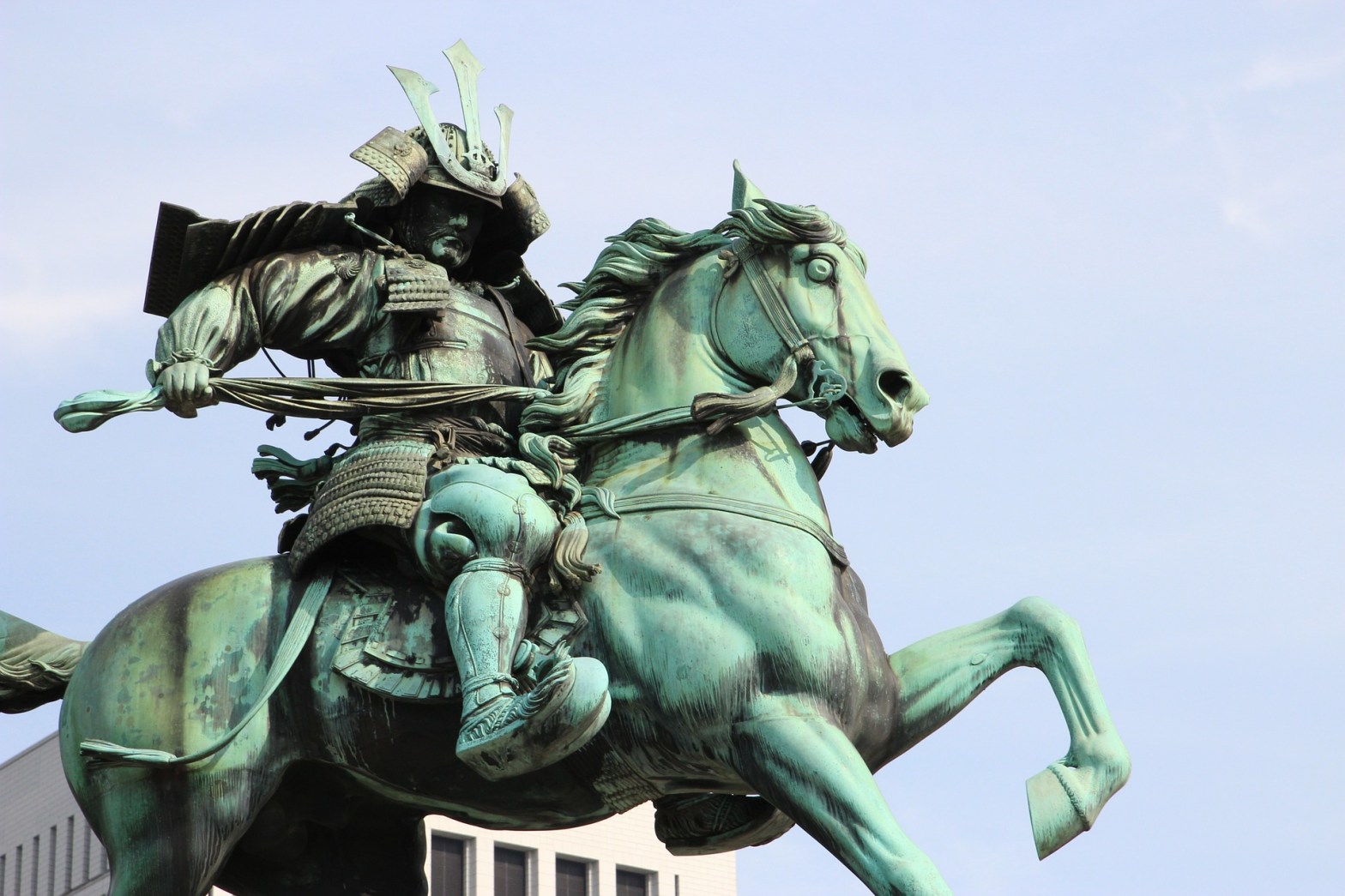
As mentioned in this month’s first post, haiku was popular with the Japanese samurai. They were a very literate society and they used haiku not only to express their creativity and love for art, but also to calm themselves before battle. I have stated before that I normally write poetry in the ABAB format, though I do not see how this would be practical to calm oneself before a stressful situation such as a fight due to the complexity and typical length of such poetry. So, this week I decided to learn how to write haiku and see for myself the applicability of it to calming my mind before a high-stress, high-intensity situation. In short, I think it worked quite well, though with some obvious limitations which I will discuss further down.

For this exercise, I decided to try writing haiku before running a home defense drill where I quickly get out of bed and grab my SIRT training pistol in place of one of my firearms; rush to three positions in the house; take cover to minimize my exposure to incoming fire; before finally taking aim and shooting at designated targets. The SIRT pistol uses a laser pointer to allow for practice inside the home. Steady pulses of the laser indicate accurate, well-placed shots. Erratic pulses which jump around indicate misplaced shots. There is also a software program which works with a webcam to analyze your performance with the SIRT and point out your errors more closely.
I find that taking a moment to stabilize my shooting stance before firing results in far more accurate shot placement, which is important during home defense to avoid stray shots going off target. Even though time is precious, shot placement and watching your background are too, especially inside the home. Stray shots can go into another room and hit a family member, or into another house. Even shots which are on target may go through the target and hit someone else. Also, taking a split-second to stabilize my stance requires less time than a blink of an eye, and I think it is worth it considering the massive increase in accuracy and the immense importance of being on target in when shooting inside the home.
To help simulate a real home defense situation where I must engage several armed intruders, I also perform some traditional exercises including jumping jacks, push ups, and sit ups to elevate my heart rate before beginning the drill. This is meant to simulate the adrenaline rush and fear one typically feels when faced with life-or-death situations and violent attacks such as a home invasion. I have read physical exercise is used in police academies and in military training where trainees must complete an obstacle course to get to a shooting range and fire a weapon. I also feel that I can more easily get into the mindset of being afraid and having to deal with hesitation when my heart rate is elevated, which I personally feel helps me train to overcome the hesitation I might feel before pulling the trigger with another human being in my sights, especially one who is armed and potentially shooting back at me or threatening my family.
Heart pounding away
My body trembling with fear
It's time to act now
I found that haiku did seem to work for me as the samurai seemed to have intended it to. When my heart was pounding as I lie in bed, waiting for the moment when I sprung into action, my mind was racing at first. I was thinking about where the targets were I had set up. How fast would I get to each position? Would I expose too much of my body from cover? Would I be able to see the targets later in the evening with many of the lights in the house turned off and the sun down? Would my shots be accurate, or wildly off target. A lot was racing through my mind, and I had to focus myself to think about producing a haiku.
Ready for the shot
Am I prepared to destroy?
Whose life will now end?
However, the simple form of haiku made this task easy and effective. The 5-7-5 syllable format with no regard to rhyme was structured enough that it forced me to focus my mind and stop my racing thoughts, but not so complex that I could not do so with my elevated heart rate and the upcoming task. I opened my notes on my phone and wrote down several haiku about what I was feeling and thinking. In that time, my heartrate did slow down and my breathing stilled. Of course, I cannot discount the fact that I was at rest and not in true danger, naturally lowering my heart rate. Yet, I did seem to calm down more than times before when I had run the drill without focusing on producing any haiku or meditating at all, instead opting to go straight into the drill after raising my heart rate with physical exercises.
I must fight for them
Those who cannot themselves fight
Do what must be done
To summarize, I do think haiku worked for me in the way it was used by the samurai. It is simple enough to produce under pressure, yet complex enough to require focus. However, I did mention there are some obvious limitations to the application of haiku for this purpose. Obviously, during a defensive operation, such as home defense against armed intruders, or self defense against an attacker in public, there is no time to meditate or write haiku. The situation happens abruptly and without warning, leaving no time for anything but a reaction. I imagine samurai must have used haiku to calm themselves before offensive operations or mutual combat, such as before a large battle or a one-on-one duel. In such context, I can definitely see its applicability.
Danger in my sights
The unknown past every door
I step into fire
Of course, there are many other kinds of stressful situations in which haiku would certainly be useful to help calm the mind. Essentially, any high-stress situation which does allow for a moment to calm oneself before taking action would allow for the individual to meditate, engage in some controlled breathing, or produce a haiku. I can see how it would help in many situations that are very stressful, but less urgent than defending against an attack. For example, to calm one’s nerves before a public speech, bungee jumping, or skydiving. I also found writing haiku to be very enjoyable due to its creative nature and ease of production. I look forward to writing more haiku in the future, and doing so when I am feeling stressed or under pressure.
What do you think of haiku? Have you ever tried using it to calm yourself in stressful situations? How has that worked for you? Feel free to share your thoughts!

All posts by The Pen and Sword are licensed under a Creative Commons Attribution-NonCommercial-NoDerivatives 4.0 International License.