Christmas Miracles: The Collapse of the Soviet Union

On December 25, 1991, the red flag with a hammer and sickle flying over the Kremlin was lowered, never to be raised there again. Numerous Soviet states had already announced they were leaving the Union. Intolerance of any political dissent, the centralized economy, and constant conflict with the rest of the world had finally worn down the totalitarian regime. After the population under the control of the Communist Party had endured decades of theft, starvation, censorship, and terror, the people the Soviet Union needed to support it reached a point where they were no longer afraid of being whisked away to the gulags in the middle of the night or executed outside their homes for daring to speak out. When the people’s fear of the consequences of compliance outweighed their fear of the consequences of non-compliance, the communist chains placed upon their minds were broken, and countless souls began to break free.

Reforms introduced by Mikhail Gorbachev years earlier allowed the wheels of change to finally be set in motion towards a brighter path. The secret police were disbanded, elections began, and criticism of the regime was finally allowed. With no international support to draw upon after waging a war against the world for so long, the reforms were a death knell for the communist regime as it reeled with the daily issues of governing it had long ignored. As George Washington once said: “Liberty, when it begins to take root, is a plant of rapid growth.” And as Mikhail Gorbachev said of the reforms he introduced: “The old system collapsed before the new system had a chance to start working.”

changing of the Russian flag
On December 25, 1991, the Soviet flag over the Kremlin was replaced with the flag of the Russian Federation.
The Cry of Freedom May Not Be Held Forever

A coup had been attempted to remove Gorbachev months earlier in August. Years before that in 1989, the Berlin Wall had come down already. Conflict broke out between the Red Army of Moscow and the peoples of Lithuania and Latvia. With many Soviet states in open revolt or simply refusing to continue to work with the central government, the Soviet Union ceased to exist. Word spread of the machinations of the secret police and the gulags as free press cropped up and began to speak out openly. The United States, under the executive control of the W. Bush administration, opted to roll back many active measures and react to what was happening instead. Elections in the Soviet Union led to a split of political support with disparate interests clashing internally.

The Red Army was pulled out of Germany and the Eastern and Western halves of the country reunified. Germany even resolved to join NATO, a move which would have been physically impossible and most likely suicidal years earlier. To many, peace seemed to be settling over the world as the threat of mutually-assured destruction with nuclear weapons which gripped the hearts of people across the globe began to dissipate for many. Conflicts across the globe, big and small, carried on. Yet, for many, it seemed this was a time of peace. All the more fitting it was the Soviet flag over the Kremlin was lowered for the last time on Christmas Day, a day of peace on Earth.

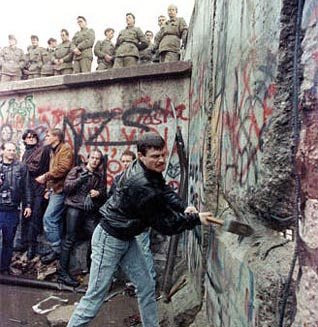
Berlin Wall coming down.
The Berlin Wall being torn down. The collapse of the Soviet Union was no sudden event, but a slow, drawn out process.
A Battle Won in a War Yet Waging

Many heralded December 25, 1991 as the end of the notorious Cold War. Of course, this was not the case, as the center of communist power simply shifted from Moscow to Beijing, as the Chinese Communist Party still retained control of mainland China and carried on with its war against the world as if little had changed. In truth, from the perspective of the communists, the Cold War never ended, and the collapse of the Soviet Union was both a setback and a boon for the rising darkness in Beijing. The Chinese communists and the Soviet Union had worked together at times, such as when they both committed to supporting the communist front in the Korean peninsula. At others times, they fought, experiencing border clashes with casualties which threatened to bring the USSR and the PRC to all out war. They shared the goal of conquering the free world and banishing liberty from the Earth, yet both wished to be one on top.

Now, as darkness rises once more, the free peoples of Earth are waking up to how the Cold War never ended since the communists were never fully defeated. The communists in Beijing grew their forces in a continuance of the Arms Race. The Cold War carried on with the Third Taiwan Crisis of 1996, the Scarborough Shoal Standoff of 2012, the Fall of Hong Kong in 2019, and many other other geopolitical disasters for the valiant peoples of Earth fighting against communism. Many sacrifices have been made and the stakes continue to be raised back to where they were before Gorbachev took over the Soviet Union those many years ago. A new era dawns for the free peoples of Earth in their longstanding fight against the dark forces of communism.

Hypersonic nuclear missile launch
The People’s Liberation Army of Communist China test launching its new hypersonic nuclear missile design which travels at Mach 5.
All Ends Are Beginnings

Despite the principle actors of the Cold War remaining and continuing on with no end yet reached, the end of the Soviet Union ushered in a moment of peace in human history which blessed the Earth for over 30 years. It also symbolized a major defeat for tyranny on Earth and a significant hurdle in the long war for freedom and peace. That peace, however temporary, should always be cherished. All good things come to an end, and war always returns when the people become accustomed to peace. Nevertheless, the three ensuing decades following the collapse of the Soviet Union were a boon for the free peoples of Earth which cannot be underappreciated.

The spirit of Christmas is one of peace on Earth. In the United States, the Christmas holiday is a day to remind us of the belief in how God sacrificed his son to free the peoples of Earth from themselves. Licentiousness had displaced liberty once more as people had become slaves to their baser emotions and desires, and Jesus Christ was born to grow up and teach humans once again the path to true freedom. As those who speak the truth and advocate for freedom are always persecuted by those who seek to defend their vices, it was known that Jesus was born only to be persecuted and to die. Yet that sacrifice would inculcate the virtues of peace and love across the Earth.

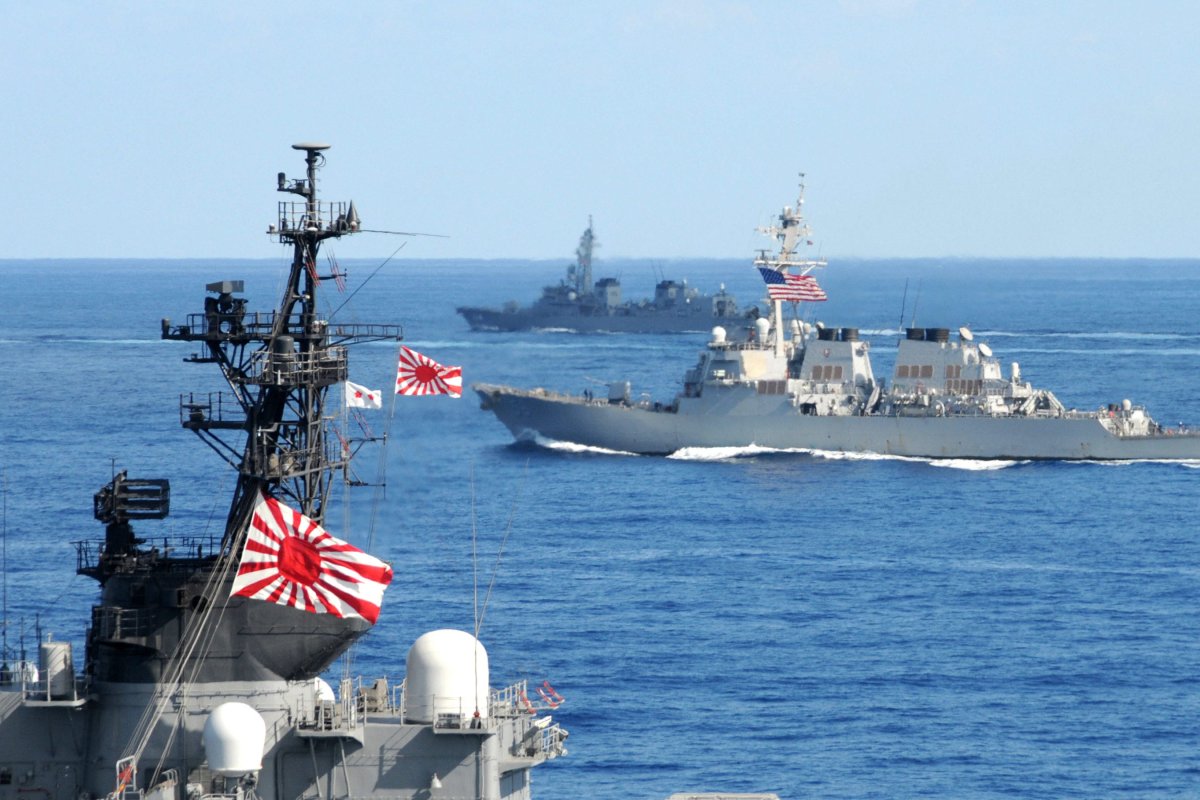
Quad Naval Formation
Warships from the U.S. Japan, Australia, and India in 2020 exercising together in the Asia-Pacific.

Perhaps there is something indescribable which is responsible for so many miracles occurring around Christmas time. Perhaps what we perceive as miracles are merely coincidences. It is difficult to know for sure. Yet there is one thing I do know. December 25, 1991 is a day to be remembered, for it is a day when great peace was washed over the Earth and gave the free peoples a breath of fresh air. It was a moment of respite in which Humanity was able to catch its breath and prepare for the coming challenges of the next century.

This Christmas, I wish a happy and peaceful day to all the free peoples of Earth who fight against tyranny, communism, and any other dark forces which assail themselves against Humanity. May you all spend this day with love and cheer, surrounded by joy, friendship, and family. Merry Christmas to all, and to all, stay strong.


Creative Commons License

All posts by The Pen and Sword are licensed under a Creative Commons Attribution-NonCommercial-NoDerivatives 4.0 International License.

The Gift of Giving

What is it to give a gift?
The power to shape souls
An ancient art to elate and uplift
A force to make us whole
We give to others to receive
The greatest gift of all
To know in our hearts and to believe
There is no greater call
Through this act we do ascend
And rise up to our greatest selves
When unto others we do attend
Into riches Humanity delves
Not riches of gold or silver coin
Nor minted notes on paper or screen
But a fullness of heart as hands enjoin
And forge us bonds before unseen
To fill the hands of another being
We fill our own hearts up gently
All emptiness cast out and fleeing
As our homes grow full with love aplenty
The gift of giving is to receive
All the bounties of love and life
The greatest reward we can achieve
Making joy abundant and rife
With outstretched arms and an open heart
Through selfless work and charity
Our world is healed in no small part
As light shines out with honor and glory

Creative Commons License

All posts by The Pen and Sword are licensed under a Creative Commons Attribution-NonCommercial-NoDerivatives 4.0 International License.
Christmas Miracles: The Christmas Truce of 1914

The First World War was a major conflict for control of the European continent between the Central Powers of Germany and Austria-Hungary and the Allied Powers of France, Britain, and Russia. Many other countries came into the fold on one side or the other until most of the world was involved, and nearly the entire global economy became mobilized for the war effort. Beginning in July of 1914, many thought the war would be over before Christmas, although as the fighting dragged on it quickly became apparent this would not be the case. The opposing forces had fought each other to a standstill by that time with no end in sight. Trenches had formed along the Western Front of the conflict which turned to mud and frost with incessant rain giving way to frost with the cold of winter closing in.

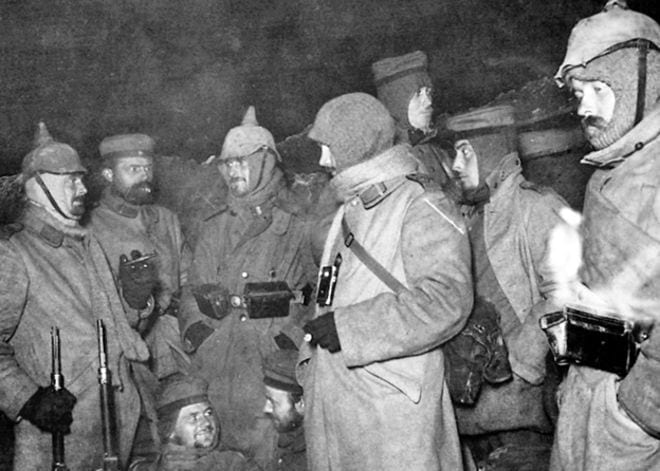
brokering a truce
The Christmas Truce of 1914 was not sanctioned by the leadership of either side, but was brokered by low-ranking officers in the trenches.

Nevertheless, the spirit of Christmas prevailed when December rolled around after months of constant fighting had made the troops eager for respite. Leading up to the great Christmas Truce, Pope Benedict XI called for a ceasefire on Christmas, requesting “that the guns may fall silent at least upon the night the angels sang.” While the British and German leadership had no interest in peace at this time, word spread of the call nonetheless. Perhaps it was this, or perhaps the spirit of Christmas weighed heavily on the fires of war and kept them still for a time. The German emperor, William II sent Christmas trees to the Western Front to try and bolster German morale, and the German soldiers set the trees up along the trenches. Christmas carols were also being sung on Christmas Eve by the soldiers, and warriors from both sides soon began to sing along together to classic hymns including Silent Night, known as “Stille Nacht” in German. Friendly exchanges occurred throughout the night with the two sides exchanging good tidings and wishes of “Merry Christmas.”

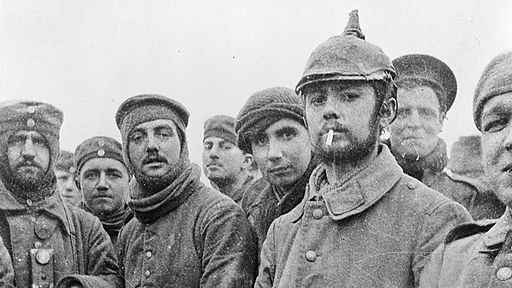
soldier with a cigarette on Christmas
The British and German soldiers who participated in the Christmas Truce exchanged cigarettes and other small items as Christmas gifts.
Dawn Breaks On Christmas Morn

That night, orders began circulating among the British troops to “live and let live,” meaning to not fire unless fired upon. The orders from the top on both sides were to continue fighting, and most did. However, as the sun rose on Christmas Day, it is said German soldiers along portions of the Western Front stepped out onto No Man’s Land with hands raised repeating the words “Merry Christmas” in the English language. The British at first thought it a rouse and readied weapons, but did not fire, waiting for the Germans to fire the first shot. Some shootings did occur, but the Germans did not return fire. They continued on with their hands raised as they were shot down. Eventually, the British troops realized it was not a ploy, and soldiers from both sides emerged from the trenches to meet the other side on Christmas morn.

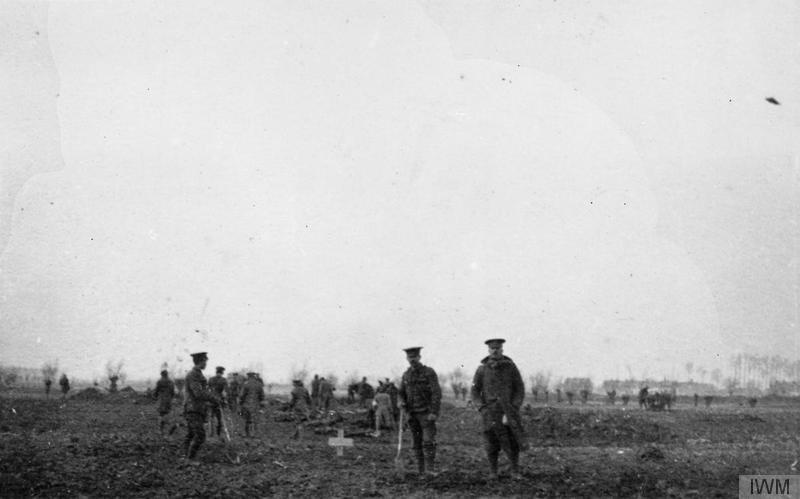
cross on No Man's Land
The German and British warriors set up Christmas trees and crosses across No Man’s Land, symbols of hope, love, and peace used to celebrate Christmas, the day used to celebrate the birth of Jesus Christ.

The British and German troops who observed the ceasefire exchanged gifts and sang songs together. Some took the cessation of hostilities to gather the dead from No Man’s Land and fortify their positions. A still moment of peace descended over the field of death that many described as eerie and strange, yet wonderful and marvelous at the same time. The Christmas trees were brought up and lit with candles, and the two forces even played a friendly game of football (soccer). Reportedly, the French did not participate in the ceasefire due to much animosity from earlier offensives into French territory, and the Russians along the Eastern Front saw no such truce as they were using a different calendar with Christmas happening at a later time. The truce persisted in some areas until the new year, at which point all hostilities resumed.

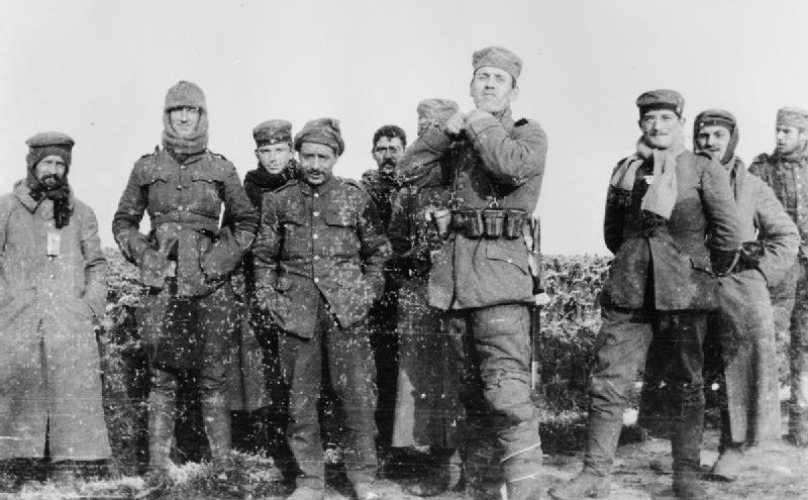
Christmas Truce of 1914
Many did not initially believe the Christmas Truce of 1914 occurred, as it was heavily censored and considered unfavorable by the German and British leadership, yet photos were taken and began to circulate.
Word Spreads of Startling Peace

The Christmas Truce of 1914 is said to be the last recorded instance of chivalry on the battlefield between warriors. British and German soldiers wrote about the truce in letters to home before censorship of communications was implemented. Word began to spread and was met with much disbelief. On both sides, the media portrayed the other as bloodthirsty demons who one would scarcely believe might stop fighting for the sake of Christmas. Yet word of the miraculous ceasefire continued to spread, much to the dismay of military leaders who feared it might affect the will of their soldiers to continue to fight. For some time, the Christmas Truce of 1914 was treated as a myth or legend rather than a historical event, and its occurrence was disputed. After the war, it became a more widely accepted fact the ceasefire did occur, no doubt due to the circulation of photographic evidence from that day.

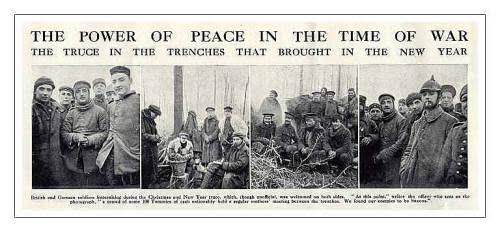
newspaper clipping of the Christmas Truce
Images of the Christmas Truce began to spread, in spite of widespread disbelief and censorship efforts.

With technological advances in firearms, ballistics, and explosives, chivalry eventually faded away from the battlefield as distance was created between warriors and battles protracted from brief bouts of intense melee to endless scourges of attrition. With larger economies and bigger guns brought into play, war became more and more vicious, prolonged, and desperate than ever. The First World War was one of the last major conflicts where chivalry could have been possible, and even then, it was not widely observed. The great Christmas Truce of 1914 was only possible due to the close proximity of fighting forces and the initiative of low-ranking officers to broker their own unofficial ceasefire in defiance of orders from their superiors. It was also a shocking moment which defied all expectations. The Christmas Truce was never repeated, and remains an anomaly to this day.

A Lesson for the Ages

The Christmas Truce of 1914 is a dark, yet heartwarming tale. In the midst of the fire and ice of a wintery battlefield, two groups of warriors which had been driven to hate one another down to their cores by the media they each received demonizing the other side managed to find some peace and solace, not just on their own, but together on that holy day we know as Christmas. It is a surprising and touching moment in human history that sheds a ray of hope into even the bleakest of ponderings. To me, it serves as a reminder of how important it is to set aside any trifles one might have with another when Christmas time comes around. For whatever conflicts we may find ourselves broiled in, Christmas is not a time for war or strife. As much as our nature may push us to dig in our heals, Christmas is a time for us to lay down the sword and share a moment of peace with the people around us.


Creative Commons License

All posts by The Pen and Sword are licensed under a Creative Commons Attribution-NonCommercial-NoDerivatives 4.0 International License.

Christmas Miracles: The Battle of Trenton

The month of December is host to many great tales. Some of heroism and bravery, others of self-sacrifice and generosity, and some tell of unsuspecting peace and tranquility. This is a special time for many when magic is in the air and the impossible is made possible. The Battle of Trenton in December of 1776 is one such tale to be told where a daring group of rebels trekked across frozen wastes into a storm of ice and fire, yet still took the day despite all the wailings of the world seemingly against them.

Sailing the Frozen River

The Continental Army under George Washington was often plagued with low morale. Few scarcely believed they could defeat the British Empire, and yet they fought nonetheless for they knew in their heart of hearts it was a stand worth taking. Washington had brought together both boys and men from different state militias with enlisted Continental troops. They were to set out across the icy river of the Delaware under cover of storm and march almost 10 miles through the snow to attack the Hessian mercenaries at Trenton. It was a plan so perilous it seemed doomed to fail. As such, the enemy was ill prepared when the Americans arrived.

Washington Crossing the Delaware
Across rivers of ice and against winds full of rage, the Americans begin their treacherous journey though the wintery hell.

On Christmas Day, George Washington, with Nathanael Greene and John Sullivan by his side, set out on boats across the frozen river with their troops in tow. The journey over the water was long and arduous, and as such, 3,000 men were not able to make it across and found themselves forced to turn back. The air was deathly cold and the waters nearly frozen solid. Only those nearest to Washington’s formation managed to carry on to the other side, pushed onward with an unseen hand at their backs. They knew the Hessians would be drunk and hungover from celebrating Christmas and tonight was their best chance to strike. So, they pressed on.

The March of Ice and Blood

After a treacherous journey across the icy Delaware, and having already lost more men than they had left, the Americans marched through the snow and wind to the city of Trenton. They trekked nearly 10 miles from the river’s edge to the Hessian encampment. Many of the troops were without boots, and so they wrapped their feet in rags to ward off the cold and save their toes. A trail of blood is said to have stained the snow a deep red as many bled at the feet after their soles froze stiff and cracked wide open. Yet still, they marched, for they knew the cost of failing to defeat their enemy was far greater than any temporary hardship or individual death.

March Through Frozen Lands
After the test of the river, many were turned back. Less than half of those who began the journey now trekked across frozen fields on bloody feet.

Many colonists saw the rebels marching through the snow leaving their trail of blood, and volunteers came out to offer aid. They gave food, clothes, and directions to the brave young warriors on their march to fight for freedom. General Washington acquired a horse and used it to ride along the column of men, encouraging them to continue on. With this generous aid, the Continental forces managed to trek all the way to Trenton and only lost two souls to exposure on what should have been a death march fraught with hundreds of casualties. Selfless Americans came out of their homes and gave what little they had to offer the troops to keep them warm, fed, and dry as they marched on through the winter winds and mountains of snow into the unknown.

On the Eve of Battle

As they approached the city of Trenton, General Washington was informed by a courier from Major General John Sullivan that the storm had wet the gunpowder they carried with them, and it would be unreliable at best. Undeterred, Washington famously said to the courier to “Tell General Sullivan to use the bayonet. I am resolved to take Trenton.” With that, the Americans prepared themselves to attack the Hessians. Whether their guns fired or not, they would charge nonetheless, determined and as ready as ever.

The Battle of Trenton begins
Starving and cold, yet brave and bold, the American forces charged at their enemy with souls on fire.

American spies had fed disinformation to the Hessians, and the weather forced regular patrols to stay back. The German commander, Johann Rall also ignored earlier requests to fortify the positions of his troops with redoubts, feeling the Americans were no threat after previous victories against them. In response to the threat of an attack on his forces, Rall said, “Let them come … We will go at them with the bayonet.” As such, the Americans approached undetected and faced no outer defenses to slow down their advance. The Hessian mercenaries were overwhelmed as a result.

A Strike Decisive and Swift

At approximately 8:00am on December 26, 1776, the Americans emerged from the woods outside Trenton and were fired upon by Hessian outposts stationed there. They returned fire and began to encircle the small groups. The Germans saw the massive force was no small raiding party to which they were accustomed. They quickly began an organized retreat, firing on the Americans as they fell back from their positions outside the town. Continental forces surrounded the city and blocked the roads before moving in.

The Hessians tried to warn their allies in the city that the outposts were lost and Trenton was now under siege. The Americans had set up cannons outside the city and were firing into the Hessian lines to break their control over the streets. The efforts of the defenders to bring their own cannons to bear were stopped by the overwhelming amount of suppressing fire. As the fighting became apparent to the American colonists living in Trenton, they too gathered their weapons and took aim at the Hessians from their windows and rooftops. The Americans overwhelmed the German mercenaries with gunfire from every angle and broke their lines as swiftly as the battle began.

The Battle of Trenton
The battle was brief as Americans rose up from their homes and rained down fire on the foreign occupiers from every direction.

Hall and his troops were routed, and the survivors were forced to abandon the city. As Washington lost most of his force crossing the Delaware, the enemy escape could not be completely locked down. Many Hessians fled, but most surrendered, including Hall. Wounded and dying from the fighting, the German leader asked only that Washington treat his men with humanity. Washington, an honorable man, obliged, and made sure to extract the prisoners from the combat zone rather than press further into enemy territory.

The battle was a decisive victory for the American rebels. Approximately 2,400 Continental Army troops and state militia members managed to inflict 905 casualties on the force of 1,500 Hessian mercenaries, killing and/or capturing 105 hostiles. With this feat, only 5 Americans were wounded in the battle, with none killed or captured. The outcome instilled confidence in George Washington among the Continental Congress, and among the young American rebels in themselves. It also proved something much more.

The Gift of Giving

One often hears the “gift of giving” in reference to the spirit of Christmas. This is the feeling we gain through giving unto others with no expectation of receiving in return. In so doing, we receive the greatest gift of all. With such an act of altruism and charity, we see the effect of giving on the recipient. We witness the smile on their face and the glow within their heart. While the actions of the troops under Washington’s command are quite impressive, the spirit of Christmas displayed by the American colonists who helped them along the way is also worth admiring.

As the Continental Army marched into the icy fields of certain death, selfless Americans who witnessed them on their journey came out to give aid, offering them food, shelter, directions, clothing, and any supplies they could spare. These gifts were surely never to be returned, yet the people opened their homes and their hearts to the courageous rebels on the perilous odyssey. It is through these acts of charity that Washington and his company made safe passage through the storm.

Yet the American spirit of Christmas did not cease there. When the rebels rushed into the fires of battle to oust the mercenaries occupying the city of Trenton, brave American townsfolk rose up with their guns to rain down fire from above. With the fear of death in their faces, the people of Trenton showed in the earliest days of the country what it meant to be an American, and they offered their lives in the fight for freedom in the spur of the moment. With this selfless act of courage and bravery, the enemy was overcome and driven out. The true spirit of Christmas rang out that day across the lands from every corner it was called and forever earned December 25, 1776 a spot in history as one of the great Christmas miracles of our world.


Creative Commons License

All posts by The Pensive Warrior are licensed under a Creative Commons Attribution-NonCommercial-NoDerivatives 4.0 International License.

Through Feast and Famine, We Give Thanks

I had a wonderful Thanksgiving holiday this year, and it has given me the opportunity to ruminate further on the spirit of Thanksgiving. This is a holiday rich with tradition and history, even though it may often be overlooked by many as a mere family gathering every November. This prompted me to produce another ABAB poem in honor of the story of the first Thanksgiving and the meaning carried with this very special occasion. I hope you enjoy!

From Famine to Feast, and Back Again
Setting forth into lands unknown
Promise and warning abound
The frontier beckons weary bones
Fortune and famine to be found
Eager to prove our worth and thrive
We take on the world and meet our match
The lands push back on our will to survive
Testing our mettle with each dispatch
Mayflower voyage
The voyage of the Mayflower across the Atlantic was as fraught as the struggles of the pilgrims to survive after making landfall.
Hunger scrapes at the mind
And frost bites at the soul
Nature can be most unkind
Beauty and cruelty as one whole
Hostiles be both man and beast
All eager for the taste of flesh
To make our own their bloody feast
Our spirits they set to gnaw and thresh
Plymouth Rock Winter
Through cold, hunger, and all manners of danger, the pilgrims at Plymouth were tested and pushed to the brink of oblivion.
Yet hope is never lost
Nor is it ever far
Amid the pain and ceaseless frost
We must keep sense of who we are
Amid the swirl of chaos and strife
We look to our friends both new and old
We stand together and breathe new life
To rise up as one into an age of gold
Meetings between the pilgrims and natives
In times of great strife, people can often choose to either come together or tear apart. The spirit of Thanksgiving embodies the choice to come together.
Together we learn and do we grow
Facing the threats of the frontier
Sharing knowledge and wisdom both untold
Bringing about new love and cheer
A Thanksgiving Day to celebrate each year
A harvest long coming to sink winter's chill
And a feast of friendship rather than fear
Brings people together for good and not ill
George Washington kneeling to God
The spirit of Thanksgiving would be carried on for centuries and remembered by great Americans like George Washington and Abraham Lincoln, reminding us to give thanks for the blessings we have during times of both feast and famine.
Yet as we return to uncertain days
Time and time again as struggle reigns
We give thanks for the blessings on our way
We give thanks even for the growing pains

I hope you all had a momentous Thanksgiving day last week, wherever you were and whomever you were with.

Creative Commons License

All posts by The Pensive Warrior are licensed under a Creative Commons Attribution-NonCommercial-NoDerivatives 4.0 International License.

The Spirit of Thanksgiving

The story of Thanksgiving holds many common themes found in numerous holidays from across the ages. A people sent adrift in a strange land, unprepared for the perils and hardship. They find themselves set upon by famine and hunger, threatened with oblivion. Then, a kind people take notice of their plight and offer a trade in the form of mutual aid. The exchange is made, and the two peoples prosper as new friendships are formed. This is the spirit of Thanksgiving we hope to embody each year with this timeless tradition of bonding, caring, and giving.

The First Thanksgiving

In September of 1620, about 100 brave souls departed on the Mayflower from England to escape religious persecution, touching down in Cape Cod and founding the colony of Plymouth. Many died on the perilous journey across the Atlantic, and many more died after coming ashore. The English settlers struggled to survive in the New World, as they were unfamiliar with the land and not adept at farming. They were visited by Squanto of the Wampanoag, who was familiar with the English language and the word of God. Squanto taught the people of Plymouth how to grow corn and fertilize the fields, among many other priceless pieces of wisdom. With this knowledge, the struggling colony was able to survive. In return, the English settlers offered may goods to the Wampanoag people, including firearms. Many of the Native American tribes were violent against one another, raiding one another for slaves, food, and other supplies. Some of the Native American tribes were even cannibalistic, taking prisoners to use as food. The firearms of the English settlers offered a unique force multiplier against hostile tribes.

Mayflower landing
The settlers aboard the Mayflower found little solace on land after their perilous journey across the sea.

Sometime in March of 1621, after numerous meetings and exchanges, a formal agreement was made between the Plymouth colony and Wampanoag tribe. It was one of the earliest examples of a mutual defense pact in American history. The people of the Plymouth colony and the Wampanoag tribe joined together to defend one another from hostile tribes. Unfortunately, this pact did not last, as many alliances are temporary. However, the spirit of Thanksgiving embodied in this story inspires me to this day, as it does many others.

The first Thanksgiving would have taken place sometime in October, shortly after the harvest. It was later made an official holiday on the fourth Thursday of every November. The peoples of Plymouth and the Wampanoag came together for a feast and several nights of celebration. They had a bountiful hunt and harvest after the two peoples learned from one another and shared their knowledge, wisdom, and tools of the trade. Before the first great feast, they all joined together and gave thanks to God for the fortuitous turn of events at the colony. The celebration lasted three days as the two peoples sang, danced, and held friendly competitions including foot races and shooting contests. It was a powerful moment in human history, filled with so much symbolism and meaning.

Trade between Native Americans and Englishmen
The English settlers traded tools, knowledge, and other goods that helped each other survive.
What Thanksgiving Means to Me

My family has always celebrated Thanksgiving for as long as I can remember. Each year, I find myself loving the holiday more and more. It is not every day I get to see many of my extended family members, each with their own lives which take them to other parts of the world. I also appreciate seeing events one can find where public feasts are held around town, bringing members of the community together who may have otherwise never met.

Even more precious can be a small get-together with friends new and old to share in the bounty and blessings we enjoy from the society our ancestors have built up over generations. As we stand upon the shoulders of giants, we give thanks for the efforts of those who came before and gave us the chance to achieve heights greater than past civilizations may have ever imagined possible. Together, we can face down the darkness set upon us, and know no fear as we strive forth into the light.

Giving thanks
A family gives thanks to God for their meal in the modern era, just as the Plymouth colonists and Wampanoag natives did on the first Thanksgiving.

I look forward to celebrating Thanksgiving again this year with my family and friends, and to sharing my journey this holiday season in the form of song and poetry, bringing light into the world in my own little way.

Do you celebrate Thanksgiving? If so, how? Do you get together with family or friends? What sorts of things do you give thanks for? I hope everyone has a great week this week and a wonderful Thanksgiving holiday.


Creative Commons License

All posts by The Pen and Sword are licensed under a Creative Commons Attribution-NonCommercial-NoDerivatives 4.0 International License.

Day of the Devil Dogs: A Haiku Series

November 10th this year was the 246th anniversary of the birth of the United States Marine Corps. At the time of their initial inception, the US Marines were referred to as the Continental Marines. The Second Continental Congress ordered the formation of two battalions of marines on November 10, 1775 to serve as a landing force for the Continental Navy. They served with distinction under the leadership of the first Marine Commandant, Samuel Nicholas. The Marines raided ships and helped defend Continental vessels. The first amphibious raid of their history was launched against the British port of Nassau in the Bahamas on March 3, 1776.

The Continental Marines were officially disbanded after the signing of the Treaty of Paris 1783. However, they were later reformed on July 11, 1798 as the United States Marine Corps. Since that reformation, they have taken part in numerous operations throughout history. The U.S. Marines earned the name “Devil Dogs” during World War I. On June 1, 1918, at the Battle of Belleau Wood in France, two regiments of U.S. Marines reinforced two U.S. Army divisions alongside French and British soldiers. Despite being heavily outnumbered and outgunned by the advancing German forces, the Marines helped hold the enemy off and even went on the offensive, charging German machine guns and artillery positions with bayonets. The German survivors referred to the U.S. Marines as “Hollenhunde” and “Teufelshunde,” meaning “Hell hound” and “Devil dog,” respectively.

This haiku series – Day of the Devil Dogs – was inspired by the history and service of the United States Marine Corps:

Battle of Nassau
The first amphibious raid of the U.S. Marine Corps was at the Battle of Nassau in 1776.
Forged in flame and blood
In an age of strife and war
A new breed was born
Over land and sea
Into storms of fire unknown
To shores far and wide
First Battle of Bull Run
A small force of US Marines led by John G. Reynolds took part in the First Battle of Bull Run on July 21, 1861 during the American Civil War.
Brave and proud are they
The few they call the Marines
Respite they earned
Across the ages
Fighting battles at God's call
Giving not to fear
Battle of Belleau Wood
At the Battle of Belleau Wood during World War I, as U.S. Marines overran German machine gunners with their bayonets, Daniel Daly spoke the legendary words: “Come on you sons of bitches, do you want to live forever?”
From rebels anew
To keepers of torn heartlands
To guards of the Earth
From Hell they were called
To do the work of the Lord
And chase out the fog
Inchon Marine Landing
On September 15, 1950, U.S. Marines launched an amphibious assault during the Battle of Inchon, landing behind enemy lines and charging head on into battle against the Communists.
Devil dogs in name
They are to live forever
In the halls of time

I hope you enjoyed this haiku series. I know the last few poetry posts have all been haiku, and it has been some time since I wrote an ABAB poem. With Thanksgiving approaching and Christmas next month, I will be writing more ABAB poems for the holiday season. Stay tuned to see those coming up!


Creative Commons License

All posts by The Pen and Sword are licensed under a Creative Commons Attribution-NonCommercial-NoDerivatives 4.0 International License.
November 7: Victims of Communism Memorial Day

On November 7, 1917, Vladimir Lenin led Bolshevik forces to seize power in Russia by capturing government offices in Saint Petersburg. The Bolshevik Revolution was complete and the Soviet Union came into being. Many have argued that for this reason, November 7th should be the internationally-recognized Victims of Communism Memorial Day.

Since that day, numerous communist regimes cropped up around the globe during the 20th Century which led to an estimated 80 to 100 million casualties from socialist policies. Even after the collapse of the Soviet Union, many communist regimes continue to hold power and exert influence around the world. The Chinese Communist Party continues to expand its reach after surpassing the Soviet Union with its death toll, leading to a new cold war as many countries scramble to correct decades of free trade agreements with a future great power adversary.

In order to help safeguard future lives which may be lost from the implementation of socialist policies in societies around the globe, there is the obvious need to educate and raise awareness about such historical and current threats. Therefore, many advocate for using November 7th as the Victims of Communism Memorial Day. However, there is also the perspective that May 1st should hold this day to counter communist celebrations which take place on that day. May 1st is often used as a day by communists to celebrate their ideology more broadly, without specific reference to the Soviet Union. As such, it would make sense to many to hold a counter holiday on the same day to help push back on the celebration of death with a memorial day commemorating lives lost.

The Victims of Communism Memorial Foundation chooses to recognize November 7th as the appropriate day of remembrance, and has made efforts to pass legislation throughout the United States to officially recognize this holiday. So far, they have achieved this goal in a number of states and have bills proposed in several others. Peoples all around the world can commemorate this day by reading history, learning about the ideology of communism, and taking a moment of silence to remember the untold lives lost at the hands of communist forces to this day.

Do you think the Victims of Communism Memorial Day makes more sense on November 7th or May 1st? The November date is already more widely used, so this may be a moot point. I do think there is merit in advocating for a May 1st date to directly oppose the death celebration with a remembrance of life. Nevertheless, the November date is the one which is gaining traction, and ultimately, either would be valid.


Creative Commons License

All posts by The Pen and Sword are licensed under a Creative Commons Attribution-NonCommercial-NoDerivatives 4.0 International License.

Happy Halloween!

Halloween is the modern-day interpretation of All Hollow’s Eve, the Vigil of All Saint’s Day. Historically, this is a day for people to remember those who have passed on and are now in Heaven, and to pray for those in Hell or Purgatory. The imagery of ghosts, ghouls, and other deathly images was meant to remind people of their mortality and to do well with the time we are given on this Earth. In the past, people would give out homemade cakes on All Hollow’s Eve on October 31st, as All Saint’s Day on November 1st was meant to be a feast in remembrance of saints who had passed on and all the work they did while they were alive. There was concern that the spirits in Hell might feel forgotten and cause trouble if they were not remembered as well. Therefore, the practice of chanting and wearing costumes or masks came out of this practice as well.

Jack-o-lantern
Jack-o-lanterns were used historically to protect the candle within from the wind and have become an iconic symbol of Halloween.

Those are some of the more Catholic and Christian origins of Halloween, which have merged with commercialization to produce the practices known today of children parading around while dressed as their favorite characters and asking for free candy. Neopagans also celebrate the day and often try to claim Halloween is about worshipping devils, demons, or other unsavory characters. Despite these things, I still love Halloween and love it even more knowing the wholesome meaning behind it. I also have fond memories of the holiday as a child, as it brought me, my siblings and friends, and other members of the community together in ways many other holidays did not. For most holidays, we spent the time together with family, and did not always have contact with the broader community or with friends. Halloween brought everyone together though.

As a child, me, my siblings, and several close friends would get together at the biggest house to use as a staging area for our trick-or-treating expedition. We would come with costumes to dress up as our favorite characters and cover ourselves in layers to try and stay warm later into the evening. Then, after receiving instructions from our parents to stick to the path we walked with them when we were younger and they accompanied us; as well as to stick together and watch out for one another; we set out to try and get as much candy as we could before the sun went down.

Bats and pumpkins
Bats and other nocturnal “creatures of the night” are often synonymous with Halloween.

Me, my brother, and some of our of friends were all martial artists and boy scouts, and we were armed with knives that we had some minimal training with. While I doubt we could have handled any professional attackers, we certainly could have deterred any untrained thugs with four members of our party armed and minimally trained. Plus, we lived in a pretty safe neighborhood anyway and never ran into any trouble. As such, we felt confident we could work together to fend off an attacker should one threaten us or our other companions who were untrained and unarmed. It was also somewhat exciting to be going out on our own for the first time with no one but our fellow peers to rely upon should anything go wrong. Even if we were just walking around a few blocks, it felt like a big adventure as a kid.

When we got back home, we all dumped our candy out in a massive pile and sorted it out. We gave everyone as much of their favorite candy as we could, and we made sure to categorize our own stockpiles according to which candy would go bad first. We wanted to make sure our loot lasted us as long into the next year as possible, since our parents would always tell us, “you don’t need candy. You’ll get candy on Halloween.” We learned to be patient and to ration our resources when we had them. We strategized about where to go and what houses gave out the most candy from our experience. We also tried to move fast and hit as many houses as possible. We got familiar with the layout of the neighborhood and agreed upon a path we felt was most efficient. No one told us to do these things, but the motivation to acquire as much candy as possible prompted us to do it of our own accord. Halloween was like our own little mission as kids, and it brought me and my peers together to make us a team in a way no other holiday did. In fact, on most other holidays, I never saw my friends as they were off somewhere with their families.

Trick-or-treat
“Trick or treating” is the common practice of little kids dressing up in costumes and going around their neighborhood soliciting neighbors for candy with the greeting, “trick or treat!”

Now, I love all the holidays that bring families together which would otherwise be apart. That time spent together is a blessing. However, Halloween has always had a special place in my heart for how it stood out amongst the other holidays and brought me and my peers together in ways no other holiday ever could. Now, I am fortunate to be able to sit back and hand out candy to young kids doing the same on Halloween, as adults did for me when I was growing up. It is great to see them getting that same experience I was blessed with as a child.

I also have a newfound appreciation for Halloween knowing it origins with All Hollow’s Eve. It makes it feel even more special knowing this is a day to remember those who have passed on, and to remind us of our own mortality. Since we only have a short time on this Earth, we should make it the best we can. Halloween reminds us of that with the scary and deathly costumes we see passing by. It is a solemn, but humbling thought which brings even more meaning to the day.

Happy Halloween
“Happy Halloween” and “trick-or-treat” are common forms of greeting appropriate for Halloween.

For more on the different origins of Halloween, check out some these articles:

The Catholic Origins of Halloween

The surprisingly Catholic origins of Halloween

The Catholic roots of Halloween, the Vigil of All Saint’s Day

Happy Halloween, everyone!


Creative Commons License

All posts by The Pen and Sword are licensed under a Creative Commons Attribution-NonCommercial-NoDerivatives 4.0 International License.

The Hammer of Man: A Haiku Series

October is host to the anniversary of the Battle of Tours, a less impactful, but no highly symbolic skirmish in human history. Also referred to as the Battle of Poitiers, was a skirmish fought between the Frankish Carolingians and the Umayyad Caliphate on October 10, 732. The exact location of the skirmish is unknown, taking place somewhere in France around the two towns of Tours and Poitiers. Islamic invaders under the command of Abdul Rahman Al Ghafiqi inserted into French territory from occupied Spain and began burning churches and attacking civilians. Charles Martel led a contingent of Frankish troops to halt the Muslim army and end their onslaught in the region.

Al Ghafiqi was killed during the fighting by Martel and his forces. The Frankish troops held their ground and reversed the enemy’s advance against superior numbers. The defenders were described by observers to the battle as like “a wall,” “immovable,” and a “mass of ice.” The Muslim invaders were said to greatly outnumber the defenders and ride atop horses, attempting the run down the defenders with ease. But the Frankish troops stood their ground and “manfully resisted” the charge of the invading horde. After the battle, Charles Martel became known as Martellus, meaning “The Hammer.”

This haiku series was written in memory of the sacrifice of those great warriors who halted in the onslaught and passed into legend.

The Hammer of Man
Invaders are here
A dark storm is on the march
Chaos spreads abound
A horde sweeps the land
Destroying all in their path
Who will stop their wrath?
The Hammer stands tall
Brave souls standing by his side
Ready to face death
Men immovable
They stand at the gates of Hell
Ice to block the fire
Hell comes with fury
Men stop demons in their path
No hellfire may pass
The Hammer pushed back
He manfully resisted
And stood to the end
The demons charged forth
All struck down by The Hammer
And the land was saved

Creative Commons License

All posts by The Pen and Sword are licensed under a Creative Commons Attribution-NonCommercial-NoDerivatives 4.0 International License.