Triumphant Is He

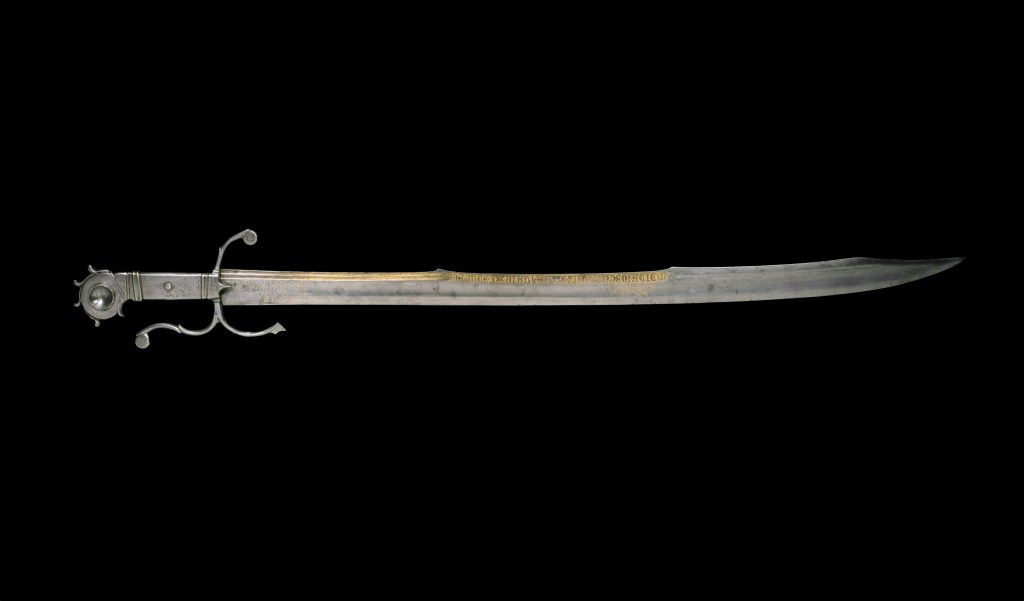
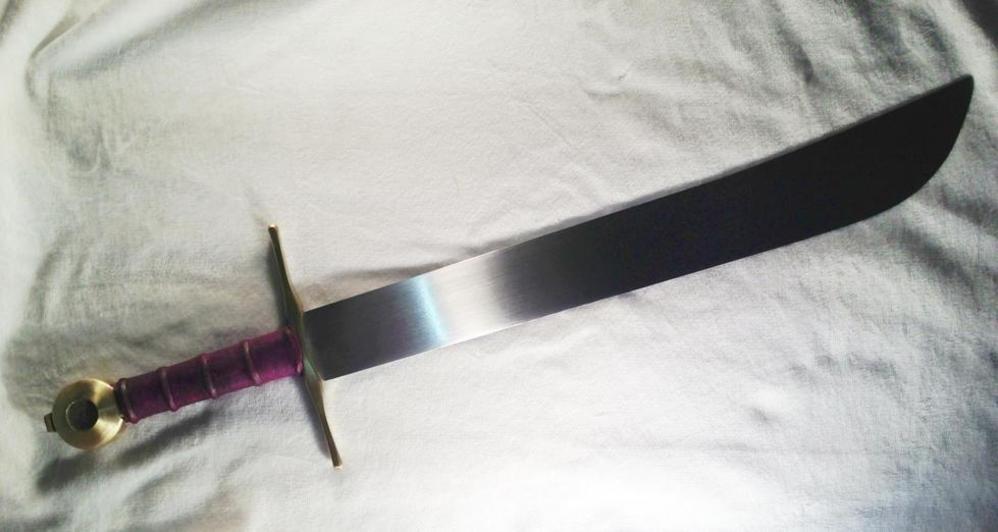
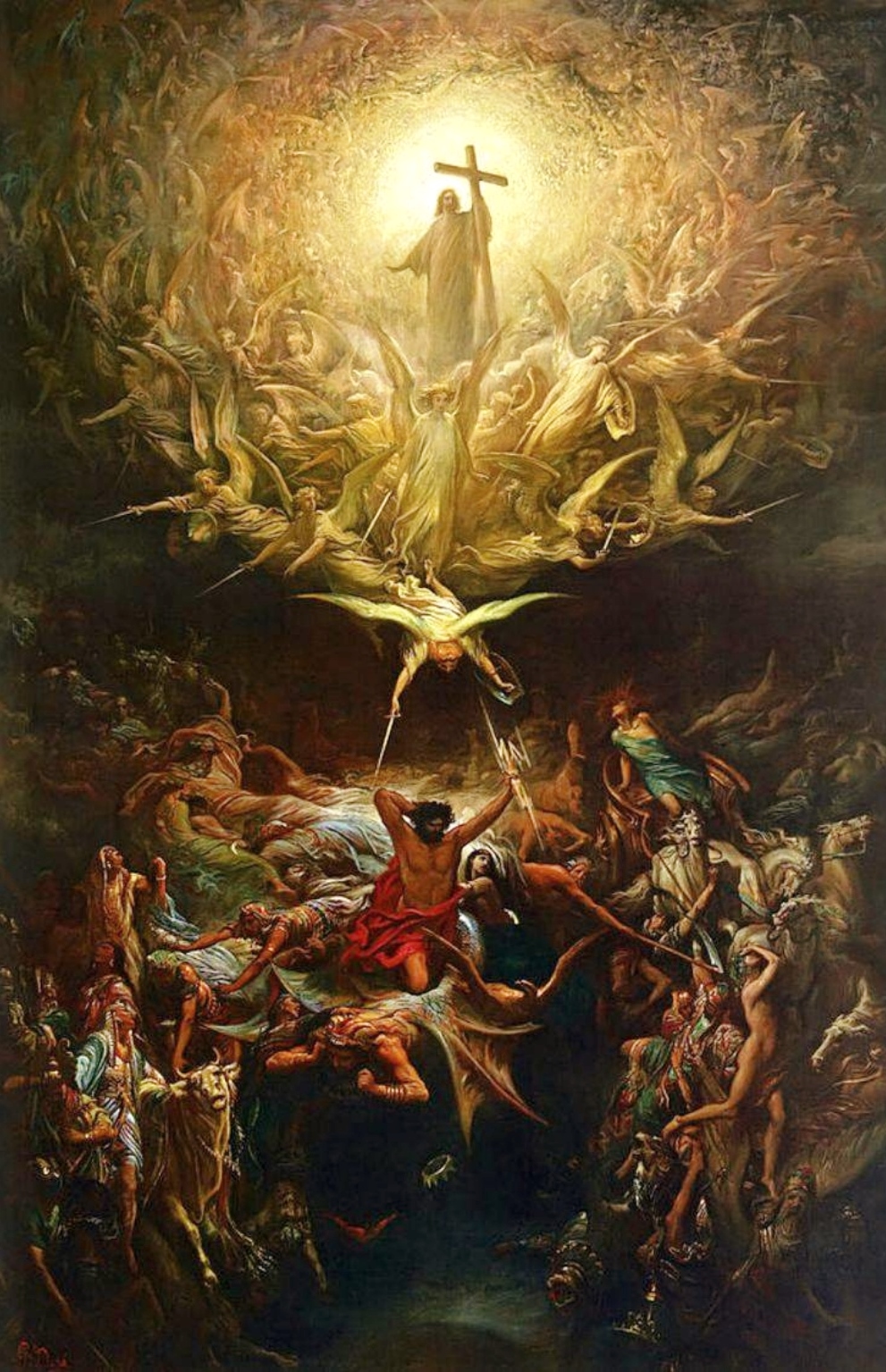
Evils rise and demons scheme to lead to humans astray, time and time again throughout history. The path of darkness is seductive and leads to self-destruction, whereas the path of the righteous leads into the light where we find our true selves. The darkness of sin resides in all of us, and it is incumbent upon us to resist the temptation of the Adversary. Such choices make us who we are. And while evil may always lurk its way back into the halls of power, so too does good always return with the sword of God to strike down His foes.


Triumphant is He
Jesus Christ, our righteous Lord
He is and will be
The one to see us restored
Blessed be the Lord
His light shines for all to see
Blessed be His sword
Drawn against the enemy
Demons try to win
Their pagan gods demand blood
Reveling in sin
Wickedness comes like a flood
A battle rages
A battle to save the world
Shackles and cages
Await those whose hearts have failed
Warriors of light
Fell their swords on pagan necks
Fighting for what's right
Angels standing at their backs
Death cannot hold Him
He rises three days after
Just an interim
A chance for strength to gather
His life was given
The ground below is shattered
The seal now broken
His enemies left tattered
For He is risen
Our Lord and Commander
Satan left wanton
The enemy sent under
Warriors stand firm
Darkness gathers all around
Light shines ever stern
Demons fall down to the ground
Men of God hold fast
Pushing back unsightly hordes
God's full strength amassed
All will break against the Lord
His blood protects us
We wash ourselves free from sin
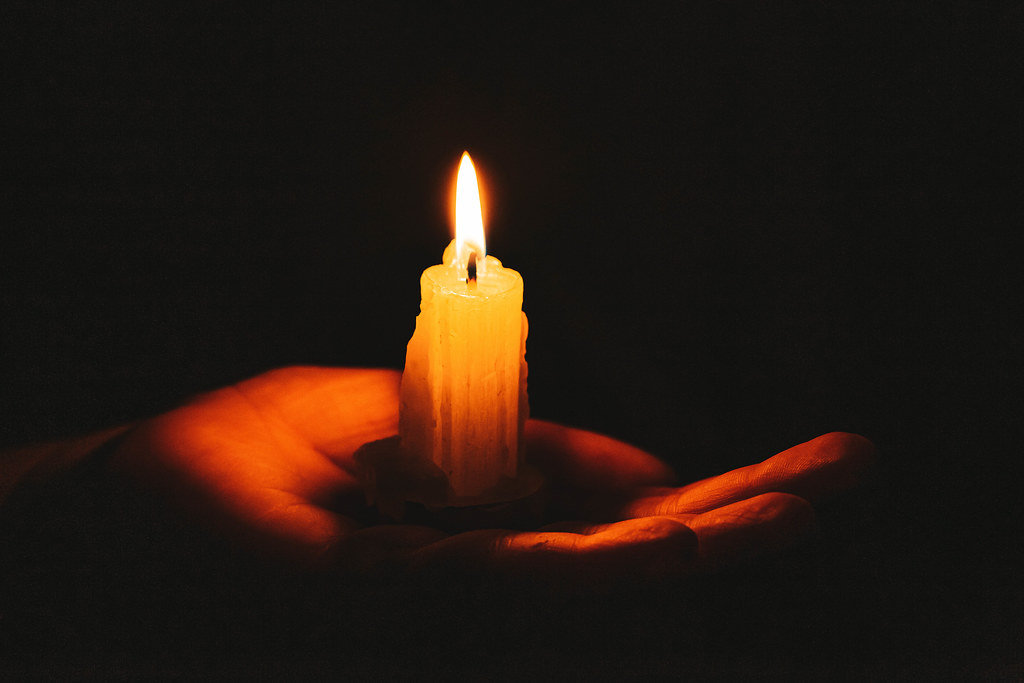
Light shines in darkness
We must be reborn to win
We do our duty
Remember His sacrifice
He makes us mighty
With Him, we find paradise

Creative Commons License

All posts by The Pen and Sword are licensed under a Creative Commons Attribution-NonCommercial-NoDerivatives 4.0 International License.
Historic Events: John Paul Jones’ Whiteraven Raid

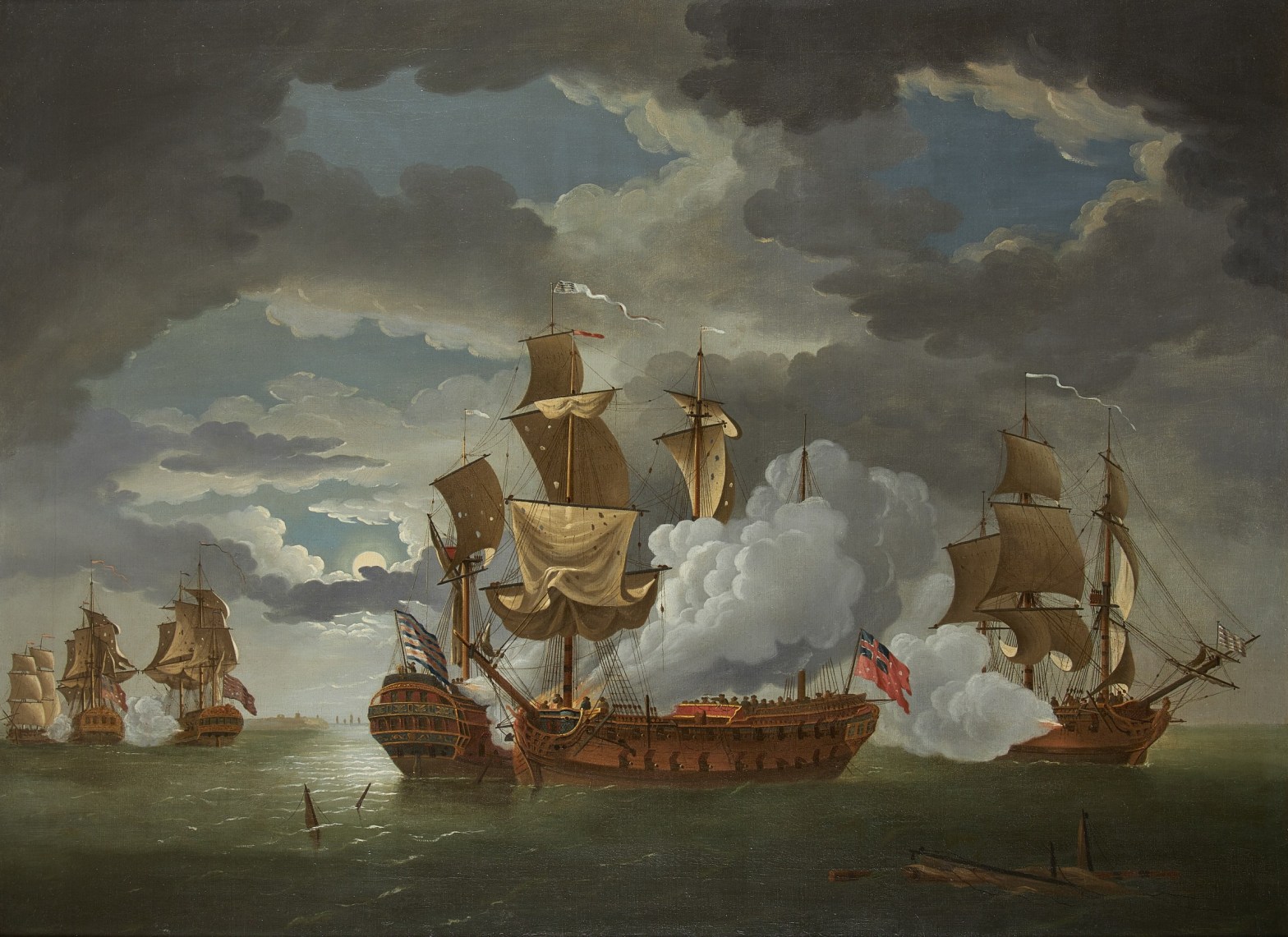
On this day, 244 years ago on April 10, 1778, John Paul Jones set sail aboard the USS Ranger from Brest, France on mission to harass British ships near the mainland. John Paul Jones was commissioned as a first lieutenant with the Continental Navy on December 7, 1775. His crew on the USS Ranger, however, was comprised of many privateers who did not share loyalty to the United States. This would complicate the mission, as it turned out, as the hired guns concerned themselves more with revelry and riches than honor and duty. Still, John Paul Jones was renowned for the operation and went onto other great successes afterward.

The Plan for the Raid

Jones and his crew sailed into the Irish Sea and arrived near the port of Whiteraven on the 22nd. The target was the 400 merchant ships in the harbor. The tides were strongest at night and kept the ships anchored. Jones planned to take a small group of men on rowboats into the harbor under the cover of darkness and set the ships ablaze. With them closely tied together, the fire would spread easily among the ships. Setting only one on fire would be enough to destroy the entire fleet.

However, the entrance to the harbor was guarded by two forts. Their sentries would see the ships burning, and their cannons would rip Jones and his men to shreds when they attempted to escape. If the rebels were to infiltrate the harbor, destroy the merchant ships, and leave without being pinned down, they would need to eliminate those forts first. The group would split into two teams and each take over a fort. Then, they would converge on the merchant fleet and set it ablaze before returning to the USS Ranger for extraction. If all went well, the operation would be quick, and the men would be sailing away before sunrise.

The Trouble With Mercenaries

Jones took a group of 30 men in two rowboats, just as planned. However, due to the strength of the tide, the journey to the forts took several hours longer than planned and the waters were difficult to navigate with row boats. Also, the men under Jones’ command were not loyal to the Continental Navy and were more akin to traditional pirates. They had no loyalties other than to themselves and to their next payday. The second team Jones sent to commandeer the northern fort decided to abandon their objective. They claimed they diverted from the fort because of a strange noise they heard, while other reports indicated they went to a nearby tavern and got drunk. By the time they awoke from their drunken stupor, it was sunrise and they returned to the USS Ranger without taking the fort or burning any ships.

Meanwhile, Jones led the first team and successfully captured the southern fort guarding the harbor. Only a small force operated each fort and was quickly subdued. The cannons were then sabotaged to prevent further use. Then, Jones led his team into the harbor and boarded a ship called the Thompson. They had lost the fire from their torches and needed to acquire a torch from a nearby house. They took the crew prisoner and set the ship ablaze. Jones and his team also tried setting matches and throwing them onto other ships during their escape, but those matches did not catch fire. Adding even more to the misfortune of John Paul Jones on this day, a traitor among his crew conspired to warn the townsfolk of Whiteraven about the rebel operation, and the fire raging on the Thompson was put out before it could spread. Tactically, the mission was a complete failure.

Attempting to Salvage the Operation

After retreating from Whiteraven and realizing the mission was a failure, Jones was eager to still make something of the operation. He gathered his crew and sailed to Kirkcudbright, Scotland. The new plan was to abduct the Earl of Selkirk and use him as leverage to negotiate the release of American prisoners. However, the Earl was not there at the time. To let the Earl know he and his men were there, they stole silverware from his estate. After that, the operation ended and the USS Ranger set back out to sea.

The raid turned out to be strategically insignificant due to the failure of the fire to spread among the merchant fleet and the absence of the Earl. However, had the fire spread and the Earl been captured, it would have been an astronomical blow to British operations, and thus, the message the raid ended up sending was clear. The British mainland, the heart of the Empire, was not safe from the American rebels overseas. Thus, the raid was successful in striking the fear of war into the hearts of the British people and forcing them to shift some of their forces to bolster domestic security, and consequently away from the American colonies.

The Value of Honor and Loyalty

There is only so much a great leader can do if those under his command are noncommittal at best and treasonous at worst. The team under Jones’ direct command during the raid succeeded with their objectives. However, their efforts were thwarted by traitors in the ranks. Also, the second team abandoned their objectives altogether in favor of getting drunk. Had the crew of the USS Ranger been committed to the cause, it is likely the operation would have been a resounding success with all targets destroyed. However, the dishonorable crew of privateers was unconcerned with the mission of the Continental Navy. Not even the legendary John Paul Jones could lead such a crew to victory. Fortunately, his time to shine would come soon enough.

The botched Raid on Whiteraven teaches us about the importance of loyalty, honor, and duty. Hired muscle may be cheaper due to their ability to self–organize and operate independently. However, there is tremendous risk is trusting pirates, mercenaries, and other soldiers of fortune to carry out the military objectives of a nation. Those who are not part of our nation, born of its bosom, and raised by its peoples to fight for its survival and freedom will not be eager to rise up with blade and gun in hand to face down her enemies. Those who stand for money rather than honor with falter at even the simplest of tasks, let alone the most harrowing.


Creative Commons License

All posts by The Pen and Sword are licensed under a Creative Commons Attribution-NonCommercial-NoDerivatives 4.0 International License.
The Enemy Within: A Haiku Series

The Book of Revelation has long been my favorite book of the Bible. I find the lessons contained within about living through dark times surrounded by agents of the adversary to be some of the greatest wisdom ever imparted upon Humanity. The stories about people who want to be good and do what is right but give into pressure to tolerate evil and degeneracy as the mainstream culture around them falls from grace are timeless and are seen repeating throughout history.

Evil always defends itself by becoming popular and ostracizing those who are good and righteous from society. When this happens, many agents of the enemy can become our neighbors, coworkers, leaders, friends, and family members. When this happens, we must identify those in step with the enemy and safeguard ourselves against their influence.

Only once the lines are clearly drawn between those who stand in the light and those who embrace the dark can the conflict be resolved and peace restored. For while the righteous mingle among the wicked, the wicked cannot be struck down. The righteous must first recognize their enemy and set themselves apart from it before the forces of evil may be vanquished.


They are all around
Agents of the enemy
Everywhere you go
Some are hard to see
Wearing familiar faces
Unexpected foes
Smiling faces all
They hide in cloaks of honey
Sweet words hide sharp tongues
Some are open fiends
Proud to be degenerate
They see wrong as right
Embracing darkness
They turn their backs on the light
They see right as wrong
Give not into fear
Lost are those who stand not firm
Their names blotted out
But those who stand firm
Who stand in the face of death
They shall see us through
To defeat the dark
We must separate ourselves
From those who are lost

Creative Commons License

All posts by The Pen and Sword are licensed under a Creative Commons Attribution-NonCommercial-NoDerivatives 4.0 International License.
Heroes From History: Thomas Jefferson

On March 27, 1775, 247 years ago today, Thomas Jefferson was elected to the Second Continental Congress as a Virginia delegate. During this time, he worked on drafts for several important documents, including the Virginia Constitution and The Declaration of Independence. Throughout his political career, Jefferson also served as the governor of Virginia, the first U.S. Secretary of State, and the third President of the United States. Thomas Jefferson is considered one of the Founding Fathers of the United States of America. His work as a writer and leader are legendary. His words continue to inspire generations of writers, philosophers, and leaders to this day.

Early Life and Career

Thomas Jefferson was born on April 13, 1743 on his father’s plantation of Shadwell in Albemarle County, Virginia. He grew up among the Blue Ridge Mountains and dreamed of building a house high up atop a mountain peak. Around the age of 25, he began working toward this dream. He contracted to have a clearing made at the highest point in the mountains above Shadwell, and there he began to build his dream home. He continued on this project over the next 40 years. This house atop the mountain became known as Monticello. Here, in his personal library, Thomas Jefferson accumulated thousands of books from his travels around the world which he would donate near the end of his life to form the beginning of the U.S. Library of Congress.

Thomas Jefferson joined the College of William and Mary at the age of seventeen. Here, he studied for two years before beginning his studies of law under George Wythe for the next five years. Then, two years later at the age of 26, he was elected to the legislature of Virginia, known as Virginia’s House of Burgesses at the time. Thomas Jefferson was an accomplished scholar, writer, and leader from a young age, making it natural for him to play a major role in the new nation to come. His “Summary View of the Rights of British America” was critical of King George III’s rule leading up to the war for independence in which Jefferson described the king as overstepping his authority.

Thomas Jefferson is perhaps best known for his drafting of the Declaration of Independence. Previous writings of Jefferson, while critical of the king, did not call for separation from the mother country. However, with the Declaration of Independence, Jefferson elaborated upon the reasoning for why continued participation in the British Empire had become untenable and separation was both necessary and justified. The grievances left unaddressed and unresolved for decades which led up to the need for severance were described in detail, as well as the natural rights possessed by all God’s peoples by virtue of birth – those rights infringed upon by the king; and the reason for why the king’s authority was forfeit.

Inspiring Legacy

Jefferson’s words ring true with resounding and timeless vibrancy across the ages of human history. That all men are created equal in the eyes of God – their creator – and that governments are endowed with authority by men to preserve the ability of those governed to pursue life, liberty, and happiness, only so long as said governments continue to do so; and not a moment longer, formed the eternal basis for understanding when a government is legitimate and may be allowed to exist, as well as when a government becomes illegitimate and must be opposed. These eternal words serve as a guiding stone for those across time and space who find themselves in the difficult position of having to determine whether an existing authority is legitimate and continues to serve the people, or whether it has gone astray and serves itself instead.

As an American and a writer myself, I am inspired at the craftsmanship of Jefferson’s writings, as well as the great accomplishments of his life. He lived the life of a farmer, architect, lawyer, scientist, and author. His achievements in life were too numerous to account for in just one article. One of his quotes which has stuck with me throughout my life is to “never trouble another for what you can do yourself.” I have always tried to live by these words, for I know others have troubles of their own, and any troubles of my own which I can bear myself saves those around me from new burdens of which they need not be appraised.

As a writer, I look to such prolific voices of the past as a measure of my own skill. I aspire to craft my words as great as those who came before and inspire the children of the future as our forebears inspire the leaders of today. Such is the way of the pen.


Creative Commons License

All posts by The Pen and Sword are licensed under a Creative Commons Attribution-NonCommercial-NoDerivatives 4.0 International License.

Humanity’s Repetitious Tale

As any who follow my work know, I love both the ABAB rhyme scheme and haiku. ABAB poems consist of four-line stanzas with the first and third lines rhyming together and the second and fourth lines rhyming together. A haiku is a short poem of three verses consisting of 5, 7, and 5 syllables each. I thought that since I enjoy both poetry styles so much, I should combine them together.

The result is this you see here. My first “A5B7” poem, as one might call it. It is merely an ABAB poem which maintains a consistent pattern of 5 and 7 syllables throughout each stanza. The poem itself is a commentary on the rise of totalitarian ideologies, enabled by the blindness of uncritical followers, and ended by the inevitable resurgence of righteous wisdom.


Humanity’s Repetitious Tale
A world on the brink
All sides sharpening their spears
A ship bound to sink
Drums of war piercing our ears
Evil stands on high
Good men afraid to act right
Dark and prying eyes
Spreading endless night
Shadows run amok
People live their lives in fear
Feeling out of luck
Perverts whisper in youths' ears
Evil spreads abound
To every corner of Earth
Nowhere is good found
Good sits in wait for rebirth
Most live in between
Neither righteous nor wicked
Sheep who follow fiends
Not seeing who is kindred
Conflict spreads and grows
The wicked prey on the young
Turning friend to foe
All our traditions undone
Discord sinks in deep
Families spit apart by lies
Good men left to weep
Unrest spreads both far and wide
War will never cease
Beasts smell the blood of their prey
Weak men keep no peace
Demons take the day
It seems hope is lost
Shadow grows all around us
Blades are drawn and crossed
Dark powers do accost us
War sparks hints of light
Evil births its own demise
We return to God
Hope is lost, but never dies
Life favors the wise
In the dark, their light grows strong
Guardians they rise
They remember right from wrong
The sheep then turn right
Standing behind the righteous
All will rise and fight
They will be victorious
Angels at their backs
Fire of God burns in their hearts
No shadow can hide
No evil escapes God's darts
People remember
What they were put on Earth for
To stand together
And keep evil from our shores
Light triumphs once more
Fiends return to the abyss
God reigns as before
The Earth earns a time of peace

Creative Commons License

All posts by The Pen and Sword are licensed under a Creative Commons Attribution-NonCommercial-NoDerivatives 4.0 International License.

Trading of the Seasons: A Haiku Series

Winter's chill falls back
Retreating from Spring's warm rise
Ice and snow be gone
A battle rages
A fight between hot and cold
Spring's warmth kept at bay
What will each day bring?
One knows not what to expect
Cloudy or sunny
Some days, sweet and warm
Others bite with icy cold
Seasons pass and change
Trading cold for heat
Seasons show us nature's way
Battle for new life
Struggle to emerge
Winter's embrace, cold as death
Struggle to suppress
The cycle renews
Life breaking death's icy grip
Dawning a new day

Creative Commons License

All posts by The Pen and Sword are licensed under a Creative Commons Attribution-NonCommercial-NoDerivatives 4.0 International License.
Heroes From History: Davy Crockett

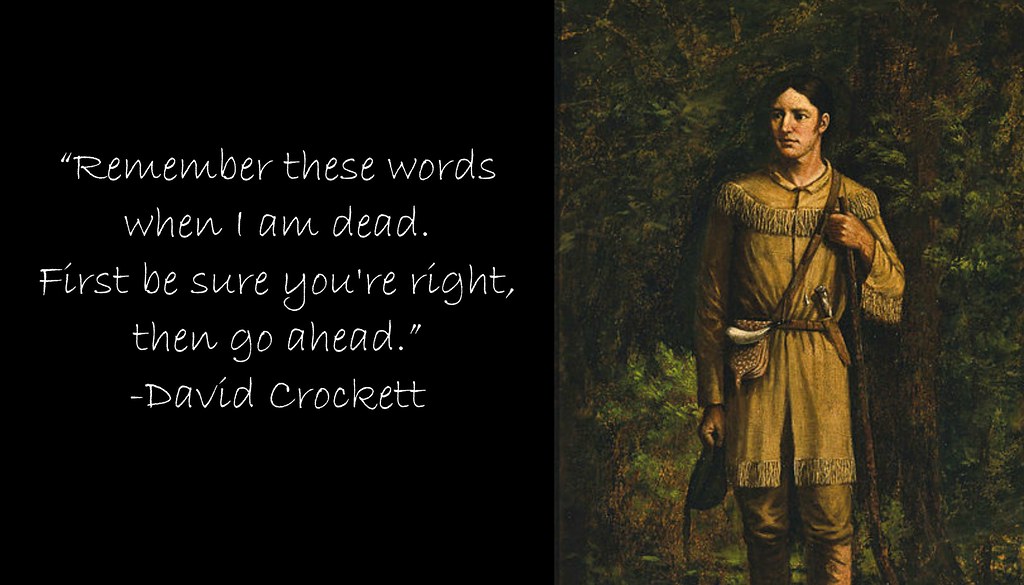
Davy Crockett was an American solider, politician, and famous frontiersman. He was born on August 17, 1786 in Greene County, Tennessee. His parents were pioneers who moved around a lot and had a big family. Davy Crockett was one of nine children and received very little formal education beyond 100 days of tutoring. Most of what he knew, Crockett learned from spending time out on the frontier, and those skills served him well throughout much of his life.

Early Life

Davy Crockett learned how to use a rifle at the age of 8 years old from his father and accompanied his older brothers on hunting trips. This allowed him to learn the skills he would need to survive just a few years later. At the age of 13, his father insisted he attend formal education. However, Crockett got into a fight with a bully and was scared to go back afterward for fear of reprisal and punishment. He was also afraid to go home, so he ran away and lived on his own in the wilderness for the next 2 years.

During this time, Davy Crockett honed his skills as a survivalist and outdoorsman. When he was about to turn 16 years old, he decided to leave his life of solitude return to his family before his sixteenth birthday. He found his family was in debt and helped them work it off. When Crockett was nearing the age of 20, he married Mary Finely and started building a family of his own. Davy and Mary had three children before Mary passed away. Crockett then married Elizabeth Patton and had two more children with her.

Davy Crockett was an accomplished outdoorsman, spending his early teenage years living on his own in the wilderness.
Military Service

Davy Crockett joined the Tennessee state militia in 1813, following the outbreak of the War of 1812. With his extensive outdoors experience, he excelled as a scout under the command of Major John Gibson. During his time stationed in Winchester, Crockett took part in the Battle of Tallushatchee during part of the Creek War. The British had been using the Native Americans to fight a proxy war against the United States, arming them with weapons and promoting anti-American propaganda. The Red Stick Creek was a Native American tribe which had recently attacked the American Fort Mims in Alabama. The Creek warriors were found to be gathered in the village of Tallushatchee.

Under the command of General John Coffee, approximately 2,500 were assembled to attack the Red Stick Creek. Davy Crockett was with them. They encircled the village and sent a small detachment into to try and draw out the native warriors. The trap worked, and the Americans routed the enemy with minimal effort due to the numerical and logistical disparity between the two forces. The Red Stick Creek were heavily outnumbered and were short on gunpowder. The Americans killed approximately 180 Creek warriors while suffering 5 dead and 41 wounded. The Creek War occurred concurrently with the War of 1812, as both conflicts coinciding with Britain’s goal of trying to destabilize and regain control of their former colonies.

Davy Crockett
Davy Crockett briefly served his country as a public servant in Congress.
Political Career

Davy Crockett served as a politician in a number of different offices after he returned home from his militia service in 1815. He was a member of the Tennessee State House of Representatives from 1821-1823. Later, he ran for a seat in the U.S. Congress in 1825, but lost his election. Nevertheless, he was elected to the U.S. House of Representatives in 1826. His reputation as an experienced frontiersman was noted as being crucial to his success. He stayed in the U.S. Congress for some time, winning and losing multiple elections. After he lost a bid for re-election in 1835, he decided to leave politics and join the Texas Revolution where he felt his skillset would be better utilized.

Crockett’s Final Stand and Legacy

Davy Crockett arrived in Nacogdoches, Texas during January of 1836 during the midst of the Texas War of Independence. He was sworn into service by the Provisional Government of Texas and sent off to be stationed at the Alamo. He arrived at the Alamo in February, just in time to take part in the infamous last stand. On February 23, Santa Anna led an estimated force of 1,800-6,000 Mexican troops to attack the Alamo. Davy Crockett and few hundred defenders held the fortress for 13 days before finally falling on March 6. Their sacrifice emboldened many others to join the Texian Army and deliver a crippling blow to the Mexican Army at the Battle of San Jacinto a month later, ending the war in victory.

It is believed Crockett died during the battle, but there is some debate that he may have been captured and executed afterwards. Regardless, Davy Crockett was an extraordinary man and a hero who has inspired legends and folktales for generations after his death. From his early days, living on his own in the wilderness as a teenager; to his time building a large family legacy; to his days serving his country on the frontlines and later in the halls of Congress; and all the way to his valiant last stand against an unstoppable foe, the life Davy Crockett lived is an incredible inspiration to us all to be the best versions of ourselves and to never believe there is any obstacle we cannot endure.


Creative Commons License

All posts by The Pen and Sword are licensed under a Creative Commons Attribution-NonCommercial-NoDerivatives 4.0 International License.

Righteous Fire: A Haiku Series

Recently, I have been interested in learning more about the life and career of Ronald Reagan. He was a political outsider who came into office as the United States was reeling from the consequences of bad policy under Jimmy Carter. As I was reading through some of his famous speeches and quotes, one line in particular struck me with a chord of inspiration.

“When you can’t make them see the light, make them feel the heat.” – Ronald Reagan

This haiku series starts with a contemplation on the exponential impact we can have on the world by being a positive influence on a even a single person, as that single person will then go out to have a positive impact on several others in their life, and so on and so forth. Then, the series transitions into the futility of trying to reach those lost souls who do not want to be found and have fully embraced the darkness in their hearts. Fighting them directly may be exactly what the want and lead one to fall into their trap. For the sake of our descendants and the world they will inherit, we must be strong enough to withstand the attacks of the wicked until they are weakened from their own fatigue. At that moment, when they have made themselves vulnerable, we strike with speed and precision to end the strife once and for all, restoring peace to our lives.


Righteous Fire
He who saves one life
Saves a thousand hopeless souls
And changes the world
Yet not all will come
They who choose not to be saved
Loathing those who do
Clawing at our backs
Craven souls whose hearts set still
Gnawing at our souls
We must be a shield
Too strong for malice to break
Wearing down their ire
Protecting the light
Standing firm against shadow
Never giving in
And when our time comes
We cease the moment of truth
Stirking out with flame
When they see not light
Darkness fills their empty eyes
Let them feel the heat
Righteous fire burns hot
And blinds the creature of night
Dawning a new day

Creative Commons License

All posts by The Pen and Sword are licensed under a Creative Commons Attribution-NonCommercial-NoDerivatives 4.0 International License.
Historic Events: The Battle of Iwo Jima

The Battle of Iwo Jima was a major engagement between the United States of America and the Empire of Japan during the Pacific War of World War II. Major combat operations lasted from February 19 – March 16, 1945 with some Japanese forces maintaining resistance on the island all the way into 1949. The battle stands out in history as an extraordinary example of the bravery, tenacity, cunning, and determination of both American and Japanese warriors. The Battle of Iwo Jima holds a particularly special place in the culture and history of the United States Marine Corps.

Prelude to the Landing

General Kuribayashi Tadamichi was in charge of the island’s defense and instructed his forces to change their strategy after studying reports from previous engagements with the Americans and taking stock of his limited resources. The Japanese had lost a significant amount of their air power and could not rely upon close air support for their ground forces. Kuribayashi also did not see the utility of banzai charges and felt his forces would be better off digging into fortified positions and waiting for the Americans to advance under heavy fire, although some banzai charges did still occur. Artillery positions were camouflaged and hidden from U.S. aerial reconnaissance and bombardment. Japanese infantry also dug deep into foxholes, building underground tunnels with stockpiles of ammunition and food for a protracted engagement. The also used the natural tunnel networks of caves in the mountains to establish a dense net of heavily fortified, heavily fortified, and virtually invisible positions with which to rain fire down upon the invaders.

Tadamichi Kuribayashi
General Tadamichi Kuribayashi of the Imperial Japanese Army.

Army General Douglas MacArthur and Admiral Charles Nimitz disagreed about the strategy to be used in the Pacific War. MacArthur emphasized the importance of regaining control over the Philippines and expelling the Japanese occupation there, while Nimitz felt it would be more important to launch an island-hopping campaign to root out Japan’s small island fortifications in the Pacific. Ultimately, it was decided both plans would be necessary to put the U.S. within striking distance of the Japanese mainland.

The U.S. Fifth Fleet was dispatched to Iwo Jima under the command of Admiral Raymond A. Spruance to facilitate the amphibious landing, air support, and logistics for the invasion. The Fifth Fleet carried with it the V Amphibious Corps led by Major General Harry Schmidt; an expeditionary task force led by General Holland M. Smith; the U.S. Army’s 147th infantry regiment; as well as the 3rd, 4th, and 5th Marine Divisions. In total, approximately 60,000 U.S. servicemen were brought to the battle against 21,000 Japanese troops.

Raymond A. Spruance
Admiral Raymond A. Spruance of the U.S. Navy.

Iwo Jima was subjected to an extensive bombing campaign for months leading up to the invasion. B-24 bombers from the 7th Air Force launched raids against the island, along with a final 3-day naval bombardment just before the landing which was intended to last 10 days, but was cut short due to ammo and weather concerns. Bombardment of the island – intended to soften up the Japanese fortifications prior to the landing – was started all the way back in June of the previous year. However, due to the use of camouflage and the natural cover of the mountains, this bombardment had very little effect the Japanese defenders. Most of the fighting on the island would ultimately be decided by the Marines on the ground launching frontal assaults on fortified positions under artillery fire.

Troops Begin to Land

When the Americans began landing, they were impeded by the soft, volcanic stand on the shores of Iwo Jima. The Japanese forces waited to open fire until the Americans came in closer and began to experience difficulties moving in the sand. Vehicles and men alike got stuck, with pile-ups forming on the beach. The Americans had assumed their bombardment was effective at first, facing little to no resistance as they struggled with the sand. However, this was a trap. The battle began in earnest when the Japanese defenders opened fire.

USS New York
The USS New York bombarding the island of Iwo Jima.

The Americans suffered heavy casualties securing the beaches during the initial landing due to the inability of their armored vehicles to get into the action and the need for infantry forces to charge headfirst into Japanese positions and root out heavily defended foxholes one by one. Given the terrain and the well-hidden positions of the Japanese forces, close fire support was ineffective, despite the Americans having established air superiority in the theater. The Americans and Japanese both battled tooth and nail against one another in a harsh battle of attrition, but the Americans had the advantage of blockading the island with over 450 ships supporting their ground forces, as well as the use of flamethrowers burning out the entrenched positions of the Japanese defenders.

General Kuribayashi knew it was only a matter of time before the island fell and there was no way to effectively dispel the invading American forces. As such, he focused his strategy on delaying the Americans as long as possible while inflicting maximum casualties. The Japanese dug in line after line of heavily armed and fortified positions which needed to be fought head-on one after the other. Even after securing the Japanese strongholds at the Quarry and Mount Suribachi on the first day of the battle, there was still a substantial amount of work to be done. The battle waged on for almost a month, with each day being a ravenous ordeal for both sides.

U.S. Marine with flamethrower
Flamethrowers were critical to the success of the U.S. Marines at the Battle of Iwo Jima.

The Americans and Japanese both fought to no end, against immense pressures, pushing each other to the limits of human bravery. The Japanese refused to give up even an inch of land, making the Americans pay for every step with relentless resistance. In turn, the Americans charged position after position under heavy fire, never turning back in the face of certain death. Neither force allowed themselves to give into the futility of their situation. The Japanese warriors knew there was no escape and no hope of victory. The American warriors knew there was no easy or clever way around the meat grinder they needed to clear. The brave souls who stood against certain death on both sides in the Battle of Iwo Jima embodied the human spirit of bravery, courage, honor, and commitment.

Aftermath and Legacy

By the end of the battle, an estimated 17,000 Japanese warriors had perished of the original 21,000 defenders. General Kuribayashi took his own life near the end of the battle, preferring death to capture. The rest were either taken prisoner or went into hiding. Those who evaded capture never gave in and continued to resist the Americans for years after the island fell. Their determination in the face of certain defeat and an overwhelming enemy force provides inspiration to us all on the importance of keeping heart and never wavering in the face of an invading force.

Captured Japanese Position
U.S. Marines fought through mountain caves, underground tunnels, and through all manners of difficult terrain to capture the island of Iwo Jima.

The Americans suffered 27,000 casualties among the 110,000 brave souls sent into the fray. There were 22 Medals of Honor awarded to U.S. Marines and five to U.S. Navy sailors after the battle. The brave American men who stormed into the face of certain death with an unflinching sense of bravery and honor rings across the halls of history. Their legend lives on for eternity and speaks to the importance of maintaining courage, certainty, and our force of will during the hardest of times. They remind us to never give up and never give in. Not until our task is done.

As Admiral Nimitz said of their historic deeds: “Among the Americans who served on Iwo Island, uncommon valor was a common virtue.” The image of U.S. Marines raising the American Flag atop Mount Suribachi became an icon of endurance and unending bravery. Both sides in the conflict fought valiantly and with tremendous honor. The Battle of Iwo Jima serves as an example of careful planning, strategy, cunning, bravery, honor, determination, and many more values. It is one of the finest moments in the history of both American and Japanese warriors.


Creative Commons License

All posts by The Pen and Sword are licensed under a Creative Commons Attribution-NonCommercial-NoDerivatives 4.0 International License.

Iconic Weapons: Greek Fire

Greek Fire – also referred to as “Roman Fire,” “Liquid Fire,” and “Byzantine Fire” – was an incendiary weapon used by the Byzantine Empire in the 7th Century. It was a flammable compound made from of unknown mixture of materials which is still not verified to this day and perhaps never will be. The recipe for Greek Fire was a closely guarded secret, which was both part of the key to its success, as well as the reason for its eventual loss from historical record.

Greek Fire was invented by Callinicus Of Heliopolis sometime after he fled to Constantinople to escape the Muslim conquest of Syria. As a Jew, Callinicus knew he would be killed under Arab rule and that the Byzantine capital he fled to would eventually fall if he did not act. So, he invented the Greek Fire to help defend against future invasions, and to that end, he was highly successful.

Greek Fire gun
This mechanism was most commonly used to spray Greek Fire during ship-to-ship naval combat.
Mysterious Composition

Greek Fire is theorized to have been a mixture of petroleum or naphtha, as well as potentially quicklime, sulphur, resin, and/or potassium nitrate. The Greek Fire was either launched from a bronze, syringe-like device known as a “siphon” which propelled the liquid under pressure – a form of ancient flame thrower – or was filled into a clay grenade and thrown or catapulted. The liquid would spontaneously combust and could not be extinguished with water. It is said a mixture of sand and aged urine was needed to extinguish the Greek Fire. This made it incredibly effective against ships in naval warfare and on land against invaders or defenders when was from or against fortifications.

The protection of the secret formula to create and extinguish Greek Fire made it incredibly effective in battle. None who encountered it had any idea how to defend against it. Many attempts were made to counter Greek Fire, such as covering ships in water-soaked hides. However, as mentioned, water did not extinguish Greek Fire, much to the confusion of all those unfortunate to encounter it. Also, the syringe-like mechanisms were also reportedly difficult to operate, as even when Greek Fire armaments were captured in a usable state, no forces without the training to operate them were ever able to understand how to turn the Greek Fire against the Byzantines.

Greek Fire grenades
Greek Fire could also be thrown or launched in the form of a grenade using clay pots.

Greek Fire was also an effective psychological weapon due not only to its incredible lethality and ability to override all attempted defenses, but also due to the loud noise and large blooms of smoke it is said to have generated. The sound and sight of Greek Fire was said to evoke the presence of a dragon. It also destroyed anything it touched due to the presence formula needed to create a counter-mixture which could douse the flames. Any ship, fortress, or person caught in Greek Fire could not be saved. Death and total destruction were a certainty.

A Secret Weapon

The legendary Greek Fire was used to great effect in many battles. During the First and Second Arab Sieges of Constantinople in the years 674 and 717, respectively, the Greek Fire allowed the Byzantines to withstand overwhelming odds and push back the Muslim fleet time and time again. Despite being heavily outnumbered, the Greek Fire was a game-changer while the Byzantines possessed it. It was terrifyingly effective and psychologically intimidating. Some historians credit Greek Fire with inflicting such heavy casualties on the Muslim invaders that it was the single-most important factor which prevented a larger invasion of Europe.

Greek Fire Instructional Diagram
Greek Fire was originally used only in naval combat, but was later adapted for land warfare.

However, Greek Fire was such a closely-guarded secret that eventually the Byzantines seem to have forgotten how to use it. What some may consider to have been the greatest strength of Greek Fire – how secretive its creation process was – eventually became its downfall. In ancient times, before the age of the printing press and Internet archives, choosing not to proliferate the creation process of the mixture eventually meant that everyone who knew how to create it was dead and they did not pass on the knowledge in any form.

Divine Intervention

Constantinople would fall, but the sacrifice the city’s defenders who fought so valiantly to protect it would not be in vein. Due to the massive casualties inflicted by the Byzantines with their neigh-unstoppable and nightmare-inducing Greek Fire, a greater darkness which threatened to consume the world was staved off and pushed back. Greek Fire was pivotal in Constantinople becoming known as “God’s protected city” before its eventual fall, and the casualties inflicted taking it ensured the rest of Christendom was spared oblivion. Greek Fire might just as well be known as Angel Fire, coming into the hands of the people who needed it most at the time and place where it could do the most good.

And then, due to the highly destructive nature of the weapon, after it had served its purpose on Earth, the mythical weapon was lost to history.

Significance and Legacy

Greek Fire is an interesting piece of history with many lessons derived from its story. Callinicus was an architect rather than an alchemist, yet used his knowledge of mixing materials to create a weapon unlike any the world had ever seen. This invention was so powerful, it was instrumental in exhausting the dark forces assailed against the Earth to the point where the spread of wickedness was abated and peace restored. The story also speaks to the importance of sacrifice, for even though Constantinople eventually fell, the efforts of its people were not in vein. The novelty of Greek Fire also speaks to the importance of keeping our greatest boons protected from the hands of our enemies, and its loss serves as a cautionary tale of the dangers of too much secrecy and the importance of passing knowledge on before it is lost.


Creative Commons License

All posts by The Pen and Sword are licensed under a Creative Commons Attribution-NonCommercial-NoDerivatives 4.0 International License.