I have finally made it to 100 posts on the Pensive Warrior, and it is a fitting time for the occasion. I wonder if it is just a coincidence this milestone was met with the new year just around the corner. I always seem to be finishing or starting something big just as the year comes to an end. Perhaps it is only natural that a sense of finality hangs in the air come the new year, as it is a symbolic time for ends and beginnings.
I am quite pleased with how this blog has come along. I have been quite busy over the past few months and have struggled to put out content as consistently as I have before. However, that is a good thing for me, as it is always a blessing to be busy. Also, if I were not so busy, my 100th post would not have come right on the eve of the new year! And if that had not occurred, I might not have been in the right mood or mind for such a post. As such, I think things worked out just as they should’ve, and I certainly wouldn’t have it any other way.
The Earliest Days
When I first started this blog, I was an unbeliever, but also an empiricist. I did not have faith in God because He had never proven His existence to me. However, I did believe in empirical evidence; pattern recognition. I still do. Thus, I always recognized the Bible would not be something people held to be true across time and space; across cataclysms that defined separate eras where culture was disconnected from one end to the other if there was not something truthful to it. If it were untrue – nothing more than a creation of man as an unbeliever would typically assert – then it would have fallen out of favor across cultures as all man-made philosophies do that clash with objective truth. That which is true, or hints at the truth somehow, stands the test of time.
And having been familiar with Biblical theology from a young age, as well as studying the theology of other major religions to compare and contrast them, I always maintained I agreed with the teachings of the Bible since they stand up to the scrutiny of a natural-law perspective where others don’t. And even when I was an unbeliever, I maintained I wouldn’t want to live in a world filled with people who don’t believe in or follow God. Morality cannot exist a priori – meaning it cannot be deductive and thus requires a lawgiver, lest morality devolve into a matter of opinion and defeat the purpose of its existence. Thus, a world where belief in a lawgiver such as God is lacking – a world of unbelief – invariably becomes a world characterized by a ruthless disregard for all that is good. History shows this play out time and time again in a neverending repeat of the story of Sodom and Gomorrah (e.g., Ancient Persia, Ancient Rome, Revolutionary France, Nazi Germany, the Soviet Union, Communist China, etc.).
With my background in psychology, I understand the concept of socialization. That is, people learn and acquire behaviors, attitudes, and beliefs from those they socialize with. We model ourselves after the models we surround ourselves with, or are surrounded by. In wanting to ensure I socialized others around me to be and do something valuable with the talents they possess, I sought to use my talent for writing to create something both enjoyable and valuable for others pro bono. That way, through no expectation of anything in return, I might give something out to the world worth giving. Somewhere along the way, I discovered my faith in God after delving deeper into His Word and establishing a relationship with Him. Since then, my desire to give something worthwhile to the world with the gift of writing God gave me has only grown. To that end, I have no plans to cease.
Where Do We Go From Here?
Moving forward, I do expect my writing career to get even busier. Nevertheless, I do still plan to post here indefinitely and as often as possible. Though, whereas I was able to post every week consistently in the past, I doubt I will be able to continue doing so without changing things a bit. I have been hesitant to post poetry regularly in the past because I do still enjoy posting articles about history, important figures, and other ideas; and I didn’t want to seem repetitive. I posted poetry often when I ran out of time because it is quick and easy to produce.
From now on, I will seek to post something once a week as intended. However, I will not be shy about posting poetry multiple weeks in a row anymore. I do want to keep original content posted regularly on this blog, and that means I will have to scale back on the articles I post here as I take on other writing responsibilities in my career. I think I shall focus more on hybrid article-poems like this blog post I wrote about the actions of John Paul Jones at the Battle of Flamborough Head. I enjoyed the style of briefly covering the events and then transitioning into a poem about them. This combined the quick turnaround of poetry-focused content with the intrigue of history and tradition.
With that said, here’s a poem I wrote contemplating the future and how we keep moving forward day by day in spite of great darkness all around us.
Every day tests our will and heart
Our will to survive and push on
And the heart's resistance to pain
We lie in longing for the dawn
What is it that drives us onward?
To reach for new heights never reached?
That urge to always be greater
And breach all those bounds not yet breached
It is the Lord our God in us
Working through us with His Spirit
To live the life we were made for
A life defying death's limit
Christmas is many things to many people, with an origin story not many know. As I know it, Christmas is the time we celebrate the birth of Jesus (Yeshua) the man whom the Angel of the Lord manifested for the eventual purpose of shedding His innocent blood on the earth for the atonement of sins. With the eternal innocent blood of the God-man, people from all over the earth have a viable sin offering to call upon into eternity. The act of the Son of Man having been born to die for others embodies the act of selfless gift-giving. In turn, we are called to emulate this act through our own selfless giving of gifts to others.
God calls upon us
To live our lives as He would
To be holy men
For what is life made?
What is the purpose of man?
If not to live well?
And how to live well?
What sets man apart from beast?
What makes a good life?
To give of oneself
Without wanting in return
This does make a man
For a man does give
He gives all he has to give
So others may have
As God gave His Son
To a people unworthy
So we may be saved
So too do we give
Without wanting in return
On this Christmas day
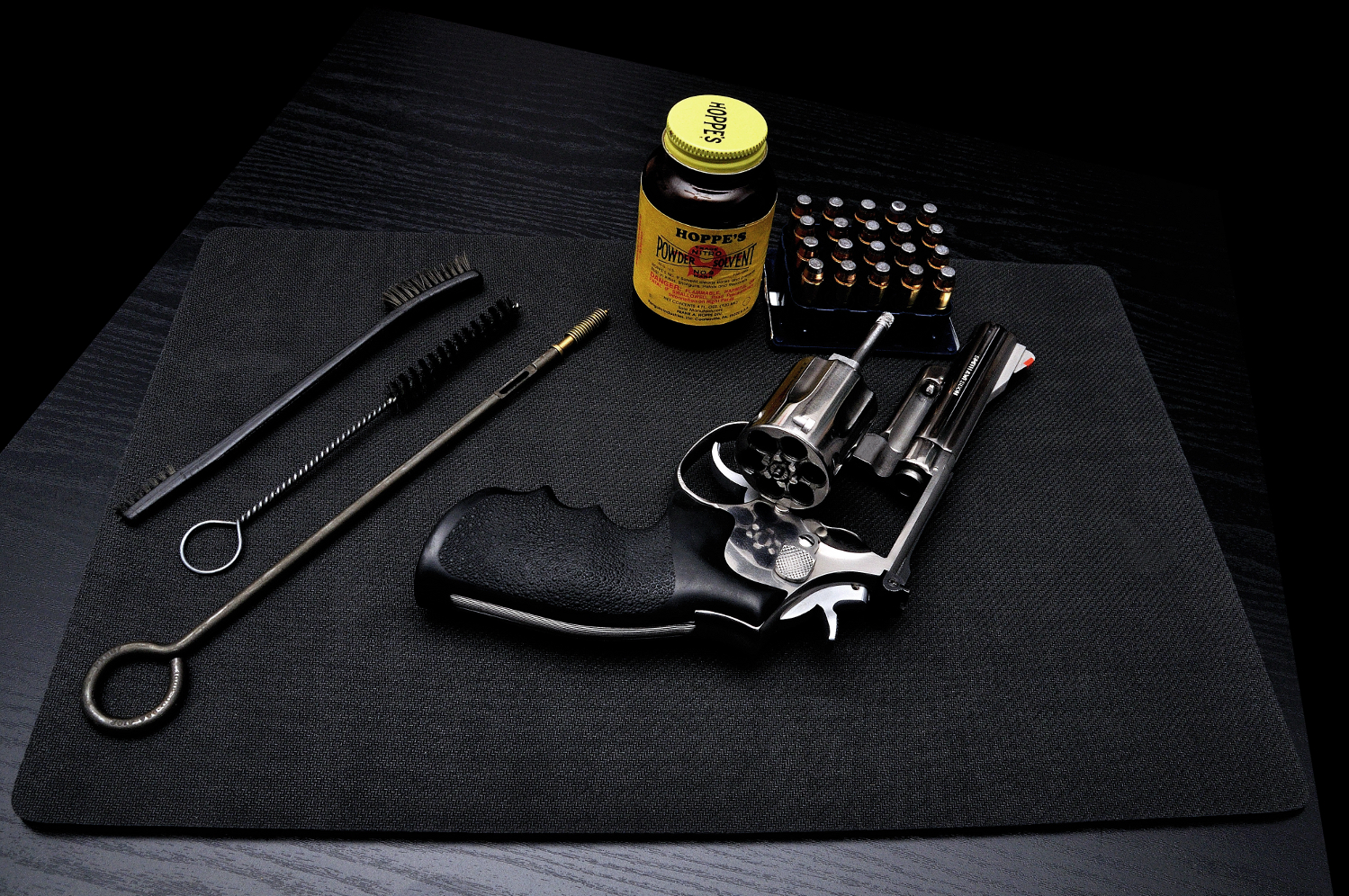
Everyone knows it is essential to keep weapons clean and well-maintained. Saying it can seem like beating a dead horse, so to speak. Although, there are some nuances that bear discussing and some critical points which may be lesser known. I know for myself, cleaning and maintaining the weapons I own is something that can be easy to overlook. If for no other reason, it will be a good reminder to myself of the importance!
Firearms
As we all know, when a firearm is discharged, carbon deposits build up inside the gun. Those deposits will harden and impede the function of the gun. As such, it is necessary to take the gun apart and remove the deposits with a solvent. It also helps to lubricate the moving parts with oil where there is metal-on-metal contact. This will make the parts last longer by preventing wear and tear. Oil also protects the metal from corrosion and rust. These are all the obvious reasons to keep a gun clean and well-maintained.
Cleaning and maintaining a firearm can be seen as a chore. Thus, it fosters a certain level of discipline, as well as respect for one’s equipment. If you have to actively take care of something, you will come to value it more so than something which does not require care. This transfers to other areas of life and makes one a more responsible individual when the performance of the chore becomes habitual. Also, it may be a lifesaver one day to know how to clean and maintain one’s own weapons rather than relying on someone else for that simple task.
Knives
It is true that one should not bring a “knife to a gunfight,” so to speak. After all, combatants armed with only edged weapons generally do not perform so well against combatants armed with ranged weapons, barring a few exceptions. What are those exceptions? Well, close-quarters situations, of course. When grappling with an opponent, a firearm can be a much less reliable weapon compared to a short knife.
Thus, even when carrying a firearm, a knife is important as well. And all but the most high-end steel knives have to be cleaned and maintained. Some modern steels are very corrosion-resistant, although most steel still needs to be protected from the elements. A wet knife can become a rusty knife, and a rusty knife can be very brittle. Therefore, knives should be kept clean, dry, and lightly oiled.
Of course, sharp knives are safe knives. Dull knives will require more force to use and thus are more likely to drag and slip during a cut. If that happens, you may cut yourself, something, or someone else you did not intend to. Some knives are easier to sharpen than others, although knives that are easier to sharpen generally do not hold an edge as well. Thus, knives that are harder to sharpen generally need less sharpening. This can be a bonus to longevity because sharpening removes metal from the blade and thus reduces its lifespan. Also, if it is possible to tone the edge of a knife instead of sharpening it, this may increase the lifespan. Though sometimes sharpening is necessary.
A few last thoughts. Folding knives require more maintenance than fixed-blade knives. This is because they have more parts to their construction and they have moving parts. Folding knives may have to be taken apart o be cleaned and maintained. The benefit of a folding knife is obviously its lack of a separate sheath, as the folding knife folds in on itself. It is one piece, which is very convenient. Though this convenience tends to be the only advantage, coming at the cost of reliability and functionality in every other respect.
Final Thoughts
When I first started carrying weapons for self-defense years ago, I viewed having to clean and maintain them as a chore. It was something I knew I needed to do, but I was not fond of it. Recently though, the activity has grown on me. So, perhaps it is an acquired taste. Although I also suspect I did not enjoy cleaning and maintaining weapons when I was still learning how to do it and I had to often stop what I was doing to check reference materials, ensuring I was doing everything correctly. Now that the process has become second nature to me, I do not mind it so much. In fact, it can be quite enjoyable.
So, if you are the kind of person who does not like to clean your guns or whatever you carry for protection, I would just say to not give up on it. You have to do it anyway, and it pays to know how to do it yourself. Also, it may just grow on you too.
Happy Thanksgiving, everyone! Every day we still live is a blessing from the Lord. No matter the hardships we endure. No matter the challenges we struggle with. We always have Him to thank for delivering us through every trial. May all those who still draw breath give thanks to God for this blessed day.
We give thanks to God Almighty
He delivers us day by day
Each day a chance to be holy
Every day a chance to belay
When times get rough and we falter
The Lord tests our will to go on
Strife brings us back to God's altar
Those who still live are not yet gone
For hope is boundless in supply
Always there for those who seek it
Never does hope run short or dry
If we keep faith, the Lord won't quit
Happy Thanksgiving to us all
Let all rejoice and be grateful
For the grace upon which we call
Every day we remain faithful
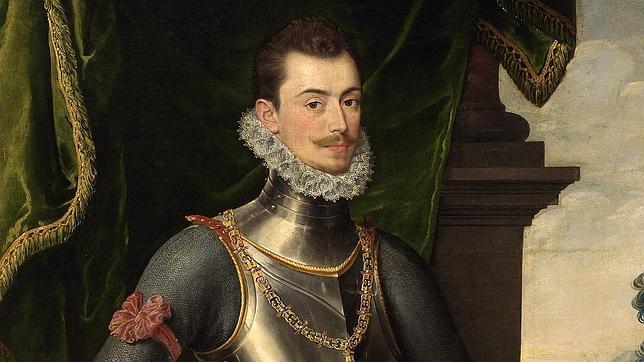
This is a ballad I am working on to tell the tale of John of Austria (1547-1578), also known as Don Juan de Austria. Born out of wedlock, he was the son of Holy Roman Emperor Charles V and the half-brother of King Phillip II of Spain. He was a brave and enduring man, scorned by many of his family and peers who were suspicious of him due to his illegitimate origins. He was raised as “Jerónimo” first by Francisco and Ana Massi, then by Luis and Doña Quijada. When he returned to his family of birth, he was denied his family name and instead given the title Don Juan de Austria.
His father wanted him to enter into service in the church, but Don Juan de Austria would find himself drawn to the life of a soldier. When in his half-brother’s service, he was often sent away and put under the command of others loyal to the king. Philip distrusted his brother, Juan, seemingly due to jealousy. Don Juan de Austria was described as very charming and athletic, making him popular with many. Despite Phillip’s attempts to stop his rise to prominence, Don Juan de Austria would be trusted with leading the Holy League at the Battle of Lepanto (1571).
An illigitimate union
A son born and hidden away
Concieved in shame, raised in secret
A knight to be who'll save the day
His father's wish to join the church
Guided his youth and early trends
But a soldier rises within
A hero and leader of men
Brought back into the family
Recognized as a bastard son
Denied his name, given one new
Don Juan de Austria has come
Eager to prove and make his name
A young lad full of strength and cheer
Keen to rise and stand in the light
And save the world from endless fear
Heretics raze and raid unhinged
Evil unleashed across the land
Knights of God called to meet the dark
Yet few there are willing to stand
The nations rage against their kin
Christendom does stand divided
Protestant and Catholic raise fists
Their true foes roaming unfettered

Yet men of honor still do rise
To stand against the dark they loath
Hence came Don Juan to lift his name
And meet the dark where it goeth
So he went without Phillip's faith
Though faith of man he needed not
For the Lord on high walked with him
To see him through this holy deed
Slavers spread fear across the land
The Ottoman horde comes anew
Terror rises, its reach unchecked
Consuming all where they pass through
A Holy Leage dawns upon them
A budding young lad at its head
The bastard son whose rise was scoffed
Yet whose mettle proved with blood shed
The dark horde raids and pillages
Its thirst for blood a ceaseless arc
The weak fall prey to their hunger
Those unprepared to face the dark
Brave warriors of Christendom
From lands on earth, sent by Heaven
The seas ripe to be filled with blood
The blood of the guilty beckons
Men who would have sooner crossed blades
Now wield as one the sword of God
The Holy Leageu does rise up strong
To show the world His iron rod
For God wills His people be free
Free from the chains of any man
And so His people raise their swords
As one against the Ottaman
The batsard son leads them with tact
Outnumbered, yes, but not outgunned
One by one, the enemy razed
Men of God are never outdone
Twelve thousand freed from chains of man
Dark foes of the Lord driven out
Righteous men proving once again
God's will be done, without a doubt
The story of Wojtek the Bear was such an inspiring and wholesome story that I felt it only fitting to add a poetry post on the topic. Seeing as Wojtek was a soldier, I felt it most fitting to write a haiku series. Since haiku was developed by the warrior samurai as a form of meditation before battle, I find it particularly suitable for writing about historical warriors.
Happy warrior
The soldier bear named Wojtek
Brave as any man
Raised among humans
Thinking he was a man too
Living among them
Fearsome and gentle
A fuzzy bundle of joy
Most true to his name
When duty called him
He answered it without fear
No hesitation
He served with the men
A miracle it may be
Fighting side-by-side
Stronger than a horse
As loyal as any dog
Sly as any cat
Wojtek was his name
The bear who fought as a man
Happy warrior
A few weeks ago, I was terribly busy over the weekend and unable to post in time. The article I wrote was quite long and took a while to complete. I decided to make an extra pot this week to make up for that. So, here is a brief haiku series contemplating the changing of the seasons to the colder part of the year.
The cold weather brings with it some challenges which make life just a little less comfortable in some ways, but which are a blessing in others. It all depends on whether we choose to see the chilliness as an inconvenience with no benefit or as a burden that is harsh, yet rewarding. The cold weather to me is like the quenching of a blade during heat treatment, strengthening the steel with rapid cooling.
Some flee from the cold
Seeking to evade its touch
Fearful of its gifts
As warmth falls away
Longing makes the heart grow fond
The cold reminds us
A gift in disguise
Teaching us to huddle close
Embrace those we love
In the cold we stand
Together, and not alone
Lest we freeze away
To live for ourselves
We live not a life of worth
If not for others
The cold brings us close
Reminding us what matters
Never to forget
A stout heart does know
As iron sharpens iron
So too does the cold
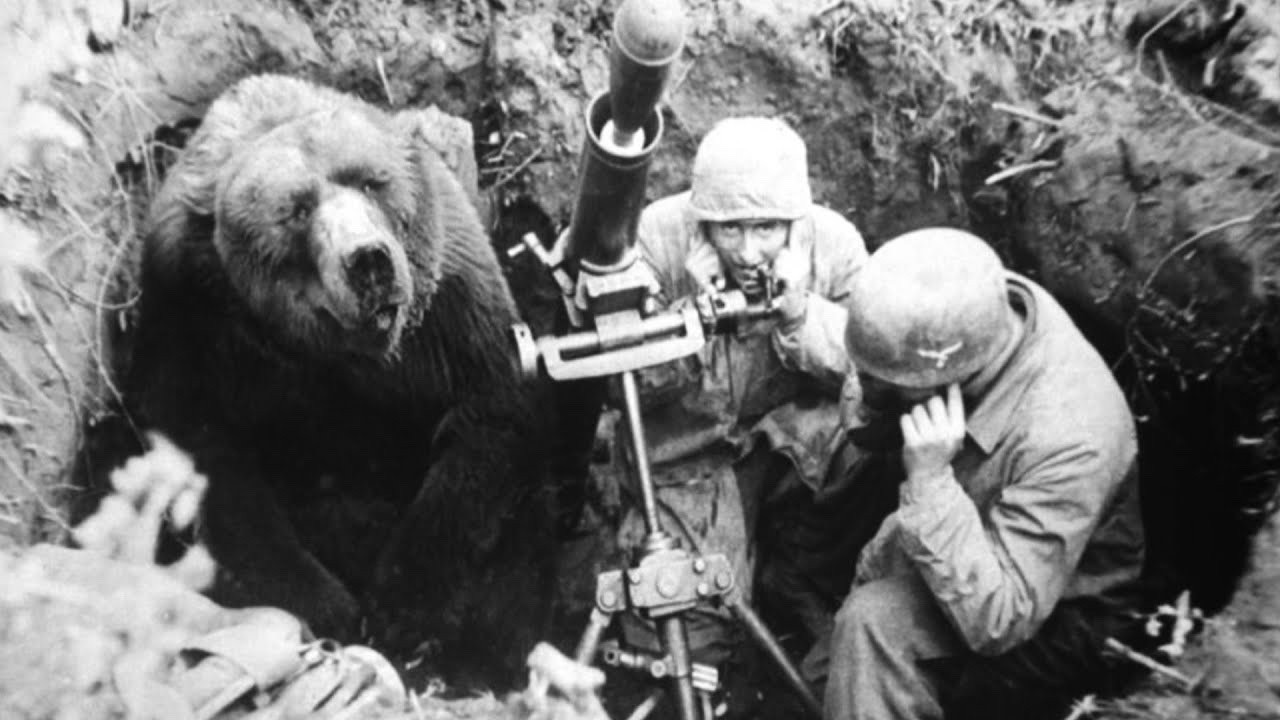
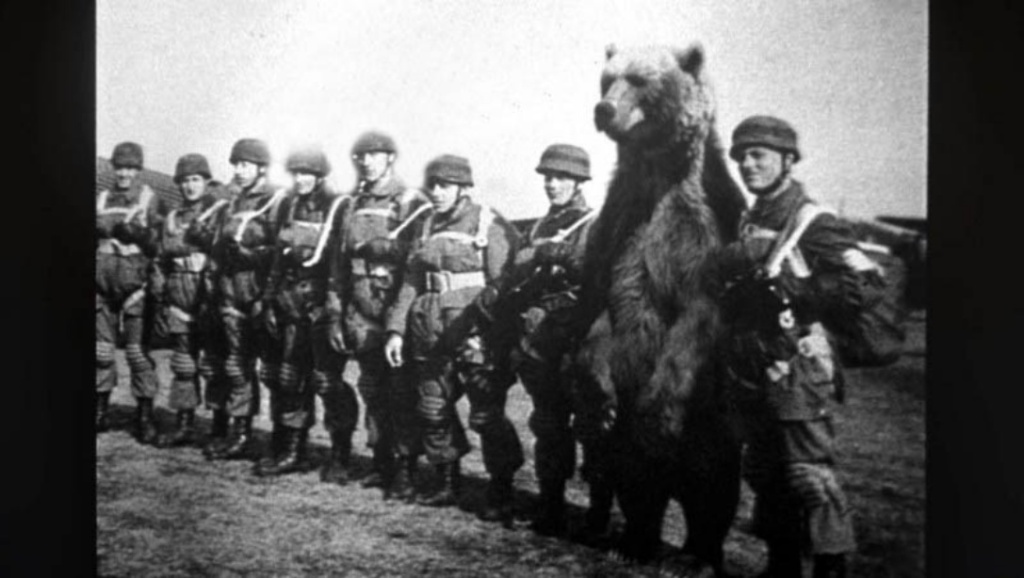
Wojtek – meaning “Happy Warrior” in Polish – was a Syrian brown bear who was enlisted in the Polish Army during the Second World War. He was the only non-human to ever receive an enlisted position with an official rank and payroll in a human military, at least during WWII, and potentially ever. Wojtek was raised by humans and thought he was a human himself. He is perhaps most famous for serving in the Battle of Monte Cassino where he helped carry artillery shells from supply trucks to the front lines. Wojtek achieved the rank of corporal before retiring from military service.
Early Life
Following the release of Polish prisoners-of-war from Soviet gulags, British command began raising the men into an army in Iran. During this time, Wojtek was acquired by “Anders’ Army” and became a mascot for the 22nd Artillery Support Company. During his youth, he took on many of the behaviors of the men. He wrestled and played soccer, marched on his hind legs, and learned to salute on command. Wojtek loved smoking cigarettes, drinking coffee and beer, and eating the oranges the men threw for practice throwing grenades.
Wojtek copied the behavior of the men of the 22nd and would march, stand at attention, and salute with them.
Wojtek also loved to sneak into the communal showers to bathe himself and keep cool. He learned how to break into the locked showers and turn the water on himself. This caused water shortages at times, as he would take long showers. However, this would turn out to be a blessing in disguise as Wojtek once reportedly captured an enemy spy hiding in the showers. Wojtek snuck into the communal showers where he found the spy and began roaring until others came to see what the commotion was about. The spy was too scared to move for fear of the bear and was then taken into custody.
Military Career
When the 22nd was leaving the Middle East to be deployed in Europe, they attempted to take Wojtek with them. However, the British ship they were boarding did not allow animal mascots or pets aboard. To circumvent this regulation, Wojtek was officially enlisted as a private with the 22nd. This allowed him to stay with the men who had raised him a bit longer. He would also prove to be an asset rather than a liability, copying the activities he saw the men performing. This would be most beneficial during the Battle of Monte Cassino.
In 1944, the Allies were advancing toward Rome in Italy. The Italians had already surrendered and were now aiding the Allied advance through their territory. The Germans, however, continued to fight. German troops stationed across Italy put up resistance to the Allies, even as their Italian counterparts laid down their weapons. The Polish II Corps was part of the assault on Monte Cassino which was suspected to be an observation post used by the Germans to coordinate their artillery strikes in the area.
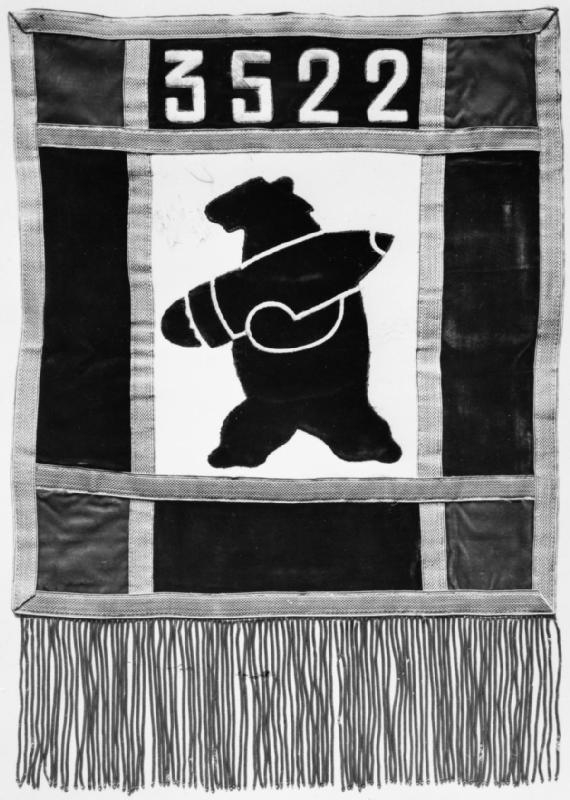
The official emblem of the 22nd Artillery Support Company after the Battle of Monte Cassino.
The 22nd Artillery Support Company was resupplying artillery guns from their supply trucks throughout the battle, a task which required men to carry crates of artillery shells from the trucks to the front line by hand. Usually, four men were required to carry a single crate, as they were extremely heavy. Wojtek saw the men performing this task and copied what they were doing. He helped to carry the crates alongside them, walking on his hind legs. Wojtek was able to carry the heavy crates all by himself, taking a significant burden off the men of the 22nd.
The story of Wojtek’s role in the battle was controversial, as many refused to believe a bear actually helped in such a way. However, there was at least one British soldier who corroborated the report of a bear helping to carry crates of artillery shells. Still, some insist Wojtek only carried empty crates. Nevertheless, Wojtek was promoted to the rank of corporal for his exemplary service in the Battle of Monte Cassino. The 22nd also adopted an image of a bear carrying an artillery shell as their company emblem after the action.
Retirement
Wojtek was retired and sent to Scotland in 1945. He could not go back to Poland as the Russians had taken over the country, and the Polish people feared Wojtek would be used for communist propaganda if he were sent to the land he fought for and represented. He eventually found a home at Edinburgh Zoo in 1947. At first, he was placed with other bears, but this did not work out for Wojtek. He thought he was human and did not have the social skills to be with other bears. So, he lived out the rest of his days in his own personal enclosure.
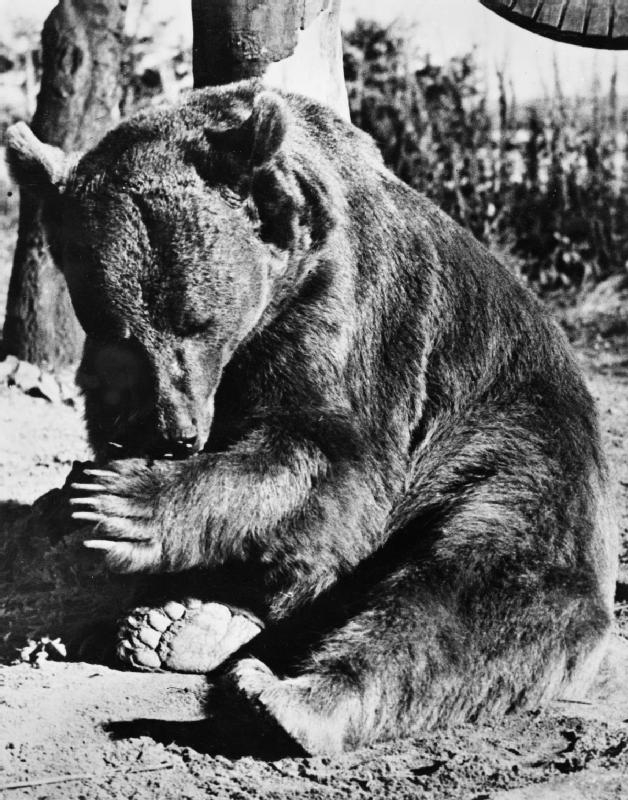
Wojtek in retirment
Men of the 22nd would come to visit Wojtek at the Edinburgh Zoo after the war. They would hop the fence and wrestle with him. Some would also bring him treats of beer and cigarettes. Wojtek lived until the age of 21. He died in December of 1963 from damage to his esophagus, likely from smoking cigarettes. Today, a statue commemorating Wojtek can be found in Edinburgh.
Legacy
There are countless stories of exceptional bravery, honor, and service among human beings, and more than a few such stories featuring animals. Still, most of those involve dogs and horses. It is rare to see a bear find such a place in human history. Wojtek may not have understood the significance of his actions, and may have simply been copying the behavior of the humans he saw around him. Nevertheless, his actions displayed the same dedication as any other man in the 22nd Artillery Support Company, and he will be remembered for his part in the battle of good versus evil.
The book of Deuteronomy is one of the most inspiring and exciting books of the Bible, as it contains so much of the essence of the rest of the Bible all in one book. There is a remembrance of the past, inspiration for the future, and a call to heed what must be done in the present. The previously-stated mitzvot (commandments) are reiterated with a few new additions. It is no wonder the book of Deuteronomy is one of the most oft-cited sources from the American Revolution. Many of the important ideas woven throughout the stories told across the Bible are condensed into the book of Deuteronomy.
Two of my favorite mitzvot from the book of Deuteronomy are “be strong and courageous” and “purge the evil from among you” from verses 31:6 and 13:5, respectively. Verse 31:6 is a commandment not to fear or dread the agents of the Adversary, for they are ultimately powerless against the Lord. It is a commandment relevant to the battles of today and the near future, but more so to the here and now. There are enemies around us always, and it is our responsibility to drive them out. Yet, doing so may be a terrifying prospect. We are reminded not to give ourselves over to fear and to do what must be done with courage. This mitzvah is repeated throughout the Bible.
Verse 13:5 is a commandment to stop evildoers in the community from turning people against the Lord and inciting rebellion against God. It is a commandment to bear in mind for the present, but more so for the future. Once the dust has settled from any great conflict with the forces of evil, darkness will seek to creep into the victor’s camp through subtle subversion. Infiltrators will seek to gain our trust with familiarity and normalization of evil things, and we must be vigilant against such evil. Testing the words, actions, and beliefs of people against the Word of God is the clearest way of discerning who these evildoers are. Where they are found, from there they must be expelled. This mitzvah is also repeated and reiterated consistently throughout the Bible.
The Lord commandeth
To be strong and courageous
Guarding our hearts close against darkness
And giving ourselves not over to fear
For a man of God is not one of faint heart
Nor a man predisposed to defeat and dismay
Nay, a man of God is a man who ceases not
Seizing victory from the hands of every setback
He does this through his courage
And he does this through his perseverance
For the man of God feels fear, but gives himself not
He keeps himself from fear, always
With courage, we may grow strong
Through strength, we will confront evil
By overcoming evil, we set ourselves free
Through true freedom from evil, we find the good
Purge the evil from among you
So the land may start to heal
And the people again may begin to love
Those things which evil steals from us
For those who tolerate evil in their midst
And join themselves to the darkness
Will themselves growing further from God
And closer ever to the Adversary
Flee from evil and from sin
Flee from that which is unholy
For to be holy is to be set apart
And to be set apart is to be set free
The Battle of Leyte Gulf was a major engagement of the Pacific War during World War II which resulted in the Japanese Navy ceasing all offensive operations for the rest of the conflict. From October 23-26, 1944, American, Australian, and Filipino forces battled against the Empire of Japan for control of the Philippines. Their goal was to cut off the Japanese shipping lanes between their colonies and the mainland, depriving the Empire of oil, rubber, and other raw materials needed for the war effort. American General Douglas MacArthur was also determined to make good on his promise to return to the Philippines two years earlier.
Lead Up to the Battle
By this point in the war, the Japanese had been driven from the Soloman Islands and the Marianas. They attempted to counterattack in the Battle of the Philippine Sea but were devastated, suffering the loss of three carriers and hundreds of aircraft. Now, the Americans were looking to push further into the Pacific by either invading Formosa (Taiwan) or the Philippines. In order to cut off Japanese shipping and provide land bases for strategic bombers to strike Japan’s inner islands, either Formosa or the Philippines had to be captured. Only one of the landmasses was required for the next phase of their plan, and there was much debate over which to pursue.
If successful, both invasion plans would accomplish the goal of providing bases from which to prevent shipping between Japanese colonies and the mainland. Ernest J. King favored invading Formosa and blockading the Philippines. Douglas MacArthur, however, favored the opposite. Ultimately, MacArthur got his way, as the Philippines was American territory lost earlier in the war, and it would be worthwhile to American morale to retake it from the Japanese. Either the Philippines or Formosa would provide the tactical benefit, yet Formosa would not necessarily provide the same morale boost as the Philippines.
The Drums Begin to Sound
Throughout September, Allied planes bombed Japanese positions in the Philippines and conducted recon in preparation for the landing. From their reconnaissance, they learned that Leyte Island was undefended and decided to invade earlier than was originally planned. A diversionary force of carriers was sent to attack Okinawa, Formosa, Luzon, and Pescadores in early October. The Japanese knew what the Allies planned to do, as it was obvious to them. Nevertheless, the diversionary forces prevented Japanese air units from deploying into Leyte Gulf, and the Japanese Navy was left to intervene with little support.
By mid-October, the Allies would strike Leyte by sea, land, and air. Admiral Chester Nimitz provided logistical support with the U.S. Pacific Fleet. Admiral William Halsey led the U.S. Third Fleet which provided cover for General MacArthur to land with the Sixth Army. Vice Admiral Thomas Kincaid led the Seventh Fleet which helped to secure the waters around the landing and prevent Japanese naval intervention. The Seventh Fleet was split into three task forces: Taffy I under Admiral Thomas Sprague, Taffy II under Admiral Felix Stump, and Taffy III under Admiral Clifton Sprague. Task Force 44 was a joint American-Australian naval group under the command of Vice Admiral John Collins which participated in the pre-landing air raids, but was badly damaged and forced to retreat by a kamikaze attack just two days before.
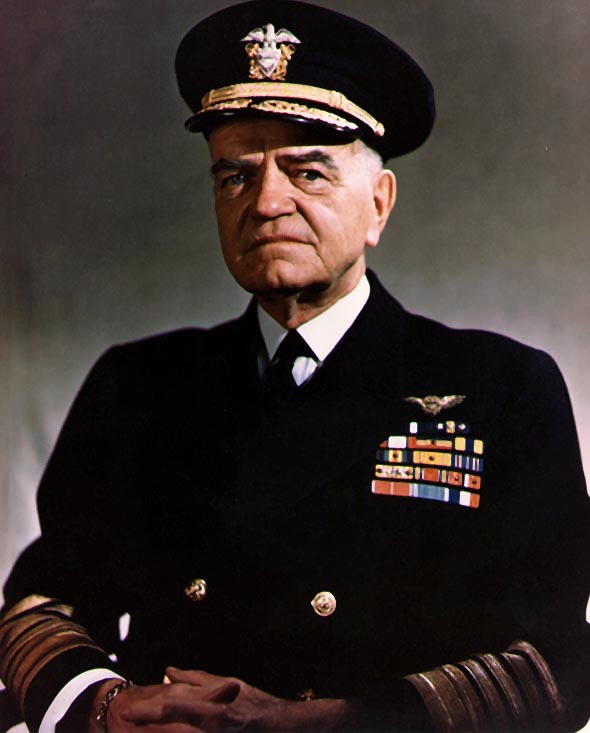
Fleet Admiral William Halsey, Jr. would lead the U.S. Third Fleet during the Battle of Leyte Gulf. He became known as “Bull” Halsey for his daring attacks which amounted to very little during the battle.
The Japanese Navy was split into three main groups: the Center Force, the Southern Force, and the Northern Force. Admiral Takeo Kurita led the Center Force out of Brunei Bay from aboard the Yamato (“Great Harmony”) – a powerful battleship and the flagship of the Japanese Navy. The Southern Force was separated into two strike groups from two separate bases – the first under Vice Admiral Shōji Nishimura out of Brunei Bay and the second under Vice Admiral Kiyohide Shima out of Pescadores. Lastly, the Northern Force was commanded by Vice Admiral Jisaburo Ozawa and deployed from the Japanese home islands. The Japanese had a total of 67 ships involved in the battle opposed to the more than 300 ships of the Allies. The Japanese had a total of 13 capital ships mixed between 6 carriers and 7 battleships. The Allies brought 47 capital ships mixed between 35 carriers and 12 battleships.
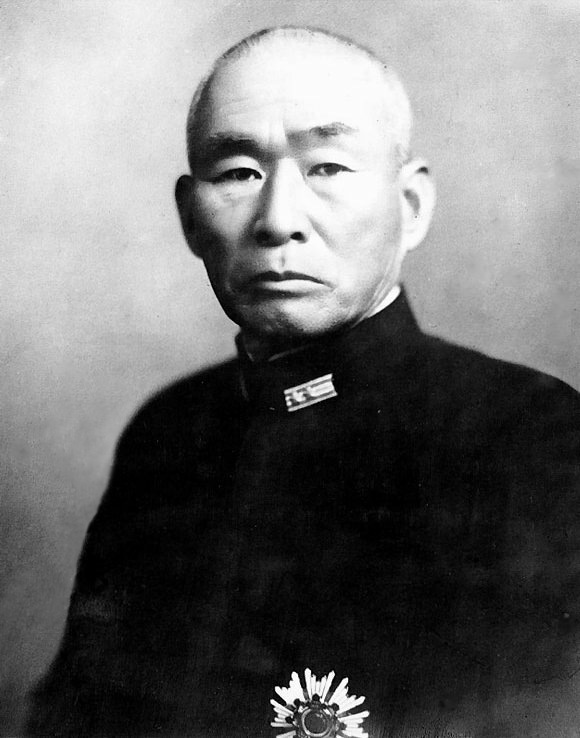
Vice Admiral Shōji Nishimura would share command of the Northern Force during the Battle of Leyte Gulf.
Soon after, the battle began in earnest in the Sibuyan Sea. The Center Force under Kurita entered the area early in the morning on October 24th and was spotted by the Third Fleet. The Americans launched 260 planes from the USS Intrepid and the USS Cabot. Using bombs and torpedoes, the first wave of American planes damaged the Nagato, Yamato, Musashi, and Myōkō. The second wave of planes critically damaged the Musashi. Then, the third wave of planes came from the USS Enterprise and the USS Franklin. The third wave also focused on the Musashi, as it was clearly the most vulnerable. Kurita pulled his ships back, leaving the Mushashi to sink.
While the battle raged in the Sibuyan Sea, the Japanese air forces at Luzon did not give up without a fight. They launched a counterattack against the four American carriers from the Third Fleet attacking their airfield, scoring critical damage on two ships. The USS Princeton suffered a major blow from a bomb, killing hundreds of sailors aboard and starting a massive fire aboard the carrier. A cruiser was badly damaged by the fire as it tried to assist in firefighting operations, and the carrier was lost. However, the Americans did prevent the Japanese air forces at Luzon from intervening at Leyte.
In the Surigao Straight, the Southern Force under Nishimura and Shima encountered ships from the U.S. Seventh Fleet. The Southern Force was ordered to maintain radio silence and consequently split into two groups, as they were unable to coordinate their movements as a single group without radio communication. Nishimura’s group was attacked first. The Americans possessed superior targeting technology and opened fire with their torpedoes and guns from outside the range of the Japanese weapon systems. One Japanese battleship – the Fusō – was broken in half and several other ships were damaged. Nishimura tried to retreat, losing more ships in the process. When Shima’s ships arrived, he immediately ordered a retreat after seeing the wreck of the Fusō and believing it to be two separate battleship hulls. In the retreat, one of Shima’s ships accidentally collided with another Japanese vessel and sunk it.
Admiral Takeo Kurita was a brilliant tactician who commanded Center Force during the Battle of Leyte Gulf.
The Northern Force under the command of Admiral Ozawa made contact with Admiral Halsey and the U.S. Third Fleet near Cape Engaño. Halsey thought he would be able to wipe out all of the Northern Force and cripple the Japanese Navy with ease. He ordered his ships and planes to pursue, leaving San Bernardino undefended. Halsey believed the Center Force had been routed and was in full retreat, and he ignored information that the Center Force was still operational and moving toward San Bernardino. As Halsey attacked the Northern Force early in the morning of October 25, he received a message from Admiral Kinkaid for urgent assistance. A second message came in from Chester Nimitz back at Peal Harbor from which the radio operator forgot to remove the junk text on the end, leading Halsey to think it was part of the message. It read: “WHERE IS TASK FORCE THIRTY FOUR REPEAT WHERE IS TASK FORCE THIRTY FOUR THE WORLD WONDERS.” Halsey abandoned his attack on the Northern Force, managing only to sink a single cruiser.
Contact Near Samar
With the San Bernardino straight left undefended, the Center Force under Admiral Kurita was able to enter the area near Samar and engage Taffy III. Admiral Kurita thought the carriers of Taffy III were fleet carriers rather than the escort carriers they actually were, and this led him to believe he had the main force of the American fleet in his sights. Admiral Clifton Sprague was in command of Taffy III – a detachment of the U.S. Seventh Fleet comprised of 13 ships. Sprague had 6 escort carriers carrying 30 planes each, 3 destroyers, and 4 destroyer escorts. His planes were only equipped with machines and depth charges for air combat and anti-submarine warfare. They were unprepared to deal with even a single battleship, assuming the San Bernardino straight was still defended by Admiral Halsey and the Third Fleet.
A photo of Clifton Sprague, taken in 1923. He would serve the United States in both WWI and WWII.
Admiral Kurita struck out at Taffy III with his force of 4 battleships, 6 heavy cruisers, 2 light cruisers, and 11 destroyers. It should have been an easy fight for the Japanese, though it would not turn out that way. Once under attack, and realizing the gravity of the situation, Sprague ordered his planes to take off and flee from the battle. The Japanese began targeting the fleeing planes, and the destroyers of Taffy III deployed smoke screens to try and obscure the hostile fire. During this time, the USS Johnston under the command of Lieutenant Commander Ernest E. Evans made a suicide run on one of the Japanese heavy cruisers.
The USS Johnston was a destroyer and would be easily disabled or destroyed if hit by the heavy cruiser’s guns. However, if the destroyer could get close enough without being hit, it could deliver a crippling blow to a heavy cruiser with a torpedo. The USS Johnston managed to avoid enemy fire and get close enough to fire upon the Kumano with its guns and a salvo of torpedos. This split the Kumano in half and took the Suzaya out of the battle as it stopped to assist the Kumano. The USS Johnston was pummeled by Kurita’s battleships, disabling the ship, killing many of its crew, and wounding Evans. However, the USS Johnston managed to limp back towards the rest of Taffy III and Admiral Sprague was emboldened by the daring attack.
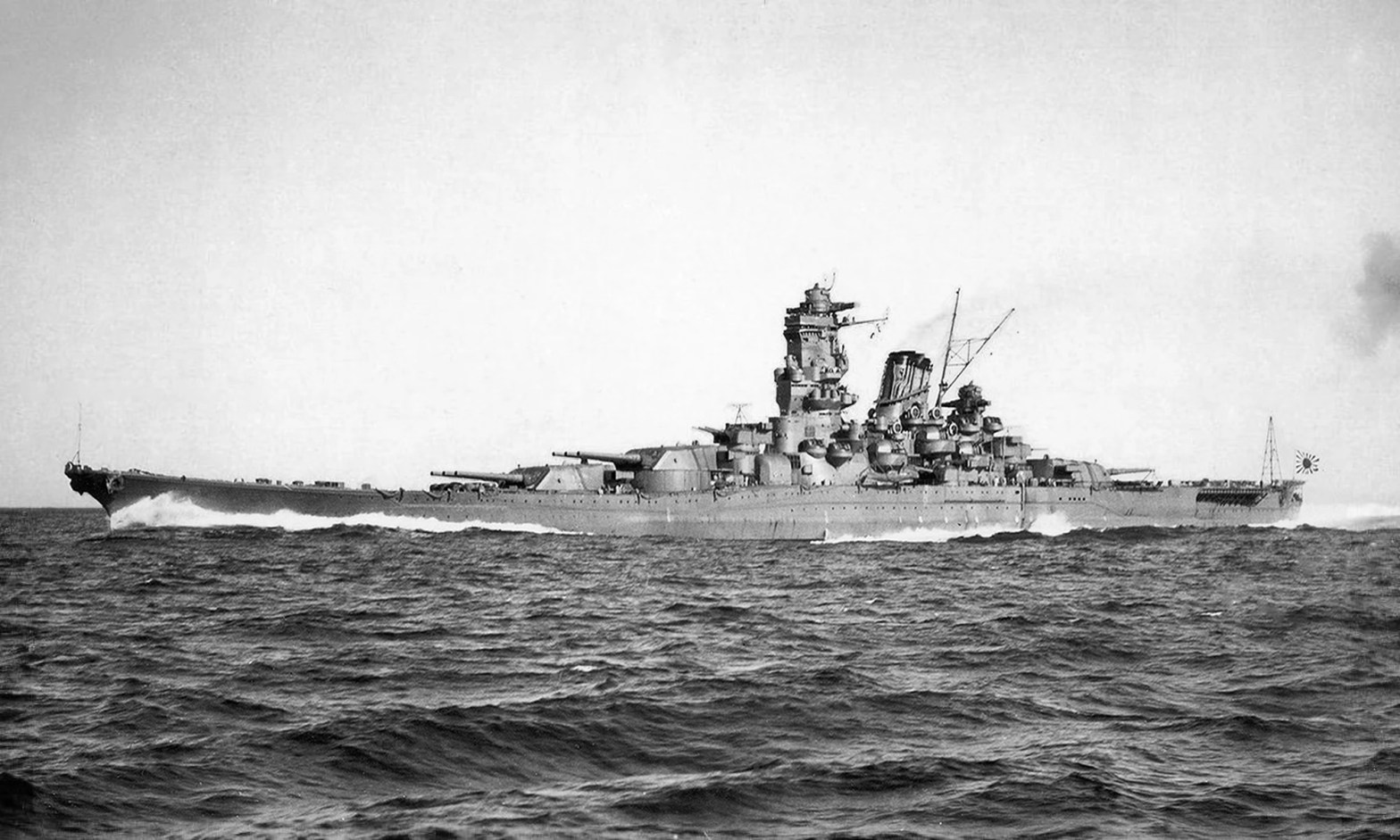
The Yamato was a Japanese battleship during WWII, and could easily outgun most other ships on the seas at the time.
Sprague then ordered the rest of his destroyers to move in and attack. After restoring electrical power to his ship and receiving medical attention, Evans even ordered the USS Johnston to turn around and rejoin the assault. The destroyers used smoke screens, mobility, and their superior numbers to swarm around the battleships and cruisers under heavy fire, launching salvos of torpedos which made the waters dangerous for the larger ships to navigate without being hit. The American destroyer USS Heermann even got so close to the battleships that the Japanese were unable to fire upon them, but the destroyer could still fire upon the battleships. After several hours of missing and taking chip damage from the smaller vessels, the destroyer escort USS Samuel B. Roberts finally took a direct hit and eventually sank.
Emboldened by the unexpected success against the seemingly superior force, Admiral Sprague ordered all the planes under his command to turn around and attack Kurita’s ships with whatever they had. Despite not possessing any weapons capable of sinking battleships or cruisers, the planes were able to harass the weapon crews aboard the Japanese ships and prevent them from firing effectively. They even managed to disable some of the guns aboard the Japanese vessels. After running out of ammo, some of the American pilots continued to make dry runs on the Japanese ships and scare the gun crews into taking cover.
By this time, the American carriers were so close to the action they became directly involved in the fight. The carriers exchanged gunfire with the battleships in the only recorded instance of an aircraft carrier engaging another surface vessel with its guns. The USS Gambier Bay was sunk and the other carriers received damage. However, by a miraculous stroke of luck, the USS St. Lo managed to strike the magazines of one of the Japanese cruisers with its anti-aircraft guns, causing some damage of note. However, luck would soon seem to be running out for Taffy III.
About six hours after the engagement began, Admiral Kurita was able to bring destroyers into the fight. Attempting to use the same tactics which the American destroyers had used against his capital ships, he sent his destroyers to launch torpedos against the American carriers. Lieutenant Commander Evans ordered the USS Johnston to intercede and soak the hits for the carriers. This worked, but the Johnston was sunk. Evans gave the order to abandon ship, but he was lost during the evacuation, and his body was never recovered. Evans received the Medal of Honor posthumously. The valiant efforts and chaos of the engagement soon after led Kurtia to order a retreat, despite his ships sustaining relatively minor damage and only three of his cruisers being sunk.
The view from an American dive bomber making an attack run during the Battle of Leyte Gulf.
Upon seeing the Japanese retreat, Admiral Sprague heard one of his sailors yell, “Dammit boys, they’re getting away!” Taffy III received a Presidential Unit Citation for extraordinary heroism against a superior enemy. No one would have expected Taffy III to have survived the attack by Center Force. That is why Admiral Halsey was meant to cover them from such an event. Nevertheless, Taffy III not only survived the encounter but forced the superior enemy to retreat.
Significance and Legacy
Due to the efforts of the U.S. Third and Seventh Fleet at the Battle of Leyte Gulf, American troops and Filipino guerillas were able to expel Japanese ground forces from the Philippines without the Japanese Navy intervening. MacArthur led American and Filipino troops to victory in the arduous Battle of Leyte, securing the Philippes as a staging ground for strategic bombers to attack the Japanese home islands. The Japanese Navy was also cut off from oil and other critical materials they sourced from their colonies in the Pacific. The Japanese would be on the defensive for the rest of the war, never again being able to field their navy offensively due to their oil supply being severed. The lopsided victory of Taffy III against Center Force also emboldened many of the Allies to keep hope during the dark and uncertain times.
Historically, the Battle of Leyte Gulf – and the simultaneous Battle of Leyte – also holds significance in the hearts of many due to the stories of heroism, friendship, and self-sacrifice it inspires. Many in the Philippines fought against the Japanese occupation without any hope of relief. The Americans, who left the Philippines as conquerors, returned as liberators. The Australians also came together with the Americans and Filipinos to stand against an enemy that threatened them and many more. A year later, the Mexicans would also join the Allies in the battle against the Empire of Japan as part of the Fifth Air Force and fight in the Battle of Luzon as well. Some reports also claim that Mexican air units were involved as early as the Battle of Leyte.
The Pacific War is an unfortunate blemish on the history and relationship between the United States and Japan. Our two nations were unlikely allies just before, which was part of the reason why the war was a shock to some. Nevertheless, the stories of heroism and bravery from the Pacific War are some of the most profound tales from across all of human history. The efforts of Taffy III against Yamato are of particular note in the Battle of Leyte Gulf. The escort group should have been annihilated by the Japanese forces, yet they not only held their own but forced their opponents to retreat.








 The Pensive Warrior