It is springtime where I live, and that means the weather is getting warmer. Each day, I find myself feeling the heat of the sun on my skin. Something about the warmer months has always made me feel more eager to exercise. My blood just feels like it’s running hotter and I want to get out and do more. That motivation has not only led me to go outside and start training with a longsword, but also to write more poetry! To that end, I wrote this series of haiku about springtime, exercising, and the life-long journey of training.
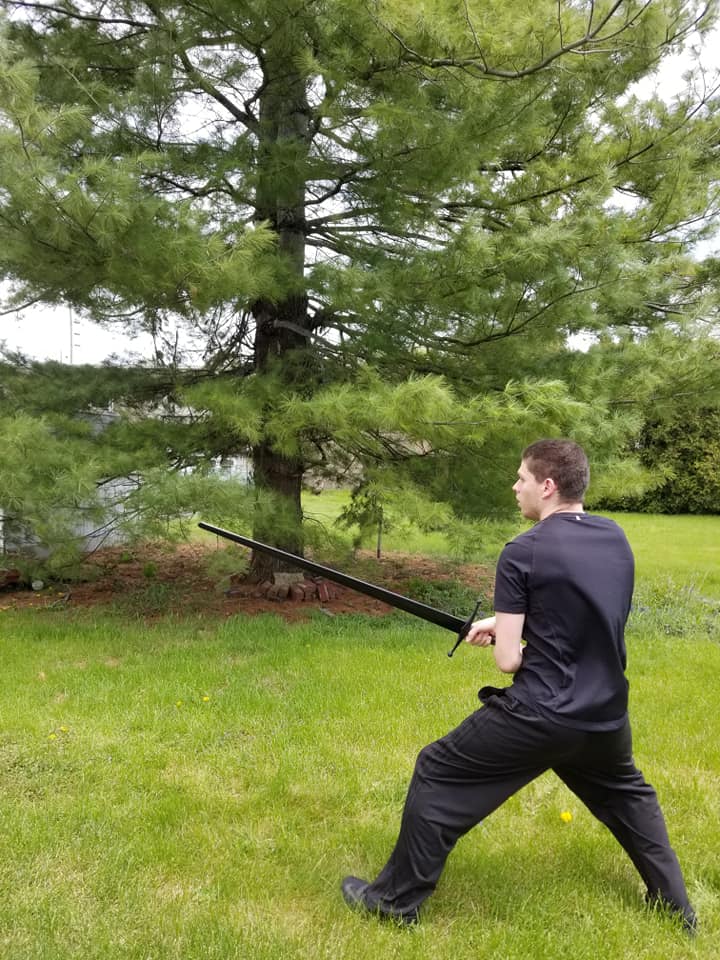
Louis Martinez training with a longsword
Time flows day by day
Seasons changing as years pass
Warmer months arrive
Soft winds stir gently
Spring heat teases summer fire
Hotter days ahead
Practicing a strike with a longsword
A flame fills my veins
Passion born of blood and sweat
Burning from within
Blood pumping harder
The sun demanding action
Heat pushing me through
Still practicing the fundamentals
Sweat drips down my skin
Eager to reach new levels
Ever rushing forth
Waiting for that day
When wisdom dawns upon me
Always out of reach
Practicing another strike
Grasping at nothing
An intangible insight
I seek without end
What is your favorite way to get some exercise? Do you enjoy the hot weather, or do you prefer the cold? What inspires you to do some writing? Feel free to share your thoughts!
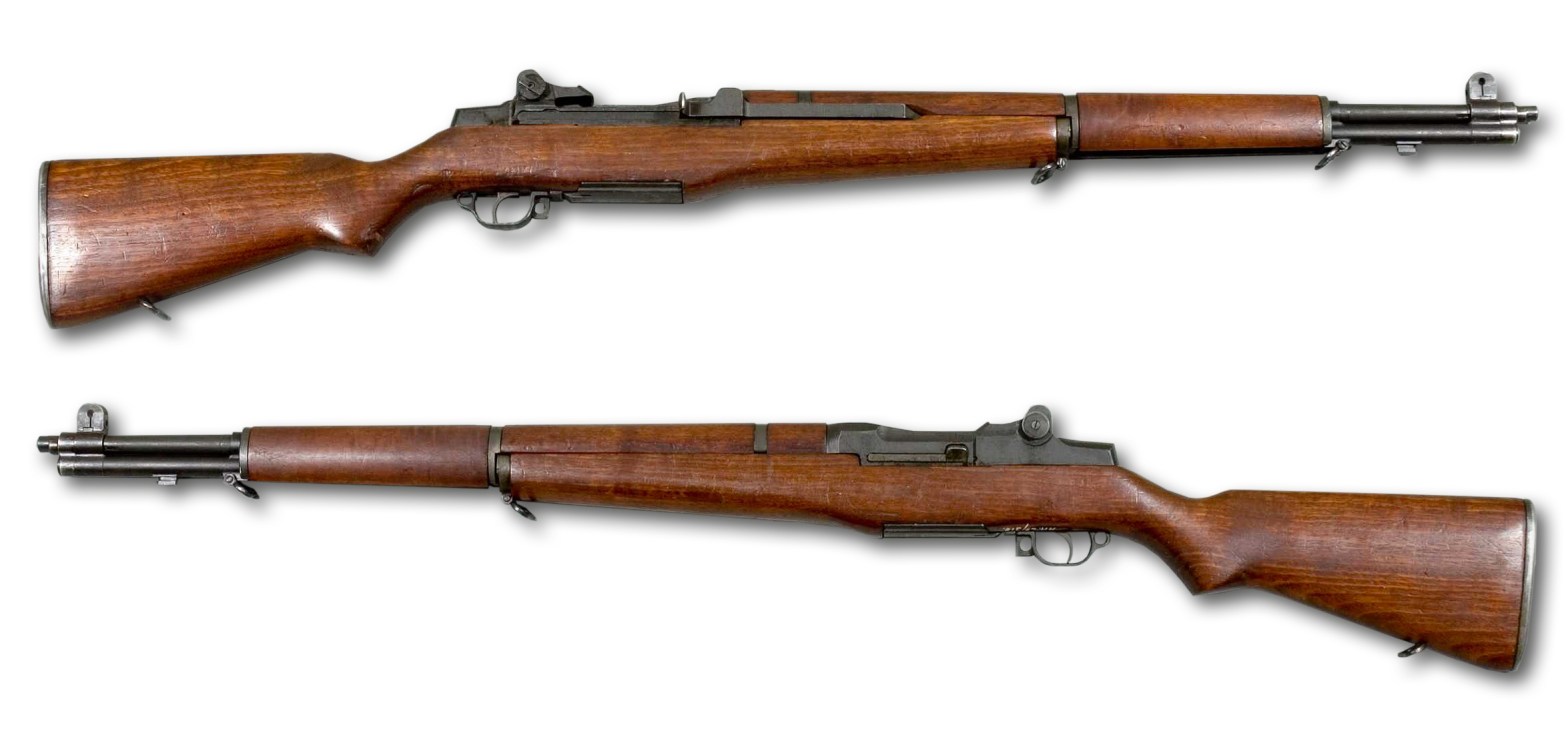
Since we looked at two iconic swords from history this month and one firearm, I thought it appropriate to look at another firearm in keeping with his month’s theme. That firearm we will explore today is the famous M1 Garand. Known officially as the “United States Rifle, Caliber .30, M1,” the M1 Garand is one of many iconic weapons from history that changed the way battles were fought and moved tactics forward by introducing new ways to fight.
John C. Garand (left) presenting the M1 Garand to Major General Charles M. Wesson (center) and Brigadier General Gilbert H. Stewart (right).
The M1 Garand was originally designed by John Cantius Garand. It was made of steel and black walnut wood, machined and assembled at the Springfield Armory in Massachusetts – one of the first two arms manufacturing plants commissioned by George Washington to rectify American dependence on foreign arms imports centuries earlier. The receiver of the rifle was forged and machined with an assembly line which could produce several hundred M1 rifles per day at their peak. Simultaneously, the stocks were woodworked at the facility on a separate line. At the end, the steel and wood were assembled together to produce a finished M1 Garand.
The weapon was prominent among the U.S. military in WWII and the Korean War. During the Cold War, stockpiles of the weapon were handed down to U.S. allies as the American forces began phasing the M1 out for the M14. The weapon was officially in service between the years of 1936-1958 in the United States, and other countries still use it as their standard issue service weapon to this day. The weapon is also still used in drills and training among many countries in the modern age, including the United States.
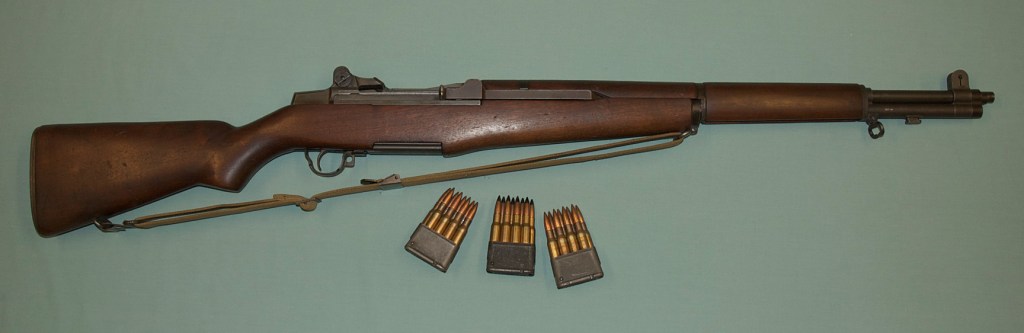
M1 Garand with a two-point sling
The M1 Garand replaced the M1903 Springfield bolt-action rifle, although the M1903A4 variant remained in service as a sniper rifle. The M1 Garand provided a higher rate of fire and greater accuracy than the M1903. It was a semi-automatic weapon with less recoil. The ammunition was lighter and allowed more to be carried, and the semi-auto fire enabled more rounds to be fired in a shorter period of time. Overall, it made for a superior infantry weapon, allowing the slower, heavier hitting M1903A4 to be delegated to a long-range role.
The M1 Garand makes a distinctive ping noise when the last round is fired and the empty clip is ejected. This was reportedly used to the advantage of both the combatants facing Americans equipped with the weapon, and by the Americans themselves to deceive their adversaries. During WWII and the Korean War, combatants facing the M1 Garand would listen for the distinctive ping to know when there may be an opportunity to charge the position of the ones wielding the weapon. On the other side, sometimes soldiers with an M1 Garand would fire one round and throw an empty clip to feign being out of ammo and lure combatants into a charge.
A soldier with an M1 Garand
Looking at the muskets and cannons of centuries past; the M1 Garand still in use today but on its way out; and the modern weapons which have replaced it like the M16 rifles based off the AR-15 design, I marvel at how far humans have come and wonder what we will make next. After all, it was not that long ago in our history that we were training with swords, spears, and bows not as recreational endeavors and a way to preserve the past, but to familiarize ourselves with the conventional defense tools of the day. Now, those tools have passed from the conventional class to the historical. I wonder what will come next, and when the day may come when the firearms of today are displaced by some new tool which makes them obsolete.
I also wonder which weapons may stand the test of time and remain in common use, such as how the knife has remained conventional since the dawn of human existence. Only time will tell, I suppose. I look forward to seeing what comes next and familiarizing myself with any new tools which come onto the scene of human history.
The M1 Garand was widely used during its service life.
What do you think of the M1 Garand? Have you ever had a chance to wield the weapon yourself? What is your favorite weapon design or system from human history?
Also, you may have noticed that some of the headings and references to the “Pen and Sword” have changed to the “Pensive Warrior.” I finally decided on this as the final name of the blog to differentiate it from other blogs and employ a unique name. I will be changing the domain name soon as well to provide a unique URL.
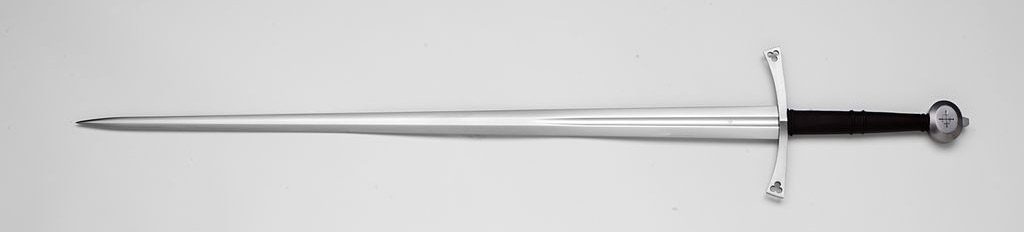
The longsword is such a classic and iconic symbol that it is used as a generic model for a sword in numerous different mediums of art and culture. Technically, the distinction between the classic “longsword” design and other types of swords such as the arming sword and “shortsword” may be a matter of blade lenght, hilt size, and semantics. The longsword then is that sword of European descent with a cruciform hilt long enough to be used with one or two hands and a straight, double-edged blade between 85-110 centimeters in length. It is probably the epitome of what many think of when they imagine a sword, rivaled only by the katana in the public consciousness of what constitutes this type of weapon. The image of a knight in shining armor with a classic longsword is as timeless and recognizable as the armor of the samurai and their infamous katana design.
Typical shape of the longsword
The longsword became widely popular in Europe during the 14th Century, although the design emerged earlier than that. Some sources claim the weapon first emerged as early as the 12th Century, and others the 13th Century. Regardless of exactly when the first longsword was made, the weapon is noted to have been in common use between the years of 1250-1550. It was used as a service weapon in the Late Middle Ages and Renaissance Period. After that, it was overtaken by new weapons as technology advanced. Still, the longsword persists to this day as a potent symbol of discipline, honor, and virtue.
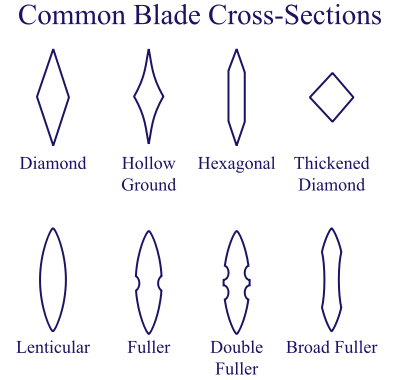
Crafting a high-quality longsword required skill beyond that of a simple blacksmith. Each sword had to fine-tuned to provide the perfect balance between flexibility and sturdiness. A sword which was too sturdy would break against a hard surface, but a sword which was too flexible would not be able to cut. A swordsmith would heat up the steel to the right color in a furnace before hammering it into shape. The edges would be hammered to a finer point than the center, forming the edge. The center of the steel would be hammered to flatten it out, but would be left thicker than the edges to provide a strong shape. Ensuring the sword was the proper weight and proportions required great skill and experience, and a swordsmith would need to take into consideration various factors such as the “point of balance,” “vibration nodes,” and “forward/aft pivotpoints” in order to craft the steel into a functional longsword design.
The cross-section of a longsword could come in many different shapes.
Tempering the blade also required a lot of experience since there was no way to measure the temperature of the steel. The swordsmith would have to know from experience by looking at the blade that it was the right temperature for tempering before quenching it in water or oil. The steel would also be filed down to craft precise edges and proportions to get the weight and shape just right. Filing would also be done to create the guard, pommel, and any decorations. Some parts of the steel might be hollowed out or filed down to create indentations which helped craft the perfect balance. Some longswords may have been mass-produced without such care or precision in order to equip large armies, producing more crude variants which were not as sturdy or balanced.
A page from a historical training manual.
The longsword is a legendary symbol of skill and precision not only because of how great skill is required to craft one using traditional methods, but also how great skill is required to wield one. Numerous training manuals from throughout history when the longsword was in common use have been preserved and carried into the modern age. These have been adapted by modern practitioners into newer manuals as well, as the sword is still quite popular for recreational purposes. Learning to use the longsword is also a useful practice for one seeking to gain discipline and self-control.
The longsword design is notorious for being one of the most versatile weapons ever conceived. Every physical part of the weapon has offensive capability from the tip of the blade to the pommel. The hilt was long enough that it could be used with one or two hands, although the classic “longsword” is typically meant to be wielded with two hands. The long, straight blade was used for both cutting and thrusting. The blade itself could be gripped with one hand and stabilized for more precise thrusts, a technique known as “half-swording.” The sword could also be flipped around and held with both hands by the blade and swung like a hammer, striking an opponent with the guard in a technique known as the “murder stroke.” The guard itself was primarily used to protect the hands from strikes. There are even historical manuals which reference unscrewing the pommel and throwing it in the opponent’s face as a distraction before charging in.
A reenactment of knights engaging in combat with what appear to be a longsword (right) and a short sword or arming sword (left).
Ewart Oakeshott (1916-2002) created a system of typology for different swords of the classic “longsword” design. This system did not exist during the time when longswords were in common use, although it is useful due to the blurred distinction between “longswords” and other swords of similar length and purpose during the time when these swords were in service. Arming swords were very similar in size and purpose to what would be considered a “longsword.” However, the Oakeshott classifications are very distinct and a “Type XVIa” sword is probably the strictest interpretation of what constitutes a longsword in the Oakeshott typology.
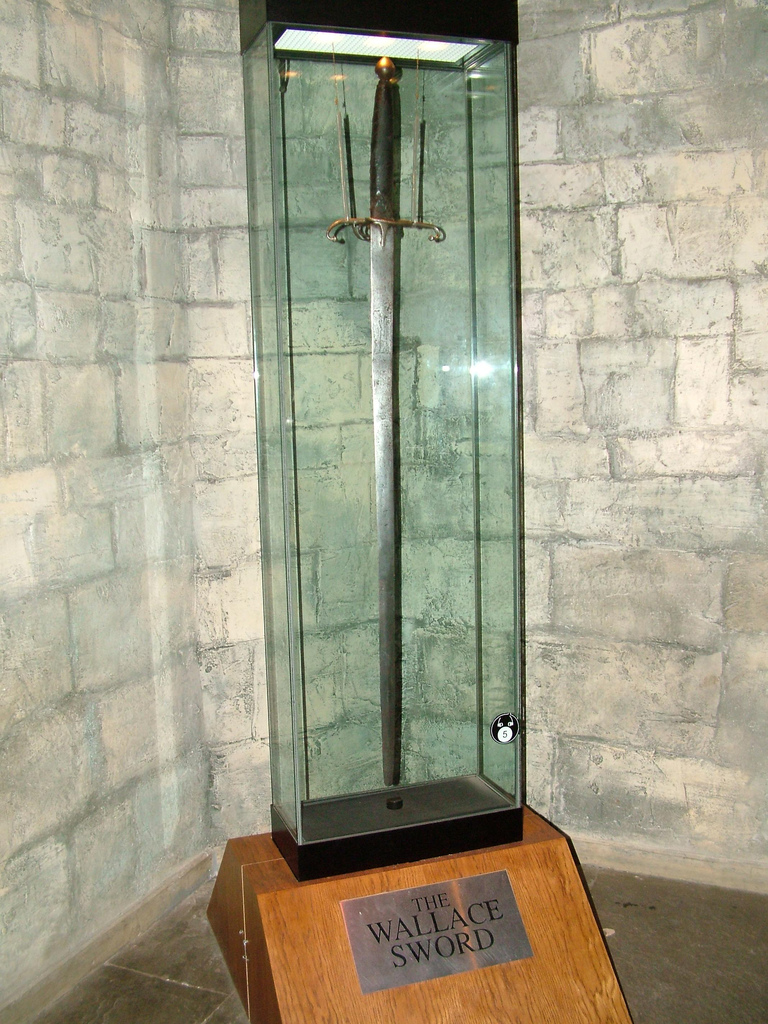
There are many famous longswords from history, as these weapons were often preserved as family heirlooms and important cultural artifacts. The Wallace Sword is one such sword housed at the National Wallace Monument in Scotland. While there is reason to believe it is not the original sword, it is preserved as if it were. William Wallace was a Scottish knight who led the resistance against the English occupation of Scotland in the Wars of Scottish Independence. His famous longsword was used during the Battle of Stirling Bridge and the Battle of Falkirk. It serves to this day as a potent symbol of freedom, liberty, justice, and the need to stand up for these ideals in the face of tyranny.
The Wallace Sword
To me, the longsword is a symbol that is synonymous with courage, bravery, honor, integrity, and ingenuity. I recently started studying to use the longsword and plan to start practicing with one soon. Despite the weapon no longer being in common use and arguably being obsolete, I still want to learn how to wield and maintain the weapon so that I can benefit from the discipline one fosters whenever they learn to wield and maintain a new weapon, as well as so that I can pass the knowledge onto others and preserve the craft of this important symbol from human history.
What do you think about the longsword? Have you ever learned how to wield one? What does the longsword symbolize to you? Feel free to share your thoughts.
The “Brown Bess” was the common name for the Land Pattern Musket, as well as other flintlock muskets in the same family. It was the weapon of choice of both the British Army and the Continental Army during the American Revolutionary War, and was also prominently used in other significant conflicts such as the Texas Revolution and the Indian Rebellion of 1857. It was the official service weapon of the British Army from 1722-1838.
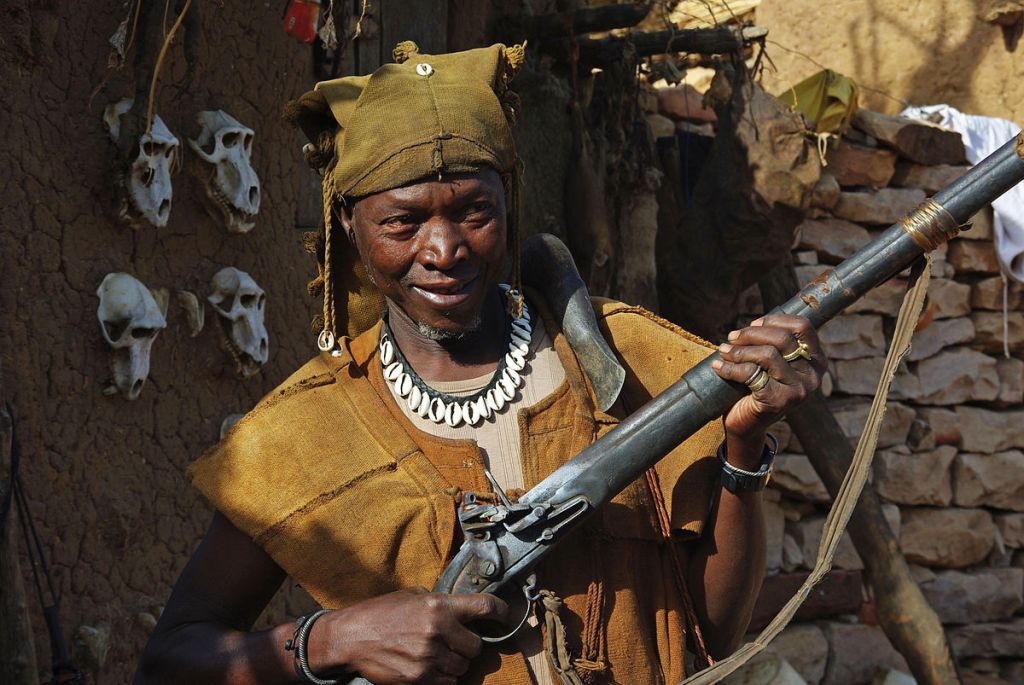
The Brown Bess was widely used around the world.
The Long Land Pattern – one of the early standardized patterns – was about 62 inches with a 42-inch barrel. It was made of wood and brass, and the metal was treated with a process to protect it against rusting which tinted it brown. The Brown Bess had a .75 caliber barrel and weighed approximately 10 pounds. Additionally, the weapon could be fitted with a bayonet. The common bayonet used with the Brown Bess was said to be 17 inches in length and arguably the most dangerous part of the weapon.
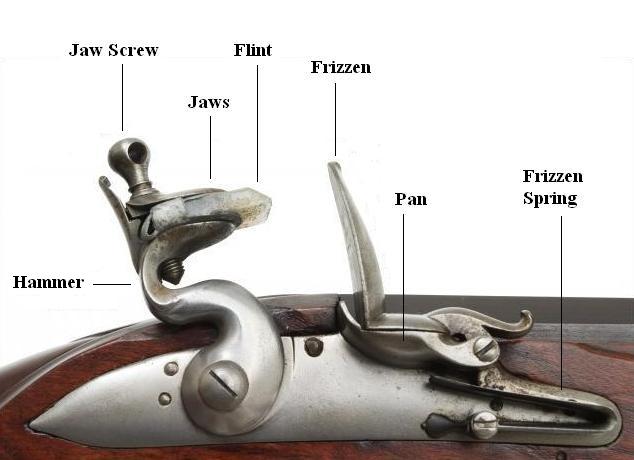
The Brown Bess incorporated the flintlock ignition system, which was a revolutionary upgrade from the matchlock system. The matchlock system on previous weapons required an external ignition device such as a match to light the powder. The flintlock system ignited the powder with a hammer that would strike a piece of flint and create sparks when the trigger was pulled. This greatly increased the rate of fire and made weapons safer to use. It also allowed for more shooters to stand next to each other, allowing for more heavily concentrated volley fire.
Flintlock Mechanism of the Brown Bess
The rationale for the name of the “Brown Bess” is uncertain. The “Brown” term is obvious. The weapon was colored brown. However, there is uncertainty surrounding the origin of the term “Bess.” Some say it was to honor the late Queen Elizabeth who had died decades earlier. Others theorize “Bess” was a slang term for a prostitute and the British soldiers would joke about holding their musket like they would a “Bess.”
There were several standardized patterns designed which were known as the Brown Bess. At first, the weapons were not standardized, and it was difficult to get ammunition and replacement parts which worked universally. There was a need for a standardized pattern which could be mass-produced, easily repaired, and allow for standardized ammunition. This led to the Long Land Pattern, and eventually the Short Land Patter, the India Pattern, the New Land Pattern, and the Sea Service Pattern.
As a smoothbore rifle, the Brown Bess was not known for its accuracy. It was essentially a canon due to the lack of conventional rifling in the barrel. The bullet accelerated without any stabilizing effect and would go off in random directions once leaving the barrel. The Brown Bess did not have any sights on it since aiming at a target was not a significant consideration. The weapon was made to be fired in large volleys which would blanket a target area with bullets, ensuring that something was hit. In fact, it is said that training with the Brown Bess did not focus on aiming at all, but rather on reloading as quickly as possible so as to be prepared for the next volley. The Brown Bess is said to have been joked of as a glorified handle for a bayonet.
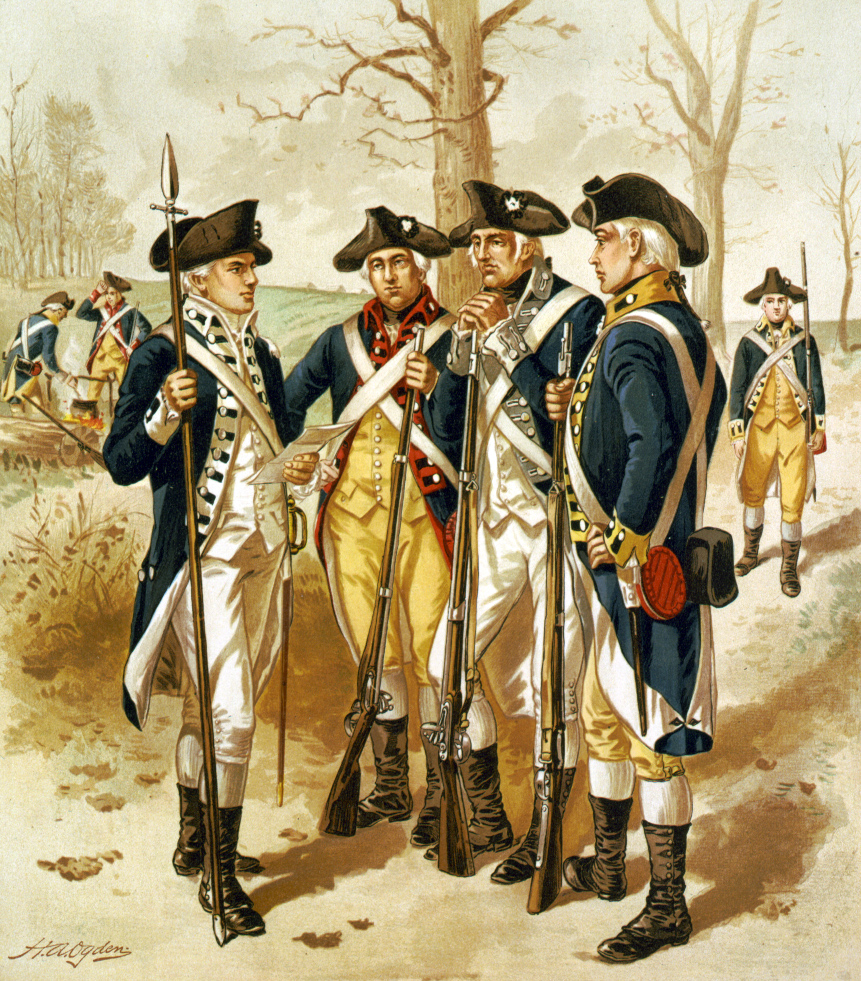
The Continental Army also used the Brown Bess.
During the American Revolution, the weapon was common among the colonists as male citizens in the Thirteen Colonies were required to keep and maintain a Brown Bess for militia duty. Life in the Colonies was harsh, and colonists were expected to be able to defend settlements in place of the British Army. With the bulk of their forces stationed thousands of miles away overseas, it was impossible for the British Army to provide meaningful defense to the Thirteen Colonies. Inevitably, as a rift between the Colonies and the Empire grew, the weapons which citizens were required to keep and maintain became a flashpoint on April 19, 1775.
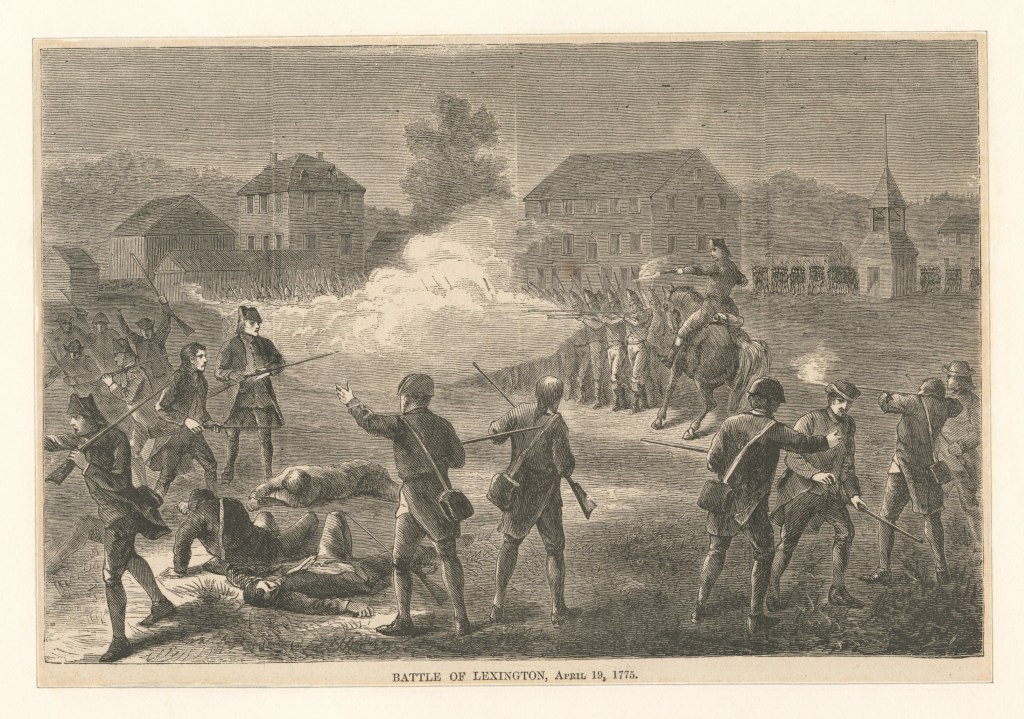
At the Battles of Lexington and Concord, the British Army attempted to cease a stockpile of weapons from the Colonies. British soldiers marched toward Concord but were intercepted at Lexington by colonial militia. A standoff ensued which led to the infamous “shot heard round the world.” The British soldiers and colonists exchanged volley fire after the unknown shot first rang off. Two opposing walls of Brown Bess muskets were unloaded, causing casualties on both sides. Then, a melee ensued since the weapon took an impractically long amount of time to reload. The surviving British soldiers continued on to Concord where they encountered more armed resistance and suffered further casualties before retreating.
Depiction of the Battle of Lexington
The Brown Bess symbolizes the importance of gun ownership; of knowing how to use a weapon; and of being prepared to use a weapon when the need arises. As every male citizen in the Thirteen Colonies was responsible for maintaining and caring for a Brown Bess since they could be needed to use it to defend themselves and their fellow citizens. They had to learn about the weapon; how to use it; and how to keep it in working order. Then, when duty called upon them to defend themselves and their fellow citizens from threats made by the very entity which was supposed to keep them safe, they were prepared to answer that call.
The Brown Bess reminds me that we never know if or when we will be called upon to defend ourselves, our homes, or our fellow citizens. We also never know who we will be called upon to defend against. Sometimes, circumstances may require us to defend against those who we thought were charged with defending us. Life is full of surprises and is rarely kind. It often seeks to test our resolve and challenge us in ways which force us to adapt, improvise, and overcome great adversity.
Have you ever heard of the Brown Bess? What do you think of when you see the weapon? What kind of images or ideas does it symbolize to you? Feel free to share your thoughts and share this article with others.
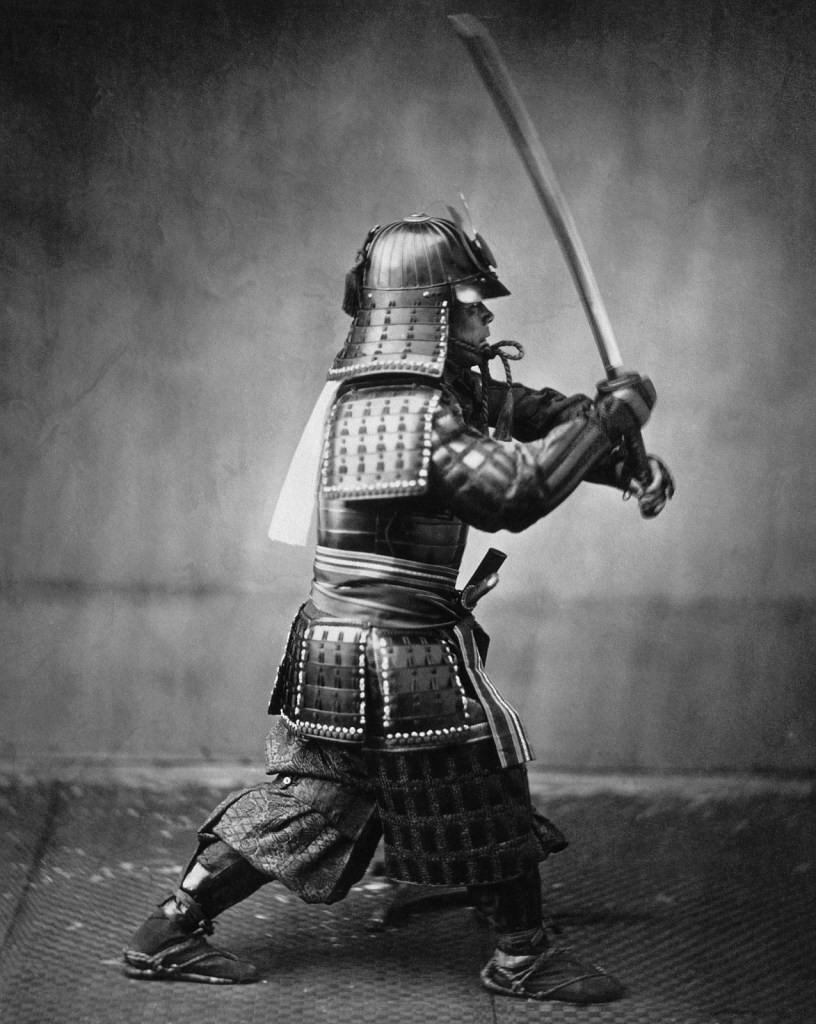
This month, we will be following the theme of looking at iconic weapons from throughout human history, starting with the katana. This legendry sword design comes from Japan and is renowned as one of the most effective cutting tools ever made. The iconic sword features a curved, single-edged blade with a small guard. The word “katana” may be interpreted to mean ” a curved sword with a one-sided blade.” It is longer than a tachi, another sword of Japanese origins sometimes described as a precursor to the katana. Traditionally, the katana is worn with the cutting edge face up along with a wakizashi – a smaller blade similar in shape. The image of an armored samurai with their unmistakable katana is as timeless now as that of a Spartan soldier with their spear and shield.
Samurai with a katana
The Japanese samurai are famous for their mounted fighting style, employing archery and swordsmanship from horseback. I have read some sources which say the katana emerged as a longer, more curved sword than the tachi which was superior for use on horseback. I have also read some sources which claim the katana was invented specifically in response to the Mongol invasions of Japan and their thicker armor necessitating sturdier, more powerful swords as the tachi was known to chip and break against Mongol armor. Regardless, the katana was certainly useful for cutting targets on the ground from horseback and for engaging more heavily armored Mongol warriors. Smaller blades such as tanto and wakizashi enabled samurai and other warriors to engage more easily in close quarters and indoors, something which became more prevalent throughout Japanese history with new conflicts leading the battlefield to different arenas.
Forging a katana using the traditional method employed by Japanese swordsmiths could take several months to complete one sword. First charcoal and iron sand are burnt in a furnace known as a tatara for three days. The process purifies the metal and creates tamahagane steel. The pieces of tamahagane are broken up, examined, and sorted according to their carbon content after they have cooled. The pieces are usually heated back up and adjusted to further refine their carbon content. Some pieces will make the hard edge of the blade, while others are used to forge the soft body. The pieces are again heated and hammered into bars, which are then folded several times into layers. The soft and hard pieces of the sword are forged separately and then fused together. Traditionally, the katana is tempered with water after it has been fully forged. The sword is heated it to red hot and then submerged in water to harden it for battle. This is of course a very brief overview of the swordsmithing process and excludes many of the finer details. An in-depth explanation of how a traditional katana is forged may be read here.
A diagram of all the different named parts of a katana
Conventional methods of forging a katana involve cutting it from a sheet of purified steel; working the metal into shape; and then tempering the blade with water or oil. The conventional method is much quicker and can also produce more durable swords which last longer and require less maintenance. Although, the conventional method does not naturally produce many of the intricate designs inherent to the traditional folding process.
The katana is an iconic piece of human history, a symbol for many that is synonymous with strength, courage, bravery, and honor. To me, it also represents human ingenuity and our ability to invent novel tools and devices. Learning about the process that goes into making a single katana using traditional methods is inspiring. The commitment to the craft is immense, and the weapon itself is a thing of beauty. I also admire the expertise needed to wield a weapon such as a sword, the time and dedication it takes to hone one’s skills with such a long blade.
What do you think about the katana? Do you see it as just a piece of shaped metal, or an important symbol with powerful meaning? What does it represent to you, if anything?
Here is a poem I wrote about springtime. I am always inspired by spring and the transition from winter. I live in an area with four distinct seasons, and the winters are very cold. When spring comes back around every year, I feel my appreciation for the sun and its warmth renewed.
Spring's First Touches
Winter scares all life away
Snow clouds blocking the sky
Light fading quicker with each passing day
Everyone scurrying inside
Winter is long
It's end ever out of sight
The sun's warmth come and gone
A most perilous of nights
But winter is no eternal arrival
Here for a while, until it must go
A transient visitor on a cold reprisal
As fleeting as the melting snow
For spring always comes to usher in summer
As reliably as the sun rises each morn
It's soft first touches a gift like no other
Delivering us from winter's harsh scorn
After a long winter's night
After months with no sun
Spring pierces the sky with its light
Returning at last to see winter outdone
A step outside brings a sigh of relief
For the first time in so long
Like a feeling of disbelief
As soothing as a birdsong
The warmth of the sun's essence
So tender and caring
A calming presence
All one's woes upending
The cool breeze in the air
A gentle caress
Soft as a lover's care
Of one who knows best
The song of the birds
Chirping to rise each morn
A song with no words
Each day feeling reborn
Spring's return is like a gift
Made ever sweeter by winter's journey
A pleasant feeling set adrift
Filling us with glee aplenty
I dread winter each year
But love it every year too
For winter heralds in spring's cheer
All the sweeter to go through
That was Spring’s First Touches, by Louis Martinez. What did you think of this poem? Did you enjoy it? Could it be improved? Let me know! I’d love to hear your thoughts.
Also, what do you think about springtime? Do you live in a place with a different climate and different types of seasons? If so, what is your perception of springtime?
Not every hero from history has a glorious end where they are remembered fondly and held up for the contributions they made to history. Sadly, this was the case with Thomas Paine. Despite his importance to American history, and indeed, human history as a whole, his later years in life were marred by imprisonment, betrayal, and poverty. Nevertheless, we recount his importance here in our modern day and shall never forget the efforts he made which brought about a freer human civilization. Still, it is humbling to look back on how one of the most important figures in human history was reportedly tossed as a casualty of diplomacy and madness.
A statue of Thomas Paine in Thetford, U.K.
Thomas Paine left the United States and returned to his homeland of England in 1787. He felt compelled to leave after several misfortunes had befallen him. Firstly, he was removed from his post as Secretary to the Committee on Foreign Affairs when he had to quote from secret documents in order to expose Silas Deane – a member of the Congress who was using his position to profit personally off dealings with the French. Even though Paine uncovered the corruption of Deane, he was forced to resign for revealing the secret documents. As he had donated all of his wealth in the United States to the Continental Army during the Revolutionary War, he was desperate for employment.
Paine managed to find a job as a clerk in the General Assembly of Pennsylvania, donating much of his earnings to support the troops and also eventually writing “Public Good,” another of his famous works in which he sought to appeal to the newly formed United States to work together as one nation. He had made a great deal of sales with his literary works, but he always zealously sought to donate his profits and put the money he made back into increasing the circulation of his works. He successfully managed to appeal to Congress – endorsed by George Washington – to gain some land in New Rochelle where he devised plans for a new kind of bridge.
In 1787, Paine left the Americas and returned to his homeland of England. His goal was to make his plans for a new kind of bridge a reality. However, Paine became enraptured with tales of the French Revolution, prompting him to publish “Rights of Man” in response to Edmund Burke’s “Reflections on the Revolution in France.” Paine eventually traveled to France and was welcomed with open arms due to his antiroyalty rhetoric. However, when Paine saw the events of the Reign of Terror with his own eyes, he spoke out. Paine was against the death penalty in all circumstances and was critical of the mass executions underway in France. The country was bathed in blood as indiscriminate violence took hold and innocents were slaughtered in record numbers for espousing any views perceived as favorable to the monarchy, or at least insufficiently in favor of the revolution. Paine began espousing his views against the mass violence which would form some of the basis of his stance in “Age of Reason.” As a result, Paine was charged with treason in absentia on December 26, 1793. Two days later, French police arrested Paine and threw him in prison to await execution without due process.
The guillotine was widely used to conduct mass executions during the French Revolution
Paine’s cell was described as a dark and wet hole with little to no light. He was locked up with many others awaiting execution by guillotine. During his time in his cell, he managed to continue working on “Age of Reason.” He also tried to appeal to his friend George Washington to help get him out of prison. However, Washington was unable to assist Paine. It is unclear if Washington wished he could help Paine or not, but Paine certainly felt abandoned. His inspiring literary works about the importance of revolution against tyrannical forces had become problematic for the stability of the new United States, and Washington was forced to publicly distance himself from Paine. As such, Washington could offer no help to his friend who had helped him motivate a nation to action and likely saved the future of the United States from the grip of demoralization early in the American Revolution.
George Washington was described as a friend of Thomas Paine
Whatever George Washington really felt about Thomas Paine’s situation, he felt he could not help Paine without compromising the United States. This led Paine to feel betrayed, angry, and alone. He consigned himself to his fate and fell ill while awaiting execution. While Paine must have felt absolutely miserable at this time, his illness apparently led the guards of his prison to leave his cell door open to increase airflow and help him get better. When the time came for his execution, the inside of his cell door was marked, and eventually closed. When the executioners came to round up the prisoners marked for death that day, the chalk marking on Paine’s cell was hidden on the inside of the door, and they walked on past.
Eventually, James Monroe learned of Thomas Paine’s location in a French prison. Monroe was sympathetic to Paine, as both were known to be associates and friends with Thomas Jefferson. After the Reign of Terror ended, Monroe found the forgotten Paine still sick and dying in his cell. Monroe rescued Paine and brought the dying man to his family. After the Monroe’s nursed Paine back to good health, he eventually returned to the United States in 1802. Sadly, he returned to the land he helped free to find himself shunned, impoverished, and all but forgotten in the U.S. as he was in a French prison cell.
Paine eventually died alone in New York City seven years later with few to mourn his loss. He had fallen into a battle with alcoholism near the end of his life. Many considered him an “infidel” and a “heretic” for his criticisms of organized religion, as well as the distancing of the United States from his revolutionary rhetoric. Reportedly, only 6 people attended his funeral.
Today, Thomas Paine is remembered as one of Humanity’s greatest thought leaders who helped our species onto a brighter path with his literary works. He inspired many in his time to stand up for freedom, liberty, and justice. While circumstances led the actors of his day to use him as a scapegoat at times, his contributions to the ideas we have today are much appreciated. History will always look favorably upon those who championed freedom and liberty eventually, as all authoritarian regimes fall sooner or later. Nevertheless, Thomas Paine could have been more responsible with his money and abstained from always donating all of it, leaving himself in desperate situations where he had to plead to others for help. While it was very noble of Paine to always donate all of his money, it is wise to secure our own masks before assisting others.
As I have mentioned before, I am inspired by the life and works of Thomas Paine. It saddens me to learn about how his life took such tragic turns, especially near the end. It is ever more saddening to think of how Paine felt abandoned and betrayed by those he trusted, and rightfully so. This is especially upsetting as I am not sure how George Washington felt about the situation. I do not know if Washington wished to help Paine but could not for political reasons, or if Washington had really abandoned his friendship with Paine. If the latter were the case – as Paine believed – then were they ever really friends to begin with? I do not know, as I can only imagine how difficult decisions must be for those in positions such as these two figures from history. Still, the legacy left behind by Paine is one that inspires me to this day, and I choose to focus on what I can learn from his greatest accomplishments as well as his moments of misfortune.
What do you think of Thomas Paine and his many literary works? Which one of his works is your favorite and why? Feel free to share you thoughts!
When I was a child, I remember one of the picture books my father shared with me told the Battle of Bunker Hill. It was an inspirational story of courage and heroism. Reading it, I felt moved by the tales of bravery, self-sacrifice, and standing against impossible odds. This week, I decided to revisit that tale. It is a story I cannot wait to tell to my own children someday when I start a family.
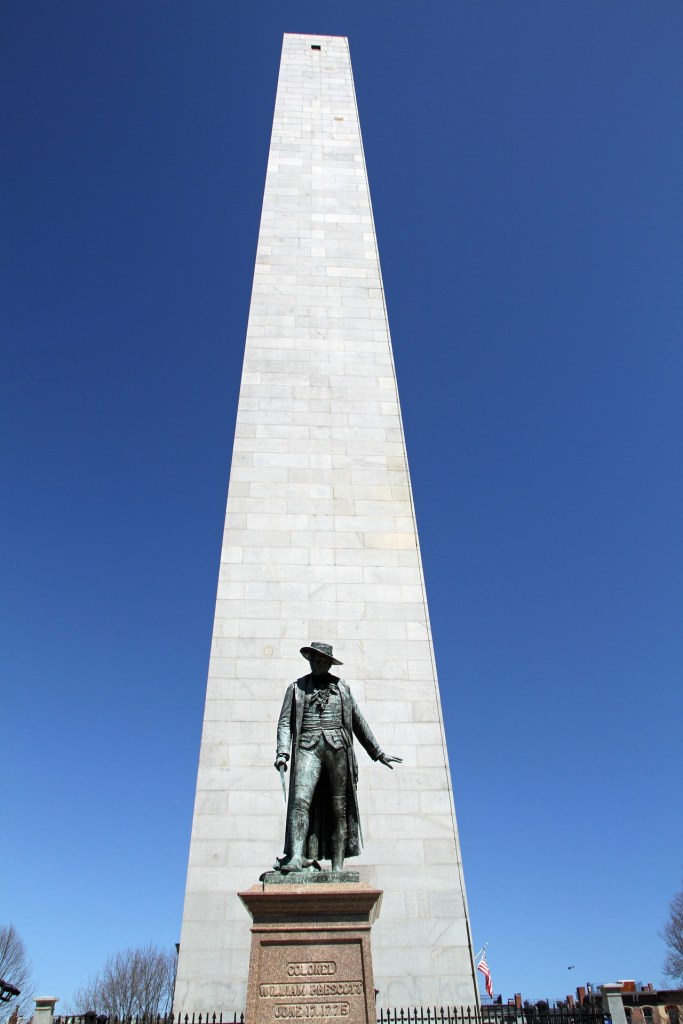
This obelisk at Bunker Hill memorializes the site of the historic battle.
The Battle of Bunker Hill was one of the earliest battles of the American Revolutionary War, preceded by the Battles of Lexington and Concord. It is often considered it to be the first major battle of the war where significant numbers of troops faced off over contested territory, as the preceding battles were considered smaller skirmishes. The Battle of Bunker Hill was part of the larger event known as the Siege of Boston.
The Battle of Bunker Hill occurred on June 17, 1775. About two months after the war began, approximately 15,000 colonist volunteers had amassed around Boston. They were intent on preventing the 5,000 or so British regulars stationed there from advancing further, although they were poorly trained, ill-equipped, and low on ammunition. The British troops stationed in Boston were under the command of General Thomas Gage, and the Continental troops besieging the area were led by General Artemas Ward.
The British troops in Boston believed if they could take control of the hills in the area, they could break the siege and advance further into the region. The rebel colonists reportedly discovered this plan from an unknown civilian who learned of the impending troop movement in a conversation with a British officer in New Hampshire and reported it. The American revolutionaries were in fact colonists from the British Empire at the time, attempting to break off and declare independence from a monarchy which had refused to redress their grievances, and the British officer who gave away the plans may have thought nothing of it at the time.
When the rebel colonists learned of General Gage’s plans to take the hills, they moved to fortify them in preparation to halt the impending advance. The Massachusetts Committee of Public Safety had recommended fortifying Bunker Hill earlier, though nothing was done on the matter. That was until they learned of the impending troop movement, at which point the Continental troops sprung into action. Colonel William Prescott was sent with a detachment of about 1,000 colonists to fortify the hills. With him were General Joseph Warren, General Israel Putnam, and General Henry Burbeck. They built a redoubt on Breed’s Hill, which is a makeshift fort of dirt and other earthen fortifications such as breastworks to shield troops from incoming fire. The rebel colonists dug in for a tough fight and prepared to stand their ground. It is said they were discovered while building the fort and fired upon by British warships, yet they managed to finish building their fortifications without casualties.
Upon learning of the fortifications, General Gage sent a detachment of approximately 2,300 troops under the command of Major General William Howe and Brigadier General Robert Pigot to capture or displace the rebel colonists. They split into two groups, one under Howe and the other under Pigot. With cover from artillery fire, they approached the fortifications on Breed Hill. Howe’s group was meant to flank the colonists from behind by going around their fortifications while Pigot’s group approached more directly.
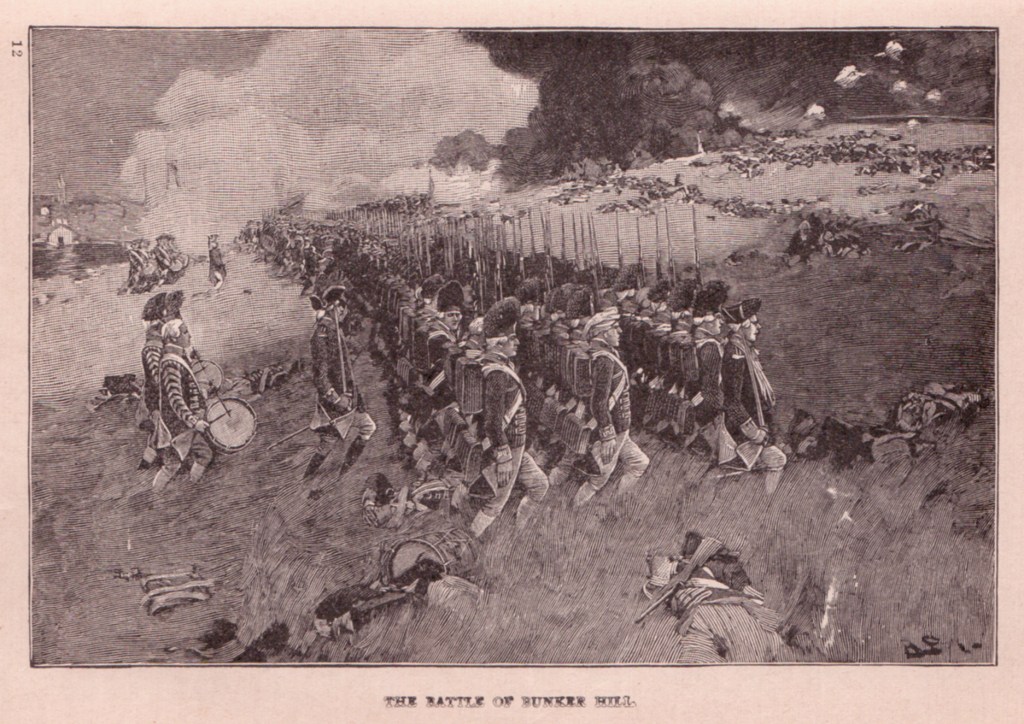
Depiction of the Battle of Bunker Hill
The main battle consisted of three waves. Knowing they were low on ammo, it is said that Prescott gave the famous order: “Don’t shoot until you see the whites of their eyes.” The British troops approached the Continental fortifications a first time, and when they were close the earthworks, they were repelled by a volley of fire. The British troops retreated and regrouped before advancing on the fortifications again. However, the Continental forces had time to reload their weapons. A second time, the British troops were repelled and forced to retreat. However, on the third approach, most of the rebel colonists were without ammo or bayonets.
It was then the British forces managed to storm the fortifications and engage the rebels in close-quarters. The colonists fought valiantly, inflicting heavy causalities on Howe’s forces. In the end, however, they were forced to retreat, and some were captured by the British. Nevertheless, the victory was incredibly costly to the British Empire and did not affect the war favorably in their view. Gage was scapegoated by his superiors for his perceived failure of leadership due to unacceptable casualties. It caused dissatisfaction among the British leadership and had the opposite effect among the rebel colonists
The newly-recognized and emboldened Continental Army, now under the command of General George Washington, were aware of the heavy disparity in casualties between themselves and the British Empire. The large group of colonists who fought at the Battle of Bunker Hill were poorly equipped volunteers who had just faced down the largest and most powerful military force in the world at the time. They did so with courage, honor, and bravery. They stood their ground for as long as they could and dealt a blow to the Empire that was harder than even they knew they could deliver.
Some have theorized that had the Battle of Bunker Hill been a more decisive victory for the British Empire, the colonists would have lost the will to fight and the war would have ended swiftly. However, the pyrrhic victory for the British showed that any war with the colonists would be long and costly. It shifted the expectations for the conflict on both sides and gave the American people the resolve they needed to continue the fight and eventually win their independence.
A closer look at the obelisk at Bunker Hill
This is why I found the story so inspiring as a child. Even though the rebels lost that fight against the Empire, they did not lose their will to fight. They kept their spirits high and carried on. The courage and bravery of those who stood strong on the battlefield inspired others to take up the fight and continue on to victory in the end. They were not hardened warriors, and they were not well-equipped. They were a group of volunteers with little training and even less ammo. Still, they set an example to all who would follow in their footsteps of standing against authoritarian threats no matter the odds against them. That, to me, is inspiring.
What do you think about the Battel of Bunker Hill? Is this a story you were familiar with? What does it mean to you? Feel free to share this post as well as your thoughts!
NOTE: I originally wrote this article for the now defunct blog of the Indiana Writers’ Consortium, a non-profit organization I interned with a few years ago which ceased operations and dissolved while I was with them. I was going back over it and several other articles I wrote for them which I realized would be useful to this audience as well.
I also noticed some of these articles were posted with grammatical errors in them, which I guess is something we all missed back then. Those were busy days. Still, I am happy to bring some of these old articles and rewrite them to not only fix the errors if there are any, but also to update them with my newfound wisdom, experience, and insight.
A story must be written before a reader can experience it. This means by the time you get the tale in your hands, what happens is already set in stone. The story is published. What is said is final.
This has unfortunate implications for the creation of suspense. Stories told in novels, or other similar mediums, do not have the benefit of a dynamic environment; a place where things can happen which neither the reader, nor the writer, could have anticipated. Novels are static. All the events which happen in the story are foretold. The outcome has already been decided before you even know what it is. The plot is predetermined, and what you read is what you get.
With that said, it can be reasonably assumed things will turn out alright in the end. It may not be exactly what the reader wanted. A favorite character may be dead, or an important battle lost. However, in the end, a reader is usually safe to expect some sort of satisfying conclusion because the events are set in stone. The reader is not influencing the outcome, so what do they have to worry about? Nothing. Not really. So then, how do we create suspense in such a static environment? How do we make the reader feel tense? How do we make them feel worried? Is it even possible? Perhaps, and perhaps not. The answer may ultimately depend on the reader, although there are some things we can do to artificially create that suspense.
I’ve heard and read many strategies one may employ to create suspense in a world where the events have already been written, and I’ve seen three main themes reoccurring. To create suspense where none inherently exists, one can make the events of their written world urgent, unpredictable, and undesirable.
Be Urgent
Make it known to the reader that the protagonist’s objective is time-sensitive. Thus, when compounding variables impede their progress, worry may build in the reader’s mind about whether the protagonist will be able to succeed in time, or if it will be too late. Even though it can be reasonably assumed that something will work out in the end, make sure the reader knows that events may not unfold perfectly if the protagonist doesn’t rise to the occasion on time.
Be Unpredictable
This is probably something every writer should try to achieve. The reader may not find your story enjoyable or enticing if they can predict everything that’s going to happen a page ahead. This is even more crucial if you’re trying to create suspense in the reader’s mind. If things are happening to the protagonist which they never expected, their sense of worry for the fate of the characters and the world can be increased. You don’t want the reader to be ahead of your story. You want your story to be ahead of the reader.
Be Undesirable
This accounts for the reality that a reader can reasonably assume things will work out in the end. Yes, they probably will. If they don’t, that can implie in the mind of the reader that there will be a sequel to the story they just finished. In such an event, if there is no sequel, then you leave your reader dissatisfied with the results of your story. Things must end. Every story needs a conclusion, and your story won’t work if the reader doesn’t walk away satisfied with the results.
So then how do we confront the reality that every story must end, and that end has to be satisfying in some way? How do we create suspense when the reader knows everything will be alright when all is said and done?
Simple. Give the protagonist what they asked for, but not what they wanted. Make the results satisfactory, yet undesirable at the same time. If you’re looking to create suspense, you probably shouldn’t end your story with “and they all lived happily ever after.” No, they didn’t. They lived, and they had to learn to accept what happened. They weren’t happy about it, but they’re happy it’s over and done with.
Another method I feel compelled to share is to give the reader a broader awareness. That is, share what the antagonist is doing when the protagonist is not around. This can emphasize what is at stake in the minds of the audience by revealing to them what consequences there may be if the protagonist fails.
When considering this strategy, I urge you to ask yourself, does this really help the story? Isn’t the protagonist going to prevail in the end anyways? I ask this because I always find it breaks immersion when we’ve been following a certain character almost exclusively, and then we briefly see another perspective, seemingly just for the sake of creating suspense. If such a switch in perspective is to be employed, I would personally advise it to be a consistent element of the story. Otherwise, it just feels contrived. At least, that is my opinion. Others may disagree on this point though.
I used to think there was no such thing as suspense in a predetermined story. And honestly, I still wonder sometimes. Maybe there isn’t. Maybe the suspense we create for our reader is just a false sense of uncertainty; an illusion to keep them guessing. Whatever the case may be, creating suspense is a difficult job in a written world, and I hope my take on things helps to set you on the path toward crafting that gripping tale.
What are you thoughts on this subject? Are you an experienced fiction writer? How do you create suspense, or how have other writers made you feel suspense in the stories you’ve read? Please, feel free to share your insights if you have any.
As mentioned in this month’s first post, haiku was popular with the Japanese samurai. They were a very literate society and they used haiku not only to express their creativity and love for art, but also to calm themselves before battle. I have stated before that I normally write poetry in the ABAB format, though I do not see how this would be practical to calm oneself before a stressful situation such as a fight due to the complexity and typical length of such poetry. So, this week I decided to learn how to write haiku and see for myself the applicability of it to calming my mind before a high-stress, high-intensity situation. In short, I think it worked quite well, though with some obvious limitations which I will discuss further down.
Two SIRT training pistols with laser pointers by Next Level Training
For this exercise, I decided to try writing haiku before running a home defense drill where I quickly get out of bed and grab my SIRT training pistol in place of one of my firearms; rush to three positions in the house; take cover to minimize my exposure to incoming fire; before finally taking aim and shooting at designated targets. The SIRT pistol uses a laser pointer to allow for practice inside the home. Steady pulses of the laser indicate accurate, well-placed shots. Erratic pulses which jump around indicate misplaced shots. There is also a software program which works with a webcam to analyze your performance with the SIRT and point out your errors more closely.
I find that taking a moment to stabilize my shooting stance before firing results in far more accurate shot placement, which is important during home defense to avoid stray shots going off target. Even though time is precious, shot placement and watching your background are too, especially inside the home. Stray shots can go into another room and hit a family member, or into another house. Even shots which are on target may go through the target and hit someone else. Also, taking a split-second to stabilize my stance requires less time than a blink of an eye, and I think it is worth it considering the massive increase in accuracy and the immense importance of being on target in when shooting inside the home.
To help simulate a real home defense situation where I must engage several armed intruders, I also perform some traditional exercises including jumping jacks, push ups, and sit ups to elevate my heart rate before beginning the drill. This is meant to simulate the adrenaline rush and fear one typically feels when faced with life-or-death situations and violent attacks such as a home invasion. I have read physical exercise is used in police academies and in military training where trainees must complete an obstacle course to get to a shooting range and fire a weapon. I also feel that I can more easily get into the mindset of being afraid and having to deal with hesitation when my heart rate is elevated, which I personally feel helps me train to overcome the hesitation I might feel before pulling the trigger with another human being in my sights, especially one who is armed and potentially shooting back at me or threatening my family.
Heart pounding away My body trembling with fear It's time to act now
I found that haiku did seem to work for me as the samurai seemed to have intended it to. When my heart was pounding as I lie in bed, waiting for the moment when I sprung into action, my mind was racing at first. I was thinking about where the targets were I had set up. How fast would I get to each position? Would I expose too much of my body from cover? Would I be able to see the targets later in the evening with many of the lights in the house turned off and the sun down? Would my shots be accurate, or wildly off target. A lot was racing through my mind, and I had to focus myself to think about producing a haiku.
Ready for the shot Am I prepared to destroy? Whose life will now end?
However, the simple form of haiku made this task easy and effective. The 5-7-5 syllable format with no regard to rhyme was structured enough that it forced me to focus my mind and stop my racing thoughts, but not so complex that I could not do so with my elevated heart rate and the upcoming task. I opened my notes on my phone and wrote down several haiku about what I was feeling and thinking. In that time, my heartrate did slow down and my breathing stilled. Of course, I cannot discount the fact that I was at rest and not in true danger, naturally lowering my heart rate. Yet, I did seem to calm down more than times before when I had run the drill without focusing on producing any haiku or meditating at all, instead opting to go straight into the drill after raising my heart rate with physical exercises.
I must fight for them Those who cannot themselves fight Do what must be done
To summarize, I do think haiku worked for me in the way it was used by the samurai. It is simple enough to produce under pressure, yet complex enough to require focus. However, I did mention there are some obvious limitations to the application of haiku for this purpose. Obviously, during a defensive operation, such as home defense against armed intruders, or self defense against an attacker in public, there is no time to meditate or write haiku. The situation happens abruptly and without warning, leaving no time for anything but a reaction. I imagine samurai must have used haiku to calm themselves before offensive operations or mutual combat, such as before a large battle or a one-on-one duel. In such context, I can definitely see its applicability.
Danger in my sights The unknown past every door I step into fire
Of course, there are many other kinds of stressful situations in which haiku would certainly be useful to help calm the mind. Essentially, any high-stress situation which does allow for a moment to calm oneself before taking action would allow for the individual to meditate, engage in some controlled breathing, or produce a haiku. I can see how it would help in many situations that are very stressful, but less urgent than defending against an attack. For example, to calm one’s nerves before a public speech, bungee jumping, or skydiving. I also found writing haiku to be very enjoyable due to its creative nature and ease of production. I look forward to writing more haiku in the future, and doing so when I am feeling stressed or under pressure.
What do you think of haiku? Have you ever tried using it to calm yourself in stressful situations? How has that worked for you? Feel free to share your thoughts!