This is an ABAB poem inspired by the book of 1 Peter, chapter 5. The chapter calls us to have humility and grace, as pride leads to destruction. Those who are prideful lead careless and self-defeating lives. Humbling ourselves allows us to see the threats assailed against us clearly and allows us to deal with those threats effectively. The chapter also calls us to remain sober, alert, and cautious. We are reminded that threats are always nearby, and any loss of focus could provide the opportunity needed for the enemy to strike a deadly blow against us. Thus, by keeping our minds clear, we put ourselves in a position to see plots and attacks coming against us.
Grace heals our body
Our humility we hath
Keeps us from folly
And keeps us straight on the path
Grace makes fear inert
Sober-minded, we can see
Watchful and alert
Guarded from our foes that be
The Adversary
For victims, he does scour
For those unwary
Seeking souls to devour
We must resist him
Standing firm and strong with grace
Through hardship, we win
Overcoming all we face
All across the world
Others face the same fascade
Our strength is unfurled
Of those who stand firm with God
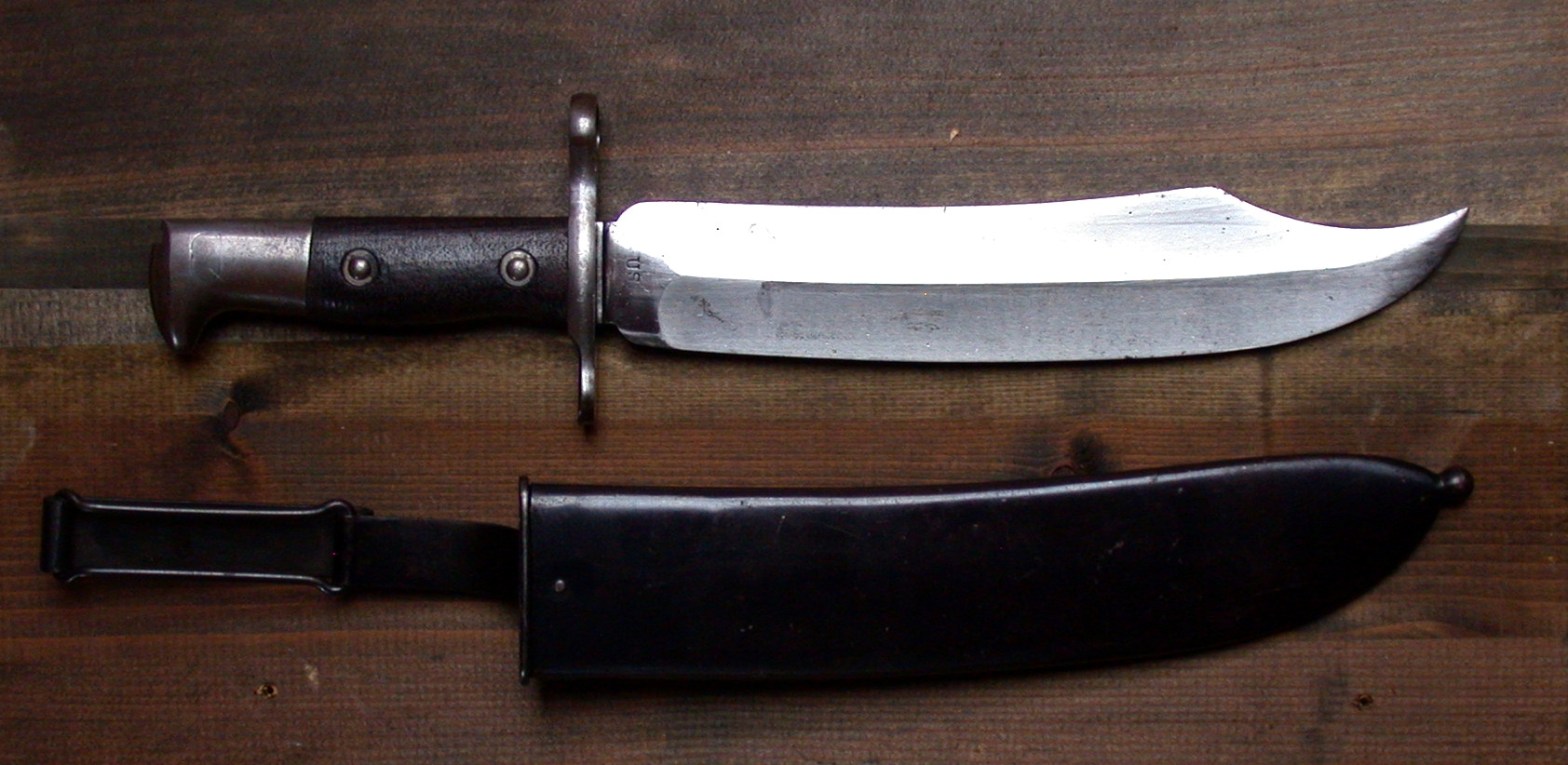
The design of the Bowie knife is attributed to the prominent blacksmith, James Black. It is a long knife up to 10 or 12 inches long with a clipped point and a crossguard. Some Bowie knifes may be up to 15 inches or longer. It was long enough to be useful at striking the hand in response to an opponent’s attack and cut deep enough to disable the hand. This is thanks to the large belly and heftiness of the Bowie knife, as well as the reach. In the famous Sandbar Duel of September 19, 1827, Jim Bowie used a large knife he was carrying to disembowel an attacker. The “Bowie knife” was not conceived of yet, but this popular fight which received extensive media coverage inspired the later design and use of the Bowie knife.
A recreation of an original Bowie knife.
The Bowie knife was large enough to be used in a manner close to that of a small sword. However, it was also small enough to avoid being an encumbrance which went beyond its usefulness in the field. At least until further advancements in firearms technology made guns more reliable, the Bowie knife was an effective tool for Americans out on the frontier. It could be used for self-defense, hunting, and general utility. Bowie knives would become so popular they also began to be carried as a status symbol. Their popularity spread to overseas where British companies saw an opportunity to make their own Bowie knives and export them abroad.
Brief History
Some sources indicate the Bowie knife was invented in 1830, and some indicate it arose as late as 1838. Long knives, as well as short swords, of a similar design would also have been in use across the American frontier during the early 1800s. These blades would have been of various design and quality. Prior to the advent of revolvers firing cartridges, swords and knives were still very relevant as primary weapons to use in close combat due to firearms requiring too much time and effort to reload. Even after the ascension of self-loading firearms, and indeed, into the modern era, edged weapons are still used. However, after the Civil War and the increased prominence of cartridges, Bowie knives fell out of use as primary weapons.
Nevertheless, Bowie knives and similar knives inspired by the design continued to be used. Some would argue the iconic KA-BAR is essentially a scaled-down version of the original Bowie design which makes it easier to carry while still being just as effective as the original Bowie knives. It is important to mention that Bowie knives were rather heavy by knife standards, weighing in between 3-5 pounds. For a knife which saw less common use following advancements in firearms technology, this became unnecessarily heavy in the eyes of soldiers, civilians, and hunters alike. Still, the shape of the Bowie knife continues to inspire knife designs to this day, and many modern knives which should probably not be considered “Bowie knives” are labeled as “Bowie-shaped.”
A modern custom knife with a blade shape inspired by the historical Bowie design.
Bowie Knives Today
Due to the more recent advent of Bowie knives, many originals are preserved as antiques into the modern era. Some are cheap to acquire, while others can be very expensive. Many antique Bowie knives have engravings of different American phrases and symbols due to their use as status symbols in the Civil War era. As mentioned, the design would continue to be changed and modified into the modern era, mostly being slimmed down to half its original size. The “Bowie” blade shape is now commonly understood to be a knife with a clipped point and a curved belly. Even in a much smaller form, it remains a useful blade shape to this day.
The United States entered the events of WWII late in the conflict. Frank Howley was already injured and relegated to a non-combat role by this time, although he did take part in the D-Day invasion as military government and re-established local governments following the expulsion of the German occupiers. Howley was specifically tasked with reforming the French government in Cherboug. With the Germans already expelled by the time Howley’s unit arrived, Howley’s earlier missions were largely uncontested. He helped reconstitute and resupply the local French people during their efforts to reform a government after years of occupation by the Germans.
Howley’s unit was known as A1A1. It was a mixed unit of American, British, and French forces. France had been under German occupation and administration since 1940, and there was much work to be done in removing pro-Nazi officials and re-installing local leaders, as well as keeping them supplied. This mission was successful and took Howley to Paris and eventually Barbizon, France. Here, he prepared a mission to establish a government in Berlin after the Germans had surrendered. Given his experience in removing the fascist government in France and installing a republican government with democratic elections, Howley was trusted with doing the same for the American-administrated region of occupied Germany. However, with the threat of the Soviets looming over all of Europe and East Germany under communist control, this task would prove to be a greater challenge.
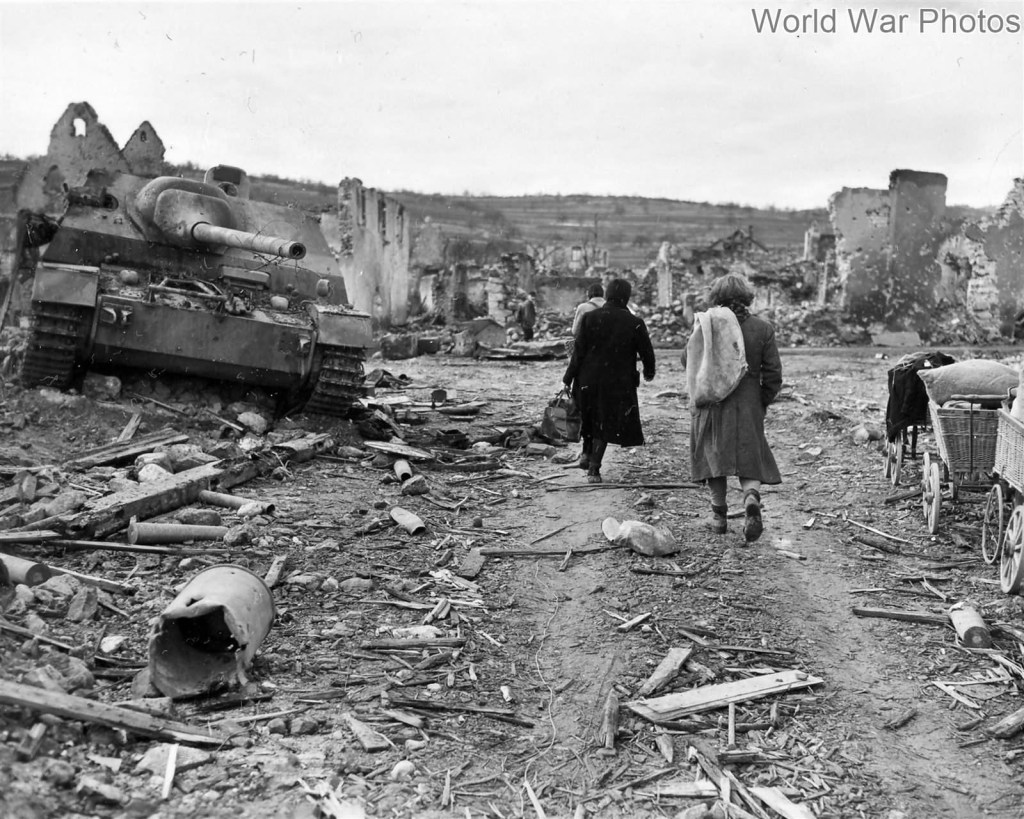
Much of Europe and Asia was left in ruins following WWII, but the Allies got to work repairing the damage immediately after the surrender of the Axis.
In the Ruins of Berlin
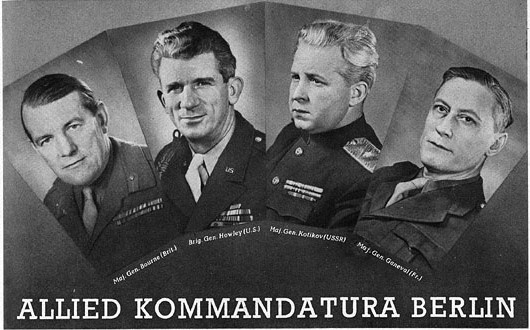
When Howley arrived in Berlin to assist with the reconstitution of government there, he was under a mandate from the Truman administration to work closely with the Soviets and foster an alliance with them. However, the Soviets were already working to expel the Allies from Germany altogether. Howley caught onto this right away and understood that whatever alliance the Allies had with the Soviets would not continue into the post-war era. Howley had to meet regularly with the other commanders of the British, French, and Russian occupation forces. Howley’s informants notified him that General Alexander Kotikov – commander of the Russian occupation – appeared to be making moves to force out the Americans, British, and French sometime soon. For the time being, however, Howley and his unit got to work repairing infrastructure and feeding civilians.
Berlin was split between British, American, Russian, and French occupation forces following Germany’s surrender in the Second World War.
Howley wrote in his journal that he came to Berlin under the impression that the Germans would be his enemy on this mission. Nevertheless, with each passing day, it became clearer and clearer to him the Russians would be his true enemy. At first, Howley’s superiors did not listen to his warnings about the Soviet plan to evict the Allies from Berlin. Many still hoped the alliance against the old Axis would last and they refused to give up on the idea, as they were all tired of fighting. Howley was outspoken about the threat from the Russians, however. He trusted his spies and they were telling him that Kotikov had orders direct from Stalin to evict the Allies.
A shadow war of sabotage and subterfuge ensued in the ruins of Berlin between Howley and Kotikov. The Russians made every attempt to undermine the German public’s confidence in the Allies. The goal of the Soviets was to trade one form of socialism for another in Germany in their quest to spread the dark shadow of Marx across the globe. Communist-sympathizing newspapers began to slander Howley, calling him a ‘brute’ and a ‘beast.’ Howley’s family back in the United States also received death threats and harassment by socialist subversives who had infested the American mainland decades prior. The Cold War was already in full swing, although many in the Allies still had not yet come to accept the reality.
The Mask Comes Off
Howley had to contend with his superiors not supporting him for over a year before they came around. Once they did, and the Marshall Plan to rebuild Europe was underway, the Soviets decided to take more decisive measures themselves. On June 24, 1948, the Russians began a blockade of Berlin to try and drive the Allies out for good. They shut down the roads and railways into the city and refused any American or British access. However, Howley was determined to keep the Allied presence in the city and immediately proposed flying in supplies to circumvent the blockade. He told his troops “We’ll starve. We’ll eat rats, rather than quit Berlin!”
With the help of General William Tunner directing the airlift, Howley and his forces began the famous Berlin Airlift. Flying supplies out of Tempelhof Airport, they were initially lifting 4,500 tons of food into the city each day. They had flight rotations going around the clock and were sending in close to 500 planes each day. Stalin did not believe an airlift could save the city, so he ordered the blockade to continue through May 12 of the next year. However, the Allies increased the efficiency of their airlift to bring in 12,000 tons of food each day. Eventually, the Soviets realized the blockade was pointless and called it off. Thus, the people of Berlin were saved from communist starvation.
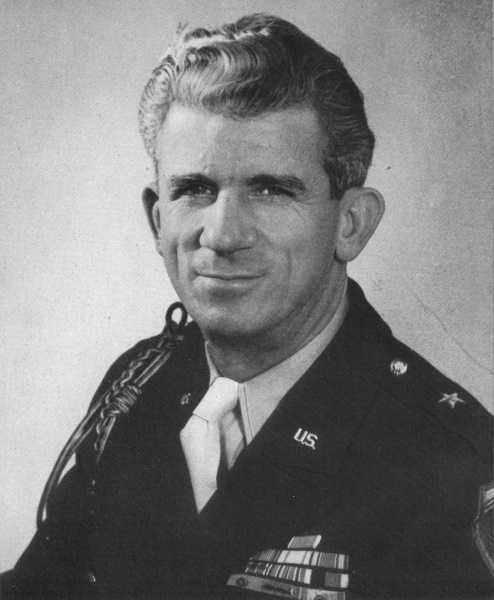
Frank Howley would rise to the rank of general during the Berlin Airlift.
Hope for the Future
While many others around the globe would not be so lucky, the communist-induced famine in Berlin was prevented and the Cold War against socialism was able to continue. Howley’s insistence on standing firm against the evils of socialism in all its forms gave the people of Berlin a fighting chance. In spite of the pressures exerted on him and his family not only from his well-meaning superiors, but also from communist subversives, Howley stood up for what he knew to be right. Howley’s persistence saved the day back then and still serves as an inspiration for those who continue to face the evils of socialism in the modern era. From Howley’s example, we learn to be brave in the face of subversive attacks and death threats against us and our loved ones. In the end, good will triumph over evil, should we just stay true to ourselves through to the very end.
Frank Howley went on to achieve the rank of general. After retiring from military life, he worked on a farm in West Grove, Pennslyvania. He also served as vice chancellor at New York University for a time. Howley passed away at 90 years old on July 30, 1933 in Warrington, Virginia. He had four children: three sons and a daughter.
I fell ill over the weekend and just finished recovering. I tried to still post something, but thinking and typing made me dizzy and cross-eyed. So, I had to wait until now to get back into things. As a result of me falling behind, I will be making two posts this week.
Firstly, I decided to write a brief poem while I finish up my post from last week. This is a soliloquy with 5757 syllables. It is a reflection on Psalm 140. The chapter recounts how wicked men and women devise schemes to go against God and His people, which eventually come back to haunt them. The wicked are a treacherous people who have no loyalty and become their own worst enemies. Due to their inability to stand united, they wicked are inevitably overcome by the righteous.
Evil lurks nearby
Scheming to stir up a war
Darkness in their hearts
Poison dripping from their lips
The righteous rise up
God calls them to fell His foes
Consumed with anger
Evildoers trip themselves
No matter their cries
Evil plans always fall through
The wicked betray
They rebel against the Lord
Allergic to truth
The wicked follow their lies
They walk into doom
Their backs turned against the Lord
Wolves all filled with hate
They rage against righteous men
But to no avail
Wrathful rebels find no peace
Wolves prey on the sheep
Yet the loyal dogs strike back
The wicked wolves flail
The Lord's men jump in the way
The Lord will prevail
His word is eternal truth
The wicked shall fall
Let justice be done on them
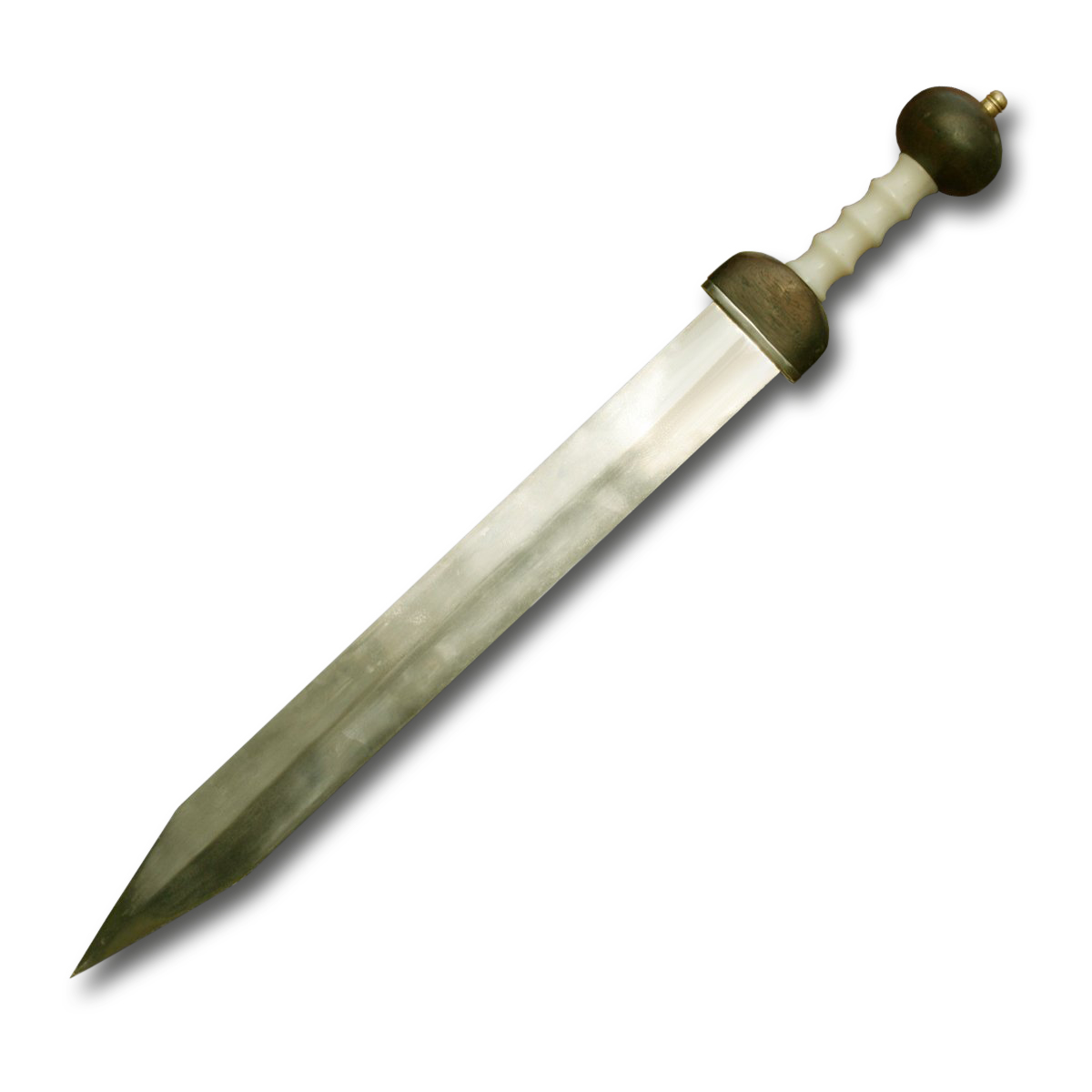
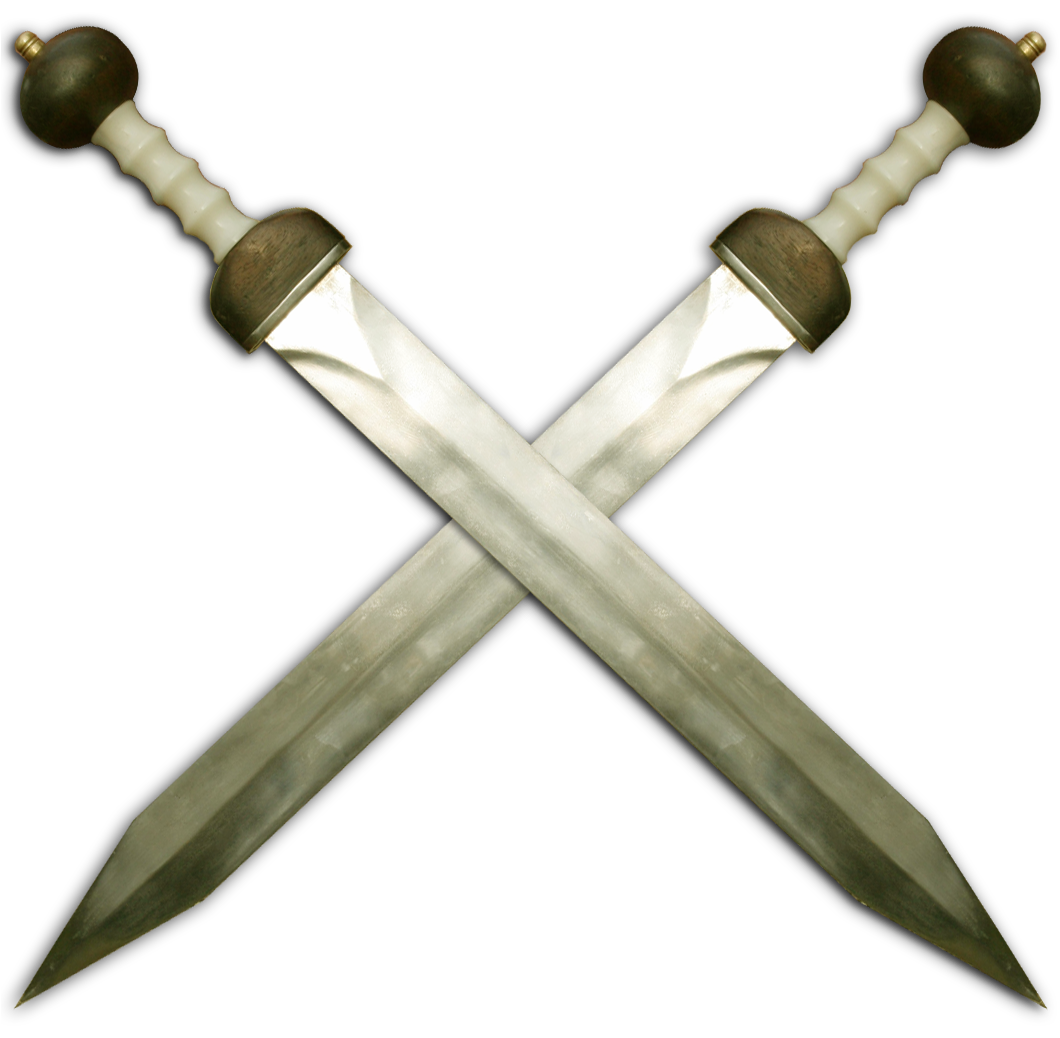
The Roman gladius may be separated into three historical types: the Republican/Fulham, Mainz, and Pompein. The differences between the designs were not so significant, although each was successively shorter than the last. The sword was originally conceived by Spanish tribes of the Iberian Peninsula. The Romans adopted it following the Punic Wars after encountering it in battle and realizing its effectiveness. The gladius eventually replaced the spatha as the weapon of choice for many Roman soldiers who were required to source their own weaponry.
The historical gladius was designed to be used in combination with a shield, leaving little room for two hands on the hilt.
The Pompein gladius is reported to have been the most popular variant, as it is the most commonly found at archeological sites. These swords were approximately 60 centimeters in length with blads about 50 centimeters long. The swords were mostly made of iron, but later were made of steel. The hilt was constructed of wood and was often decorated with different types of metal plating. Many officers would have pommels shaped as eagles which could be used to grip the sword with two hands.
Use and Reputation
The gladius was a widely respected and feared weapon among those who found themselves on the receiving end of it. The Romans perfected the use of the gladius by pairing it with the scutum – a large shield. The gladius and scutum would be used in combination to close the distance against opponents with longer blades and pole weapons. With the short blade of the gladius, it was very effective at close range where most battlefield weapons were ineffective due to their longer reach limiting their close-quarters ability. Apart from the Roman Civil Wars which saw soldiers wielding gladii against gladii, the gladius and scutum combination devastated foreign armies all over the world due to the prevalence of long weapons.
The gladius was a hefty sword, weighing an average of 1.5 lbs. It was also quite thick with a 2-inch blade. These qualities made it an excellent chopper, and historians recounted its devastating ability to hack off limbs and heads. It was also adept at thrusting with its double-edged blade coming to a fine point. The short sword was used to stab to the gut and chop at the kneecaps, all with the shield in front to defend. Historians recounted how terrifying the weapon was to face. The gladius and scutum together in the hands of the Romans overcame many conventional armies equipped with long blades and pole weapons, as many soldiers were simply unsure of what to do against the gladius.
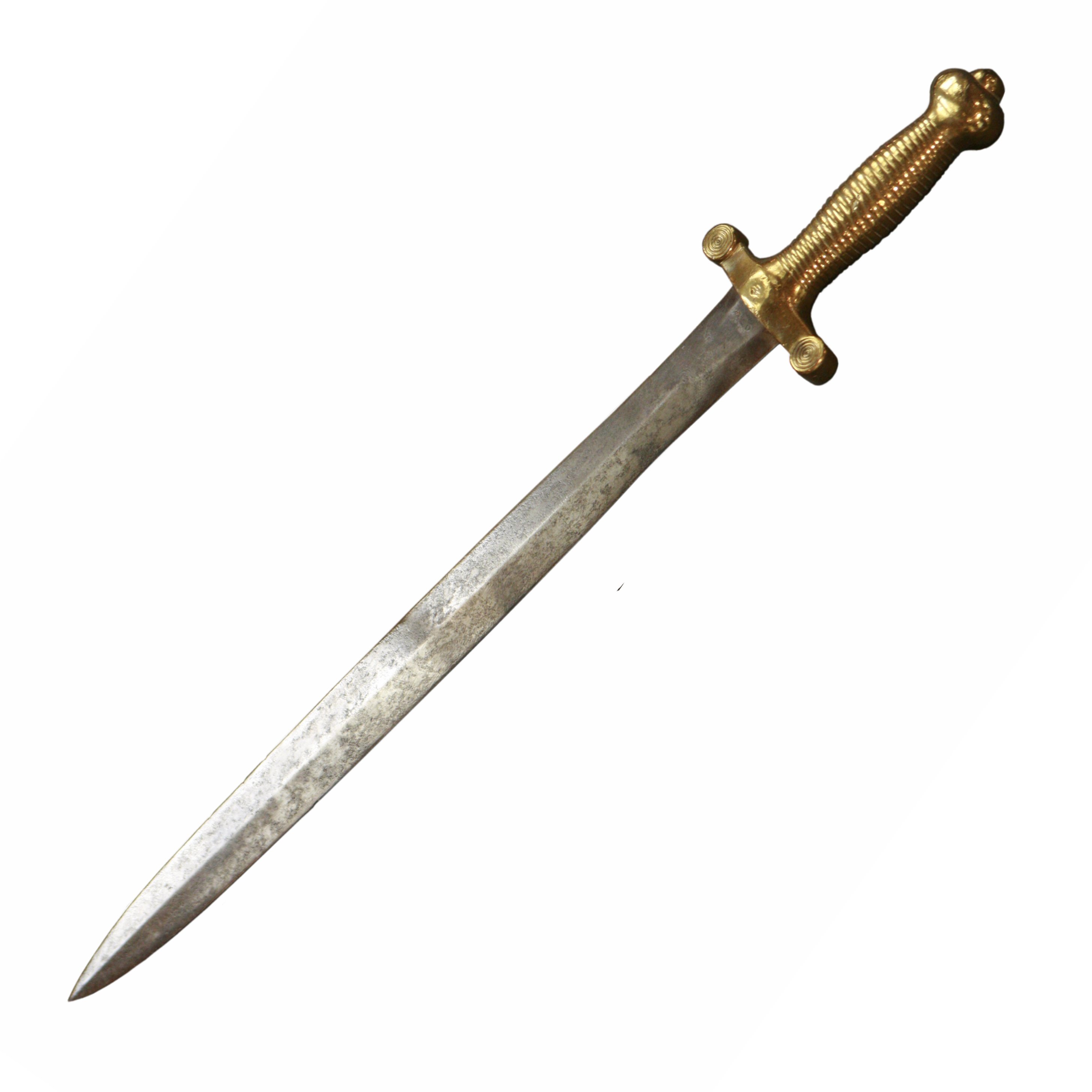
An 1831-model French infantry sword modeled after the ancient gladius
Legacy of the Gladius
The gladius remains one of the most iconic and popular sword designs to this day. It is also one of the few historical swords which retains some practicality in the modern world. While long swords have fallen out of use due to firearms, there are many situations where short blades are still practical. Although the machete probably takes the top spot as the most common edged weapon still in use today which could arguably be called a sword, a gladius with a two-handed hilt would make a viable alternative. Provided, of course, that one values the double-edged blade which requires more maintenance and care than a single-edged blade.
Prior to the American Revolutionary War, Anthony Wayne was a surveyor. He was known for traveling to Nova Scotia, Canada to record a description of the land and natural resources there. Later, he returned home and founded both a tannery and a farm. Wayne supported independence and regularly advocated for separation from the British Empire. He briefly served in the Pennsylvania Legislature prior to being commissioned as a colonel in the Continental Army after the war began.
Anthony Wayne’s early military career was defined by several notable defeats. He was first deployed to assist the future traitor, General Benedict Arnold with his army in Canada. Quebec, the fourteenth colony, refused to sign the Declaration of Independence and remained loyal to the British Empire. During the Battle of Trois-Rivières on June 8, 1776, the troops under Wayne’s command successfully skirmished with enemy troops in the swampland. Nevertheless, the rest of the American forces were routed and began to scatter. Wayne quickly switched to supporting the Americans during their withdrawal to provide a fighting retreat. Despite the loss of the battle and the failure of the invasion of Canada, Wayne was commended for his efforts during the campaign. He was then put in command of Fort Ticonderoga and promoted to Brigadier General in 1777.
Anthony Wayne commanded troops at the Battle of Brandywine on September 11, 1777. His forces were tasked with holding the Brandywine River against Hessian troops, and they were successful for a time. However, the German General Wilhelm von Knyphausen eventually managed to flank the Americans and push them back. Wayne again managed to organize a fighting retreat and support the withdrawal. Later that month, he suffered one more defeat during what became known as the Paoli Massacre.
A painting of the Battle of Paoli was commissioned by a British soldier who participated in the event.
On September 20, George Washington sent Wayne to circle around the enemy and counterattack from behind. However, either deserters or captured American couriers informed the British of where Wayne and his men were camped. They lost 158 men when attacked by British General “No Flint” Gray. General Gray earned the name for ordering his men to attack the camp using only with bayonets and swords, or by using their firearms as clubs. In so doing, they managed to go through the camp without alerting the whole American force. General Wayne requested that he be court-martialed for the Paoli Massacre, the number of significant defeats under his belt beginning to weigh heavily on him. He was ultimately acquitted of all charges and commended once again for his leadership, despite the loss of men.
Wayne would quickly be put back into service and take part in the defeat of Continental forces at the Battle of Germantown on October 4, 1777. His troops were reportedly putting heavy pressure on the British and pushing them back. However, partway through the battle, they came under friendly fire. Thinking they were about to be encircled, Wayne ordered a retreat. This cost the Americans their momentum, and ultimately, the battle. Still, Wayne learned much from his early military career. By all accounts, his losses were due to factors outside his control including the overwhelming force of the British Empire’s international coalition and a bit of bad luck. This was something he may not have appreciated at the time, but others such as George Washington recognized his efforts and continued to press him forward.
Learning From Defeat
One of the first major victories of Wayne’s career involved taking over command of General Charles Lee’s troops after he was relieved of command by George Washington at the Battle of Monmouth. Lee was not confident in the Continental Army’s ability to push the British out of New Jersey, and the troops under his charge reflected this perspective. When Washington saw Lee’s troops fleeing from the battle, he removed Lee and split up the general’s forces between the reserve troops under the Marquis de Lafayette and Wayne’s men. Washington then pressed the attack against the British and eventually forced them to retreat to New York. Wayne wished to pursue right away on the following morning, but Washington denied that request in favor of giving everyone the much-needed rest.
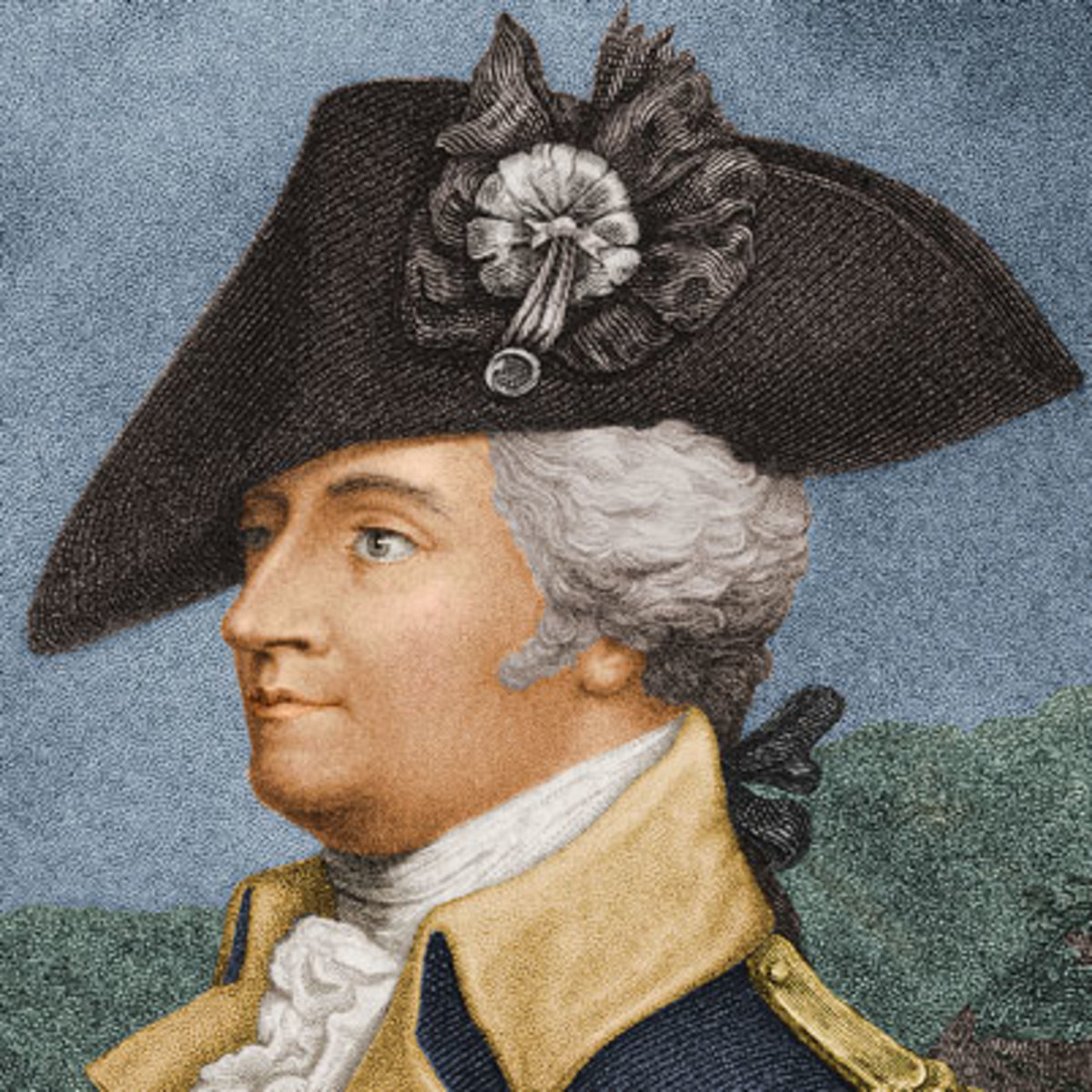
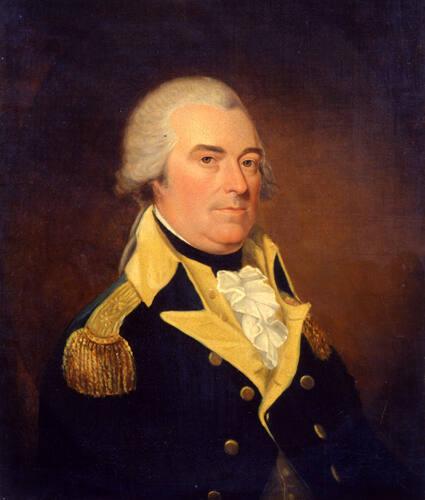
A portrait of Anthony Wayne by Edward Savage.
On July 16, 1779, Wayne was dispatched to recapture the fort at Stony Point which had been taken over by the British. He used the tactic General “No Flint” Gray had employed against him during the Paoli Massacre, ordering his troops to advance on the fort using only bayonets. This prevented the whole force from being alerted and putting up a defense. Wayne was shot in the head during the Battle of Stony Point, but he continued to fight and led his troops to victory. For this, he was awarded a gold medal by Congress. General Wayne’s nickname, “Mad” Anthony, had been catching on for some time now and eventually stuck due to his aggressive reputation. This was due in part to George Washington considering him to be rash and impulsive, yet somehow wildly successful. The name also probably first arose from Wayne ordering one of his spies who was arrested to be lashed as punishment, and rumors spreading that Wayne was “mad” about the whole affair.
Still not done, General Wayne had many more exploits throughout the war. He facilitated more fighting retreats and saved Continental troops which would have been routed without his leadership. He also helped foil Benedict Arnold’s plan to betray the Americans and turn over West Point to the British. Wayne was with Washington at the Battle of Yorktown where Cornwallis surrendered and the American Revolutionary War officially came to a close. Wayne achieved the rank of major general before retiring from military service in 1783.
The British Switch to a Proxy War
The Legion of the United States at the Battle of Fallen Timbers
After General Cornwallis’s surrender officially ended the conflict with the American rebels, the British Empire continued to mobilize the Native Americans and Canadians against the United States. Intent on toppling the American government from the shadows, they unofficially supplied the Native Americans and Canadians with weapons and munitions using their network of military forts they retained across the American mainland. This led to the formation of the Northwestern Confederacy – an alliance between the Canadians and Native Americans with shadow support from the British Empire. Thus began the Northwest Indian War which saw the Americans lose many battles in the early days.
In 1792, Wayne was brought out of retirement and put in command of the U.S. Army. Washington hoped he would turn the conflict around which was going poorly, and he would not be disappointed. Wayne spent two years training an army and building forts around the frontier to challenge the British network. His troops came to be known as the “Legion of the United States.” On August 20, 1794, Wayne led the Legion against Native American and Canadian troops under the command of Blue Jacket at the Battle of Fallen Timbers. The result was a decisive victory, forcing the enemy to retreat to Fort Miami.
The Native Americans were not allowed entry to the British fort, and the situation briefly grew tense again when the Americans arrived. Wayne ordered the fort to be vacated, but the British were ready for a fight and refused. Unwilling to push further, the Americans retreated back to Greenville. From there, Wayne began negotiating a peace treaty with the Northwestern Confederacy. On August 3, 1795, the Native American tribes agreed to surrender and the conflict ended. The Americans took Ohio and parts of the surrounding region. The Northwestern Confederacy was a threat no more.
A statue of Anthony Wayne at the Pennsylvania Museum of Art.
Death and Legacy
Anthony Wayne passed away on December 15, 1796. He died from complications with gout. He was originally buried at Fort Presque Isle in Erie, Pennsylvania, but his remains were later moved by his son to his hometown. He was remembered as an impulsive and overly-eager leader, but one whose skill earned him the respect of his peers nonetheless. Mad Anthony Wayne saved numerous American lives throughout his career and played a critical role in ensuring the survival of the young republic he loved so much.
His story also reminds us not to let our past setbacks prevent us from forging ahead. Wayne would have had many detractors in his day due to him presiding over many disastrous occasions, but he was recognized then and now for his valiant efforts in the face of terrible circumstances often outside his control. If we would all do likewise, always giving our best effort and letting happen what may, we may find ourselves remembered in a similar light in not too distant days.
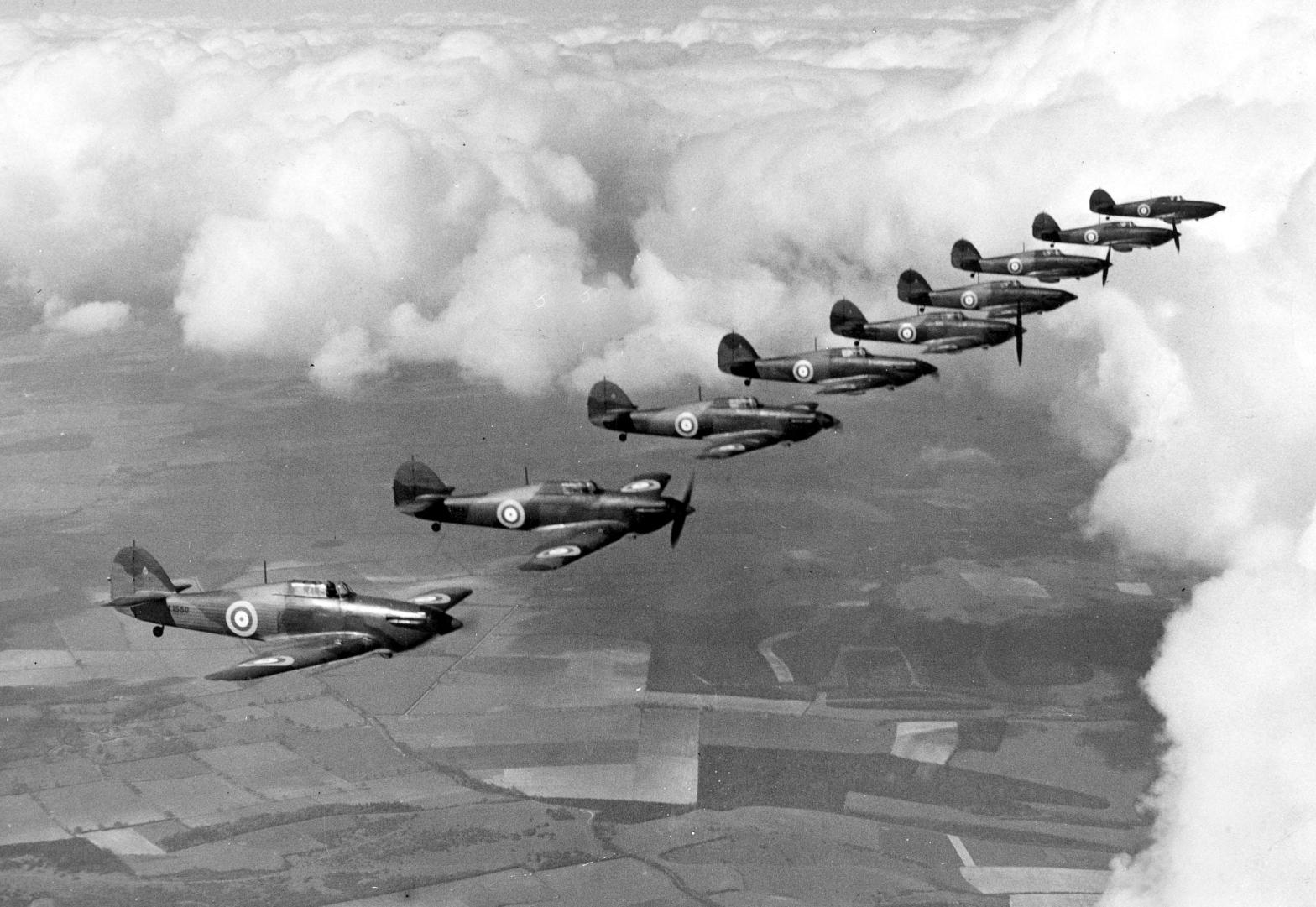
The Battle of Britain was a series of aerial conflicts over Britain from July-September 1940. The German Luftwaffe was tasked with establishing aerial supremacy over Great Britain in preparation for a naval invasion. Adolf Hitler had assumed the British would surrender after their complete evacuation from the European mainland and the capitulation of France. As such, the German army and navy had no plans or preparations for a naval invasion. Only Hermann Göring, Air Marshal of the German Luftwaffe, expressed confidence in attacking Great Britain. With Winston Churchill unwilling to capitulate to German rule of the mainland, it was eventually clear to Hitler that an invasion of Great Britain was necessary to bring hostilities to an end. The only hope for the Germans was to control the air and suppress the British Royal Navy while their troops crossed the channel. As such, the German air force was tasked with suppressing the British Royal Air Force (RAF) to provide safe passage for a vulnerable landing attempt against the superior Royal Navy.
However, things would not go according to plan for the Germans. The British had superior fighter craft and the German attacks were ineffective at thinning out the RAF. Significant casualties were inflicted on the British population as the Germans tried to deteriorate the will of the British people to continue resisting. However, this came at a high cost to German fighters and bombers, resulting in a net loss of equipment. German aircraft were shot down faster than they could be replaced. Unable to reliably down British aircraft, and unable to bomb the population into submission, Hitler eventually called off plans for an invasion of Great Britain and turned instead to invading the Soviet Union. After months of responding to near-constant bombing raids, the RAF outlasted the Luftwaffe and spared the British island from German invasion. Years later, the British coastline would be used to launch Operation Overlord when British, American, and Candian troops would cross the English Channel and turn the tables against the Axis.
Winston Churchill refused to capitulate to Germany or recognize Hitler’s rule over the European mainland.
Over 1,700 RAF aircraft were destroyed during the Battle of Britain with over 1,500 airmen killed. Nearly 50,000 civilians were killed or wounded by the air raids before the German Luftwaffe backed off. The Germans lost almost 2,000 aircraft and over 2,500 airmen before giving up on the offensive.
From the perspective of the Allies, the Battle of Britain was a dark and somber time. The European mainland was ceded completely to the Germans and Soviets. France was under German occupation. The British had abandoned the mainland. To many, the air raids over Britain seemed to be the beginning of the end. Nevertheless, this was not so. The British RAF held their own against the Luftwaffe until the Germans backed off, bringing the people of the Allies some semblance of hope.
Hermann Göring was the leader of the German Air Force during WWII, and the only German military leader with a plan to attack Great Britain.
The world has fallen
Darkness rises over all
Hope begins to fade
Time grinds to halt
The whole world seems to stand still
What will happen next?
A time of monsters
We come to the darkest hour
A time of heroes
The German Luftwaffe attempted to exhaust the British air defenses in preparation for a naval invasion.
Doom is upon us
But the light has not fallen
Brave souls do yet stand
They take to the skies
Demons fly across the sea
And angels meet them
Uncertainty looms
Death rains from skies on fire
People hide below
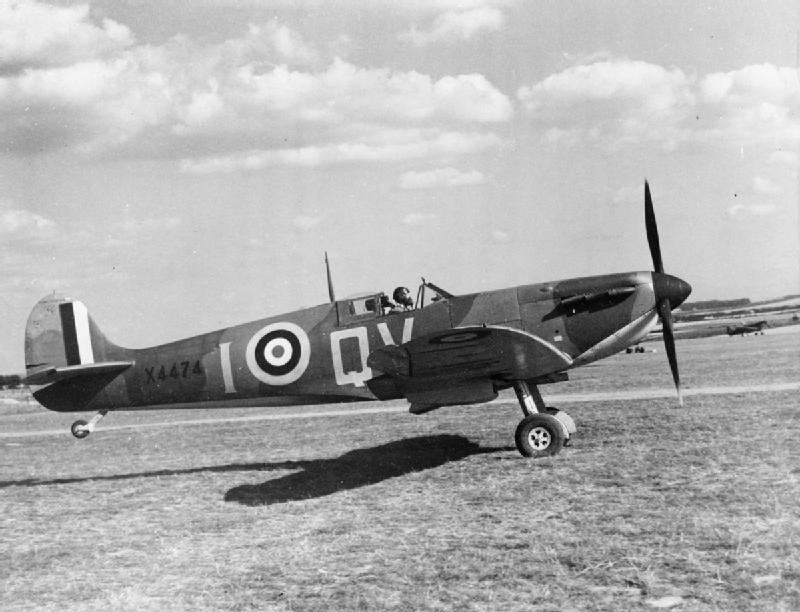
The RAF “Spitfire” was one of the British aircraft which was instrumental in defending against the German air raids.
Flesh and metal grind
The skies fill with flame and blood
With no end in sight
Through struggle they grow
Selfless souls fly into hell
To the stars they go
Their efforts prevail
Day and night, they stay the flame
Taming the dark beast
As the air raids dragged on, many British people opted to emerge from their shelters and get on with their lives despite the dangers of the war.
The people hold strong
Across the ages they stand
To meet this moment
The beast wails in pain
Unable to bear the truth
That hope still remains
The beast turns away
Aching from its wounded state
The light still may shine
The RAF was established in WWI. Their motto translates to, “through adversity to the stars” in Latin.
This weekend was the 810th anniversary of the Battle of Las Navas De Tolosa. On July 16th, 1212, the Reconquista defeated the Muslim invaders of Spain and marked a turning point in the liberation of the country. Spain had been occupied by Muslim slavers for five centuries, with a small resistance movement slowly taking back territory in the north bit by bit. After they had liberated half the country, the situation escalated. The Muslims amassed a huge army of volunteers, traitors, and slaves to reinvade northern Spain.
Pope Innocent III received the declaration of war and called for Christian warriors from across the lands to muster for a defense. Thus, a new Crusade began, and Alfonso VIII of Castile took charge of the Reconquista. The Spanish Christians were outnumbered, but better equipped and were volunteers with hearts filled with passion. A force of 12,000 heavily armed and armored warriors stood against the ragtag group of 30,000 scantily clad conscripts. The enemies fell in droves, but their numbers allowed them to withstand such losses.
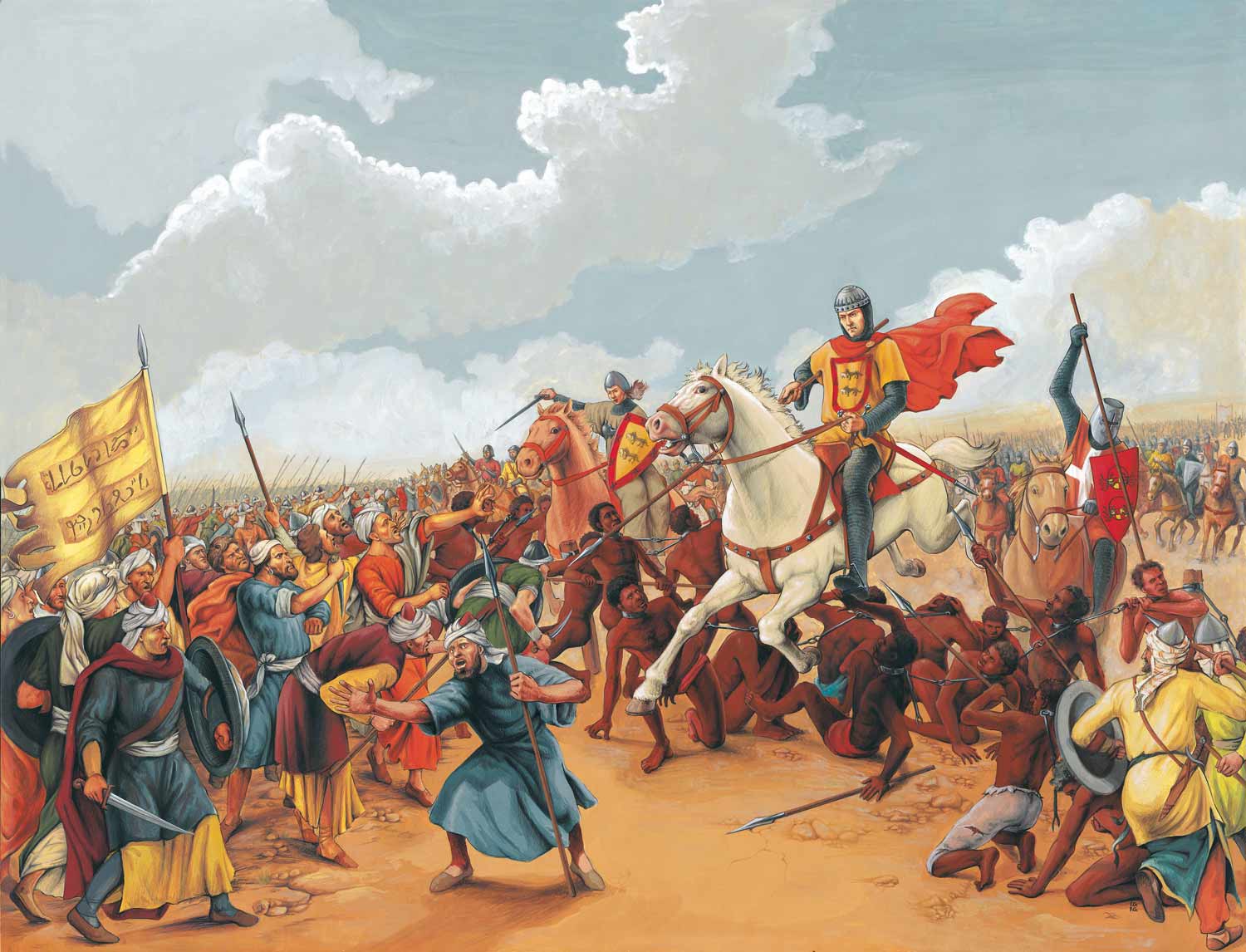
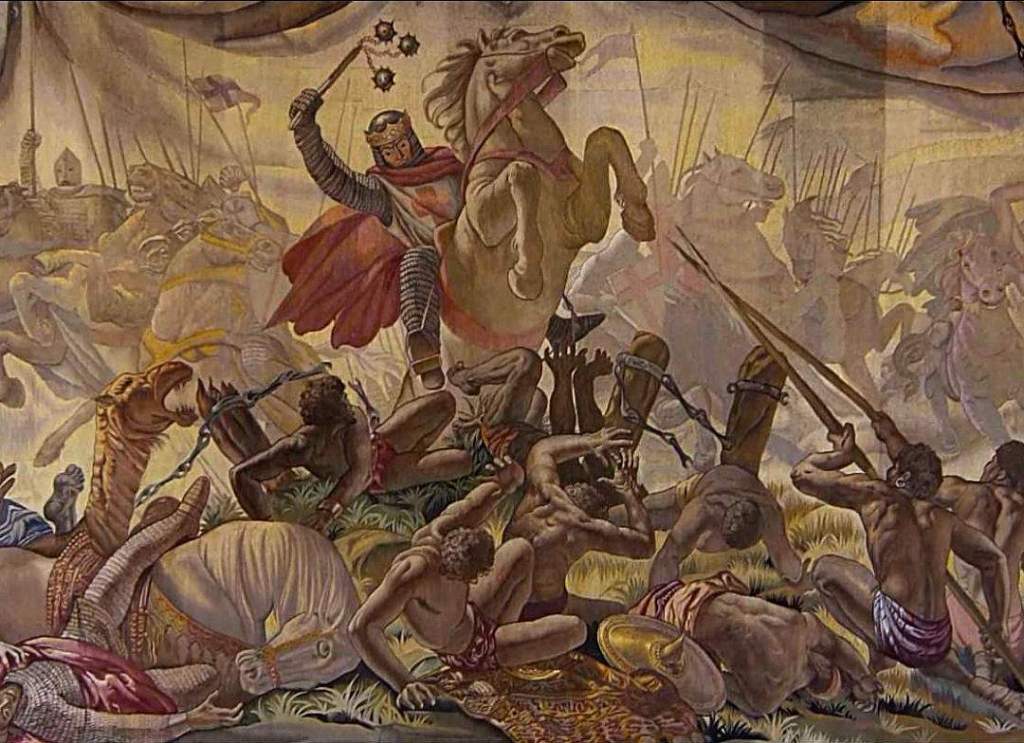
The Christians eventually grew weary and lost hope. They began to flee, and Alfonso took the initiative to lead a cavalry charge. With their flags bearing the cross and the Son, Alfonso and his men rallied their troops and broke through the Muslim lines. They slaughtered the slave warriors chained together and scattered the rest who could run. The tide was turned and the enemy was routed. This battle was one of the great triumphs of freedom over slavery and it is an inspiring tale to behold.
Terror spreads throughout the land
Fiends pillage and enslave the weak
A great heresy is their marching band
Where they go, havoc does wreak
Yet brave souls prosper to the north
Carrying the sword of the cross
Piece by piece, they move forth
Reclaiming the land that was lost
The slaver king cries out in vain
Against the return of the light
The Lord has come to free the land of Spain
To push out the heretical blight
Hope is kindled near every bend
Light spreads to the darkest corner
A scourge of five centuries comes to an end
The Lord has come to restore His order
The slaver king fumes with rage
Wailing from his throne of flesh and chains
Against the Lord, he sets his cage
With malice flowing through his veins
An artist’s depiction of Alfonso’s cavalry charge against the Muslim slave soldiers.
The heretics know their end draws near
The time for them to drown in shame
The Lord's men come for that most dear
To reclaim the lost land of Spain
Men of God muster from across all the lands
To Crusade once more against the darkness
Pushing back the heretics and slaver bands
The Reconquista comes to redeem us
A force of warrior monks and knights
Volunteers with hearts strong and calm
To battle the slave hordes of Muslim fright
And restore the realm of Christendom
The army of God amassed as one
Met with a sea of demons of all types
Knights in armor shining in the sun
The agents of the Adversary a force of all stripes
Traitors, slaves, and volunteers filled the heretic ranks
Dressed in rags and chains with flesh exposed
Some came willingly, others dragged without thanks
Others came in madness with their minds disposed
The Battle of Las Navas de Tolosa is said to have involved so many men that there was no room for archers.
The light and dark clashed without end in sight
Outnumbered at large was the Army of God
Yet unyielding and undeterred as they kept up the fight
Determined to break the heretics' fascade
A momenet then came
When hope faultered briefly
The army of light flew in shame
As the dark horde stood steeply
But Alfonso stood tall
When he heard that cry of doom
He charged forth without fear nor stall
Into the thick of the blood plume
There was no victory in sight
With the darkness vast and shrill
Though God's men stood still to keep the fight
To embody His everlasting will
Armor clashed against flesh and chain
Freeman against the slave
Fighting for the fate of Spain
For a future bright or grave
Another depiction of Alfonso’s cavalry charge against the Muslim slave soldiers.
And the light shines in the darkness
Ever bright and ever pure
The darkness shall not overcome His greatness
The future shall at last be secure
At long last the chains did break
And the heretics fell to the sword
Fallen ground was now God's to retake
Freedom was Spain's reward
The Reconquista prevailed
By God's mighty grace
The enemy was assailed
Now peace, Spain may embrace
Praise be to the Lord
He who is never to know loss
He who sends us men of war
Men who wield the sword of the cross














 The Pensive Warrior