Seasons Come and Seasons Go

In Ecclesiastes chapter 3, verse 11, Solomon tells us that God has set eternity in the hearts of men. In other words, the Lord has given us a longing for things that are neverending and ever-changing.

In Psalm 37, verse 4, the Psalmist tells us to “take delight in the Lord, and He will give you the desires of your heart.” This lets us know how to satisfy that desire set within us. By taking delight in the path the Lord has called us to.

That path is as it has always been. As Moses writes in Genesis chapter 1, verse 28 we are called to fill the earth, exercise dominion over it, and all its inhabitants. In that manner, we are to continue to grow in all we do.

In that spirit, I wrote this poem for a good friend of mine named Jim. This is “Seasons Come, and Seasons Go.”


Seasons come and seasons go
Yet life endures, its eternal flow
There is no end to times that pass
Yet, no one time is sure to last
For all such things must find an end
So that new times shall turn their bend
A pity to find, should one be stuck
Never anew, always a muck
For life is growth, and death decay
So then, to die, is long to stay
In but one place, one may not grow
And for their life, not much to show
Unless they do forge on ahead
Never to be one so dead
But one alive, alive indeed
Ever to strive to meet one's need

The Pensive Warrior posts are licensed under a Creative Commons Attribution-NonCommercial-NoDerivatives 4.0 International License.

Nahum 1 Commentary

The selected verse on Biblehub’s devotional page for the evening of February 22nd is Nahum 1:3. In the NKJV, this verse reads “The Lord is slow to anger and great in power, And will not at all acquit the wicked.” The larger passage is a declaration of judgement against the nation of Assyria, and the capital city of Nineveh in particular. Those familiar with the Bible will remember Nineveh from the story of Jonah, and that the Lord spared this city from His judgement before.

That was about a century prior to this time. Back then, the people of Nineveh repented in response to the Lord’s call through Jonah. However, they have since backslid into their old ways. As such, their evil has again aroused the anger of the Lord, and He is set to destroy them. Some time later, a rebellion would break out in the Assyrian capital and unnaturally heavy rains weakened the city’s defenses. The result was the total destruction of the city, just as the Lord foretold through Nahum.

Key Points

There are a few statements in Nahum 1 that beckon closer consideration. The first comes in verse 2: “God is jealous.” This provides insight not only regarding the character of God, but also the morality of jealously. God is supremely good. There is no sin in Him. Thus, jealously cannot be considered sinful. On the contrary, there is a righteous nature to jealously, otherwise God would not experience such an emotion.

We experience jealously when intimate boundaries are violated. It can be defined as “intolerance to unfaithfulness” or “vigilance in guarding a possession.” This is not to be confused with covetousness/envy, another Biblical concept that involves having a desire for something that does not belong to you. Due to the careless use of language by many, people may sometimes consider jealousy and envy to be synonyms. However, it is important to distinguish between the two, since the Bible makes such a distinction. Jealousy is righteous, while envy is wicked. Therefore, we risk leading people astray by equating the two. Instead, jealousy and envy must be clearly distinguished from one another in our minds.

Another statement worth examining comes from verse 3, “The Lord is slow to anger and great in power, And will not at all acquit the wicked.” This is a reminder to those who might foolishly think that God is being unfair when He destroys a city or a nation. On the contrary, God abstained from destroying Nineveh for a century, only unleashing His wrath upon them after they backslid into their old ways which He previously warned them about. Oftentimes, people are quick to forget their wrongdoings when they are about to be held accountable, and they may try to gaslight the judge by falsely claiming that the justice they are facing is unjust. A quick reminder of the truth is sufficient to rebuke them.

In verse 7, we read “The Lord is good.” This is a simple, yet profound statement in light of the context. The Lord has just detailed His total destruction to be wrought upon His enemies. This is indeed very good, for to continue in abstaining from justice at this point would not be merciful. It would be enabling of sin, and God is not an enabler of sin. That would not be good, but evil. Thus, the Lord must eventually deal out justice to those who continue in error. We too must recognize the line between merciful abstention and sinful enabling. Like the Lord, we should be slow to anger and quick to forgive. Yet, as His servants, we must also be good, not abstaining forever from putting an end to evil lest we stray from the path of good in so doing.

A Hard Path to Follow
Prepare in me, oh Lord, a heart quick to forgive.
One slow to anger, and always cheerful to give.
Yet, let me not falter when justice need be done.
Lest I come to heed not You, but heed the evil one.
Make me wise to know how long to bear with one most vile.
Lest I do make sin to abound and become one You revile.
Still More to Learn

Nahum is one of the shortest books of the Bible, yet also one of the most dense in terms lessons packed into each verse. This is by no means an exhaustive look at Nahum, and I would encourage everyone to read it in its entirety along with some extra research on world history surrounding the time when it was written. The insight one can gain in pursuing an understanding of the Lord is well worth the time and effort.


The Pensive Warrior posts are licensed under a Creative Commons Attribution-NonCommercial-NoDerivatives 4.0 International License.

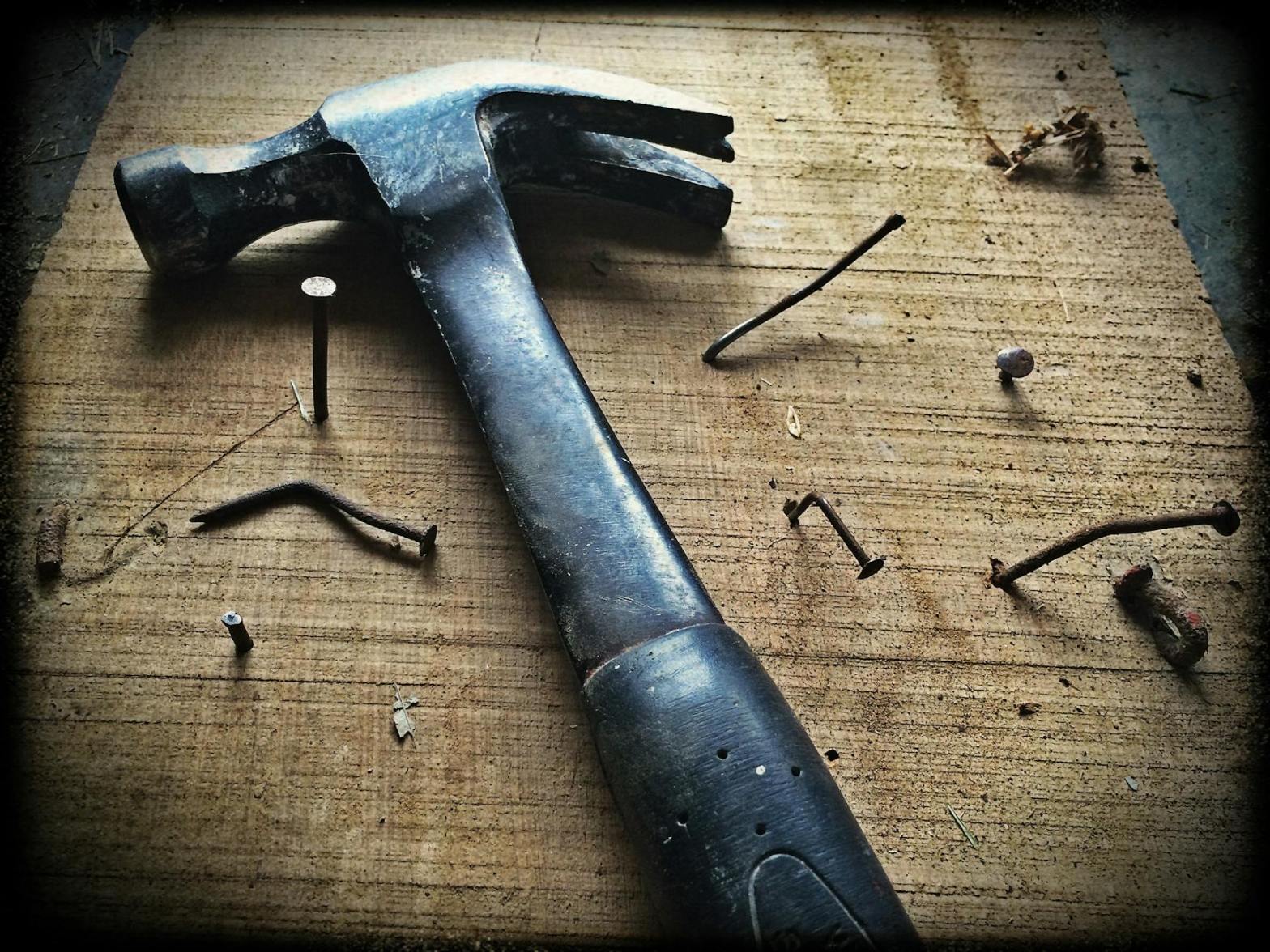
Hammers and Nails: The Right Tool for the Job

We’ve all heard the notion, “to a hammer, everything looks like a nail.” This is true when we have some charity and don’t scrutinize the statement. For those who don’t understand what this means, it is an idiom espousing the idea that if you are only familiar with one tool, then you will find excuses to use that tool all the time. This includes scenarios in which it would be inappropriate to use said tool. In so doing, some kind of damage is caused, as happens when one uses a hammer on things that are not nails. A hammer applied in any way other than driving a nail is destructive, and when pursuing any intended outcome other than a destructive one, using a hammer as such is counterproductive.

This is of course notwithstanding situations where one is using a hammer as a weapon and the intended outcome is the destruction of the opponent. In such a case, obviously that destructive end is productive. However, the original idiom assumes for the sake of argument that we are talking about an ordinary construction hammer used for driving and pulling nails. With this assumption accepted, the notion espoused by the original idiom withstands scrutiny and can be said to be true. No analogy, metaphor, or other figure of speech is perfect. Analogies and the like can be tortured beyond their original context to defeat the meaning, but we must have charity and not do so when assessing such things.

With that said, let us modify the original statement to make it more defensible and true. “When all you have; know how to use; or are willing to use is a hammer, everything will tend to appear as a nail.” Obviously, this doesn’t roll off the tongue quite as smooth as the original phrase, but it does remove the holes in it that a critic could poke. Now, we can move onto the inverse notion derived from the acceptance of this original idea.

If A=B, then B=A

Of course, if something is true, then the inverse of it should also be true. That brings up the notion of “when you don’t have a hammer, nothing looks like a nail.” This is a quote I recently read from the Facebook page The New Christian Intellectual. I do not know, nor am I associated with the administrator of this page; but he seems an intelligent Christian fellow, and I would recommend his content. As for his statement, it is true that when you don’t have or know how to use a metaphorical hammer, then nothing would appear to you as a metaphorical nail. What is meant by this?

It means the same thing as the old adage. That is, it is a commentary on the importance of having and knowing how to use the right tool for the job. However, the inverse of the old adage may be more useful nowadays, especially in the realm of polemics, as the saying that “to a hammer, everything looks like a nail” can be commonly misused. In the modern vernacular, I have certainly noticed in media and common speech the use of this old adage to disparage those using a stern or forceful approach to something, or to insinuate the person adopts such an approach too much.

While this may be true of some individuals somewhere at some times, it can take the old adage into a slightly different context which can have dramatic effects on our modern lexicon and the ideas people presuppose. After all, the notion that “to a hammer, everything looks like a nail” can be refuted by noting that no it does not necessarily. To a metaphorical hammer that knows itself and what it is not, and as one who knows a metaphorical screwdriver and what it used for, this anthropomorphic being might very well recognize the difference between nails and other things; and when dealing with other things, go about enlisting other anthropomorphic tools to help deal with them.

If the aforementioned refutation holds true, then not only does it shatter the literal notion of the old adage – which admittedly was not meant to be taken literally, but may be by those extending it beyond its original intent – but it also refutes those who would take the notion out of context to use it as a disparaging saying. Why would one want to refute such instances? Because clear meanings in the use of our language are important. It helps prevent semantic confusion, revisionism, and other problematic things that can inhibit social stability.

The phrase “to a hammer, everything looks like a nail” can be used maliciously to disparage someone who is using a stern or forceful approach where one is necessary, especially in the minds of people who are not privy to all the history or context of a situation. Also, it is just plain courteous to use language clearly and appropriately, and this is especially so when using phrases that hinge on metaphors like anthropomorphic hammers.

Being Prepared Goes A Long Way

All this discussion does remind me a bit of the story of David and Goliath in 1 Samuel 17. In this retelling of events, we notice a few things. David is a shepherd in the traditional sense. Shepherds were often well trained as warriors since they would be the first line of defense on the outskirts of society, protecting people and livestock from both hostile wildlife and foreign incursions. David was no exception in this regard, as he notes to King Saul that he has wrestled against large animals such as lions and prevailed. Few humans throughout history can claim such a feat, so David is already established here as one of the most skilled warriors in the history of the entire world.

While that would be impressive enough, we see that David is also capable of wielding a sling. This is an ancient projectile weapon that would launch stones with about the equivalent force of modern pistol calibers. A sling also took an incredible amount of skill to use, further demonstrating David’s high level of training.

There are two important points to notice from this story. Firstly, we are made aware that David could probably beat Goliath in a melee (as indicated by his comments about lions), yet he opts to slay the giant with a projectile weapon. This shows that David fights smarter, rather than harder. He chooses the best tool for the job and uses it well.

The second point to note is that no one else thought to do something similar. Certainly David was not the only warrior in Israel capable of shooting Goliath with a sling. However, it seems he is the only one to whom it occurs to do this. Why is that? I can only speculate, of course. However, I would posit that maybe since Goliath was challenging everyone with spears and javelins, people just assumed they would need to respond with similar weapons. Again, that is speculation, but it does account for the astonishingly simplistic solution David applies and why no one else did so earlier.

The obvious spiritual answer to the aforementioned question may be that, as the text states in verse 11 of chapter 17, the Israelites were dismayed and terrified. Perhaps this was a supernatural effect of sorts that David was immune to from his anointing earlier in 1 Samuel 16. Again, this is speculation. I cannot be certain of the answers to questions regarding “why” such things happened the way they did. We only have the account of the events themselves and must draw conclusions from them as diligently as we are able in light of the whole of Scripture.

Conclusion

The point in everything discussed herein, succinctly stated, is this: “not only is it important to have the right tool for the job, but also to be familiar with a variety of conventional tools and have them available for when said tools need to be applied.” Doing so not only allows us to be prepared to accomplish things we otherwise would not have, but also enables us to work, fight, and love smarter rather than harder. After all, a hammer may be the best tool for driving nails, but other things can do it too.

The most important thing is to have the tools necessary and to both know how to use them when the time arises, as well as the willingness to do so. You do not want to be the person stuck with a nail and no way to drive it into wood when the time comes. Likewise, when the giant shows up, you want to be the one willing and able to shoot him in the face rather than the horde of cowards who did nothing for one reason or another as civilization remained in peril.


The Pensive Warrior posts are licensed under a Creative Commons Attribution-NonCommercial-NoDerivatives 4.0 International License.
Merry Christmas 2024

The Advent season is the time leading up to the celebration of Christmas. By this time, it is Christmas Eve where I am, the day just before. During this time, we ponder the faithfulness of our Lord in not leaving us to our doom, fulfilling the promise to send us a Savior from the very moment of our fall. For it is written, “I will put enmity between you and the woman, and between your seed and her seed. He will crush your head, and you will strike his heel” (Genesis 3:15).

This promise is later reiterated many times. For example, it is also written, “When your days are fulfilled and you rest with your fathers, I will set up your seed after you, who will come from your body, and I will establish his kingdom. He shall build a house for My name, and I will establish the throne of his kingdom forever” (2 Samuel 7:12-14).

Lastly, the birth of the Messiah is seen, which is the sake of the Christmas holiday and our celebrations this time of year. For it is written, “Today in the city of David a Savior has been born to you. He is Christ the Lord!” (Luke 2:11). This begins the fulfillment of the promise, even though at this time in events, the full mission of the Messiah was not yet fulfilled. Nevertheless, what was set in motion could not be thwarted, and the rest is history.

Promises made. Promises kept.


A world long sealed unto its fate
A dark and dismal tale of woe
With demons abound and hearts of hate
With pagan lies all that most know
Yet loving is our Lord, most true
Never leaving His flock to our doom
From the beginning, His plans did ensue
To save us from our self-made gloom
Yet, nay did He come as most thought He may
For most care not to think or see
So it was then and in these days
And till the end, so shall it be
For our Lord came as a newborn son
And endured all of our growing pains
To relate with us as does anyone
And so in Him would be our gain
And this, we do recall this day
The advent of our Lord in flesh
To save us from sin and decay
And give us a world made new and fresh
Rejoice, indeed, all ye who hear
Our King Jesus born a humble boy
Some time ago, yet always near
A blessing all His kin enjoy
Remember that, come Christmas Day
The story you knew from days of old
And triumph over all dismay
With thy greatest story ever told

The Pensive Warrior posts are licensed under a Creative Commons Attribution-NonCommercial-NoDerivatives 4.0 International License.
The Importance of Weapons and the Overestimation of Bare Hands

Throughout my nearly three decades of life as a martial artist, I have routinely encountered a superiority complex among people who either have little to no combat experience (simulated or otherwise) or have not had recent experience for too long. Honestly, this is a problem I also had during my adolescence. The main issue I think is in either never having had the opportunity to be outnumbered by multiple enemies, or being so far from the last time one was outnumbered/overpowered in a fight as to not remember what it is like. The lack of this experience can lead one to overestimate the effectiveness of empty-handed techniques and/or underestimate the importance of conventional weapons. This is particularly dangerous for older and female students who often rely entirely on weapons to practically overcome even a single opponent. However, even young men will be overwhelmed when outnumbered or out-positioned, and they will suffer greatly too if they do not understand that bare hands have limited efficacy against motivated opponents.

This leads us to the question: “How do we address individuals with such dangerous preconceived notions or misunderstandings?” With this in mind, one can be guided to think realistically about multiple-opponent scenarios. Simulations with protective equipment can also be used to foster understanding. The quicker and easier method is obviously guided discussions and leading questions. This allows one to build understanding; eliminate cognitive biases; and address preconceived notions, rapidly leading students to realize the dangers of overestimating empty-handed techniques and underestimating the importance of weapons. The key is to bring up relevant [to the person you are addressing] and plausible scenarios that can be talked through as a thought exercise.

The Overestimation of Bare Hands

What is the source of this misunderstanding? How should we characterize or describe it? Also, why is it dangerous? Is it just a harmless perspective? Who does it typically affect, and why?

As mentioned, I used to share this perspective as a teenager. I felt I was invincible and could defeat anyone or anything if the occasion called for it. When pondering why I felt this way, I would say it was a combination of two things. Firstly, I think it was a product of my training as a traditional martial artist. Attending such schools, I was not afforded the opportunity to fight multiple opponents or to fight an armed opponent while I was unarmed or handicapped somehow (such as with one arm tied behind my back). We sparred regularly, and I sparred with people bigger, stronger, and more skilled than I was. However, it was always an honorable duel. In other words, it was a one-on-one bout that began with both opponents at the ready. This is helpful when training martial arts for competitive purposes, but not necessarily for combative purposes. At least, not if it is your only force-on-force training.

Secondly, I was influenced by my childish mind and fictional portrayals of hand-to-hand combat. Certainly, I love a good movie as much as the next guy. However, nowadays, I often cringe at the fight choreography in many films. What is commonly passed off as “martial arts” in Hollywood is little more than fantasy. This is probably because realistic portrayals of combat would not entertain most audiences. They are over too quick, and skilled combatants try to minimize telegraphing – something stage actors actually try to accentuate. Also, I think I spent more time fantasizing about combat as a child than actually training it, and that contributed to the warping of my perspective on my own abilities and limitations.

In short, I lacked humility and wisdom. Those two things were only acquired through experience. Not training, but experience. Training is the first step and is critically important, but I was very well trained at the time I believed in such fantasies. Yet, I had not been sufficiently humbled by both experiences and the time to mature and reflect on those experiences. I say “the time to mature and reflect” because I had opportunities to be outnumbered and overpowered. I had been beaten up by a group of people who I knew were not as well trained as I was individually. I had also been overwhelmed by people who were bigger and stronger than me, even when they were less trained. Yet, despite those experiences, it was some time until I reflected upon the past and came to appreciate the limitations of a single, unarmed combatant.

That is why I think you find people who overestimate unarmed techniques and underestimate the universal importance of weapons among both trained and untrained people. It is not a training issue. Rather, it is an issue caused by a lack of recent experience and self-reflection. To address this, scenario-based training can be used to mitigate the potential for the trainee to overcome the opponent with bare hands alone, forcing that self-reflection. This means training scenarios with multiple attackers, ambush simulations, and disparities in strength.

Obviously, those first two examples are easy enough to set up. As for simulating disparities in strength (assuming you and your training partner(s) are of comparable strength), you can spar when one of you is rested and the other(s) is/are fatigued. Such simulations can help to build the perspective gained from actually being attacked in disadvantageous conditions, thus fostering an understanding of the importance of weapons to equalize those situations.

The Importance of Weapons

Weapons are incredibly important to realistic, practical combat as a human being. We do not have claws, talons, fangs, or other inborn tools capable of rending flesh and bone. Thus, we rely upon weapons – offensive tools capable of dealing damage – for effective combat. This is why cross-culturally, and cross-generationally, martial arts systems emphasize the use of weapons. Another reason is the obvious lack of effectiveness of empty-hand techniques. When seconds matter and an imminent threat must be neutralized, weapons are essential to getting the job done quickly and efficiently. Lastly, weapons are critical for a self-sufficient style of fighting. When no one is coming to back you up and you have to either eliminate the enemy or fail and die, and you cannot risk them getting back up and continuing the attack, weapons are of paramount importance to ending the confrontation definitively and maximizing the safety of all those you are charged with protecting.

We see this wisdom conveyed not just in our own lives, but through the stories we read in the Holy Scriptures as well. In the Bible, whenever we see men of God battle evil forces in the physical plane, they use swords or other comparable weapons. Examples of this would be Jael, David, and Nehemiah, to name a few. In fact, the only time I can think of off the top of my head during which we see a man of God fight with his bare hands is when Jacob wrestles with God. But then, that was not a battle against evil forces. Also, when we see God Himself come down to the earth in the form of the Theophanic Angel (commonly translated as Angel of the LORD), such as when He fights the entire Assyrian army at the Siege of Samaria; when He greets the Israelite army crossing the Jordan; or when He stops Balaam on his path of rebellion, The Lord also appears in those instances armed with a sword. Therefore, as the children of God who seek to imitate Him, I would never expect my fellow Christians to have to fight off physical forces with their bare hands when the need arises, just as I would never expect them to fight off spiritual forces by the power of their own spirit without the aid of the Holy Spirit. We are not supermen, after all. As mentioned, even God Himself – the only one who might claim to be a kind of “superman” – feels it proper to use a conventional weapon (at times) to do battle.

The use of weapons could also be argued to allow for the humane, efficient use of force as well. In situations where deadly force is necessary to eliminate a threat, effective weapons allow for quick neutralization in a way that bare hands do not. Ask yourself, if striking down an enemy is necessary, is it better to beat him to death with your bare hands or to eliminate him swiftly with one fell stroke of a weapon? Also, when eliminating the enemy quickly is important to stop him from harming innocent bystanders one is charged with protecting, the quicker and more certainly this can be accomplished, the safer those under our charge will be. If one is elderly, or otherwise smaller and weaker in stature, the use of a weapon may also be the only effective way to ensure one’s own survival against a physically superior enemy. These are all important things to consider and emphasize when understanding the paramount importance of weapons to practical, contemporary martial arts. However, this discussion is not exhaustive, but cursory. Thus, I shall move on, even though I could ponder this point ad nauseam.

Real-World Example

Recently, I spoke with a man who wanted to share his martial arts background with me upon learning of mine. He was an elderly gentleman with a military and law enforcement history who had also studied various traditional martial arts in his youth. One thing he had mentioned to me indicated he may have been subject to the misconceptions discussed herein. That is, he mentioned he learned a lot about pressure points and holds while working in a prison, and that he found that style of fighting to be “preferable to him” because he viewed it as “non-violent.” There are a couple of obvious issues with this perspective. Some, I talked through with him, while others I did not in the interest of time and focus.

The first issue, and the one I addressed directly in our conversation, was that such a style of fighting is not necessarily well-rounded. It may be particularly suited to young men, especially those who fight as part of a team and expect backup to arrive at any moment (i.e., guards at a prison). However, such a style of fighting, emphasizing empty-hand techniques, pressure points, and holds, can be dangerously unsuited to an individual man fighting multiple attackers, women, the elderly, and anyone who is not expecting someone to come and help.

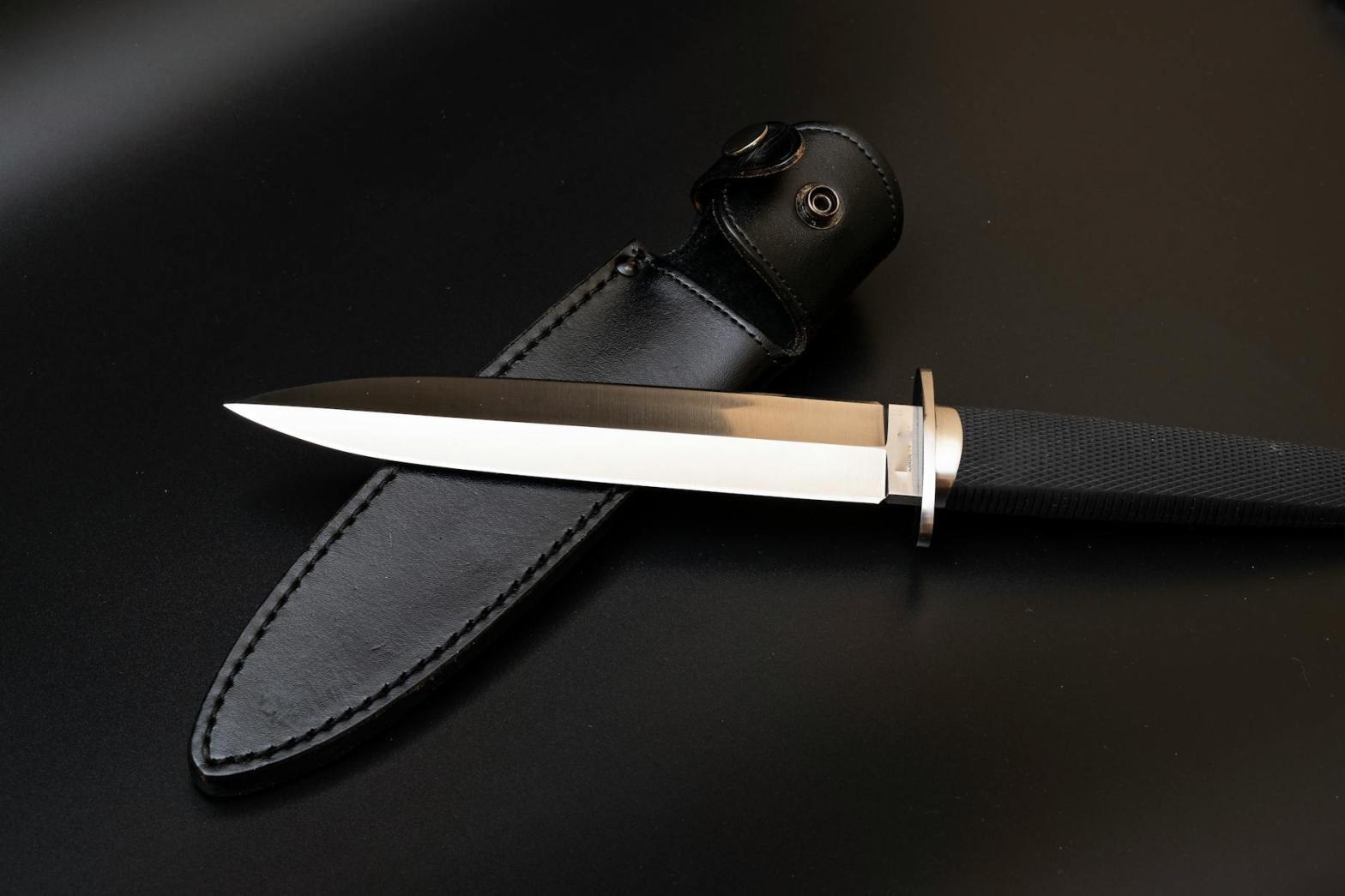
I explained to him that when I train, I train to end the fight quickly and efficiently, without any expectation that people will come to help me. Thus, I emphasize the use of a fixed-blade knife with at least a 4-inch blade, supported by a firearm and minimal empty-hand techniques. My bare hands are largely just for creating time and space to access a more definitive weapon that can end the confrontation more assuredly when such force is necessary. This still allows me to use only my bare hands in situations where only that is necessary, or even better, just my voice. After all, we do not rise to the occasion but fall to our level of training. Thus, we can always use a lower level of force than the maximum of what we have trained for when it is suitable to do so, but we can never apply a higher level of force than what we have trained for.

I also mentioned that I would not recommend training, nor would I teach a student to fight in a way that would not work later in life, alone, or as a weaker combatant [in comparison to one’s enemy]. I also talked about how my love for the knife comes from the fact that I am not the biggest or strongest guy, at least not compared to a lot of other martial artists. I have trained with many warriors much more physically imposing than I am. However, the knife mitigates many disparities in strength, similar to the gun, without raising the risk of harming bystanders the way that bullets do.

The knife and gun are a great combination, covering any engagement distance. The knife works well up close, forcing the enemy away to avoid it. In so doing, he steps into the firing range of the gun. If he wants to close the distance on the gun, he comes back in range of the knife. Also, the gun allows for eliminating threats from a distance at a lesser risk to myself and a greater risk to bystanders, while the knife is the opposite. The knife allows for eliminating threats up close at a greater risk to myself but a lesser risk to bystanders. As a Christian who often finds myself surrounded by innocent bystanders who expect people like me to protect them if need be, the knife is invaluable to me with its ability to dispatch enemies quickly and efficiently with little to no risk of harming the bystanders.

One issue I did not feel was necessary to address with the man was the framing of any use of force as “non-violent.” Obviously, any use of force is violent. However, some people fail to understand violence as an amoral concept in the English language – meaning neither good nor evil. “Amoral” means “without morality.” It is opposed to “moral,” meaning “good,” and “immoral,” meaning “evil.” Something amoral, like a knife or a rock; a punch or a kick, is neither good nor evil. Rather, such a thing can be used for either good or evil, depending on the context. The obvious Biblical paradigm to explain this is the rock in Cain’s hand murdering Able, and the rock in David’s hand killing Goliath. This would then lead to the polemical discussion of the different words for “to kill” and “to murder” in the Holy Scriptures, but that is beyond the scope of this discussion. The point here is sufficiently made.

Conversationally addressing these issues using real-world examples and thought exercises allowed me to break through to the gentleman and hopefully broaden his understanding. I would never want an elderly man who trained to fight as a young man who was part of a team to think those same techniques would be equally as useful when applied alone and at a more advanced age. As I am approaching my third decade as a lifelong martial artist, I find the Lord placing me in more consultative situations where I am expected to share my perspective and understanding. That honors me and the time I have spent studying and training, but it also scares me. It means I may be responsible for what a student thinks and believes about combatives based on my commentary.

With that said, I am always cautious to avoid overemphasizing the value of empty-hand techniques as I have seen so many others do in my culture in response to a fear of the misapplication of weapons. Certainly, weapons can be misused. That is why I would never teach a student to use weapons before learning to fight with his or her bare hands. In my view, the discipline and mindset of a warrior, as applied using one’s own body, must be gained first before one is trusted with an extension of one’s body, such as a weapon. However, there is more of an issue in our present culture that I see of people overestimating the effectiveness of bare hands and underestimating the importance of conventional weapons; and that is something I would never want to be guilty of perpetuating.

Conclusion

There is much more to be said on this topic. As mentioned above, this is not an exhaustive discussion. Rather, it is a concise overview with one, real-world example. Yet, I feel this is a good starting point for a topic I have always been quite passionate about, especially growing up as a rather lean martial artist. Years of sparring as a toddler and teenager against grown men who I was hopeless to overcome helped me empathize with what it is like to fight a young man as a woman or an elderly person. Also, getting beat up by groups of young men when I was in my prime honed that perspective as well. I think it is easy to forget or overlook the paramount importance of weapons to practical combat. After all, I encounter people who make this error all the time, it seems. And indeed, I used to make this error myself.

What about you? Have you ever had the opportunity to get beat up by multiple people or spar with someone significantly stronger than you? Have you ever had the chance to spar with someone armed with a training weapon while you were unarmed? Have you ever survived a fight with an enemy who was armed with a real weapon while you had none? What was that experience like for you? How did it change your perspective on things? Also, what would you say in a conversation to convey that understanding to someone else?


The Pensive Warrior posts are licensed under a Creative Commons Attribution-NonCommercial-NoDerivatives 4.0 International License.

Commentary On 2 Samuel 7:25

While wondering what to post about at the very end of this month, I stumbled across the Devotions page on Biblehub.com. From there, I jumped to 2 Samuel 7:25, and then the full chapter of 2 Samuel 7. It is a brief excerpt with a simple, yet profound message.

The verse 2 Samuel 7:25 reads “And now, O Lord God, confirm forever the word that you have spoken concerning your servant and concerning his house, and do as you have spoken.”

Reading the rest of the chapter surrounding this verse reveals the context and the lesson, giving us insight into both the character of God and a man following His will. In this passage, David has decided it would be a good thing to build a dwelling place for the Lord, since the Ark has been carted around from place to place for quite some time. The Lord instructs the prophet Nathan to inform David that He does not want David to build Him a temple, but that his offspring will do so later and that an eternal kingdom to come will be established through David’s line. David is content with this, and even overjoyed. He rejoices that God’s plans for his life are greater than the plans he had devised himself, and thus he is blessed in the putting away of his own plans in submission to the greater plans of Adonai.

The lesson for us to learn from this passage is then clear. Sometimes we may attempt to do something for God of our own initiative, but God may have something else in mind to be done. That is not to say that what we intended was bad or ill-intentioned. Certainly not. On the contrary, if we are following the Lord and His ways, our plans should be good and well-intentioned. However, God’s plans will be better than ours, and thus it is good to submit to those greater plans. In fact, going along with God’s plans will bring about even greater joy for us and everyone else than our own plans would have, being made separate from His.

With that said, it’s time to write a poem on all this.


Prepare in me, O Lord, a willing heart;
One always seeking good to do
Yet also ready to depart
When thou hast for me something new.
Let me not cling to mine own plans
When there may be something greater still
That You would make by both our hands
Guiding mine to do what is Thy will.
This way, may I, always come to be
Your instrument by which You play
The great songs of all that is to see;
The music that does make each day.
For I do know you see more than I
No matter how I am to seek
For Yours is much the greater eye
And I, the student, of Your technique.
And to change course from one's own way
When a better path is to be found
Is never a source of dismay
No matter what has yet been bound.
For better still is God's design
Than ever should I make alone
What better way than one divine;
Carved by He upon the throne?
And what is my wish for all that be,
But to align my will to His?
The One whose hands gave shape to me;
The One who made all that there is.

The Pensive Warrior posts are licensed under a Creative Commons Attribution-NonCommercial-NoDerivatives 4.0 International License.
Autumn’s Relief

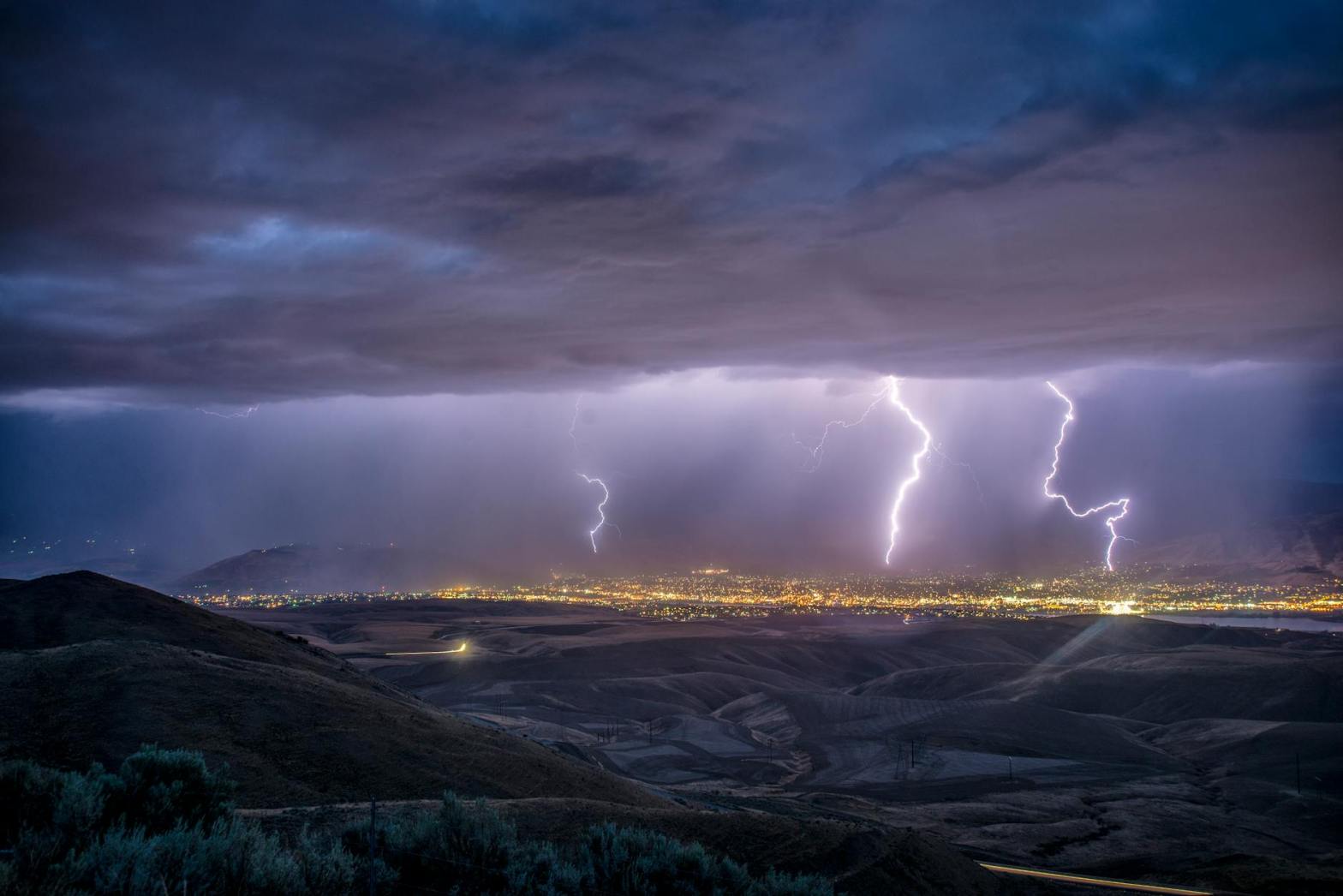
A few days ago was the first day of autumn. As if a switch had been flipped, it seemed as though the wretched summer weather was turned off. Where I live, there is often high humidity with 70+ degrees Fahrenheit weather every day for nearly three months straight during the summertime, even at night. For those unaware, that is like being in a sauna all the time.

Needless to say, summer is not a pleasant time where I live unless you plan on sitting around, doing nothing. If you have any mind to get up and move, you feel weaker and get tired quicker than at any other time of year. You also sweat like a fountain, even if you are not doing anything. Thus, for anyone who wishes or needs to be active, summertime is a nightmare.

Yet the brutality of summer always makes the end of it all the sweeter. That is what this poem is about. I was moved to write this after taking a walk through the woods for the first time this year in autumn weather. Doing so reminded me how being outside can be a pleasant experience, something I always manage to forget every summer season.


Summer lashes with whips of fire
Each day and night a dreary toil
With no relief, it burns most dire
Summer's snare, a loathsome coil
Yet autumn reminds us of God's grace
For summer's heat is never to last
Always to come is autumn's embrace
With humid anquish left to the past
For all of nature does testify to God
To show His glory and mercy most true
His love, indeed, is no facade
And in all things, it does shine through
When autumn comes, it comes with joy
With a peace found only in the Lord
Restoring the spirit summer does destroy
Such relief, a just reward
In autumn's embrace, the sun is fond
No longer a tyrant in the sky
No more does steam rise from the pond
And no longer does skin cry
Autumn comes with great relief
As colors bloom with deep arrays
The wind does kiss with no more grief
And all is wrapped in Heaven's gaze
Though summer's hell does have its place
For gold is tested and refined in fire
Summer's end does show God's grace
As autumn fulfills all peaceful desire

The Pensive Warrior posts are licensed under a Creative Commons Attribution-NonCommercial-NoDerivatives 4.0 International License.

Knife Fighting: More Recent Understandings

I have been studying knife fighting – particularly forward-grip, edge-out styles – for quite some time now. At this point, I feel very comfortable with the blade in my right hand and am gaining comfort with it in my left (I am right-handed). There are quite a few things I have learned and some misconceptions I previously held which I have now abandoned.

Things I’ve Learned

Cutting and stabbing the neck and wrists is appealing since they are among the easiest targets to reach. However, they are also the least likely to be covered by thick clothing. This means they are more vulnerable to the blade since no penetration is lost through clothing, but it also means the enemy’s blood is more likely to squirt in your face. That is something you wish to avoid because not only is getting someone else’s blood in your eyes, nose, and mouth gross; but you also don’t know what is in the enemy’s blood. There could be drugs, diseases, or other dangerous chemicals. Thus, it is imperative to use footwork and the support hand to angle yourself away from the wound as quickly as possible, if possible, when targeting the neck or wrists.

This has also started to create somewhat of a preference in me for attacking below the chest. The lower abdomen and upper legs are more likely to be covered with clothing, but a large enough knife should be able to handle this. It is important to remember that 1-2 inches of penetration may be lost through clothing and to choose your blade accordingly. The upper arms also are often covered by clothing that can soak up blood. However, I recognize we do not get to choose the targets presented to us in combat, so it is paramount to train using movement and positioning to try and avoid blood spurts when exposed arteries are cut.

Misconceptions I Held

I used to think there was little practical application to a reverse grip with the blade facing edge out and a forward grip with the blade facing edge in. However, after reading more literature on the topic of knife fighting and practicing with a blade in hand, I have come to understand the applications and merits of each. Now, I understand there is a time and place for all four orientations of the blade – forward grip with the edge facing out/in and reverse grip with the edge facing out/in. This all assumes one is using a basic, single-edged straight knife design. Daggers with double-edged blades and knives with aggressive curvature are obviously used in somewhat specialized ways.

Classic Fairburn-Sykes Dagger
A classic, Fairburn-Sykes dagger with a double edge has benefits and drawbacks.

In my previous post on this topic, which you can find here, I also espoused the idea that you might as well do rising cuts when raising the knife to do a vertical or diagonal, downward cut. However, after more practice, I find the need to amend my statement on this. Rising cuts can certainly be done with a knife, especially when paired with good footwork. However, with a blade as short as a knife is, I just feel they are less and less useful as I practice more. Downward, vertical, and diagonal cuts, as well as horizontal cuts and thrusts, can all be performed in much easier, rapid succession along with open-hand attacks with the free hand. Rising cuts seem to just be slower, as well as less useful due to the very short nature of a knife. I do like rising cuts with a longsword because of how quick they can be performed; how far they reach with the length of the blade; and the intuitive way they allow you to advance on the opponent. However, with a knife, I am finding rising cuts may not have been as practical as I thought some time ago.

Preferences I’ve Developed

Before I started training with a knife, I was very enamored with daggers due to their double edge. This may have come from my love of a double-edged sword and its ability to offend from more angles than a single-edged sword. However, just as swords eventually converged to have “false edges,” meaning one side was fully sharpened and the other was sharpened only part of the way down, I have developed a preference for knives like the Bowie with a fully sharpened edge and a false edge on the spine. This allows for a thicker spine for heavier cuts, but still enables the double-edged point for greater penetration. Also, a knife with a false edge rather than a double edge allows for putting the thumb or hand on the spine like a single-edged knife, enhancing cuts with more force. This is something that would be precarious with a dagger.

Classic Bowie Knife
I still find myself quite fond of the classic, Bowie design.

I am also growing fond of the karambit, an ancient Indonesian design with an inward curve fashioned after a tiger claw. This enhances cuts, which are a lot of fun to drill and put less pressure on the wrist than thrusts. The inward curve also allows for some grappling techniques to be performed with the knife while cutting. This would be impractical with a straight-edged knife. However, the thrusting capability of the karambit is diminished by its design, and thrusts are what primarily end fights.

Prayer for Warriors in Christ

Heavenly Father, thank you for this day; for all you have done; and for all that you do, for all you do is good and great. Thank you for creating me, bringing me to this occasion, and for all the provision you have afforded me in this life. Forgive me for the good I struggle to do and the ill I struggle to resist, as I extend the same forgiveness to others.

Train my hands for war and my fingers for battle, as you are my strength and refuge; my Father and my my Master. Train my hands to protect the innocent from the wicked, and my heart to be the instrument of Your divine will. Grant me knowledge to know Your will, wisdom to know how to apply it, discernment to know your seed from Satan’s, and discretion to preserve my ways before You.

Guide me to align my ways with Yours, for Your ways are higher than mine. I am Your servant. It is for You whom I lay down my life, and for Your kingdom I do serve. I also pray these things for those other warriors who put their faith in You and commit themselves to Your ways.

This I pray in the name of Your Son, Jesus the Christ.


The Pensive Warrior posts are licensed under a Creative Commons Attribution-NonCommercial-NoDerivatives 4.0 International License.

America (Extended Version)

This is an extended version of the hymn “(America) My Country ‘Tis of Thee.” I love the original, but I felt it was lacking in verses. As a hymn, I know people often sing certain verses rather than the whole song, and they sometimes have different verses altogether in their hymnals.

I wanted to add a significant number of verses to this song that follow the same melody, rhyme scheme, syllable count, theme, and meaning. My goal was to give a greater volume of verses to choose from while still maintaining the integrity of the song.

The extension adds nine verses, bringing it up to thirteen in total. This was done to coincide with the Thirteen Original Colonies that signed the Declaration of Independence.

The original hymn was written by Samuel Francis Smith in 1832. The melody is adapted from the British national anthem, “God Save the King.” Before the adoption of the “Star Spangled Banner” as the official national anthem of the USA, “My Country ‘Tis of Thee” served as a sort of de facto national anthem.

To elaborate on the aforementioned, I wrote this extension primarily to add more verses speaking of the character and faithfulness of the American people across time and space as a Christian nation in a Godless world. We are a people who have struggled with enemies internally and externally, physically and spiritually. As each generation passes, those forces of evil only grow greater. As it is written, “he who endures to the end shall be saved” (Matthew 24:13).

I also wrote this as a gift to the American people this Independence Day. It is the 4th of July, 2024. Long may our land be bright, until we are all called home.


My country tis of thee
Sweet land of liberty
Of thee I sing
Land where my fathers died
Land of the pilgrims' pride
From every mountainside
Let freedom ring
My native country thee
Land of the noble free
Thy name I love
I love thy rocks and rills
Thy woods and templed hills
My heart with rapture thrills
Like that above
Let music swell the breeze
And ring from all the trees
Sweet freedom's song
Let mortal tongues awake
Let all that breathe partake
Let rocks their silence break
The sound prolong
Our fathers' God to thee
Author of liberty
To Thee we sing
Long may our land be bright
With freedom's holy light
Protect us by Thy might
Great God our King
Land of the righteous free
Home of the brave are we
Brothers, come sing
Sing of Christ's victory
Praise God and King do we
Who gives us liberty
Now freedom rings
In God we place our trust
He who is right and just
To heal our land
Him do we need always
To guide us all our days
For this we ever praise
And take our stand
To us you gave your sheep
A republic to keep
This we hold dear
A home away from home
No more are we to roam
This, a piece of shalom
On the frontier
A people strong and firm
Faith to outlast the wyrm
Hope without end
Forever shall we be
Steadfast and yoked to Thee
Until You choose to see
Us all ascend
Though darkness near may creep
Over our holy keep
It shall not win
In Christ we take our pride
In faith we all shall die
Stood by the Father's side
Heeding no sin
My fellow countrymen
We storm the devil's den
To fight as one
Our Lord and God most just
Praise for sustaining us
Through hell and back we thrust
Till all is done
Though evil surely comes
Never shall we succumb
We fighting men
Always shall God provide
Evil always denied
We all in faith have died
To rise again
Shamed and forlorn have we
Been on behalf of Thee
Hated by all
Strengthened through all are we
Never forsaking Thee
Till we are called to be
Home in your halls
Blasphemers on all sides
Is when we take our stride
In these last days
When every tribe shall come
Every nation and tongue
Americans as one
Shall lead the way

The Pensive Warrior posts are licensed under a Creative Commons Attribution-NonCommercial-NoDerivatives 4.0 International License.
Family Found and Forged

America and the Philippines have had an interesting relationship, much like any two countries we analyze from a long-term perspective. However, there is more to be said about the special bond between our two nations, a bond which has given glory to God through bitter times and sweet. It is a bond that has been tested and strained and still stands to be tested as never before in times to come. Yet through all, there have been Americans and Filipinos who have been faithful to one another as to our Lord, no matter the schemes of the Adversary beset to push us apart. This history and future, as well as the friends from the Philippines I have made personally, led me to commemorate the ties between our two nations in the same way I honored the bond between America and Japan. With that said, let us take a brief look at the history of America and the Philippines.

Spanish-American War & Handover

The relationship between America and the Philippines began as a result of the Spanish-American War. Spain was in control of Manila, but a fledging republic led by Emilio Aguinaldo held most of the archipelago. This led to a stalemate that could not be broken, as control of Manila was very much contingent upon naval power, a domain in which Spain held the decisive advantage over the Philippines. However, this advantage did not extend to America at the time. While the Spanish-American war was focused on Cuba for the Americans, it did lead the Spanish and American navies into combat over control of Manila; and the U.S. Navy quickly routed the Spanish forces controlling the bay, harbor, and city.

Battle of Manila Bay
The Battle of Manila Bay, oil on canvas – Public Domain

Unfortunately, despite the fact the Filipinos were commanding a functional republic throughout the rest of the archipelago, some American leaders bought into the European idea that they were not educated enough to control the island themselves. Aguinaldo tried to reach out to the Americans and form amicable ties, but his attempts were not heeded. In the Treaty of Paris, Spain handed over official control of the Philippines to the Americans. Even though the treaty was unpopular in the U.S. Congress, it narrowly passed with enough convincing by supportive voices. The main draw of the move was to give the United States a presence in the Pacific, allowing U.S. forces to better protect merchant vessels traveling to China. Since this was a valid concern, those in favor of annexing the Philippines won the day.

This would put America and the Philippines on a collision course in the short term, but similar to the British and Japanese, the forced ties would eventually lead to a lasting partnership. However, just as with those other allies forged from historical enemies, Americans and Filipinos would now shed one another’s blood.

The Philippine-American War & Colonization

Commodore George Dewey led an American naval group based out of Hong Kong and took Manila Bay quickly. Additional ground troops arrived three months later and Manila was surrendered without a fight by the Spanish governor, Fermín Jáudenes. However, Aguinaldo and the Filipino forces in control of the rest of the archipelago did not recognize American sovereignty over the islands any more than Spanish sovereignty, nor did the Americans recognize the Filipino claims to sovereignty. The conflict was inevitable at this point, as the Filipinos saw the state of affairs as simply a continuation of their revolution without much of a difference, and groups opposing the occupation back in the Continental United States failed to muster enough support to hand over control of the Philippines to the locals.

On February 4th, 1899, Aguinaldo declared war against the United States. Malolos was established as the capital of the First Philippine Republic, and Antonio Luna was given command of all their military forces. Filipino troops stormed Manila on the 4th, attempting to take the city in one fell swoop. They were repulsed by American troops at every point of contact. The fighting carried on and spread. Luna was killed and Malolos fell to American occupation by March 31st. At this time, U.S. President William McKinley formed a new civil government in the Philippines to establish some kind of peace and the pursuit of happiness and the prosperity of the Filipinos, even against American interests. This declaration was later cited in support of Philippine independence. Due to the atrocities committed by the militant groups under Aguinaldo such as the crucifixion of Americans, setting them up to be eaten alive by ants, and cutting their ears off, any involvement of the First Philippine Republic under Aguinaldo in the new government was seen as unthinkable.

American troops in the Philippines
American troops in the Philippines during the Philippine-American War.

A campaign of guerilla warfare continued against the Americans and their allies they had gained amongst the locals by Aguinaldo and his forces. Fighting was concentrated in Luzon. At this time, groups such as the Macabebe – who had aided the Spanish during their reign – began working alongside the Americans and the new government. The Macabebe and Americans worked together to capture Aguinaldo on March 23, 1901. Brigadier General Frederick Funston and a handful of other Americans posed as prisoners of war being transported by some Macabebe troops. This allowed them to sneak into Aguinaldo’s camp and take him alive.

Now in American custody, Aguinaldo pledged his loyalty to the United States and called for all his forces to stand down. However, they did not heed his call and the fighting continued with greater ferocity. There were massacres and atrocities in turn committed by both Americans and Filipinos against one another.

The Philippine-American War Escalates

As Americans captured population centers, they made use of combatants who had been arrested in forced labor – a common practice to this day, as those who have forfeited their liberty through violence against the community may be expected to make restitution through involuntary community service. However, in the context of a foreign war and occupation, this was understandably perceived as enslavement and conquest by the Filipinos. In truth and charity, that is an honest understanding. Out of foolishness, the Americans tried to earn the trust of the Filipinos through naive gestures such as ordering troops to be unarmed while on patrol and forbidding searches of suspicious persons to avoid accusations of sexual harassment.

This naivety of American forces and the collision course it put them on with their Filipino brethren was put on full display on September 28th, 1901 in Balangiga when rebels were smuggling weapons into the town for an early morning attack. Women were used to move the weapons, hiding them in coffins with young girls playing dead. American troops who searched them for weapons were suspicious of false claims of a recent plague, as they had not heard of any such thing. However, they were afraid to search the women for weapons for fear of being accused of sexual harassment, as American troops would be court-martialed and executed if they were accused of inappropriately touching any local women.

So, the weapons got through and the attack commenced. A company of Americans was wiped out, and the town of Balangiga burned to the ground in response. The Samar campaign followed with the Americans using a scorched earth policy against the Filipinos, causing tens of thousands of deaths. Infamously, Brigadier General Jacob F. Smith ordered all Filipino males over the age of 10 to be killed during this campaign, resulting in his court martial for the use of excessive force. It was a horrific time in the history of America and the Philippines, demonstrating how quickly violence can escalate during times of conflict.

Jacob Smith War Crimes Political Cartoon
A political cartoon from the New York Journal in 1902 regarding the war crimes of General Jacob Smith

Yet, there was light at the end of the dark times that arose out of the bloodshed. The conflict came to an end as rebel leaders fell. Miguel Malvar surrendered on April 16, 1902. Simeón Ola and the rebels under his command fell by 1903. About the last of the rebel forces under the command of Macario Sakay had fallen by 1906. As the war dragged on, the leaders of the First Philippine Republic engaged in all the same violence and destruction against their own people as the Americans had. Rebel leaders were infamous for burning Filipino villages and massacring populations who did not bow to their whims, and the people who followed them could be perceived as doing so out of a hatred for foreigners rather than a true love of country or desire for independence. As a result, the Americans eventually defeated the rebel forces since they limited such practices as much as possible and punished commanders who engaged in such atrocities wantonly.

Lessons Learned

The Philippine-American War never came to a close all at once, but rather, it died down over time as those pushing for more war and bloodshed were eventually defeated. It would take all day to exhaustively discuss the events of this conflict, and it is certainly a topic for future discussions. For now, however, for Americans such as myself, Filipinos, Christians everywhere, and all other observers today, there are several valuable lessons to take note of from studying this conflict.

The war was a wake-up call to the inexperience of American soldiers in tropical warfare. More troops died of disease than enemy contact. Expeditionary forces needed better training in surviving humid, jungle landscapes not seen anywhere across the Continental United States. This could undoubtedly be cited as invaluable to both the Americans and Filipinos in preparation for the battles to come in the next few decades. The Pacific War and Cold War would put these two peoples on the battlefields of the Pacific islands once again against new enemies. The lessons that both Americans and Filipinos learned fighting against one another would save them in the future when they had to fight alongside one another.

Some other lessons I noted while briefly studying this conflict included the importance of local support when waging any such campaign. An ignorant observer may point to the technological advancement of the American forces over the Filipinos as the deciding factor in their victory, yet why then were the Spanish ineffective? There are numerous examples of a technologically inferior force defeating a superior one. The Filipinos also had greater familiarity with the battlefield environment, as evidenced by the great losses Americans suffered to exposure rather than combat. The First Philippine Republic, however, was more of a terror to the Filipino people than the Americans were.

Unlike the FPR, the Americans also punished and even executed their own people who committed atrocities, while the FPR was led by people committing such actions and holding themselves accountable to no one. The Americans also made a point of fostering relationships with the locals in pursuance of peace, regardless of what anti-American critics might assert or what mistakes they may have made along the way. Understanding this, it was inevitable for the Filipino people to turn against the First Philippine Republic and toward the American Commonwealth. This was probably the deciding factor in the war and an important lesson for future war planners.

Another lesson learned is the inherent difficulty in cross-cultural communication and the importance of grace. In their early efforts to foster relations with the Filipinos, the Americans made several mistakes that may have seemed reasonable at the time but were wrong nonetheless. They took over government functions and distrusted Filipinos to run their own population centers. Despite what some uncharitable dunces might assert, this was actually a reasonable prejudice for late 19th and early 20th Century Americans to have given the living conditions across much of the Philippines and the brutal dysfunction of their existing government. Nevertheless, it was uncharitable on the part of the Americans to expect the Filipinos to be wholly incapable of governing themselves, requiring such a heavy-handed intervention. Greater efforts should have been made by the Americans to involve Filipinos in the governance of their own land. Americans, among all people, should have known this given our history with the British Empire.

On the part of the Filipinos, they were excessively belligerent to American offers of assistance, to the point of armed aggression. Some bleeding-heart, paradoxical utopian might think such a response was warranted. However, an unbiased observer with love for both America and the Philippines would notice the restraint of American colonialists and their genuine efforts to try and grow the Philippines; and in noticing this, could admit the violent efforts of the First Philippine Republic against the Americans were harmful to the overall society rather than helpful. The Americans were policing their own, seeking to punish those who mistreated Filipinos even with the death sentence. That is not the kind of policy that would have been enacted by a power that was truly seeking its own gain at the expense of the other. The Filipinos should have taken notice of this, especially given their reputation as a very empathetic and caring culture.

As such, we learn of the delicate and difficult nature of cross-cultural communication regardless of whatever noble intentions one might think themselves to have. There will always be misunderstandings that threaten to spiral out of control. We must be prepared for that, think through important decisions with the utmost concern for all involved, and proceed always with extreme caution where hostility may be lurking around the corner. Also, as mentioned, we must have grace for one another. Where possible, we must not be like the Filipinos at Balangiga who abused the show of faith by the Americans who disarmed themselves as an opportunity to attack, and we must not be like the Americans in the Samar campaign who responded with indiscriminate rather than targeted killing.

Of course, this is very easy to say, and never so easy to do. In fact, the Lord promises us that things will not be easy on this earth. We will be tested, and we will fail. This inevitable struggle points us to our unquestionable need for a savior. Having been provided that savior in our Lord, Jesus Christ, we are eternally grateful.

From the Philippine-American War, we learn the need for the boldness of honest men, willing to always do what is right with bravery and integrity, never giving in to the emotions of oneself or the crowd. We learn the need for sound preparations, for one should not rush into a crisis without first considering the risks and costs. We also learn the importance of the need for grace, love, friendship, and community. It was the love for fellow man and the kindred spirit we share as brothers in Christ that enabled Americans and Filipinos to build bonds that led to inevitable peace. Without this love, the early 20th-century Americans likely would have exterminated the entire population of the Philippines in an endless wave of continually escalating hostilities. Yet because of the love that was born, peace was made in time for these two peoples to rise together and meet new occasions just on the horizon.

A New Nation Emerges

Before the war for independence, the Filipinos were not a unified people. During the conflict, they fought each other more than any invaders. However, the conflict with America forced them to form a unified national identity that previously did not exist. Similar to how the American war for independence against the British forged a new national identity among the Christian denominations of the colonies who had previously all raged against one another, so too did the Filipino war for independence against America force the peoples of the archipelago to unify in a way they otherwise never would have. The result was a culture that valued solidarity, self-governance, and religious freedom, as revealed by the Philippine Commission of 1902.

Filipino-American Family
A Filipino-American family in 1912, author unknown

In the ensuing decades, civil governments began to emerge in the Philippines which saw Filipinos working together toward common goals. A fully autonomous and independent government was something to strive for. The Philippine Bill of 1902 put forth a path for a full handover of regional control to the people of the archipelago if they could establish a national census followed by two years of peace. Diplomatic missions between America and the Philippines began, with people going back and forth between both nations to collaborate and coordinate with one another. In 1934, the Philippine Independence Act was signed into law by the United States, establishing a Commonwealth government that would last until the Japanese invaded and annexed the Philippines in 1945.

A New Era

After the Japanese were cut off from American oil imports due to their invasion of China and the ensuing altercations with American troops stationed there, the Japanese became desperate to replace their oil supply. Their two options were the Norther Plan – to invade the Soviet Union – and the Southern Plan – to invade the Pacific. They lost confidence in the Northern Plan due to several lost border skirmishes and the superiority of Russian tanks. This meant they felt their best chance was to attack the American, British, and Dutch holdings in the Pacific. Their prime objective was to capture the Dutch oil fields in modern-day Indonesia. Doing so would put them on a war path with America, but they wagered if they caused enough damage at Pearl Harbor, they could delay any response long enough to prevent the recapture of Pacific territories by any Western forces.

So, they went forward with their plan, yet they failed to sink enough American capital ships at Pearl Harbor and deal significant damage to the oil depots there. This resulted in an American response far sooner than the Japanese could prepare for. Still, the war to retake the Pacific would not be easy. While surprise attacking Pearl Harbor, Japanese forces landed all across the Pacific Isles, including the Philippines. Their attack was unexpected by many, and even less prepared for. Almost overnight, Japan took charge of almost the entire Pacific region. Their invasion of the Philippines began with the bombing of Luzon and then-President Quezon bringing the famous Filipino-American Douglas MacArthur out of retirement to lead the newly-formed Philippine Army of the Commonwealth against the Japanese.

Japanese planes bombing the Philippines
Japanese warplanes bombing the Philippines

However, no one was really prepared to deal with the Japanese attack. It came as quite a surprise to everyone, and all the aircraft in the Philippines were grounded for refueling at the time the bombing began. General MacArthur decided it would be best to try and fight the Japanese on the beachhead as they landed, rather than retreating further inland. However, many of the troops at his disposal were untrained and unarmed at the time. The plans for the defense of the Philippines against such an invasion relied on American support from Pearl Harbor, support that obviously never came.

The American and Filipino forces were eventually forced to retreat further inland due to a lack of supplies, the unabated stream of landing Japanese troops, and enemy air superiority. They first fell back to Bataan, but it could not be held. MacArthur was then evacuated to Corregidor while others stayed behind to slow the Japanese advance.

After three months of fighting, the Americans decided to fully retreat from the Philippines and regroup for a later push back into the Pacific. They had to leave many of the Filipino brothers behind, but they would not forget one another. By this time, many bonds of love and friendship had been forged between Americans and Filipinos. Many new families bridged across both cultures. While the Americans were ordered to leave and regroup with the rest of the fleet, Douglas MacArthur vowed he would return one day to help the Filipino people fight for their homeland. In the meantime, he left behind some American personnel, giving them and the other Filipino warriors the order to scatter and fight the Japanese using guerilla warfare across the wilderness.

The Struggle Continues
Americans and Filipinos surrender
Americans and Filipinos surrendering to Japanese forces

The Japanese occupation forces captured tens of thousands of American and Filipino warriors and killed tens of thousands more after securing the archipelago. Yet, the people never gave up hope. Over 1,000 guerilla units operated across the Philippines, attacking the Japanese in cells that could not be isolated or snuffed out. The Filipino people were adept at guerilla warfare, and it is said many of them truly believed MacArthur would return one day with reinforcements if they just held out long enough. Thus, the guerilla fighters enjoyed local support from the hundreds of thousands of Filipino civilians throughout the war. This frustrated the efforts of the Japanese to subdue the islands and kept the spirits high of the Philippines, despite the immense suffering and despair they endured.

It is bitter-sweet that it often takes war and conflict by an external threat to bring a divided people together. It is regrettable it often comes to this before such unity is found, but it is hopeful that at least it can be found when such unity is needed most. Americans and Filipinos had fought one another in the past, but now they were forced to fight alongside one another. Also, Americans in the Philippines at this time were able to serve as neutral arbiters or mediators between different Filipino groups with political divides, allowing different groups who otherwise would have never cooperated to work together in the fight against the Japanese. The forming of these memories of teamwork, however contrived, are the kinds of shared bonds that people can remember when relations are strained in the future. Such times remind us of our love for one another when it may be hard to see the common goals we share.

American and Filipinos in Bataan Death March
American and Filipino prisoners carry their dead during the Bataan Death March

MacArthur was eventually able to set up an intelligence group out of Australia and establish contact with guerilla units in the Philippines. They continued raids against Japanese occupation forces up until American reinforcements arrived in October 1944. The Filipino guerillas had managed to conduct countless successful sabotage, espionage, and assassination operations against Japanese forces, and were able to effectively get information out to the Americans in Australia. Thus, when the reconquest of the Philippines came, guerilla units were able to provide actionable intelligence for U.S. bombers as well as medivac for downed American pilots.

The full extent of the coordination between American and Filipino forces at this time would take all day to recount. It is nothing short of a miracle to read about and study. It is a long and endearing story of what God can do when He brings His people together.

Filipino troops with an American officer on Leyte during the Second World War

On July 4th, 1946, the Philippines was declared fully independent from the United States of America. The Filipinos were finally recognized as a people, a nation, and a culture capable of defending themselves after generations of battling long and hard. Several of the most wonderful friends I have ever known are Filipinos, and it warms my heart to know our history and for us to share July 4th as a day of celebration. I praise God for my brothers and sisters overseas, uniting with me through the blood of Jesus Christ. Though we may be far apart physically, I know they are always close by spiritually. Yet, this is not the end of the story of America and the Philippines, though it would certainly be a fitting place to leave things as finished.

The end of WWII was the end of a chapter in the history of our two peoples. Many Americans and Filipinos forged strong bonds during this time which led to the creation of even more new families that spanned the two nations. Laws were passed in 1945 and 1956 to recognize marriages and make American citizenship for Filipino veterans who had served in the U.S. Armed Forces or who married someone who had. For a brief time, there was peace and joy across America and the Philippines. Yet, it would be short-lived.

The Communist Plague Spreads

The Cold War began before the ink was dry on the treaties that ended WWII. As soon as the Axis powers had surrendered, the Communists began scheming against the Allies. Europe and Asia would see significant conflict in the decades to come as the world realized the struggle against evil indeed has no end until the Messiah returns. The struggles would only become more intense as time went on, not less so. While the Filipinos and Americans celebrated their newfound partnership as sovereign nations with a moment of peace, they would once again be thrust into hardship alongside one another as the Soviet Union and the Comintern jumped into action without missing a beat.

The Americans and Filipinos established an official military alliance in 1947, agreeing to mutually defend one another against attack on either nation. Of course, there was not much the Filipinos could really do at the time to aid in any attack against America, but the moral support was appreciated. Also, the Filipinos were able to offer the Americans a great strategic advantage against the Communists by continuing to house American forces in the Philippines. This allowed Americans to provide combat power to defend the Philippines which would otherwise be absent while also providing defensive depth to the Americans by moving part of the frontline in the Pacific Ocean up from the West Coast of the Continental United States to the Pacific Isles.

However, there was still much contention between Americans and Filipinos, as well as infighting over issues like the American bases and sovereignty. As such, communist influence was able to thrive in the Philippines without a serious challenge from what should have been a unified force of God’s children. The Hukbalahap guerillas, or the “Huk” for short, took root in Luzon. For a time, they posed a serious threat to the government of the Philippines, fighting to hand the land over to Godlessness and enticing people with their usual rhetoric seen across time and space. The same kinds of emotional manipulation that worked in Russia seized the hearts of many Filipinos, turning them away from ideas of reform to self-destruction under the guise of revolution.

As the Americans tried to help rebuild the Philippines while simultaneously rebuilding the rest of the world from the damage caused during WWII, fighting broke out again across the archipelago. Filipinos were once again slaying each other. Tensions flared as the Philippine government expected the Huks to surrender all their weapons, including small arms like rifles. As we have learned many times throughout history, anyone attempting to disarm you is your enemy, so the division between the Huks in Luzon and the government in Manila was understandable to some extent. After the Philippines gained independence in 1946 and some Huk candidates for office lost their elections, they decided to resort to bloodshed.

Over many years, the opposing governments of Manila and Luzon fought one another. If there is one thing communists are good at, it is using sustained confrontation with them to fuel their propaganda efforts. They must either be contained until they fight themselves or destroyed at once with overwhelming force. However, the government of Manila could not crush the Communists outright, nor would they be given the luxury of containment. The Huks constantly put pressure on Manila, forcing them into battles with no decisive victory. At one point, the Huks even seemed to come close to taking Manila.

However, it was precisely this that sent alarm bells ringing into the ears of Americans. The spread of Communist power and influence in the Philippines was a great threat that could put the whole world at risk if it was unabated. Fortunately, relief came in the way of two critical events. Firstly, multiple Huk leaders were captured at a secret facility in Manila. Secondly, Americans started taking the fight against Communism in the Philippines seriously and helped to arm the poorly-equipped Filipinos with more modern weaponry. These developments gave the Filipino people the edge they needed to turn the tide against the Red Specter.

In 1953, Ramon Magsaysay was elected president of the Philippines, another event that shifted public support from Luzon to Manila. This was likely because most historical leaders of the Philippines were of Spanish descent, but Magsaysay was not. For better or for worse, this allowed him to take support from the Huk leadership. The next year, the last leader of the rebellion surrendered and the Huk Insurgency was considered ended. Nevertheless, Communists continued to work in the shadows of both the Philippines and the United States. In the decades to come, they would make another appearance in both nations as the long war against the Global Left continued without an end in sight.

Americans and Filipinos Take the Fight To Them

As the Communist plague spread, the Red Menace threatened to consume the Korean people. The Russians and Chinese Communists aided what would become North Korea, while Americans and Filipinos both rushed to defend the South. The Philippine Expeditionary Forces to Korea fought alongside Americans from the U.S. 1st Calvary Division and multiple Infantry Divisions. The first battle ever won by Filipinos on foreign soil would be the Battle of Miudong. Other notable actions of Filipino forces in Korea included the Battles of Yultong and Hill Eerie. With their aid, the Communist forces were held at bay and the Korean people in the South were saved.

Filipino Troops In Korea
A Filipino unit in Korea during the Battle of Yultong

In the 1960s, Americans and Filipinos would find themselves together on the front lines against Communists in Vietnam. While no Filipino units would be involved directly in combat during this confrontation, the Philippine Civic Action Group-Vietnam would provide significant humanitarian aid to American and anti-communist, South Vietnamese forces throughout the war. Their efforts saved many lives in the form of medical care and provisions of other basic necessities. Unfortunately, the American effort was marred from the very beginning. With the war being started by a false flag, the Americans not coordinating well enough with anti-communist Vietnamese, and communist subversives beginning to take root in American society, darkness was able to keep its hold and push out all semblance of light.

The Cold War would continue with Communism and other Leftist offshoots spreading all over the world. In 1989, the Russian Communist regime out of Moscow suffered significant setbacks with the dissolution of the Soviet Union, forcing an eventual reorganization under what would become known as National Bolshevism, combining old Russian Communism with new ideas to revitalize the movement. However, the Chinese Communists were able to survive this period and make significant inroads in the Philippines and the United States. Meanwhile, Leftist denominations already seeded in America, the Philippines, as well as other parts of the world would continue to take root and grow. This would lead to enduring problems in both our countries felt to this day.

Lessons Learned Again

Despite the wealth of history between America and the Philippines, mistakes of the past were repeated during this era. The Americans made the mistake of disarming Filipino civilians during the Philippine-American War, only justifying the belief that Americans were enemies in the eyes of the people. Then, the government of Manila made the same mistake in expecting the people of Luzon to surrender their small arms.

Both cultures should have learned from the past. The Americans of that time should have known better from our history with the British. Likewise, the Filipinos in Manila should have known better from their history with Americans. Yet, so often people fail to learn the lessons they are supposed to from our history.

Also, we can learn from the failures of the Americans and Filipinos of the Cold War era to stop Communist subversion and infiltration into our current societies, as well as the complete overlooking of the Communist Chinese threat. Institutions of power across American and Filipino society were ceded by Christians to Leftists, eventually leading to a generation of professing Christians who were more catechized by a secular worldview than by the Word of God. Also, many leaders were foolish in their thinking they could work with Chinese Communists to counter the Soviet Union, fostering ties that would be used to undermine society after the fall of the USSR.

Forging Ahead Together
U.S. Marines American, Philippine, and USMC Flags
U.S. Marines hand over Cubi Point Naval Base to the Philippines in 1992

Today, America and the Philippines have an old, mature relationship. We have grown together for a long time across many generations. This provides us with a great foundation to work together, but as with any relationship, there is always the risk of strain and growing cold if we forget how God brought us together in the first place. Nefarious actors that we have allowed to take root in our societies, to the disobedience of God’s commandment to drive out the evil from among us, will also always try to use our past struggles as a reason to drive us apart rather than a reason to bring us closer together.

After the end of the Soviet Union, the threats our two nations faced from without and within did not end. However, many Americans and Filipinos put their guard down as if such threats had indeed ceased. A good Christian should know that such dangers shall never be at an end until the return of our Lord, and we must remain ever vigilant until then. Thus, as we press forward into this new era, we must carry with us a love for God, a love for one another, a love for our history, and a love for our future. Forgetting those things, we have already surrendered to the Adversary and his minions.

American and Filipino Ships Sailing Together
US Navy and Philippine Navy ships sailing together in 2005

Looking back on the relationship between America and the Philippines, I cannot help but be inspired. We have struggled together and against one another, yet throughout all that time, there were Americans and Filipinos who tried to stay faithful to God and one another. Such unity is the mark of the Holy Spirit, and it is an ever-present reminder to me to endure with hope through all the struggles of this earth. That, and the several friendships I have had with Filipinos over the years, led me to write this poem a while back. I am glad to finally bring it to the Public Domain. This is “Family Found and Forged” by Louis Martinez.


A bond neither side asked for
Born by circumstance rather than choice
A brother and sister bound in war
A knot the world most surely did foist
And trouble comes for all such bands
Just as brothers clash and sisters claw
A house divided cannot stand
The wicked long for lines to draw
Yet family always comes back together
Growing stronger than ever apart
A new bond that God has tethered
Preparing as temples both nations' hearts
Strong ties prepare us for new foes
To serve God with fervor and love
To fight His enemies wherever they go
And give glory to our Lord above
Yet Satan never ceases his plans
Always scheming to break family away
New foes rise within as devil's hands
Yet faithful brothers always take the day
God bless America and the Philippines
We trust our Lord with all we are
Darkness of days past we have both seen
Yet the Lord has carried us both this far
Now Satan's agents rise once more
Preparing a new scourge upon the land
Yet the Lord's chosen shall triumph as before
Striking down our enemies at His command

Creative Commons License

The Pensive Warrior posts are licensed under a Creative Commons Attribution-NonCommercial-NoDerivatives 4.0 International License.