New Book Available

Happy New Year! Good tidings unto you and all your kin. May the Lord bless you and keep you this year as in every other, for all His ways are perfect and lead us unto goodness and peace.

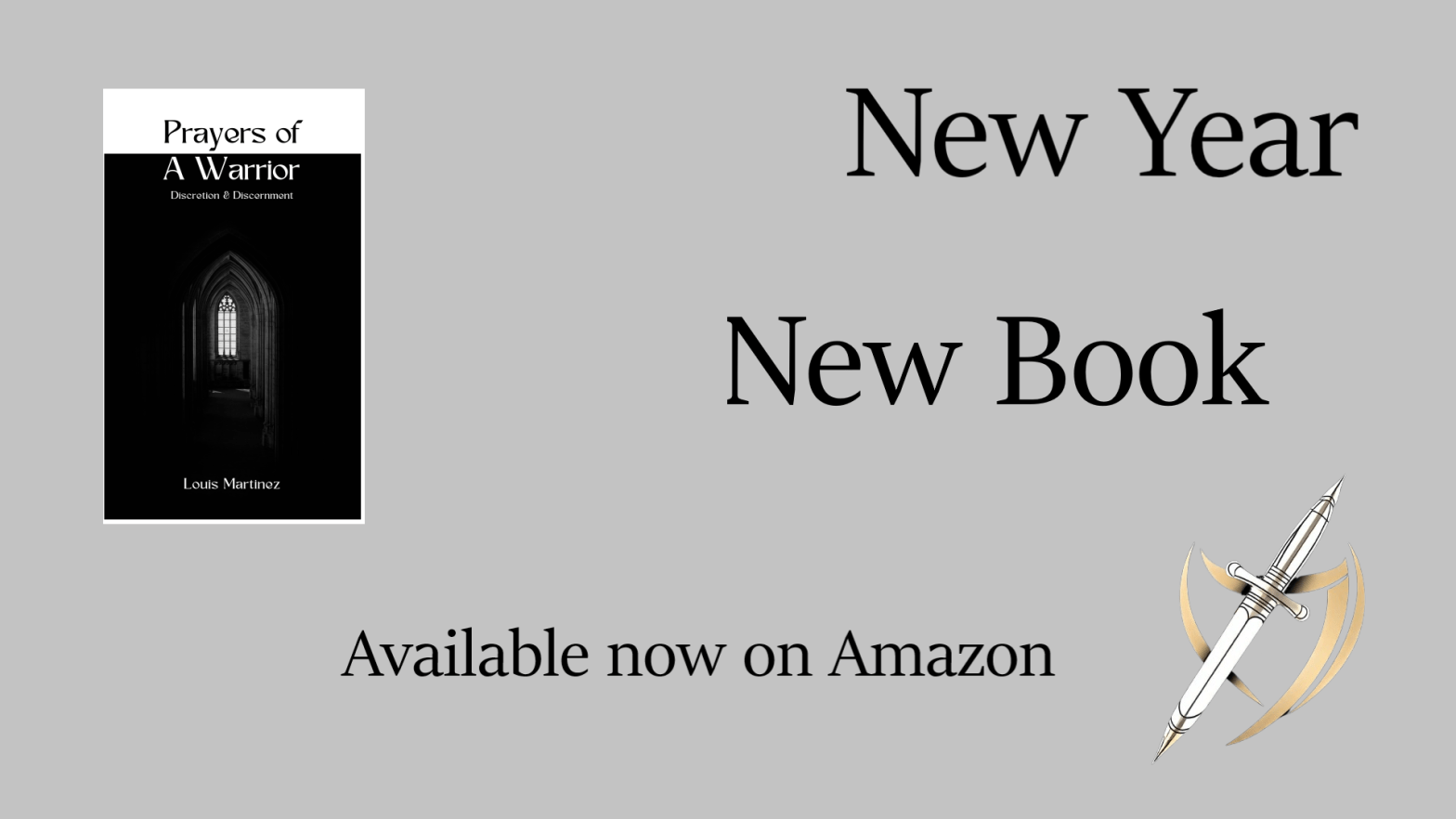
With the coming of this new year, I have published a new book! This is the second in the Prayers of a Warrior series. The book is available on Amazon, which you can navigate to by clicking here. You can also click the “Books” button at the top of this webpage.

This new installment focuses on the topics of “Discretion & Discernment.” Scriptures were selected which both speak to these topics directly, as well as those Scriptures which seem to contradict themselves at face value. The entries seek to exhort Christian warriors to grow in these disciplines and reconcile in their Theology any apparent contradictions within the Word of God so as to be both steadier in one’s own walk, and to be prepared to give a correction to critics who would claim the Bible is inconsistent.

With that said, here is a bonus entry written in the same style you will find in the book.


Acts 17:11

Now the Bereans were more noble-minded than the Thessalonians, for they received the message with great eagerness and examined the Scriptures every day to see if these teachings were true.

Day by day, must we adhere
And keep God's Word in us most near
Always eager to know more
And of wisdom true, ne're to abhor
Examine those who claim God's call
Test their ev'ry word, yes all
Against the Word we know is true
To see what then is right to do
And then, shall righteous men be found
Our brothers with whom love doth abound
And so, the wicked, brought to light
Who sought to keep you in the night
By this, our family sets to grow
And still more kin, we come to know
By this, we also bless our heart
To see that we are set apart

Beckon me, Lord, unto Thy Word each and every day. May I never neglect this pursuit, lest our enemies be given an edge over me when I am found wanting for understanding. Protect me from such moments of weakness that may present a triumph for deceivers by instilling a passion within me to continually reprove myself with Your Truth. In this way, may glory be unto You, and edification unto others. By this, may I be ever ready to rightly divide truth from lies. Amen.


All Pensive Warrior blog posts are licensed under a Creative Commons Attribution-NonCommercial-NoDerivatives 4.0 International License.

To Love Thy Enemies

This is a poem I wrote a while back, but my posting schedule did not permit it to be shared until now. In a moment of disappointment in my fellow man, and in the reminder that our enemies are not just people who avowedly oppose us; but also those unwitting pawns whose heart and deeds do not align, often at the behest of financial incentives. We can become the enemy of a man so easily, and often because we are following the will of another.

I was also reminded that to love one’s enemies is not a noble or enjoyable task. Indeed, it is not noble, as strong a sentiment as it may seem to suggest it is. In practice, we find there is no honor in it, at least not for the time being. Though, I know that as with all suffering, so shall loving thy enemies be as all things at the conclusion of the matter. That is, such things are promised to be worth it in the end. For all suffering done as the Lord’s servant produces good character, and a lasting hope. I hold onto that.

Just as important to remember is to humble ourselves in recognizing our enemies may be closer than anyone else could ever be. The Holy Scriptures in 1 Samuel 2:1, 1 Samuel 20:33, & Matthew 10:34-36 remind us of how even our own family members may at times be as such. The many wars fought between different Christian groups provide endless examples of how brothers and sisters in faith may even find themselves on opposite ends of a conflict in this fallen world. As C.S. Lewis notes in Mere Christianity, we may look back and laugh about such squabbles one day in Heaven. Though until that day, such things are certainly no laughing matter.

With all that said, the Advent season is upon us. During this time, it is important to remember that by coming in the flesh to save us from the consequences of our rebellion against Him, the Lord did exercise love for us – His enemies – in so doing. Is there honor in that? Indeed, as hard as it may be to see when in the midst of such events. Rather, these are things often understood with time.


To love thy foe is no simple trite
No easy task and for sure, no delight
For to love an enemy is to love and hate
The one who is vile, yet does not relate
What a burden it is to hate one's own home
The people who smile, yet spurn you as their own
Those banal ones of ill, most evil dressed nice
Who have not within, but a heart cold as ice
To love what one hates is no simple deed
It requires all one can muster indeed
It is not for the faint, nor the weak of will
It shall take all you have until you are ill
You shall be an outcast in the land of your birth
You shall know all the scorn that one can unearth
All the good that you do is regarded as dirt
They shall tell you all's well, and give naught but hurt
But God's child holds hope, for he knows what's to come
He knows of the day to deliver us from
All the evil dressed so nicely and neat
He knows that true good, one can never defeat
God's child does know to suffer most long
In a world where he knows that he does not belong
For suffering doth produce a good heart
And is key to him who is set apart
And as small as a comfort it may ever be
To know of such purpose for the ill he does see
It is all that one needs to endure through each day
And to keep in good cheer along such a way

All Pensive Warrior blog posts are licensed under a Creative Commons Attribution-NonCommercial-NoDerivatives 4.0 International License.
Numbers 22 Commentary

It is a lovely day today as I sit down to carry this task, and a lovely day still as I prepare to send these words out. Today is November 1st, All Saint’s Day. Praise be to the Lord for the endurance of His saints. We thank Him for all who have gone before, those He sustains today, and those yet to come.

At the time of this writing, it is October 27th, in the 2025th year after the death, burial, and resurrection of the Messiah. The skies are bright blue, painted with fluffy wisps of cloud across their face. The wind provides a soothing chill that keeps one dry beneath the garments, and all the world is colored with the greatness of changing leaves, an uplifting relief from the monotonous green sea of summer’s landscape. God be praised.

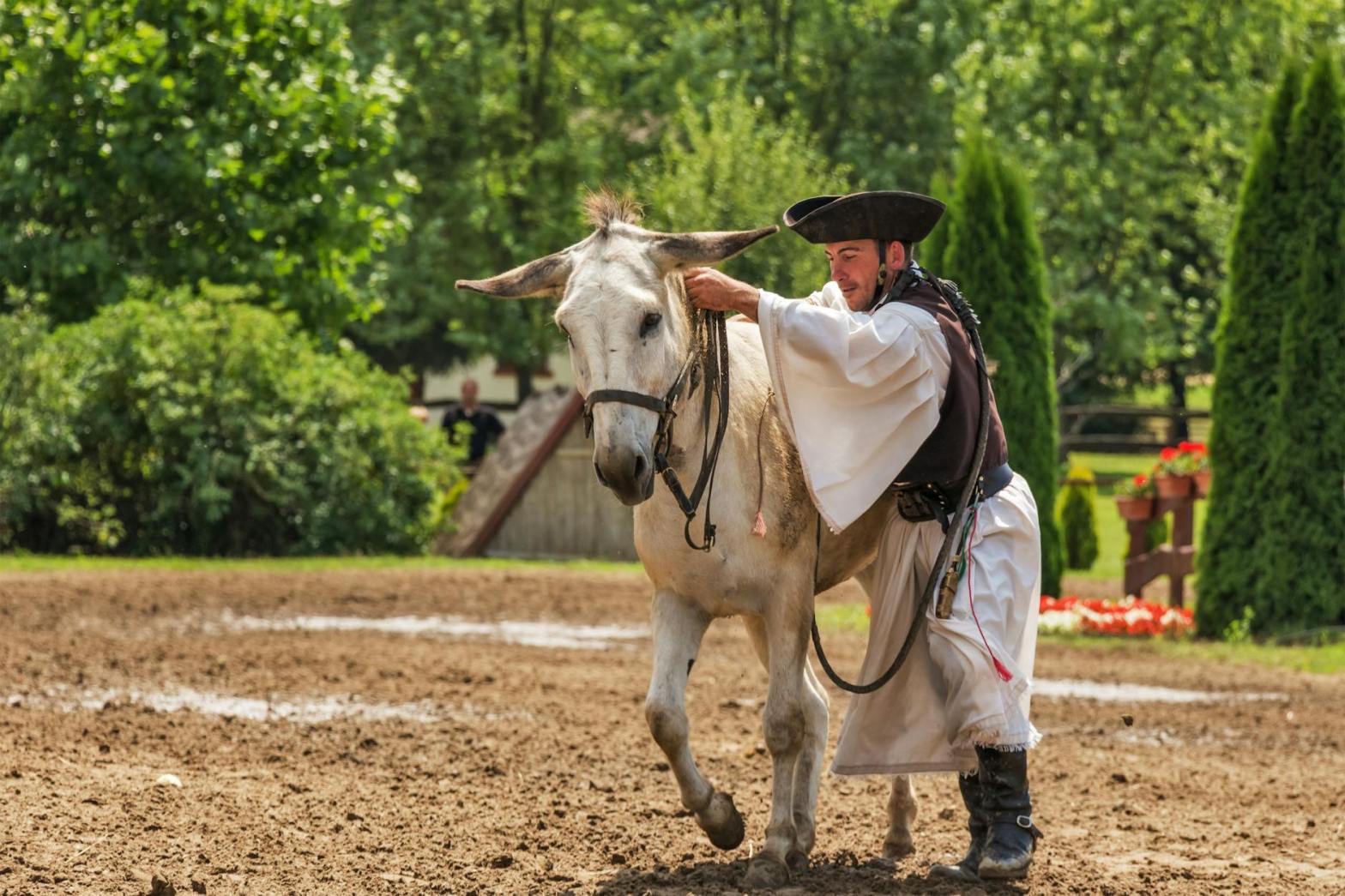
On this day, Bible Hub prompts several passages for daily devotions. One such is from Numbers 22. This tells the story of Balaam and his donkey meeting God along the road. The man is a prophet of the Lord Almighty, and His enemies are attempting to enlist him to curse the invading Israelites whom God has sent to destroy them. It is a humbling, comforting, and uplifting tale all at once when understood. Come, let us examine.

The Passage

The text opens with the revelation that the Moabites inhabiting the Promised Land are in dread of God’s army which is on the way to expel them (Numbers 22:1-4). They are aware of what is to come, and so they seek a way to potentially subvert the justice that is to befall them, as is their nature in subverting and perverting other things meant for God’s goodness. Balak – king of the Moabites – attempts to sway one of God’s people for his own purposes, a prophet by the name of Balaam (Numbers 22:5-7). Balak sends princes to recruit the man. Unfamiliar with the unyielding righteousness of God and how to gain His cooperation, the enemies of the Lord first think they can simply offer a bribe to gain favor in His sight.

Of course, this does not work out the way they intended. Balaam speaks with the Lord, asking to curse the Israelites on behalf of his clients. As expected, God refuses and then forbids Balaam from going along with such schemes (Numbers 22:8-13). The Moabite princes return to Balak and report back, which prompts the enemy to try again with more princes and greater promises of wealth and prosperity (Numbers 22:14-17). This is a common tactic for Satan and his forces to try and tempt with riches, fortune, fame, and the like (Matthew 4:8-9).

Balaam reiterates he can do nothing the Lord does not empower, but offers to entreat God on behalf of the Moabites once more to see if there is anymore information he can glean. This leads to him gaining permission to go with them, though he is not allowed to do anything outside what the Lord strictly permits (Numbers 22:18-21).

At this point, the anger of the Lord is aroused against Balaam for “going along,” even after God Himself gave permission to go (Numbers 22:22). Obviously Balaam went with a misunderstanding or with the intention to help the enemy, hence the saying “going along,” as in perhaps, “going along with the plans of the Moabites” rather than simply going with them. An unbeliever might read such things and think God is being fickle here, yet with keen understanding of both the Lord and Balaam, we can avoid such blasphemous thinking.

God stands in the road to oppose Balaam, sword in hand, ready to kill the man as he tries to pass (Numbers 22:23-30). Balaam’s donkey protects him, by trying to avoid the Lord, yet Balaam thinks she is making him look foolish in front of the Moabites and beats her three times. The Lord the enables the donkey to speak for herself, and Balaam converses naturally with her. She claims she has been faithful to him all his life and questions why he is beating her, to which Balaam replies he would kill her if he was armed, displaying not only a disrespect for animals, but for weapons as well, given his expression of the willingness to use a weapon so flippantly. The only thing to Balaam’s credit is that he answers honestly when his donkey asks if she’s ever behaved this way before, to which he recognizes she has not.

There is much to be gleamed from this passage. It lends to us the notion that perhaps animals are supposed to be able to speak, but normally cannot due to the curse of sin. Eve talks to a serpent in the Garden of Eden, a creature then transformed into the snakes we know today (Genesis 3:1-15). It may be that animals are able to think and have memories just as humans do, but are restricted from communicating those under ordinary circumstances. However, it may also be normal for animals to be unable to speak like humans, and these circumstances in which they do are indeed extraordinary. Such things are uncertain.

Nevertheless, these instances do remind us of the importance of the Lord’s words later delivered through Solomon: “The righteous care for the needs of their animals, but the kindest acts of the wicked are cruel” (Proverbs 12:10). Indeed, on the day of rest, not even the livestock are to be put to their ordinary work (Exodus 20:10), thus establishing the notion of treating animals with the same respect as any person and caring for their needs and health.

At this point, the Lord reveals Himself to Balaam, who bows down and worships before Him (Numbers 22:31-35). The Lord tells Balaam his “way,” or his intentions, are perverse in His sight. Thus, the Lord came to oppose and kill him, but the donkey saved his life. Balaam offers apologies and thinks to go back home, yet the Lord reiterates what He has said before, that Balaam is to go with the Moabites; but not to go along with their plans, saying only what the Lord conveys to Balaam.

Balaam then makes his way to Balak, and the two converse (Numbers 22:36-41). Once again, Balaam tries to make it clear he has no power over what God will declare. Rather, he is but a messenger of sorts who conveys the Lord’s words. Balak prepares an offering still to try and entreat the Lord, an effort we later see will fail. Still, Balaam eventually informs the Moabites how to entice the Lord’s wrath against His people (something not clarified until much later), giving insight into the displeasure we saw from God at Balaam in this scene.

Important Lessons

The three most important lessons I would derive from this passage are:

  • Do not try to skirt the Lord’s will
  • Do not love the things of the world
  • Respect the animals in your care

Balaam is nearly struck dead by the Lord for attempting to bend the rules. He is a shifty man, as we learn about him from his continued story in the Holy Scriptures. As a prophet of God, certainly he must know what is happening with the Israelite invasion. Unless he is completely aloof, he must know there is nothing he can do to please the king of Moab.

Yet, as we see from God’s reaction and from Balaam’s schemes, he has every intention of helping the Moabites against the Israelites. He goes beyond the Lord’s will of only saying what God permits, telling the Moabites to send women outside the Israelite camp to tempt the men to fornicate and sacrifice to idols, thus turning God against His people in that time (Revelation 2:14).

Why would he do this? Likely because he loves “the things of this world,” so to speak. He expresses concern for looking like a fool in front of the Moabite princes, hence why he lashes out at his donkey. He also goes against God’s will to later satisfy the Moabites. Why would he do these things? For money, prestige, and earthly status would be the obvious explanation. Balaam seems to be a man who loves the world more than God, and that nearly gets him killed. In eternity, he is also now recorded by the Holy Scriptures as a wicked man to be served up as a cautionary tale. He is known as one who deceives people for money (Jude 1:11).

Balaam shows himself to be a cruel man as well. His harsh treatment of his faithful donkey reveals how he would no doubt treat anyone else he viewed as being less esteemed than himself. From his poor example, we learn how to behave well in the inverse. Thus, we learn to listen to a trusted animal when it seems to be disturbed, for we know our animals we care for also care for us. And indeed, do not think it a small thing to mistreat a beast, for they know the rightness or wrongness of what you do, whether they can normally communicate such things or not.


All Pensive Warrior blog posts are licensed under a Creative Commons Attribution-NonCommercial-NoDerivatives 4.0 International License.

What To Do When You Don’t Know What To Write

If you have been writing for some time, chances are you have come across times when you feel you should do more, but are totally unsure of how to proceed. If you haven’t yet, you will. It’s always easiest in the beginning because everything feels new and nothing has yet grown stale.

There comes a time in all things, however, when the steam in our metaphorical engines begins to run low. At those moments, I might argue it is more important to understand what is happening and why, which then makes it clear what precisely one needs to do. Taking breaks, looking at what we’ve done so far, and trying something new might be just relief one needs.

However, what if you’ve not been writing for some time? What if you’re just starting out and don’t know where to begin? Well, that’s another issue. You’re definitely not tired if you’ve not yet begun. Instead, you may be unsure of what to do because you literally don’t know what to do.

After all, you haven’t done anything yet. In this case, it can be helpful to consider what kind of writing you have enjoyed from others. Also, brainstorm ideas of your own. Lastly, consult an experienced writer for guidance on what precisely to do.

Let’s take a look at each of these issues, similar as they are, yet quite different in the approach to addressing them.

When You Run Out of Ideas

Just like the muscles, the mind can get tired. A man wears himself out after a big push. It may help to envision a gas tank in a motor vehicle. As it runs, gas is used. When that happens, the tank grows closer to empty. When the tank is empty, the combustion engine no longer functions. At that point, the tank must be refilled with fuel in order for it to function again. The only question remains then, how do we metaphorically “refill our tank when it is empty?”

Moments like those, often we humans just need to take a break to restore our energy, whether physically or creatively. That can involve trying something new, or examining work from the past. The main focus is to pause the present flow of content creation or whatever it is you normally do, opting instead for a change a pace.

That may sound so simple, and in fact, it is. It may not be easy, but neither is it complicated. The best cure for things like “writer’s block” may be to simply take a break and do something else. That is difficult if you have put yourself in a position where you feel you need to perform and time is running out. In those moments, there is tremendous pressure to keep going even if that is the worst possible thing to do, hence why it can be so hard.

“Remember the Sabbath day (Day of Rest) and keep it holy.” – Exodus 20:8

One last thing I would recommend is to have a reserve bank of sorts to fall back on. In keeping with the gas tank analogy, this would be like a small gas can you could use to fill up the tank on to the go. In practical terms, this means having some pre-written pieces ready for publication several cycles in advance of whatever your schedule is. These can be shorter pieces than usual, taking less time to produce. In fact, that may be imperative due to their nature as something you can use for such purposes. You don’t want to be keeping your best work in reserve, necessarily.

That is not to say such pieces should be sloppy. No. Never should you be producing anything of the sort, but rather, always should you be delivering your best work. “Whatever you do, do it heartily as unto the Lord, not to men.” – Colossians 3:23

“Whatever” means whatever, no exceptions. In my case, when I was posting weekly to this blog, I would fall behind at times due to unexpected schedule changes and so-called “writer’s block.” In this instances, I would have several poems written ahead of time which I could post when I had nothing else to present. Poems are short, easy pieces to produce when you have a lot of experience writing them, and they are something I can consistently ensure is of a high quality. As such, they make the perfect content to fall back on for me.

Likewise, we should all store up more than we need in times of abundance, or great creative energy, so that we have some to spare in times of great lack. For it is written, “During the seven years of abundance, the land brought forth bountifully. During those seven years, Joseph collected all the excess food in the land of Egypt and stored it in the cities.” – Genesis 41:47-48

In your case, you may need articles, video scripts, comics, or any other number of things. Whatever it is, make sure you have some savings to use on a metaphorical rainy day; written content that is “evergreen” and thus can be posted whenever to satisfy your audience. If you are part of a team, you may have someone who can step in and take your place for a day or week when you cannot come up with something.

The point is, always be ready to keep your consistent schedule, even when you yourself are unable to deliver . This preparation will allow you to take the break you need when it is sorely necessary.

To recap, when you’re unsure of what to write and have written lots before:

  • Take a break
  • Examine past work
  • Try something new

As the Lord warns [and comforts] us through Solomon, “There is no end to the making of many books, and much study wearies the body.” – Ecclesiastes 12:12

It is a comfort to us writers to know there is no end to the making of many books, for such is our passion, and a good passion is one that can be pursued to no end. Nevertheless, as much study wearies the body, so too do we need to know when to take a step back and give ourselves a break.

When You Don’t Know Where To Start

The guidance I have offered up to this point has primarily been geared toward those who already have a habit of writing. If you have written lots before, and are feeling stuck, you’re probably just tired and need a break.

However, what if you’ve never written before and aren’t sure where to start? Well, that’s a different story. After all, you can’t be tired of something you’ve never done, so the issue must be something else.

I know in my experience, when I am beginning something new, I often don’t know what to do because I haven’t developed a practice of doing it yet. That makes me unsure of where to start. At that point, I have found the best thing to do is look to those who are doing what it is you’re attempting to begin and imitate them.

This works for writing just as it does with anything else in life. As the Lord tells us through the hand of Paul, “Imitate me, just as I also imitate Christ.” – 1 Corinthians 11:1

So study past works from others you have enjoyed. Your goal will be to understand what about them was good and caught your fancy. This is for two reasons. First, if you can do the same, the work you do will benefit others in that same way. Second, if it interested you, then doing work in the same vein will be what you are passionate about and can do a good job in.

I would be remiss if I didn’t also mention the age-old tactic of brainstorming ideas. Once you have some notion of what you might want to write about, it’s time to begin the planning stage. Many people skip this and go straight into drafting. However, I would caution against that, as it can lead to you writing in circles until you burn yourself out, thus leaving the project unfinished.

Whatever way you decide to do your planning is up to you. The options are many. I like to use an outline, although some may consider that more of an advanced strategy. Idea mapping, free association, creating a collage, etc. Find whatever works for you and makes things enjoyable. If it’s engaging, you’ll be more likely to do it and do it well. If it’s boring and seems like a chore, you’ll find every excuse not to do it.

You may even ask someone experienced with the activity where and how to start. Seeking the advice of a teacher helps jumpstart many things. In fact, this may be the best way to go about getting started, and we all probably resort to this in one way or another. After all, if you study the work of others, you are consulting an experienced writer. So too if you look up writing prompts for guidance. It is just an indirect method.

Going to an experienced writer directly, however, is often the quickest, easiest, most efficient way to get started. A person who knows you and can interact with you will be able to give specific feedback and personalized assignments. That is infinitely better than any writing prompt you found online but must now utilize all on your own. A teacher can tell you what to write, look at what you’ve done, and then tell you how to improve. That may be intimidating, but the expediency of it is beyond any other measure.

After all, as we know, “A poor, yet wise lad is better than an old and foolish king who no longer knows how to receive instruction.” – Ecclesiastes 4:13

So, to reiterate, if you’re unsure of what to write and have NOT written lots before:

  • Study past works you enjoy
  • Brainstorm ideas of your own
  • Ask an experienced writer for guidance

Again, the Lord warns us through Solomon, “Whoever loves discipline loves knowledge, but he who hates correction is stupid.” – Proverbs 12:1

If you don’t know what to do, it may be that you literally don’t know what to do. In that case, don’t be afraid to ask someone who does.

Give Not Into Fear

What I would say to both the weathered writer, worn down by the waves of time, as well as to the novice who knows not which way to go, is this:

Do not be afraid to do what must be done, whatever that may be. For doing something is better than nothing. We can all improve upon something. However, it is a painful misery to attempt to draw out goodness from nothing at all.


All Pensive Warrior blog posts are licensed under a Creative Commons Attribution-NonCommercial-NoDerivatives 4.0 International License.
Knife Fighting: Edge Alignment Practice

Recently, the uncomfortable weather of summer has subsided and the soothing touch of autumn has blown in over the land where I find myself. This brought me outside with comfort for the first time in many months. I took the opportunity to practice “edge alignment.” That is, my ability to keep the sharp edge of a blade in line with a target while cutting through it.

Materials Used: Knife, Refilled Water Bottles, Cut-Resistant Gloves, & Safety Glasses

As you may know, an effective way to test and refine this is to cut into water bottles. If your edge alignment is poor, the bottle will explode spectacularly, spewing water everywhere. It will be knocked to the ground from whence you staged it, or swing to the side if it is suspended by cord. Lastly, the cuts will be jagged, and uneven across its surface.

However, if you have good edge alignment, your blade passes through the bottle without disturbing it from its place, leaving a graceful cut from which water passes neatly through. A masterful cut moves through the water bottle almost as if nothing touched it at all, and the opening seems to appear like a magical seam has miraculously spawned. With such stark, visceral differences in the bottle’s reaction between good and bad edge alignment, it is a useful test of one’s ability in this regard.

Another bonus aspect is when you do make a poor cut, and the bottle explodes in your face, this presents a great opportunity to condition yourself not to flinch when fluids squirt out at you in the midst of battle. After the first poor cut that sent liquid straight at me, I flinched quite a bit. Less so with each instance, until I was not flinching at all by the end. This is important to train oneself to do, so that our attention is not taken off the enemy during combat – a fatal error which can cost innocent lives if allowed for even a moment.

The Test

Using a Mora Companion, I did 6 cuts. Of those, 2 were great, 1 was good, and 3 were bad. After that, I analyzed what I did differently on the good and bad cuts. I noticed that on all the bad cuts, I put a lot more power and strength behind the strikes. With the great cuts, I trusted in the sharpness of the blade to do the work, focusing on accuracy and speed.

A Good Cut

This is common sense in retrospect. Everyone knows you don’t need to put a lot of power behind strikes with a sharp blade, and if you do, you risk compromising accuracy. In fact, I know that! Or at least, I do in my head.

However, as any with martial art, putting it into practice reduces us down to our level of training, forgoing much of what we know for what little we have actually trained. And, in my case, most of my hand-to-hand combat training up to that point was unarmed, where you actually do need to put a bit more power behind strikes. At least, more so than with a blade.

Having this in mind, I decided to try again. This time, I focused on speed and precision, trusting in the sharpness of the blade to compensate for the lack of power I put in. I did 3 more cuts, and this time, all of them were great.

A Bad Cut
Reflection

There are some important things I learned from this test. Firstly, filling the water bottles as much as possible helps to create pressure inside the bottle, simulating the closed circuit of fluids in the human body. Also, it helps to weigh the bottle down, keeping it in place if it is set atop something without being tied down. Secondly, the initial cut on the bottle seems to provide the most valuable feedback. Once the pressure is lost from the bottle being opened from the first cut, follow up strikes are arguably just for fun.

Lastly, and most importantly, you don’t need much power behind your strikes with a sharp blade. Precision and speed are much more important. Trust in the sharp edge. It will do the work. Any extra power you put behind your swings beyond what is necessary will hinder you, making you far less accurate and ruining your edge alignment. Logically, I knew that before this test. However, actually doing it and experiencing the result firsthand made a world of difference.

Do you have experience training edge alignment with a water bottle cut? If so, what insights do you have to share? Is there anything I missed that should be mentioned? Feel free to let me know.


All Pensive Warrior blog posts are licensed under a Creative Commons Attribution-NonCommercial-NoDerivatives 4.0 International License.

For What Is This Song?

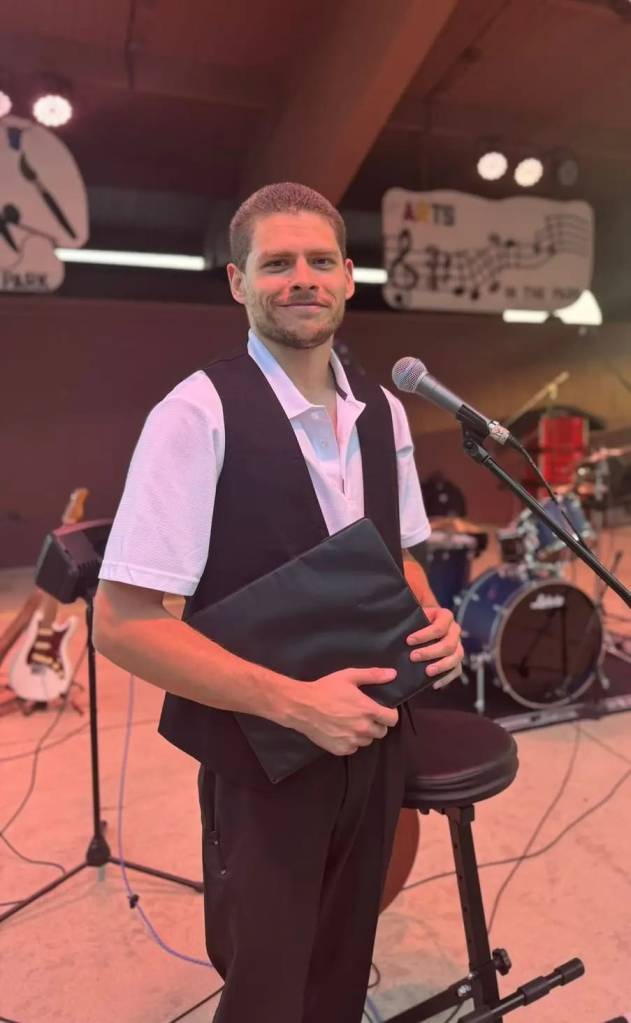
This is a piece I wrote for an organization known as Arts in the Park. They hosted me yesterday as an author to showcase my recent book, Prayers of a Warrior, and also to share an original poem prior to their concert.

I researched the organization, as well as the band they were hosting, to prepare a piece well-suited to them and glorifying to God. The result, showcased here, turned out quite well in my estimation.

My photo taken just before sharing “For What Is This Song?”

Why do we make music?

With that question pondered, I would remind us that after God saved the ancient Israelites from the hand of Egypt at the Red Sea, the first thing Moses and the people did was write a new song unto the Lord, extolling His good deeds.

“I will sing to the LORD,” they said, “for He is highly exalted. The horse and rider He has thrown into the sea. The LORD is my strength and my song, and He has become my salvation. He is my God, and I will praise Him, my father’s God, and I will exalt Him.”

At each new mercy and triumph over evil, we read David hearken those who would listen to sing a new song unto the Lord as he himself would do. For each new victory is worthy of remembrance, and what better way to remember than through the immortal words of a song, with music to our ears so oft to stick more than simple prose.

For as this world was created through a spoken word of God, so too do we sow good or ill unto the world with the words we speak and songs we sing.

We carry on such deeds every day when we make music and share new songs with the talent God has endowed us with. In contemplation of that, I wrote these words to share with you and all the world. I call this piece, “For What Is This Song?”


What makes this music to ears that hear?
These tunes men play so near and dear?
What makes a song not just mere sound?
But something where true life abounds?
For to abundant life, are all men called
And to that way, many have stalled
Yet woken from slumber, they may yet be
For a song is not just to hear, but to see
So then, perhaps, music may be
A glimpse of ours, or perhaps a key
To find our way back to our Lord
When all our ways have become untoward
As medicine unto the soul
Just the right song can make one whole
To brighten up the darkest day
And lead one back who’s lost his way
Not just for us to celebrate
Nor just to sing of things so great
But to remind of that most dear
And call us unto God most near
Thanks be to Him for those He made
Who bring us all new songs each day
A glory to our Lord on high
Are these great songs they do supply
May we ever be so blessed, indeed
And never find ourselves in need
Of those so skilled in such great art
Teeming with a musician’s heart

Thank you to all the musicians who rightly use the talent and artistic abilities God has endowed and cultivated within you. I thank you as a martial artist, and as God’s servant. May the Lord bless you and guide you all of your days.


All Pensive Warrior blog posts are licensed under a Creative Commons Attribution-NonCommercial-NoDerivatives 4.0 International License.

Independence Day: July 4th, 2025

All this week, Independence Day has been celebrated in various ways across my community in Midwestern America. Watching a fireworks show last night made me nostalgic for a time that has not yet transpired, but which I look forward to most dearly. A time when I will join with all those American Christians who have gone before me and celebrate this day each year in perpetuity, with every generation of my people who have joined to God from across all time. What an age that will be.

For now, I do pray for myself and all my fellow Americans who live this day. I pray we would conduct ourselves in a manner worthy of the Gospel of Jesus Christ; and that we would steward the nation we have inherited from God’s people with care and reverence. May we stand boldly against all our enemies and astutely care for all our neighbors, at every chance that may arise. By God’s grace and our good cheer, may we face our forefathers one day without the shame that comes from failing to uphold the virtues we have all known from the beginning.

When God led Moses and the Israelites to form a government in the ancient world, it was a republic which was bestowed upon them. In rebellion against God during the time of Samuel, they established a monarchy in a false rivalry against the Kingship of God. It is not often that nations establish a republican form of government as God taught, nor is it is common that they keep it even when they do.

Yet, as God’s mercies renew every morning, so too do His triumphs through His people renew every generation. Those of us who live in this time all have a chance to play our part in the nation, tribe, and tongue He has created and is gathering for His kingdom. What precisely that part is not only depends on each individual person and his or her calling, but also upon the very real circumstances of the society within which one is found. You may be in a totally Godless or heretical place, tasked with planting the first seeds toward freedom. Or you may be somewhere the Way of God is long-established.

Whatever your lot in life, live it well. God makes no mistakes, and we were all placed where we are for it is the best place for us to be. No matter where you read this from, know that your American brothers and sisters in Christ from past and present are rooting for you, along with all the other saints. Take heart and fear not. You are never too small to do what God has called you to do this day. Had our American forbearers not known this, we would not celebrate this day as we do.

God bless you all. And may God bless the United States of America.

“Now the Lord is the Spirit, and where the Spirit of the Lord is, there is freedom.” – 2 Corinthians 3:17


All Pensive Warrior blog posts are licensed under a Creative Commons Attribution-NonCommercial-NoDerivatives 4.0 International License.

Heroes From History: Miles Standish

Miles Standish was one of the Pilgrims who founded Plymouth Rock, a British colony that would be a progenitor to the United States of America. He was a kind and courageous warrior. Standish was known for fighting against evil, yet never allowing appearances to beguile him away from righteousness. When life beckoned him to fulfill needs and roles he did not sign up for, no complaint was found on his lips, for he was always ready to lend a hand toward doing good deeds.

Origins and Colonization

Miles Standish was born in either 1584 or 1587, most likely in Lancashire, England. However, it is also debated he was born on the Isle of Man. Regardless, he eventually fought the Spanish Catholics during their invasion of the Netherlands in the Eighty Year War. English troops had been sent to support Dutch Protestants during the conflict.

Stationed somewhere in Holland, this is how Standish became acquainted with John Robinson and other would-be Pilgrims prior to the voyage that would establish Plymouth Rock. When the time came, Standish went out to Cape Cod as their military captain. He was responsible for surveying the land; deciding where to establish the colony; and preparing for its defense against foreign and native threats. He helped design and build fortifications; install cannons; and organize trade routes and security, amid many other important duties.

Service In the New World

Standish is reported to have become a practicing Christian either on the journey to the New World or shortly after arriving. He was also one of the few colonists who did not become sick during the first winter at Plymouth Rock. Despite being brought on as a military captain for the colony, Standish was applauded for jumping into the role of a bedside caretaker during the harsh and desperate season. He is noted as working tirelessly to feed and nurse the sick colonists back to health in that trying time, all while maintaining a cheery attitude and a smile on his face.

Standish was also reportedly well-versed in several languages. This made him an important liaison between the English and natives. It was also critical due to the close contact with colonies of hostile foreign powers such as the French and Spanish. Some of the pivotal actions taken by Standish during his time with the Plymouth Rock colony involved launching strikes against hostile natives planning to eradicate the colony, securing trade routes, taking down a rival colony run by an alcoholic, and bringing criminals into custody. He was critical to the survival of Plymouth Rock in many ways, and thus to the eventual birth of the United States of America.

Miles Standish Coat of Arms
This is the coat of arms of the family of Miles Standish.

Some of Standish’s peers reportedly thought he was too quick to use force, and his enemies were noted to describe him as hot-tempered. However, the reliability of these claims is questionable due to both the sources of them and in light of the fact that Standish was recorded using diplomacy to resolve numerous situations. Of course, enemies would speak ill of him and view him as reckless when they are the ones forcing such a response out of him. Never would such foes have a chance to see otherwise. Also, some of his “peers” who deemed Standish too quick to use force may have been unacquainted with the application of force in general, and thus unable to adequately assess when it may or may not be necessary. Therefore, their perspective on such things may be inappropriately skewed.

Inspiring Character

Three things that endear me most to Miles Standish are his selflessness and willingness to do all he could, even beyond what he was enlisted to do; his composure under pressure and resistance to the provocations of personal attacks on his immutable characteristics; and his courage to face confrontation when no other options were afforded to him.

As mentioned, when the people of Plymouth Rock suffered an outbreak of illness and food shortages, Miles Standish was one of the few people to remain healthy and strong. Despite being enlisted as a soldier to guard the colony, he happily jumped into the role of a nurse to help the other colonists survive the winter and get back on their feet. William Bradford claimed that, among others, Standish cared for the sick and “spared no pains, night nor day, but with abundance of toil… willingly & cheerfully, without any grudging in the least, showing herein [his] true love unto [his] friends & bretheren.”

This reminds me of the words of the Holy Spirit, written through Paul in Colossians 3:23-24. “[W]hatever you do, do it heartily, as to the Lord and not to men, knowing that from the Lord you will receive the reward of the inheritance; for you serve the Lord Christ.” Though Miles Standish was a warrior drawn into the role of a healer, he did so with all exuberance and good cheer, as it was the task set before him which needed doing in that time.

When Standish was sent to apprehend Thomas Morton of Merry Mount, the latter was incapacitated from drunkenness at the moment Standish arrived. Finding Morton inebriated, Standish took the man in without incident, enduring and deflecting the drunkards derogatory remarks. This is noteworthy, as if Standish’s critics were correct that he was prone to use force when it was unnecessary, this would have been the perfect opportunity to do so. Cutting down a drunken fool who could barely stand would be child’s play for a man of Standish’s skill. Yet, he instead brought in his mark without any casualties.

The March of Miles Standish
Miles Standish fought against and worked alongside native forces, depending on their disposition.

Lastly, Standish is described by many different historical figures as being short in stature. Oftentimes, he is spoken of in a cruel way on account of his height, being called names such as “Captain Shrimp” by hostile Englishmen. His peers even spoke of him appearing as a “silly boy,” and natives were noted to doubt his ability and courage based on his appearance before coming to respect him following his actions. Standish never allowed such things to affect his job. He is described as never looking for conflict, nor avoiding it when it became necessary. Though everyone looked down on him initially, often quite literally, he won over the admiration of allies and enemies alike through hard work. That is perhaps his most commendable aspect.

A Life Well Lived

Miles Standish lived an incredible life, and this is only a brief snapshot of some of his accomplishments. He was a kind, caring, and courageous man, always working for the betterment of others, be they friend or foe. Standish is noted as having led expeditions against native tribes who were hostile to the English at times, and also caring for natives at others. The manner in which he dealt with those he encountered always depended on them, rather than on him. As for Standish, he seems to always have treated others with the utmost dignity, respect, and love that they afforded for him to give.

I certainly hope to be the same kind of man who will destroy an enemy swiftly and efficiently if he leaves me no other choice, but who will nurse him back to health if he will relent before it is too late. As for my allies, I would hope I live a life where I am also seen much the same way; as a man who has proven his integrity against any doubts others may have initially harbored. May we all conduct ourselves in a manner worthy of the lives God has purchased for us (Philippians 1:27).


All Pensive Warrior blog posts are licensed under a Creative Commons Attribution-NonCommercial-NoDerivatives 4.0 International License.

Iconic Weapons: Stiletto

The stiletto is a classic weapon that may have evolved from the rondel dagger, or “dagger of mercy,” used by knights in the Middle Ages to penetrate armor and finish downed opponents. Thus, it seems to be somewhat of a scaled down version of a rondel dagger, often featuring an unsharpened blade that could be round or angular with multiple bevels. A cross-guard and hilt, along with the typically unsharpened blade, gave it incredible indexing on a draw and allowed for it to be held in a greater variety of grips than a sharpened blade. These weapons could be very ornate and decorative, as they could be used as a fashion piece as much as a weapon.

Of course, as with lots of pieces of historical weapons, we in the modern era have a tendency to impose terms and theories of development on these things which we often do not know the full story of. The stiletto may be one such weapon. Where did it really come from? Did it develop from the rondel dagger? Maybe. Maybe not. Also, how was it used? Again, there are things we can surmise from its design and what we can deduce, but that is also something which likely varied from user to user. One thing that is certain is the legacy which this iconic weapon has left in its wake.

Terminology & History

As for the term “stiletto,” it has seen widespread use. It is an Italian word which may be translated as “sharp rod” into English. In medieval fighting manuals, one can find reference to stilettos with images depicting a double-edged weapon looking similar to a Fairburn-Sykes dagger from the 20th Century. For example, Achille Marozzo does this in his treatise, Opera Nova in the section “Dueling, Unarmed vs. Dagger.” Therefore, the term “stiletto” should not be taken so strictly to refer only to the sleek, trimmed down version of a rondel dagger that is marketed as such by modern blade sellers. At least not if one cares about the etymology of the term.

However, most of us probably aren’t such sticklers for that sort of thing. Which is good, because you will see lots of products marketed with the term “stiletto” nowadays which have nothing to do with the classic weapon. From women’s shoes to switchblades, it is a catchy term which has become broadly applied.

Application/Usage

As anyone with a martial arts background would see from a quick glance at the weapon, the stiletto was a specialized thrusting blade. Like any dagger, it could be held in a forward or reverse grip. However, the design of the stiletto appears to allow it to excel with a modified forward grip where the guard is “fingered.” This means to put the index finger over the guard, onto the blade portion of the weapon rather than keeping all the fingers on the hilt. Such a grip would give great stability and discretion to the blade, as well as minimizing the torque on the wrist from thrusting. Many daggers prevent this due to the double-edged blade, but stilettos are iconic for lacking a sharpened edge. Instead, they opt for a multi-angular design such as a triangular or cube-shaped blade. One may describe it more like a tent peg than a traditional blade.

This multi-angular design would allow for great penetration with minimal resistance. Of course, the unsharpened edge would mean it lacked cutting capacity, although this is certainly not as much of a downside as one might think. After all, thrusts are what end fights with blades, with a rather large and powerful weapon being needed to incapacitate with a cut. Even if a stiletto did have a sharpened edge, it is unlikely it would be very combat-effective at cutting. That is not to say it wouldn’t be able to cut, just that cuts it could make would likely be too shallow to make a significant difference in a fight. Thus, specializing the weapon for maximum thrusting capability makes sense.

The main function of the stiletto would be to thrust through clothing and body tissue to reach vital organs inside the chest cavity such as the heart and lungs. With its design, it would excel at this purpose phenomenally. This kind of penetration would allow for quick incapacitation with minimal force needed. Given its petite design, it would also be comfortable to carry everyday without it getting in the way of performing other tasks. When traveling around untrustworthy types, it could also be easily concealed under one’s garments. As such, the stiletto would be a perfect sidearm before the age of automatic firearms, performing much the same function up close as a modern, semi-automatic pistol does from a distance.

Fashionable Stiletto
A fashionable stiletto with engravings.

Also, just as people still love to modify and customize their sidearms today, so too was it with the classic stiletto. Many of these items seen in museums, reproduction markets, and historical artwork are ornate and fashionable. For many of us, the weapon one carries is as much a part of our outfit as any garment. That is true for me today, and held true for people of the past. Such was the case with stilettos.

The Weapon’s Legacy

This iconic weapon continues to inspire not only knives, but other implements to the present day. As mentioned, the term “stiletto” has never been exclusive to the iconic weapon we now know it as. The equally-classic, Fairburn-Sykes dagger from the Second World War was sometimes referred to as a stiletto. Going back, many stilettos were used by some soldiers in the First World War, and the FS dagger may have been an outgrowth from that. It should also be mentioned that old, triangle bayonets from the early modern period look remarkably like stilettos, only longer and made to be fixed to the barrel of a gun.

V-42 Stiletto
A “V-42 Stiletto” which looks remarkably like an FS dagger.

Of course, Italian knife makers still use the term stiletto in their marketing. Switchblades and other folding knives from Italy may be commonly termed as such, even though one might argue such blades bear little resemblance to the iconic weapon they take their namesake from. Many women are probably more familiar with the fashionable lady’s shoe bearing the name “stiletto” that sports a long, thin heel. Such items are a stark reminder of the word’s etymology and broad application. Almost any long, thin spike of varying application can be a “stiletto” in the literal sense.

As for me, I think I would be very comfortable carrying a stiletto as my bladed sidearm if I needed a replacement for my single-edged knife. It would require me to change up my knife fighting style to a purely thrust-centric approach. However, if needed, I could certainly do that and it would absolutely work. As mentioned, thrusts are what end fights, and cuts with a small-to-average-size knife are usually just for opening the enemy up to a thrust. A stiletto just gets straight to the point then, so to speak. You can’t go wrong with a pointy spike up close.


All Pensive Warrior blog posts are licensed under a Creative Commons Attribution-NonCommercial-NoDerivatives 4.0 International License.

My First Book Now Available

Recently, I finished publishing my first book. The title is Prayers of a Warrior: Devotional Poetry to the Lord of Armies. You can find it on Amazon by clicking here. It is available for 4.99 USD, and should be purchasable internationally.

It is a devotional poetry/prayer book. In it are 31 selections from the Holy Scriptures along with a poem meant to capture and expound upon the essence of the verse(s), followed by a relevant prayer of mine. If you have enjoyed my poetry here, you will probably enjoy this book as well.

About the Book

I wrote it primarily as an ode to Christian warriors like myself. As a lifelong martial artist, I know we can be a lonely bunch. For a warrior, it is not uncommon to feel alone, isolated, and misunderstood, even among close friends and family. That is just a natural part of being one with such a rare calling.

Also, generalized Christian devotionals, poetry, and prayer books are a dime a dozen. Since God has made me into a scholar and a warrior, I felt it was about time I used both those aspects of my character to start giving back what the Lord has so graciously given to me. This book is my first step toward doing that in a more meaningful and creative way beyond what can be done with this blog.

With all that said, I also know how common it is for non-warriors to misunderstand and feel disconnected from their warrior brethren, despite whatever closeness they may think they should have for one reason or another. As such, I suspect a book like this may be of use to non-warriors, and especially pacifists, in better understanding their warrior brothers and sisters who watch over and protect them. I do not expect it to be an in-depth guide in that regard, but more of a glimpse of insight. Take from it what you will.

New Logo

Astute followers of the Pensive Warrior blog will also notice a new logo on the book. I finished this not long ago, just a week or so before the book launched. This is something I was meaning to work on for years, but it took publishing this poetry book to finally motivate me to get it done. Praise God for that. I hope it is up to everyone’s expectations.

The new logo for Pensive Warrior

I still need to create a version of the logo with a solid, black background. I became acutely aware of that when creating a cover image for this post! However, I will get to that later. I have a PNG and a good JPEG with a white background for now. I also need a break from graphic design for a bit! That is a domain I inserted myself into which I am not normally accustomed to.

More to Come

Of course, I have no plans to stop here. I already have much more planned for the Pensive Warrior, both here on the blog and in the book publishing realm. So stay tuned. If you’ve enjoyed everything thus far, there will definitely be more to come. God bless you all.


The Pensive Warrior blog posts are licensed under a Creative Commons Attribution-NonCommercial-NoDerivatives 4.0 International License.