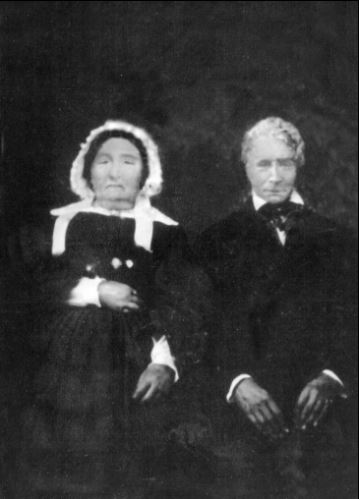
The line is never-ending of competent heroes from history. God be praised. For what makes one a hero need not be so grand or glamorous, especially in one’s day. The hero is he who has done something of tremendous value in the sight of another, as a common father can be a hero to his own son by simply being there when it matters.
As the author of this story, Pensive Warrior, it falls to me to choose who is remembered here as a “Hero From History.” The only requirements I impose are that the person’s story in this age be complete (i.e., the person must be “dead” in a materialist sense), and the person must have done something I find to be inspiring and valuable. After, all I have to write about these people! As such, their stories must inspire me to do so.
That brings me to Joseph Plump Martin, a man who garnered no fame in his day. Yet today, and to me, his story is of immense value and inspiration. Of particular note is his willingness to plead for what is right and to do good unto others, even when his extreme circumstances would have pushed other men to the furthest reaches of apathy. His endurance through great suffering brings hope to us all in the midst of our trials we live through each day.
Upbringing
Joseph Plumb Martin was born on November 21, 1760 in Beckett, Massachusetts. According to Ray Raphael (2009, p. 13), his parents were Ebenezer Martin and Susannah Plumb. Sir Joseph was part of a farming family most of his life, except for a brief time when his father became a pastor and moved the family into urban life. Ebenezer Martin was a Yale-educated, Congregationalist Christian (Martin, 1830 p. 3). This no doubt contributed to Sir Joseph’s astuteness, moral character, and Biblical literacy displayed later in life. For when you train up a child in the way he should go, then when he is old, he shall not depart from it (Proverbs 22:6).
At the age of seven, our hero became a working man when he was sent to help his grandparents on their farm in Milford, Connecticut. This brought him back to agricultural life, which would be his profession for most of his days. There, he found himself until the age of 15 when he left home to join in the American struggle for independence.
Revolutionary War
Sir Joseph was inspired to aid in the fight against the British, despite his grandfather discouraging the idea. Speaking with others his age who were to join, marching with them when they were in town, and seeing them off are some of the reasons he gives for his inclination (Martin, 1830, pp. 5-6). When he threatened to run away and join a privateer ship if he could not enlist with the Connecticut Militia, he was finally allowed to go and outfitted with weapons and provisions. After completing his first term of service, he returned home for a short time before joining the Continental Army for the duration of the war.
Most of Sir Joseph’s time in the conflict is spent starving and searching for food. Indeed, the majority of his narrative is taken up by this activity. At one point, this nearly costs him his life after eating some poisonous apples he happened across out in a field (Martin, pp. 113-124). In his desperation, he did not examine them for edibility before digging in, and as a result, describes being close to death from food poisoning.
Fortunately, his commanding officer found him in this sorry state and nursed him back to health. Such moments caution us of how food must be ingested with care to prevent self-harm, and starvation has a way of impeding our judgement thereof. We are also reminded of the importance of faithful companions to care for us in the midst of our ailments, lest Death be unimpeded to accelerate our demise.
Apart from such woes, Sir Joseph laments all the time he spent marching in severe heat over long distances, lugging heavy cargo with his own strength the whole way. He makes the claim that no fighting was ever as perilous as the act of marching on foot. This, he says, put him in more suffering and danger to his health than any battle or action of the enemy.
Nevertheless, there is one moment where Sir Joseph claims he endured harder combat than he believes ever took place at any other time of the war (Martin, pp. 48-54). This was when he was ordered to defend Fort Mifflin in November of 1777, upon which time the British laid siege to it with multiple ships from the Delaware River. Joseph Martin would have been 16 years old at the time. It was reportedly a very cold autumn, and he did not have any shoes, likely having worn them out during previous marches.
Sir Joseph describes being sleep deprived from the sound and shaking of all the bombardment, and that the only part of the fort with proper sleeping quarters could not safely be used. Most of the men who went to rest there never came back alive, as the British artillery seemed to target that part of the fort in particular.
Our hero describes the situation as incredibly bleak, with it being difficult to keep warm and the guns possessed at the fort faring pitifully in his assessment. There was one gun he claimed could have been rather powerful, but alas, there was no ammunition for it. Still, the Americans managed to destroy two enemy ships during the siege. At night, Sir Joseph and the others would try their best to repair the damage wrought during the day.
Eventually, a massive group of enemy ships arrived and began bombarding the fort incessantly. The Americans attempted to return fire, but to no avail. Sir Joseph describes seeing many of his compatriots cut to pieces, and that no small number of the men attending the fort died over the next few hours. The decision was made to retreat as soon as the sun set and darkness could cover an escape.
Sir Joseph endured to the end of his post at Fort Mifflin, and aided in the burning of it before departure. This ensured it would be of no use to the enemy when they were sure to seize it, just as the Lord commands Joshua to hamstring the horses and burn the chariots of the enemy, preventing them from being used by again if recovered later (Joshua 11:6).
While the Americans were escaping in boats, the blaze of the burning structure illuminated them trying to flee, leading to them being fired upon and one boat disabled. Sir Joseph describes how they took the men from the broken boat into his own before getting away. His commitment to the mission, refusal to abandon his post despite nightmarish conditions, and endurance under indominable attempts on his life provide inspiration to us all in the midst of our own trying times.
Another one of Sir Joseph’s most commendable actions was that of convincing some fellow soldiers not to blow up their captain (Martin, p. 149). Our hero was a likable man who gained the respect and confidence of others, and was promoted from a private to a sergeant in the Army by this time. And so, there was a moment when a group of privates shared with him a scheme to detonate some powder in the canteen of their captain. They believed it would just scare the man, but when our hero examined the charge, he found it to be enough to kill.
Even though Sir Joseph himself was not fond of the captain, as everyone despised the man, he recognized the danger in the plan and the wrongness thereof. To spare both the intended victim and the prospective evildoers, Sir Joseph convinced the private not to follow through with the prank and never spoke of it to the captain. This was an honorable solution, and not one that just anybody could have brought about.
Any man, whether he intends to or not, can be made to withstand the pains of hunger. Many men, including mindless brutes, can be motivated to stand their ground and die for a position, provided the right incentives and some friendly faces by their side. However, it takes a man of good character and sufficient skill to convince a group of people not to do wrong when they are convinced it is of no harm, against someone the speaker despises no less. Sir Joseph was that kind of man, and that is something I greatly appreciate.
One last thing I found noteworthy in Sir Joseph’s narrative of the Revolutionary War is the time he saw a ghost (Martin, p. 139). He mentioned being camped out at night with his companions when one of their number who was on watch came screaming back to them about seeing an apparition. No one believed the man at first, including our hero. Nevertheless, they went to the spot where this supposed ghost appeared, and there it was.
Sir Joseph describes it as a sickly-looking horse, ghastly and undead in its visage. Beyond that, nothing else extraordinary occurred. The men simply saw the ghost, and its appearance was recorded in the narrative.
What makes this notable is the context of its presentation. The purpose of this narrative was to illuminate the plight of the Revolutionary War soldier in light of their difficulty receiving pensions. It is a plain, firsthand, historical account by a professional soldier, not a fiction writer, known satirist, or any other who might embellish. The objective of the writing is not to create an interesting story or mythological account. It is just history. It is Joseph Plumb Martin’s factual account of what happened, as best as he was able to recall by the time he wrote it.
Of course, the staunchest critics of anything supernatural would still contend his mind must have failed him in that moment due to extreme stress. To that, I would say, it is possible. However, that is all I would say to entertain such a notion.
This also was not a lone sighting by Joseph Martin, for he was in a group, and all reportedly saw the ghost. Of course, the accounts of the others are not preserved, and we only have Sir Joseph’s word. That seems believable enough to me, however, and I endeavor to be as honest of a critic as one can be. The reader may here think what one will. I thought it worth mentioning.
Marriage and Later Adulthood
Moving on in life, Sir Joseph worked as a teacher. He was in New York for a time where his Army service concluded, staying to find work there. At some point, he relocated to Maine and was married to Lucy Clewley. They eloped in 1794 and had five children. In Maine, he worked as a clerk and legislator before eventually returning to his life of farming.
While working the land, Sir Joseph apparently came into dispute with the prominent figure, John Knox over who owned what. This ended with what land the Martin family owned being significantly reduced, which may have been a blessing in disguise. It is said they already struggled to farm what land they did have before losing much of it. Nevertheless, such a turn of events would no doubt have been disheartening, regardless of whatever bright side one attempts to see from it.
Near the end of his life, Sir Joseph wrote down his memoir for us. It gained no prominence during his day. However, it has since become a treasure to those of us looking back. In his own words, he hoped his account of the war would move the hearts and minds of those in his time to afford better treatment for the nation’s veterans. The early Americans struggled immensely, and often could not afford to pay the pensions they promised to those who served in the military. Sir Joseph himself had to go to great lengths to get his pension, and even so, his communication skills, which were clearly above average at the very least, likely had a hand in that. Many others would not be so lucky.
Death and Legacy
On May 2, 1850, Joseph Plumb Martin passed on from this world. Now, I am sure he is waiting for the rest of us who are his adopted brothers and sisters to join him with Jesus Christ. He made it to the age of 89 before going on ahead.
I was personally inspired to share Joseph Plump Martin’s story as part of Pensive Warrior for several reasons. Firstly, his narrative serves as a critical firsthand account of the Revolutionary War for historians today This is a memoir he wrote himself, despite claiming to be no accomplished writer (Martin, p. 2). Of course, one might say he must have been well-educated privately given who his father was. However, Sir Joseph spent most of his youth with his grandfather, and most of his life as a farmer. Still, his firsthand account which is now passed down to us is impressive, and serves as an invaluable insight into the time period. We all owe him a debt of gratitude for that.
He displays a deep, philosophically-sound intimacy with the Holy Scriptures, applying them contextually to his own life. Not only that, but he also insightfully references other history and folk tales. As one who endeavors to do the same in my own speech, this is appreciable to me, and something I consider a good example from him. No matter one’s station in life, intimacy with the Word that became flesh is of critical importance. Sir Joseph understood this and took it to heart.
He also seems an honest man, speaking plainly of his own faults and never trying to justify his failings, such as at times he went along with what he himself considered pillaging for food amidst severe starvation. He encouraged others to do the right thing and abstain from causing undue harm, even to those he did not care for himself. This shows he was an honorable man, concerning himself with righteousness and goodness unto all along his path.
Lastly, Sir Josephs endurance through immense hardship and suffering is an inspiration in and of itself. Particularly, his ability to keep a clear mind and a good heart in the midst of starvation. Hunger is a temptress which has driven many a man to abject horrors, yet death is preferable to dishonor, especially in light of the fact that to willfully sin is to reject Christ’s Lordship, resulting in a “cutting off” of one from the people of God due to their being “no further sacrifice” therefor remaining (Numbers 15:30-31 & Hebrews 10:26-27); as well as the knowledge that those who die in Christ shall not truly die. After all, as our Lord would say, “whoever wants to save his life will lose it, but whoever loses his life for My sake and for the gospel will save it” (Mark 8:35). This is something our hero remembered well as he suffered to the brink of death, continuing with his mission despite his sorry state of affairs.
Through all his misery, Joseph Martin seems to maintain good spirits and a positive attitude. He is even funny at times, joking about the starvation he finds himself in. He also tries not to be bitter and resentful, despite rendering immense and brutal service to his country, only for his country to fail gravely in returning the favor.
And it is this faithful endurance, with contentment in all things, that is perhaps more inspiring than the specific details of any hardship which Joseph Martin endured. It is his indomitable will to continue on with what is good and right, living a life worthy in the sight of the Lord, that gives hope to those who still endure madness on the face of the earth. Just as the Lord assures us through the writings of Paul, “we know that suffering produces perseverance; perseverance, character; and character, hope” (Romans 5:3-4).
With all that said, I am honored to recognize Joseph Plump Martin as one of the “Heroes From History.” As a fellow Christian, I look forward to meeting him one day. May we all live our lives in a way that such a brother may look fondly upon from Heaven as he waits for us to join him with the Lord.
I shall end with a poem Sir Joseph wrote that I thought was very good:
"You may think what you please, sir. I too can think-
I think I can't live without victuals and drink;
Your oxen can't plough, nor your horses can't draw,
Unless they have something more hearty than straw;-
If that is their food, sir, their spirits must fall-
How then can I labour with - nothing at all?"
- Joseph Plump Martin (1760-1850)
All Pensive Warrior blog posts are licensed under a Creative Commons Attribution-NonCommercial-NoDerivatives 4.0 International License.

