It is a lovely day today as I sit down to carry this task, and a lovely day still as I prepare to send these words out. Today is November 1st, All Saint’s Day. Praise be to the Lord for the endurance of His saints. We thank Him for all who have gone before, those He sustains today, and those yet to come.
At the time of this writing, it is October 27th, in the 2025th year after the death, burial, and resurrection of the Messiah. The skies are bright blue, painted with fluffy wisps of cloud across their face. The wind provides a soothing chill that keeps one dry beneath the garments, and all the world is colored with the greatness of changing leaves, an uplifting relief from the monotonous green sea of summer’s landscape. God be praised.
On this day, Bible Hub prompts several passages for daily devotions. One such is from Numbers 22. This tells the story of Balaam and his donkey meeting God along the road. The man is a prophet of the Lord Almighty, and His enemies are attempting to enlist him to curse the invading Israelites whom God has sent to destroy them. It is a humbling, comforting, and uplifting tale all at once when understood. Come, let us examine.
The Passage
The text opens with the revelation that the Moabites inhabiting the Promised Land are in dread of God’s army which is on the way to expel them (Numbers 22:1-4). They are aware of what is to come, and so they seek a way to potentially subvert the justice that is to befall them, as is their nature in subverting and perverting other things meant for God’s goodness. Balak – king of the Moabites – attempts to sway one of God’s people for his own purposes, a prophet by the name of Balaam (Numbers 22:5-7). Balak sends princes to recruit the man. Unfamiliar with the unyielding righteousness of God and how to gain His cooperation, the enemies of the Lord first think they can simply offer a bribe to gain favor in His sight.
Of course, this does not work out the way they intended. Balaam speaks with the Lord, asking to curse the Israelites on behalf of his clients. As expected, God refuses and then forbids Balaam from going along with such schemes (Numbers 22:8-13). The Moabite princes return to Balak and report back, which prompts the enemy to try again with more princes and greater promises of wealth and prosperity (Numbers 22:14-17). This is a common tactic for Satan and his forces to try and tempt with riches, fortune, fame, and the like (Matthew 4:8-9).
Balaam reiterates he can do nothing the Lord does not empower, but offers to entreat God on behalf of the Moabites once more to see if there is anymore information he can glean. This leads to him gaining permission to go with them, though he is not allowed to do anything outside what the Lord strictly permits (Numbers 22:18-21).
At this point, the anger of the Lord is aroused against Balaam for “going along,” even after God Himself gave permission to go (Numbers 22:22). Obviously Balaam went with a misunderstanding or with the intention to help the enemy, hence the saying “going along,” as in perhaps, “going along with the plans of the Moabites” rather than simply going with them. An unbeliever might read such things and think God is being fickle here, yet with keen understanding of both the Lord and Balaam, we can avoid such blasphemous thinking.
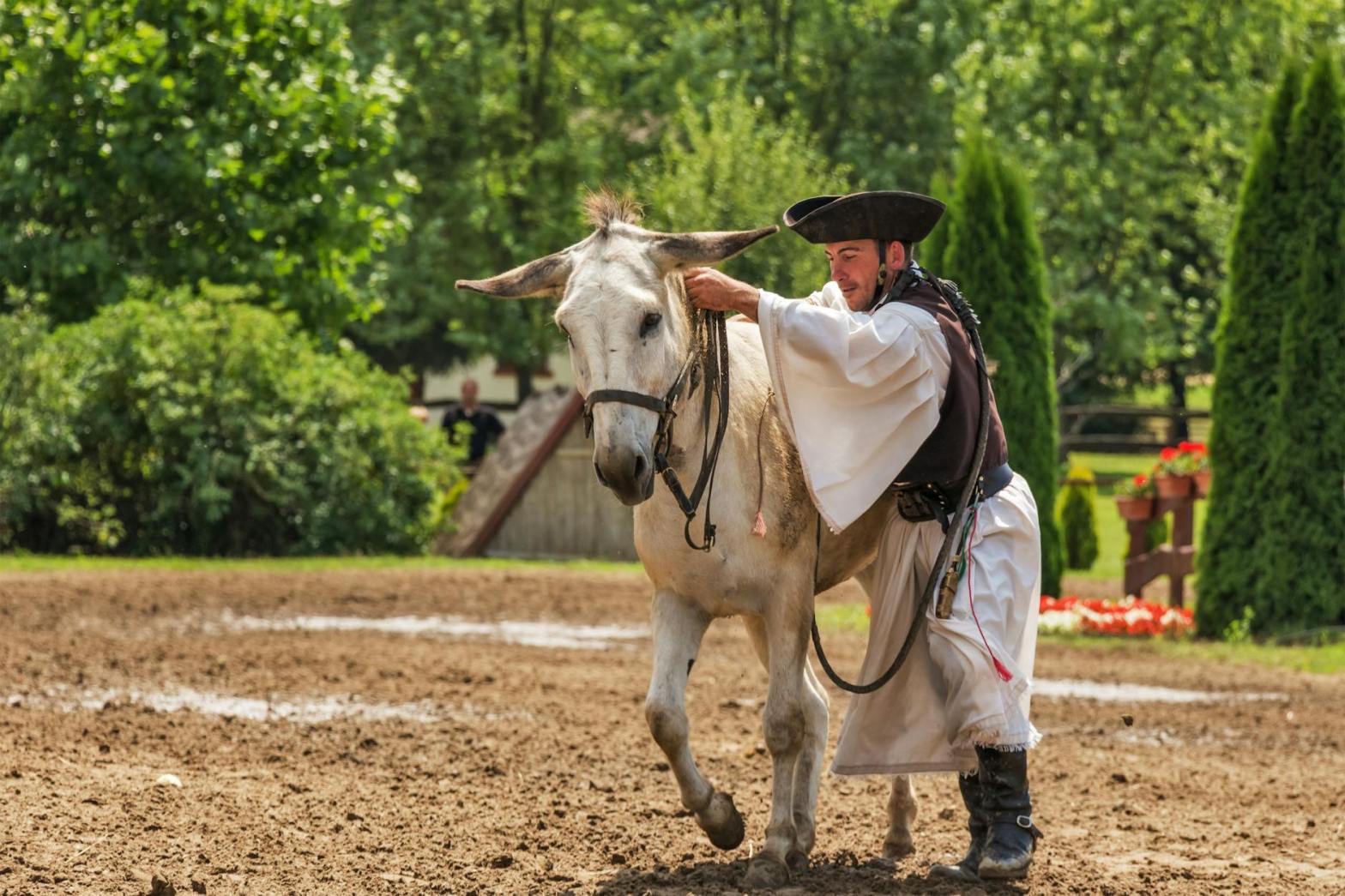
God stands in the road to oppose Balaam, sword in hand, ready to kill the man as he tries to pass (Numbers 22:23-30). Balaam’s donkey protects him, by trying to avoid the Lord, yet Balaam thinks she is making him look foolish in front of the Moabites and beats her three times. The Lord the enables the donkey to speak for herself, and Balaam converses naturally with her. She claims she has been faithful to him all his life and questions why he is beating her, to which Balaam replies he would kill her if he was armed, displaying not only a disrespect for animals, but for weapons as well, given his expression of the willingness to use a weapon so flippantly. The only thing to Balaam’s credit is that he answers honestly when his donkey asks if she’s ever behaved this way before, to which he recognizes she has not.
There is much to be gleamed from this passage. It lends to us the notion that perhaps animals are supposed to be able to speak, but normally cannot due to the curse of sin. Eve talks to a serpent in the Garden of Eden, a creature then transformed into the snakes we know today (Genesis 3:1-15). It may be that animals are able to think and have memories just as humans do, but are restricted from communicating those under ordinary circumstances. However, it may also be normal for animals to be unable to speak like humans, and these circumstances in which they do are indeed extraordinary. Such things are uncertain.
Nevertheless, these instances do remind us of the importance of the Lord’s words later delivered through Solomon: “The righteous care for the needs of their animals, but the kindest acts of the wicked are cruel” (Proverbs 12:10). Indeed, on the day of rest, not even the livestock are to be put to their ordinary work (Exodus 20:10), thus establishing the notion of treating animals with the same respect as any person and caring for their needs and health.
At this point, the Lord reveals Himself to Balaam, who bows down and worships before Him (Numbers 22:31-35). The Lord tells Balaam his “way,” or his intentions, are perverse in His sight. Thus, the Lord came to oppose and kill him, but the donkey saved his life. Balaam offers apologies and thinks to go back home, yet the Lord reiterates what He has said before, that Balaam is to go with the Moabites; but not to go along with their plans, saying only what the Lord conveys to Balaam.
Balaam then makes his way to Balak, and the two converse (Numbers 22:36-41). Once again, Balaam tries to make it clear he has no power over what God will declare. Rather, he is but a messenger of sorts who conveys the Lord’s words. Balak prepares an offering still to try and entreat the Lord, an effort we later see will fail. Still, Balaam eventually informs the Moabites how to entice the Lord’s wrath against His people (something not clarified until much later), giving insight into the displeasure we saw from God at Balaam in this scene.
Important Lessons
The three most important lessons I would derive from this passage are:
- Do not try to skirt the Lord’s will
- Do not love the things of the world
- Respect the animals in your care
Balaam is nearly struck dead by the Lord for attempting to bend the rules. He is a shifty man, as we learn about him from his continued story in the Holy Scriptures. As a prophet of God, certainly he must know what is happening with the Israelite invasion. Unless he is completely aloof, he must know there is nothing he can do to please the king of Moab.
Yet, as we see from God’s reaction and from Balaam’s schemes, he has every intention of helping the Moabites against the Israelites. He goes beyond the Lord’s will of only saying what God permits, telling the Moabites to send women outside the Israelite camp to tempt the men to fornicate and sacrifice to idols, thus turning God against His people in that time (Revelation 2:14).
Why would he do this? Likely because he loves “the things of this world,” so to speak. He expresses concern for looking like a fool in front of the Moabite princes, hence why he lashes out at his donkey. He also goes against God’s will to later satisfy the Moabites. Why would he do these things? For money, prestige, and earthly status would be the obvious explanation. Balaam seems to be a man who loves the world more than God, and that nearly gets him killed. In eternity, he is also now recorded by the Holy Scriptures as a wicked man to be served up as a cautionary tale. He is known as one who deceives people for money (Jude 1:11).
Balaam shows himself to be a cruel man as well. His harsh treatment of his faithful donkey reveals how he would no doubt treat anyone else he viewed as being less esteemed than himself. From his poor example, we learn how to behave well in the inverse. Thus, we learn to listen to a trusted animal when it seems to be disturbed, for we know our animals we care for also care for us. And indeed, do not think it a small thing to mistreat a beast, for they know the rightness or wrongness of what you do, whether they can normally communicate such things or not.
All Pensive Warrior blog posts are licensed under a Creative Commons Attribution-NonCommercial-NoDerivatives 4.0 International License.
 The Pensive Warrior