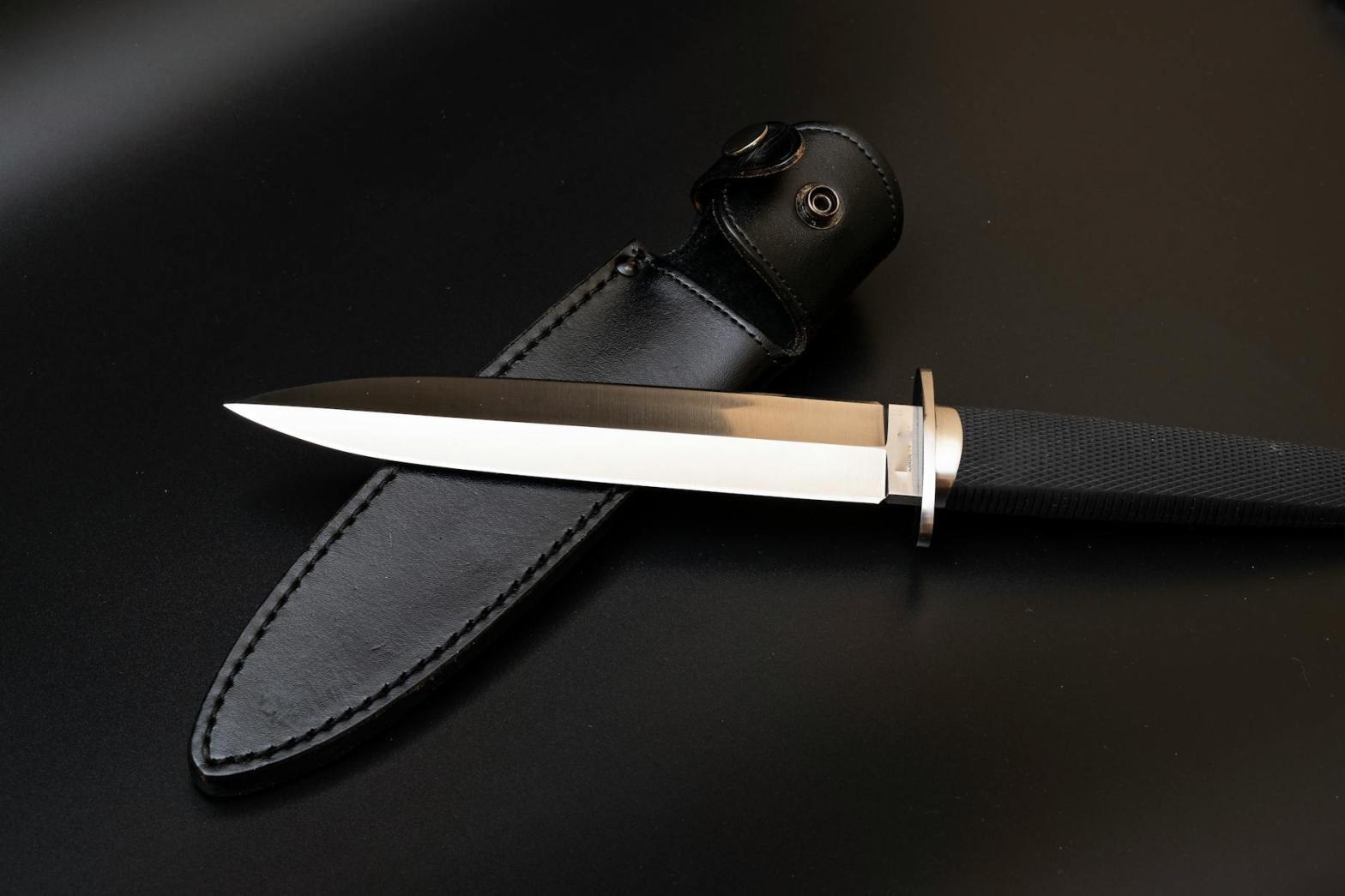
Throughout my nearly three decades of life as a martial artist, I have routinely encountered a superiority complex among people who either have little to no combat experience (simulated or otherwise) or have not had recent experience for too long. Honestly, this is a problem I also had during my adolescence. The main issue I think is in either never having had the opportunity to be outnumbered by multiple enemies, or being so far from the last time one was outnumbered/overpowered in a fight as to not remember what it is like. The lack of this experience can lead one to overestimate the effectiveness of empty-handed techniques and/or underestimate the importance of conventional weapons. This is particularly dangerous for older and female students who often rely entirely on weapons to practically overcome even a single opponent. However, even young men will be overwhelmed when outnumbered or out-positioned, and they will suffer greatly too if they do not understand that bare hands have limited efficacy against motivated opponents.
This leads us to the question: “How do we address individuals with such dangerous preconceived notions or misunderstandings?” With this in mind, one can be guided to think realistically about multiple-opponent scenarios. Simulations with protective equipment can also be used to foster understanding. The quicker and easier method is obviously guided discussions and leading questions. This allows one to build understanding; eliminate cognitive biases; and address preconceived notions, rapidly leading students to realize the dangers of overestimating empty-handed techniques and underestimating the importance of weapons. The key is to bring up relevant [to the person you are addressing] and plausible scenarios that can be talked through as a thought exercise.
The Overestimation of Bare Hands
What is the source of this misunderstanding? How should we characterize or describe it? Also, why is it dangerous? Is it just a harmless perspective? Who does it typically affect, and why?
As mentioned, I used to share this perspective as a teenager. I felt I was invincible and could defeat anyone or anything if the occasion called for it. When pondering why I felt this way, I would say it was a combination of two things. Firstly, I think it was a product of my training as a traditional martial artist. Attending such schools, I was not afforded the opportunity to fight multiple opponents or to fight an armed opponent while I was unarmed or handicapped somehow (such as with one arm tied behind my back). We sparred regularly, and I sparred with people bigger, stronger, and more skilled than I was. However, it was always an honorable duel. In other words, it was a one-on-one bout that began with both opponents at the ready. This is helpful when training martial arts for competitive purposes, but not necessarily for combative purposes. At least, not if it is your only force-on-force training.
Secondly, I was influenced by my childish mind and fictional portrayals of hand-to-hand combat. Certainly, I love a good movie as much as the next guy. However, nowadays, I often cringe at the fight choreography in many films. What is commonly passed off as “martial arts” in Hollywood is little more than fantasy. This is probably because realistic portrayals of combat would not entertain most audiences. They are over too quick, and skilled combatants try to minimize telegraphing – something stage actors actually try to accentuate. Also, I think I spent more time fantasizing about combat as a child than actually training it, and that contributed to the warping of my perspective on my own abilities and limitations.
In short, I lacked humility and wisdom. Those two things were only acquired through experience. Not training, but experience. Training is the first step and is critically important, but I was very well trained at the time I believed in such fantasies. Yet, I had not been sufficiently humbled by both experiences and the time to mature and reflect on those experiences. I say “the time to mature and reflect” because I had opportunities to be outnumbered and overpowered. I had been beaten up by a group of people who I knew were not as well trained as I was individually. I had also been overwhelmed by people who were bigger and stronger than me, even when they were less trained. Yet, despite those experiences, it was some time until I reflected upon the past and came to appreciate the limitations of a single, unarmed combatant.
That is why I think you find people who overestimate unarmed techniques and underestimate the universal importance of weapons among both trained and untrained people. It is not a training issue. Rather, it is an issue caused by a lack of recent experience and self-reflection. To address this, scenario-based training can be used to mitigate the potential for the trainee to overcome the opponent with bare hands alone, forcing that self-reflection. This means training scenarios with multiple attackers, ambush simulations, and disparities in strength.
Obviously, those first two examples are easy enough to set up. As for simulating disparities in strength (assuming you and your training partner(s) are of comparable strength), you can spar when one of you is rested and the other(s) is/are fatigued. Such simulations can help to build the perspective gained from actually being attacked in disadvantageous conditions, thus fostering an understanding of the importance of weapons to equalize those situations.
The Importance of Weapons
Weapons are incredibly important to realistic, practical combat as a human being. We do not have claws, talons, fangs, or other inborn tools capable of rending flesh and bone. Thus, we rely upon weapons – offensive tools capable of dealing damage – for effective combat. This is why cross-culturally, and cross-generationally, martial arts systems emphasize the use of weapons. Another reason is the obvious lack of effectiveness of empty-hand techniques. When seconds matter and an imminent threat must be neutralized, weapons are essential to getting the job done quickly and efficiently. Lastly, weapons are critical for a self-sufficient style of fighting. When no one is coming to back you up and you have to either eliminate the enemy or fail and die, and you cannot risk them getting back up and continuing the attack, weapons are of paramount importance to ending the confrontation definitively and maximizing the safety of all those you are charged with protecting.
We see this wisdom conveyed not just in our own lives, but through the stories we read in the Holy Scriptures as well. In the Bible, whenever we see men of God battle evil forces in the physical plane, they use swords or other comparable weapons. Examples of this would be Jael, David, and Nehemiah, to name a few. In fact, the only time I can think of off the top of my head during which we see a man of God fight with his bare hands is when Jacob wrestles with God. But then, that was not a battle against evil forces. Also, when we see God Himself come down to the earth in the form of the Theophanic Angel (commonly translated as Angel of the LORD), such as when He fights the entire Assyrian army at the Siege of Samaria; when He greets the Israelite army crossing the Jordan; or when He stops Balaam on his path of rebellion, The Lord also appears in those instances armed with a sword. Therefore, as the children of God who seek to imitate Him, I would never expect my fellow Christians to have to fight off physical forces with their bare hands when the need arises, just as I would never expect them to fight off spiritual forces by the power of their own spirit without the aid of the Holy Spirit. We are not supermen, after all. As mentioned, even God Himself – the only one who might claim to be a kind of “superman” – feels it proper to use a conventional weapon (at times) to do battle.
The use of weapons could also be argued to allow for the humane, efficient use of force as well. In situations where deadly force is necessary to eliminate a threat, effective weapons allow for quick neutralization in a way that bare hands do not. Ask yourself, if striking down an enemy is necessary, is it better to beat him to death with your bare hands or to eliminate him swiftly with one fell stroke of a weapon? Also, when eliminating the enemy quickly is important to stop him from harming innocent bystanders one is charged with protecting, the quicker and more certainly this can be accomplished, the safer those under our charge will be. If one is elderly, or otherwise smaller and weaker in stature, the use of a weapon may also be the only effective way to ensure one’s own survival against a physically superior enemy. These are all important things to consider and emphasize when understanding the paramount importance of weapons to practical, contemporary martial arts. However, this discussion is not exhaustive, but cursory. Thus, I shall move on, even though I could ponder this point ad nauseam.
Real-World Example
Recently, I spoke with a man who wanted to share his martial arts background with me upon learning of mine. He was an elderly gentleman with a military and law enforcement history who had also studied various traditional martial arts in his youth. One thing he had mentioned to me indicated he may have been subject to the misconceptions discussed herein. That is, he mentioned he learned a lot about pressure points and holds while working in a prison, and that he found that style of fighting to be “preferable to him” because he viewed it as “non-violent.” There are a couple of obvious issues with this perspective. Some, I talked through with him, while others I did not in the interest of time and focus.
The first issue, and the one I addressed directly in our conversation, was that such a style of fighting is not necessarily well-rounded. It may be particularly suited to young men, especially those who fight as part of a team and expect backup to arrive at any moment (i.e., guards at a prison). However, such a style of fighting, emphasizing empty-hand techniques, pressure points, and holds, can be dangerously unsuited to an individual man fighting multiple attackers, women, the elderly, and anyone who is not expecting someone to come and help.
I explained to him that when I train, I train to end the fight quickly and efficiently, without any expectation that people will come to help me. Thus, I emphasize the use of a fixed-blade knife with at least a 4-inch blade, supported by a firearm and minimal empty-hand techniques. My bare hands are largely just for creating time and space to access a more definitive weapon that can end the confrontation more assuredly when such force is necessary. This still allows me to use only my bare hands in situations where only that is necessary, or even better, just my voice. After all, we do not rise to the occasion but fall to our level of training. Thus, we can always use a lower level of force than the maximum of what we have trained for when it is suitable to do so, but we can never apply a higher level of force than what we have trained for.
I also mentioned that I would not recommend training, nor would I teach a student to fight in a way that would not work later in life, alone, or as a weaker combatant [in comparison to one’s enemy]. I also talked about how my love for the knife comes from the fact that I am not the biggest or strongest guy, at least not compared to a lot of other martial artists. I have trained with many warriors much more physically imposing than I am. However, the knife mitigates many disparities in strength, similar to the gun, without raising the risk of harming bystanders the way that bullets do.
The knife and gun are a great combination, covering any engagement distance. The knife works well up close, forcing the enemy away to avoid it. In so doing, he steps into the firing range of the gun. If he wants to close the distance on the gun, he comes back in range of the knife. Also, the gun allows for eliminating threats from a distance at a lesser risk to myself and a greater risk to bystanders, while the knife is the opposite. The knife allows for eliminating threats up close at a greater risk to myself but a lesser risk to bystanders. As a Christian who often finds myself surrounded by innocent bystanders who expect people like me to protect them if need be, the knife is invaluable to me with its ability to dispatch enemies quickly and efficiently with little to no risk of harming the bystanders.
One issue I did not feel was necessary to address with the man was the framing of any use of force as “non-violent.” Obviously, any use of force is violent. However, some people fail to understand violence as an amoral concept in the English language – meaning neither good nor evil. “Amoral” means “without morality.” It is opposed to “moral,” meaning “good,” and “immoral,” meaning “evil.” Something amoral, like a knife or a rock; a punch or a kick, is neither good nor evil. Rather, such a thing can be used for either good or evil, depending on the context. The obvious Biblical paradigm to explain this is the rock in Cain’s hand murdering Able, and the rock in David’s hand killing Goliath. This would then lead to the polemical discussion of the different words for “to kill” and “to murder” in the Holy Scriptures, but that is beyond the scope of this discussion. The point here is sufficiently made.
Conversationally addressing these issues using real-world examples and thought exercises allowed me to break through to the gentleman and hopefully broaden his understanding. I would never want an elderly man who trained to fight as a young man who was part of a team to think those same techniques would be equally as useful when applied alone and at a more advanced age. As I am approaching my third decade as a lifelong martial artist, I find the Lord placing me in more consultative situations where I am expected to share my perspective and understanding. That honors me and the time I have spent studying and training, but it also scares me. It means I may be responsible for what a student thinks and believes about combatives based on my commentary.
With that said, I am always cautious to avoid overemphasizing the value of empty-hand techniques as I have seen so many others do in my culture in response to a fear of the misapplication of weapons. Certainly, weapons can be misused. That is why I would never teach a student to use weapons before learning to fight with his or her bare hands. In my view, the discipline and mindset of a warrior, as applied using one’s own body, must be gained first before one is trusted with an extension of one’s body, such as a weapon. However, there is more of an issue in our present culture that I see of people overestimating the effectiveness of bare hands and underestimating the importance of conventional weapons; and that is something I would never want to be guilty of perpetuating.
Conclusion
There is much more to be said on this topic. As mentioned above, this is not an exhaustive discussion. Rather, it is a concise overview with one, real-world example. Yet, I feel this is a good starting point for a topic I have always been quite passionate about, especially growing up as a rather lean martial artist. Years of sparring as a toddler and teenager against grown men who I was hopeless to overcome helped me empathize with what it is like to fight a young man as a woman or an elderly person. Also, getting beat up by groups of young men when I was in my prime honed that perspective as well. I think it is easy to forget or overlook the paramount importance of weapons to practical combat. After all, I encounter people who make this error all the time, it seems. And indeed, I used to make this error myself.
What about you? Have you ever had the opportunity to get beat up by multiple people or spar with someone significantly stronger than you? Have you ever had the chance to spar with someone armed with a training weapon while you were unarmed? Have you ever survived a fight with an enemy who was armed with a real weapon while you had none? What was that experience like for you? How did it change your perspective on things? Also, what would you say in a conversation to convey that understanding to someone else?
The Pensive Warrior posts are licensed under a Creative Commons Attribution-NonCommercial-NoDerivatives 4.0 International License.
 The Pensive Warrior