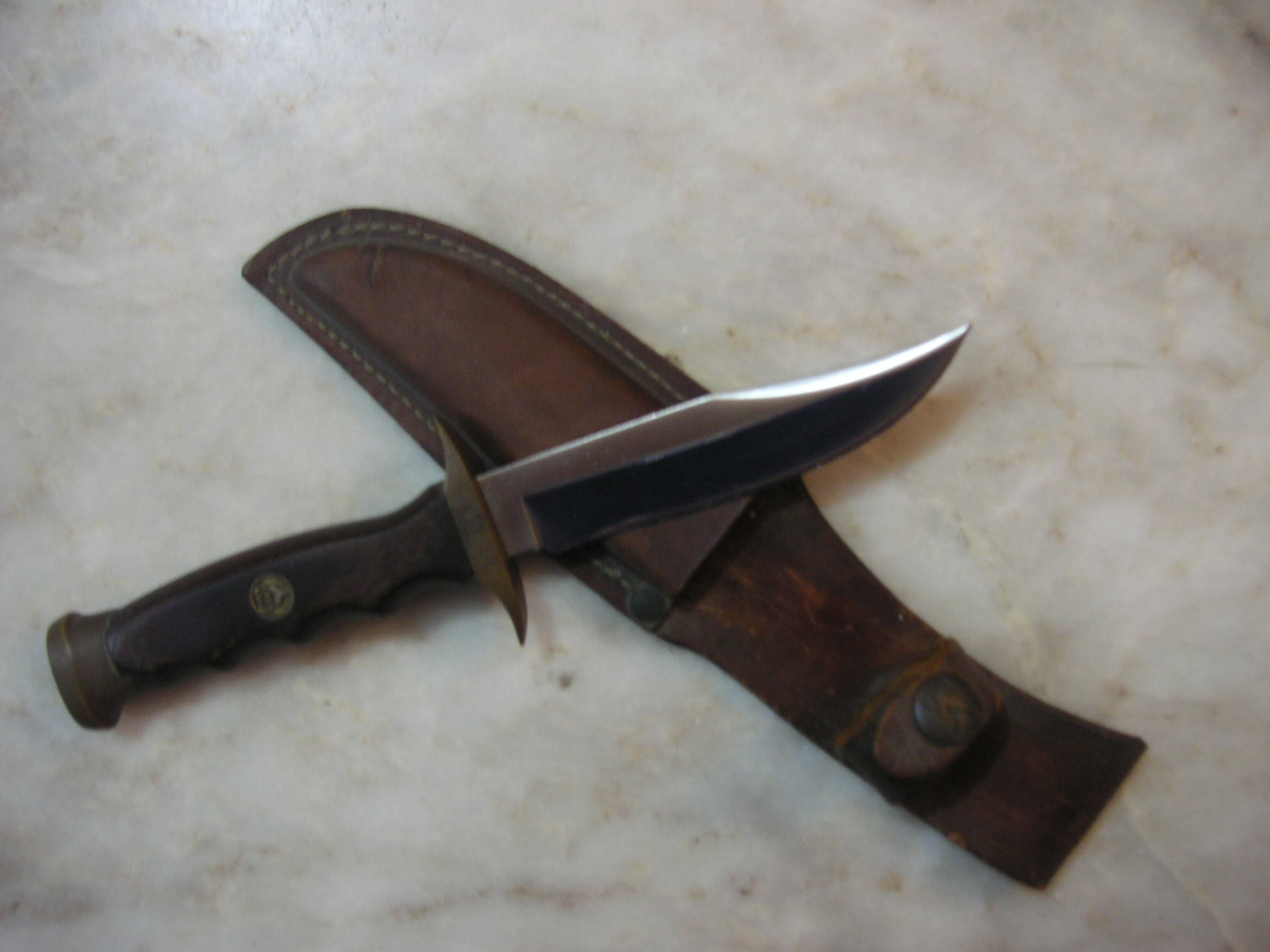
I have been studying knife fighting – particularly forward-grip, edge-out styles – for quite some time now. At this point, I feel very comfortable with the blade in my right hand and am gaining comfort with it in my left (I am right-handed). There are quite a few things I have learned and some misconceptions I previously held which I have now abandoned.
Things I’ve Learned
Cutting and stabbing the neck and wrists is appealing since they are among the easiest targets to reach. However, they are also the least likely to be covered by thick clothing. This means they are more vulnerable to the blade since no penetration is lost through clothing, but it also means the enemy’s blood is more likely to squirt in your face. That is something you wish to avoid because not only is getting someone else’s blood in your eyes, nose, and mouth gross; but you also don’t know what is in the enemy’s blood. There could be drugs, diseases, or other dangerous chemicals. Thus, it is imperative to use footwork and the support hand to angle yourself away from the wound as quickly as possible, if possible, when targeting the neck or wrists.
This has also started to create somewhat of a preference in me for attacking below the chest. The lower abdomen and upper legs are more likely to be covered with clothing, but a large enough knife should be able to handle this. It is important to remember that 1-2 inches of penetration may be lost through clothing and to choose your blade accordingly. The upper arms also are often covered by clothing that can soak up blood. However, I recognize we do not get to choose the targets presented to us in combat, so it is paramount to train using movement and positioning to try and avoid blood spurts when exposed arteries are cut.
Misconceptions I Held
I used to think there was little practical application to a reverse grip with the blade facing edge out and a forward grip with the blade facing edge in. However, after reading more literature on the topic of knife fighting and practicing with a blade in hand, I have come to understand the applications and merits of each. Now, I understand there is a time and place for all four orientations of the blade – forward grip with the edge facing out/in and reverse grip with the edge facing out/in. This all assumes one is using a basic, single-edged straight knife design. Daggers with double-edged blades and knives with aggressive curvature are obviously used in somewhat specialized ways.

In my previous post on this topic, which you can find here, I also espoused the idea that you might as well do rising cuts when raising the knife to do a vertical or diagonal, downward cut. However, after more practice, I find the need to amend my statement on this. Rising cuts can certainly be done with a knife, especially when paired with good footwork. However, with a blade as short as a knife is, I just feel they are less and less useful as I practice more. Downward, vertical, and diagonal cuts, as well as horizontal cuts and thrusts, can all be performed in much easier, rapid succession along with open-hand attacks with the free hand. Rising cuts seem to just be slower, as well as less useful due to the very short nature of a knife. I do like rising cuts with a longsword because of how quick they can be performed; how far they reach with the length of the blade; and the intuitive way they allow you to advance on the opponent. However, with a knife, I am finding rising cuts may not have been as practical as I thought some time ago.
Preferences I’ve Developed
Before I started training with a knife, I was very enamored with daggers due to their double edge. This may have come from my love of a double-edged sword and its ability to offend from more angles than a single-edged sword. However, just as swords eventually converged to have “false edges,” meaning one side was fully sharpened and the other was sharpened only part of the way down, I have developed a preference for knives like the Bowie with a fully sharpened edge and a false edge on the spine. This allows for a thicker spine for heavier cuts, but still enables the double-edged point for greater penetration. Also, a knife with a false edge rather than a double edge allows for putting the thumb or hand on the spine like a single-edged knife, enhancing cuts with more force. This is something that would be precarious with a dagger.

I am also growing fond of the karambit, an ancient Indonesian design with an inward curve fashioned after a tiger claw. This enhances cuts, which are a lot of fun to drill and put less pressure on the wrist than thrusts. The inward curve also allows for some grappling techniques to be performed with the knife while cutting. This would be impractical with a straight-edged knife. However, the thrusting capability of the karambit is diminished by its design, and thrusts are what primarily end fights.
Prayer for Warriors in Christ
Heavenly Father, thank you for this day; for all you have done; and for all that you do, for all you do is good and great. Thank you for creating me, bringing me to this occasion, and for all the provision you have afforded me in this life. Forgive me for the good I struggle to do and the ill I struggle to resist, as I extend the same forgiveness to others.
Train my hands for war and my fingers for battle, as you are my strength and refuge; my Father and my my Master. Train my hands to protect the innocent from the wicked, and my heart to be the instrument of Your divine will. Grant me knowledge to know Your will, wisdom to know how to apply it, discernment to know your seed from Satan’s, and discretion to preserve my ways before You.
Guide me to align my ways with Yours, for Your ways are higher than mine. I am Your servant. It is for You whom I lay down my life, and for Your kingdom I do serve. I also pray these things for those other warriors who put their faith in You and commit themselves to Your ways.
This I pray in the name of Your Son, Jesus the Christ.
The Pensive Warrior posts are licensed under a Creative Commons Attribution-NonCommercial-NoDerivatives 4.0 International License.
 The Pensive Warrior