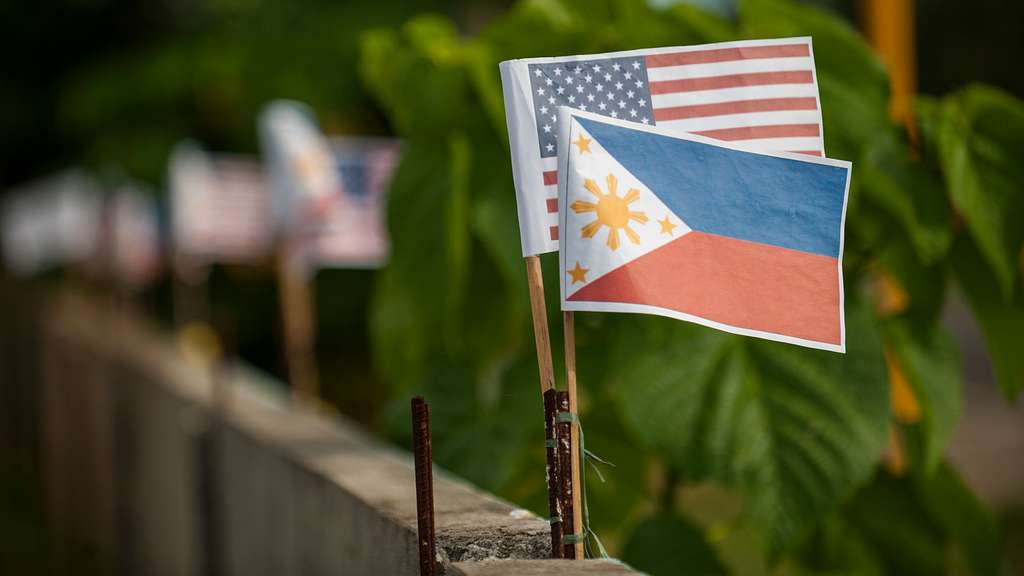
America and the Philippines have had an interesting relationship, much like any two countries we analyze from a long-term perspective. However, there is more to be said about the special bond between our two nations, a bond which has given glory to God through bitter times and sweet. It is a bond that has been tested and strained and still stands to be tested as never before in times to come. Yet through all, there have been Americans and Filipinos who have been faithful to one another as to our Lord, no matter the schemes of the Adversary beset to push us apart. This history and future, as well as the friends from the Philippines I have made personally, led me to commemorate the ties between our two nations in the same way I honored the bond between America and Japan. With that said, let us take a brief look at the history of America and the Philippines.
Spanish-American War & Handover
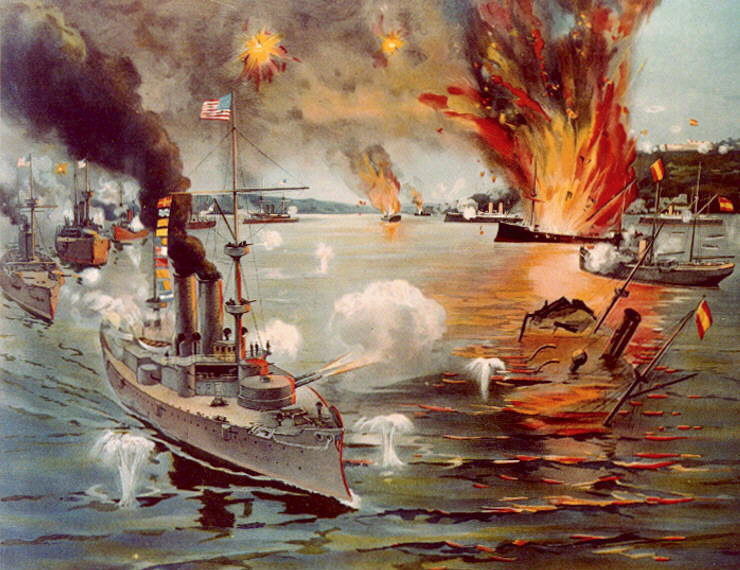
The relationship between America and the Philippines began as a result of the Spanish-American War. Spain was in control of Manila, but a fledging republic led by Emilio Aguinaldo held most of the archipelago. This led to a stalemate that could not be broken, as control of Manila was very much contingent upon naval power, a domain in which Spain held the decisive advantage over the Philippines. However, this advantage did not extend to America at the time. While the Spanish-American war was focused on Cuba for the Americans, it did lead the Spanish and American navies into combat over control of Manila; and the U.S. Navy quickly routed the Spanish forces controlling the bay, harbor, and city.
Unfortunately, despite the fact the Filipinos were commanding a functional republic throughout the rest of the archipelago, some American leaders bought into the European idea that they were not educated enough to control the island themselves. Aguinaldo tried to reach out to the Americans and form amicable ties, but his attempts were not heeded. In the Treaty of Paris, Spain handed over official control of the Philippines to the Americans. Even though the treaty was unpopular in the U.S. Congress, it narrowly passed with enough convincing by supportive voices. The main draw of the move was to give the United States a presence in the Pacific, allowing U.S. forces to better protect merchant vessels traveling to China. Since this was a valid concern, those in favor of annexing the Philippines won the day.
This would put America and the Philippines on a collision course in the short term, but similar to the British and Japanese, the forced ties would eventually lead to a lasting partnership. However, just as with those other allies forged from historical enemies, Americans and Filipinos would now shed one another’s blood.
The Philippine-American War & Colonization
Commodore George Dewey led an American naval group based out of Hong Kong and took Manila Bay quickly. Additional ground troops arrived three months later and Manila was surrendered without a fight by the Spanish governor, Fermín Jáudenes. However, Aguinaldo and the Filipino forces in control of the rest of the archipelago did not recognize American sovereignty over the islands any more than Spanish sovereignty, nor did the Americans recognize the Filipino claims to sovereignty. The conflict was inevitable at this point, as the Filipinos saw the state of affairs as simply a continuation of their revolution without much of a difference, and groups opposing the occupation back in the Continental United States failed to muster enough support to hand over control of the Philippines to the locals.
On February 4th, 1899, Aguinaldo declared war against the United States. Malolos was established as the capital of the First Philippine Republic, and Antonio Luna was given command of all their military forces. Filipino troops stormed Manila on the 4th, attempting to take the city in one fell swoop. They were repulsed by American troops at every point of contact. The fighting carried on and spread. Luna was killed and Malolos fell to American occupation by March 31st. At this time, U.S. President William McKinley formed a new civil government in the Philippines to establish some kind of peace and the pursuit of happiness and the prosperity of the Filipinos, even against American interests. This declaration was later cited in support of Philippine independence. Due to the atrocities committed by the militant groups under Aguinaldo such as the crucifixion of Americans, setting them up to be eaten alive by ants, and cutting their ears off, any involvement of the First Philippine Republic under Aguinaldo in the new government was seen as unthinkable.
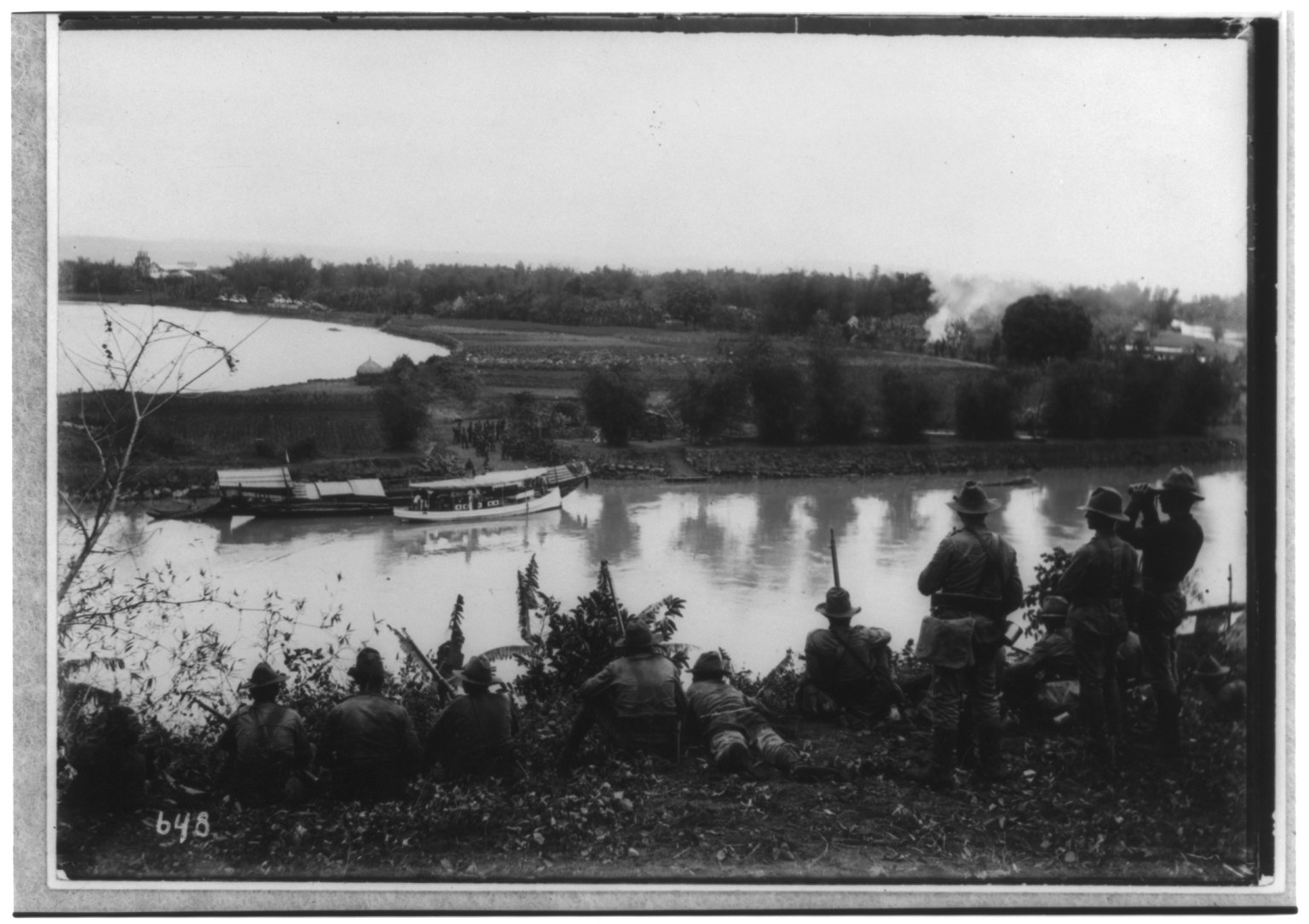
A campaign of guerilla warfare continued against the Americans and their allies they had gained amongst the locals by Aguinaldo and his forces. Fighting was concentrated in Luzon. At this time, groups such as the Macabebe – who had aided the Spanish during their reign – began working alongside the Americans and the new government. The Macabebe and Americans worked together to capture Aguinaldo on March 23, 1901. Brigadier General Frederick Funston and a handful of other Americans posed as prisoners of war being transported by some Macabebe troops. This allowed them to sneak into Aguinaldo’s camp and take him alive.
Now in American custody, Aguinaldo pledged his loyalty to the United States and called for all his forces to stand down. However, they did not heed his call and the fighting continued with greater ferocity. There were massacres and atrocities in turn committed by both Americans and Filipinos against one another.
The Philippine-American War Escalates
As Americans captured population centers, they made use of combatants who had been arrested in forced labor – a common practice to this day, as those who have forfeited their liberty through violence against the community may be expected to make restitution through involuntary community service. However, in the context of a foreign war and occupation, this was understandably perceived as enslavement and conquest by the Filipinos. In truth and charity, that is an honest understanding. Out of foolishness, the Americans tried to earn the trust of the Filipinos through naive gestures such as ordering troops to be unarmed while on patrol and forbidding searches of suspicious persons to avoid accusations of sexual harassment.
This naivety of American forces and the collision course it put them on with their Filipino brethren was put on full display on September 28th, 1901 in Balangiga when rebels were smuggling weapons into the town for an early morning attack. Women were used to move the weapons, hiding them in coffins with young girls playing dead. American troops who searched them for weapons were suspicious of false claims of a recent plague, as they had not heard of any such thing. However, they were afraid to search the women for weapons for fear of being accused of sexual harassment, as American troops would be court-martialed and executed if they were accused of inappropriately touching any local women.
So, the weapons got through and the attack commenced. A company of Americans was wiped out, and the town of Balangiga burned to the ground in response. The Samar campaign followed with the Americans using a scorched earth policy against the Filipinos, causing tens of thousands of deaths. Infamously, Brigadier General Jacob F. Smith ordered all Filipino males over the age of 10 to be killed during this campaign, resulting in his court martial for the use of excessive force. It was a horrific time in the history of America and the Philippines, demonstrating how quickly violence can escalate during times of conflict.

Yet, there was light at the end of the dark times that arose out of the bloodshed. The conflict came to an end as rebel leaders fell. Miguel Malvar surrendered on April 16, 1902. Simeón Ola and the rebels under his command fell by 1903. About the last of the rebel forces under the command of Macario Sakay had fallen by 1906. As the war dragged on, the leaders of the First Philippine Republic engaged in all the same violence and destruction against their own people as the Americans had. Rebel leaders were infamous for burning Filipino villages and massacring populations who did not bow to their whims, and the people who followed them could be perceived as doing so out of a hatred for foreigners rather than a true love of country or desire for independence. As a result, the Americans eventually defeated the rebel forces since they limited such practices as much as possible and punished commanders who engaged in such atrocities wantonly.
Lessons Learned
The Philippine-American War never came to a close all at once, but rather, it died down over time as those pushing for more war and bloodshed were eventually defeated. It would take all day to exhaustively discuss the events of this conflict, and it is certainly a topic for future discussions. For now, however, for Americans such as myself, Filipinos, Christians everywhere, and all other observers today, there are several valuable lessons to take note of from studying this conflict.
The war was a wake-up call to the inexperience of American soldiers in tropical warfare. More troops died of disease than enemy contact. Expeditionary forces needed better training in surviving humid, jungle landscapes not seen anywhere across the Continental United States. This could undoubtedly be cited as invaluable to both the Americans and Filipinos in preparation for the battles to come in the next few decades. The Pacific War and Cold War would put these two peoples on the battlefields of the Pacific islands once again against new enemies. The lessons that both Americans and Filipinos learned fighting against one another would save them in the future when they had to fight alongside one another.
Some other lessons I noted while briefly studying this conflict included the importance of local support when waging any such campaign. An ignorant observer may point to the technological advancement of the American forces over the Filipinos as the deciding factor in their victory, yet why then were the Spanish ineffective? There are numerous examples of a technologically inferior force defeating a superior one. The Filipinos also had greater familiarity with the battlefield environment, as evidenced by the great losses Americans suffered to exposure rather than combat. The First Philippine Republic, however, was more of a terror to the Filipino people than the Americans were.
Unlike the FPR, the Americans also punished and even executed their own people who committed atrocities, while the FPR was led by people committing such actions and holding themselves accountable to no one. The Americans also made a point of fostering relationships with the locals in pursuance of peace, regardless of what anti-American critics might assert or what mistakes they may have made along the way. Understanding this, it was inevitable for the Filipino people to turn against the First Philippine Republic and toward the American Commonwealth. This was probably the deciding factor in the war and an important lesson for future war planners.
Another lesson learned is the inherent difficulty in cross-cultural communication and the importance of grace. In their early efforts to foster relations with the Filipinos, the Americans made several mistakes that may have seemed reasonable at the time but were wrong nonetheless. They took over government functions and distrusted Filipinos to run their own population centers. Despite what some uncharitable dunces might assert, this was actually a reasonable prejudice for late 19th and early 20th Century Americans to have given the living conditions across much of the Philippines and the brutal dysfunction of their existing government. Nevertheless, it was uncharitable on the part of the Americans to expect the Filipinos to be wholly incapable of governing themselves, requiring such a heavy-handed intervention. Greater efforts should have been made by the Americans to involve Filipinos in the governance of their own land. Americans, among all people, should have known this given our history with the British Empire.
On the part of the Filipinos, they were excessively belligerent to American offers of assistance, to the point of armed aggression. Some bleeding-heart, paradoxical utopian might think such a response was warranted. However, an unbiased observer with love for both America and the Philippines would notice the restraint of American colonialists and their genuine efforts to try and grow the Philippines; and in noticing this, could admit the violent efforts of the First Philippine Republic against the Americans were harmful to the overall society rather than helpful. The Americans were policing their own, seeking to punish those who mistreated Filipinos even with the death sentence. That is not the kind of policy that would have been enacted by a power that was truly seeking its own gain at the expense of the other. The Filipinos should have taken notice of this, especially given their reputation as a very empathetic and caring culture.
As such, we learn of the delicate and difficult nature of cross-cultural communication regardless of whatever noble intentions one might think themselves to have. There will always be misunderstandings that threaten to spiral out of control. We must be prepared for that, think through important decisions with the utmost concern for all involved, and proceed always with extreme caution where hostility may be lurking around the corner. Also, as mentioned, we must have grace for one another. Where possible, we must not be like the Filipinos at Balangiga who abused the show of faith by the Americans who disarmed themselves as an opportunity to attack, and we must not be like the Americans in the Samar campaign who responded with indiscriminate rather than targeted killing.
Of course, this is very easy to say, and never so easy to do. In fact, the Lord promises us that things will not be easy on this earth. We will be tested, and we will fail. This inevitable struggle points us to our unquestionable need for a savior. Having been provided that savior in our Lord, Jesus Christ, we are eternally grateful.
From the Philippine-American War, we learn the need for the boldness of honest men, willing to always do what is right with bravery and integrity, never giving in to the emotions of oneself or the crowd. We learn the need for sound preparations, for one should not rush into a crisis without first considering the risks and costs. We also learn the importance of the need for grace, love, friendship, and community. It was the love for fellow man and the kindred spirit we share as brothers in Christ that enabled Americans and Filipinos to build bonds that led to inevitable peace. Without this love, the early 20th-century Americans likely would have exterminated the entire population of the Philippines in an endless wave of continually escalating hostilities. Yet because of the love that was born, peace was made in time for these two peoples to rise together and meet new occasions just on the horizon.
A New Nation Emerges
Before the war for independence, the Filipinos were not a unified people. During the conflict, they fought each other more than any invaders. However, the conflict with America forced them to form a unified national identity that previously did not exist. Similar to how the American war for independence against the British forged a new national identity among the Christian denominations of the colonies who had previously all raged against one another, so too did the Filipino war for independence against America force the peoples of the archipelago to unify in a way they otherwise never would have. The result was a culture that valued solidarity, self-governance, and religious freedom, as revealed by the Philippine Commission of 1902.

In the ensuing decades, civil governments began to emerge in the Philippines which saw Filipinos working together toward common goals. A fully autonomous and independent government was something to strive for. The Philippine Bill of 1902 put forth a path for a full handover of regional control to the people of the archipelago if they could establish a national census followed by two years of peace. Diplomatic missions between America and the Philippines began, with people going back and forth between both nations to collaborate and coordinate with one another. In 1934, the Philippine Independence Act was signed into law by the United States, establishing a Commonwealth government that would last until the Japanese invaded and annexed the Philippines in 1945.
A New Era
After the Japanese were cut off from American oil imports due to their invasion of China and the ensuing altercations with American troops stationed there, the Japanese became desperate to replace their oil supply. Their two options were the Norther Plan – to invade the Soviet Union – and the Southern Plan – to invade the Pacific. They lost confidence in the Northern Plan due to several lost border skirmishes and the superiority of Russian tanks. This meant they felt their best chance was to attack the American, British, and Dutch holdings in the Pacific. Their prime objective was to capture the Dutch oil fields in modern-day Indonesia. Doing so would put them on a war path with America, but they wagered if they caused enough damage at Pearl Harbor, they could delay any response long enough to prevent the recapture of Pacific territories by any Western forces.
So, they went forward with their plan, yet they failed to sink enough American capital ships at Pearl Harbor and deal significant damage to the oil depots there. This resulted in an American response far sooner than the Japanese could prepare for. Still, the war to retake the Pacific would not be easy. While surprise attacking Pearl Harbor, Japanese forces landed all across the Pacific Isles, including the Philippines. Their attack was unexpected by many, and even less prepared for. Almost overnight, Japan took charge of almost the entire Pacific region. Their invasion of the Philippines began with the bombing of Luzon and then-President Quezon bringing the famous Filipino-American Douglas MacArthur out of retirement to lead the newly-formed Philippine Army of the Commonwealth against the Japanese.

However, no one was really prepared to deal with the Japanese attack. It came as quite a surprise to everyone, and all the aircraft in the Philippines were grounded for refueling at the time the bombing began. General MacArthur decided it would be best to try and fight the Japanese on the beachhead as they landed, rather than retreating further inland. However, many of the troops at his disposal were untrained and unarmed at the time. The plans for the defense of the Philippines against such an invasion relied on American support from Pearl Harbor, support that obviously never came.
The American and Filipino forces were eventually forced to retreat further inland due to a lack of supplies, the unabated stream of landing Japanese troops, and enemy air superiority. They first fell back to Bataan, but it could not be held. MacArthur was then evacuated to Corregidor while others stayed behind to slow the Japanese advance.
After three months of fighting, the Americans decided to fully retreat from the Philippines and regroup for a later push back into the Pacific. They had to leave many of the Filipino brothers behind, but they would not forget one another. By this time, many bonds of love and friendship had been forged between Americans and Filipinos. Many new families bridged across both cultures. While the Americans were ordered to leave and regroup with the rest of the fleet, Douglas MacArthur vowed he would return one day to help the Filipino people fight for their homeland. In the meantime, he left behind some American personnel, giving them and the other Filipino warriors the order to scatter and fight the Japanese using guerilla warfare across the wilderness.
The Struggle Continues

The Japanese occupation forces captured tens of thousands of American and Filipino warriors and killed tens of thousands more after securing the archipelago. Yet, the people never gave up hope. Over 1,000 guerilla units operated across the Philippines, attacking the Japanese in cells that could not be isolated or snuffed out. The Filipino people were adept at guerilla warfare, and it is said many of them truly believed MacArthur would return one day with reinforcements if they just held out long enough. Thus, the guerilla fighters enjoyed local support from the hundreds of thousands of Filipino civilians throughout the war. This frustrated the efforts of the Japanese to subdue the islands and kept the spirits high of the Philippines, despite the immense suffering and despair they endured.
It is bitter-sweet that it often takes war and conflict by an external threat to bring a divided people together. It is regrettable it often comes to this before such unity is found, but it is hopeful that at least it can be found when such unity is needed most. Americans and Filipinos had fought one another in the past, but now they were forced to fight alongside one another. Also, Americans in the Philippines at this time were able to serve as neutral arbiters or mediators between different Filipino groups with political divides, allowing different groups who otherwise would have never cooperated to work together in the fight against the Japanese. The forming of these memories of teamwork, however contrived, are the kinds of shared bonds that people can remember when relations are strained in the future. Such times remind us of our love for one another when it may be hard to see the common goals we share.

MacArthur was eventually able to set up an intelligence group out of Australia and establish contact with guerilla units in the Philippines. They continued raids against Japanese occupation forces up until American reinforcements arrived in October 1944. The Filipino guerillas had managed to conduct countless successful sabotage, espionage, and assassination operations against Japanese forces, and were able to effectively get information out to the Americans in Australia. Thus, when the reconquest of the Philippines came, guerilla units were able to provide actionable intelligence for U.S. bombers as well as medivac for downed American pilots.
The full extent of the coordination between American and Filipino forces at this time would take all day to recount. It is nothing short of a miracle to read about and study. It is a long and endearing story of what God can do when He brings His people together.
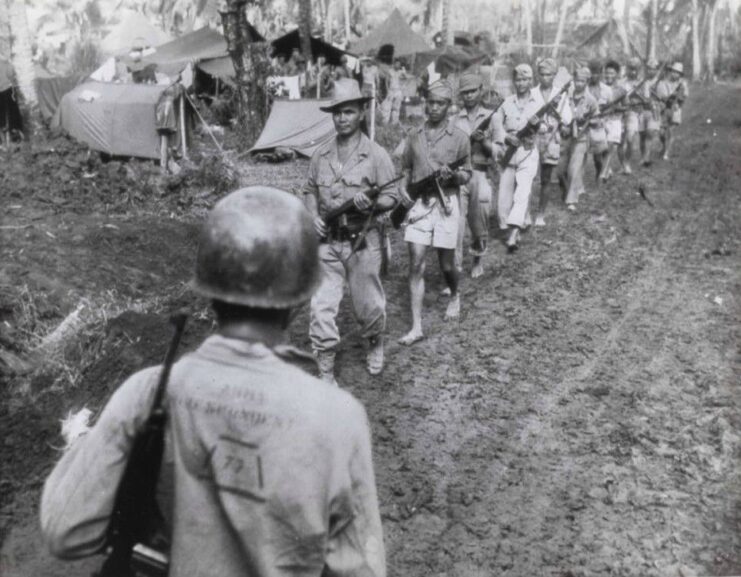
On July 4th, 1946, the Philippines was declared fully independent from the United States of America. The Filipinos were finally recognized as a people, a nation, and a culture capable of defending themselves after generations of battling long and hard. Several of the most wonderful friends I have ever known are Filipinos, and it warms my heart to know our history and for us to share July 4th as a day of celebration. I praise God for my brothers and sisters overseas, uniting with me through the blood of Jesus Christ. Though we may be far apart physically, I know they are always close by spiritually. Yet, this is not the end of the story of America and the Philippines, though it would certainly be a fitting place to leave things as finished.
The end of WWII was the end of a chapter in the history of our two peoples. Many Americans and Filipinos forged strong bonds during this time which led to the creation of even more new families that spanned the two nations. Laws were passed in 1945 and 1956 to recognize marriages and make American citizenship for Filipino veterans who had served in the U.S. Armed Forces or who married someone who had. For a brief time, there was peace and joy across America and the Philippines. Yet, it would be short-lived.
The Communist Plague Spreads
The Cold War began before the ink was dry on the treaties that ended WWII. As soon as the Axis powers had surrendered, the Communists began scheming against the Allies. Europe and Asia would see significant conflict in the decades to come as the world realized the struggle against evil indeed has no end until the Messiah returns. The struggles would only become more intense as time went on, not less so. While the Filipinos and Americans celebrated their newfound partnership as sovereign nations with a moment of peace, they would once again be thrust into hardship alongside one another as the Soviet Union and the Comintern jumped into action without missing a beat.
The Americans and Filipinos established an official military alliance in 1947, agreeing to mutually defend one another against attack on either nation. Of course, there was not much the Filipinos could really do at the time to aid in any attack against America, but the moral support was appreciated. Also, the Filipinos were able to offer the Americans a great strategic advantage against the Communists by continuing to house American forces in the Philippines. This allowed Americans to provide combat power to defend the Philippines which would otherwise be absent while also providing defensive depth to the Americans by moving part of the frontline in the Pacific Ocean up from the West Coast of the Continental United States to the Pacific Isles.
However, there was still much contention between Americans and Filipinos, as well as infighting over issues like the American bases and sovereignty. As such, communist influence was able to thrive in the Philippines without a serious challenge from what should have been a unified force of God’s children. The Hukbalahap guerillas, or the “Huk” for short, took root in Luzon. For a time, they posed a serious threat to the government of the Philippines, fighting to hand the land over to Godlessness and enticing people with their usual rhetoric seen across time and space. The same kinds of emotional manipulation that worked in Russia seized the hearts of many Filipinos, turning them away from ideas of reform to self-destruction under the guise of revolution.
As the Americans tried to help rebuild the Philippines while simultaneously rebuilding the rest of the world from the damage caused during WWII, fighting broke out again across the archipelago. Filipinos were once again slaying each other. Tensions flared as the Philippine government expected the Huks to surrender all their weapons, including small arms like rifles. As we have learned many times throughout history, anyone attempting to disarm you is your enemy, so the division between the Huks in Luzon and the government in Manila was understandable to some extent. After the Philippines gained independence in 1946 and some Huk candidates for office lost their elections, they decided to resort to bloodshed.
Over many years, the opposing governments of Manila and Luzon fought one another. If there is one thing communists are good at, it is using sustained confrontation with them to fuel their propaganda efforts. They must either be contained until they fight themselves or destroyed at once with overwhelming force. However, the government of Manila could not crush the Communists outright, nor would they be given the luxury of containment. The Huks constantly put pressure on Manila, forcing them into battles with no decisive victory. At one point, the Huks even seemed to come close to taking Manila.
However, it was precisely this that sent alarm bells ringing into the ears of Americans. The spread of Communist power and influence in the Philippines was a great threat that could put the whole world at risk if it was unabated. Fortunately, relief came in the way of two critical events. Firstly, multiple Huk leaders were captured at a secret facility in Manila. Secondly, Americans started taking the fight against Communism in the Philippines seriously and helped to arm the poorly-equipped Filipinos with more modern weaponry. These developments gave the Filipino people the edge they needed to turn the tide against the Red Specter.
In 1953, Ramon Magsaysay was elected president of the Philippines, another event that shifted public support from Luzon to Manila. This was likely because most historical leaders of the Philippines were of Spanish descent, but Magsaysay was not. For better or for worse, this allowed him to take support from the Huk leadership. The next year, the last leader of the rebellion surrendered and the Huk Insurgency was considered ended. Nevertheless, Communists continued to work in the shadows of both the Philippines and the United States. In the decades to come, they would make another appearance in both nations as the long war against the Global Left continued without an end in sight.
Americans and Filipinos Take the Fight To Them
As the Communist plague spread, the Red Menace threatened to consume the Korean people. The Russians and Chinese Communists aided what would become North Korea, while Americans and Filipinos both rushed to defend the South. The Philippine Expeditionary Forces to Korea fought alongside Americans from the U.S. 1st Calvary Division and multiple Infantry Divisions. The first battle ever won by Filipinos on foreign soil would be the Battle of Miudong. Other notable actions of Filipino forces in Korea included the Battles of Yultong and Hill Eerie. With their aid, the Communist forces were held at bay and the Korean people in the South were saved.
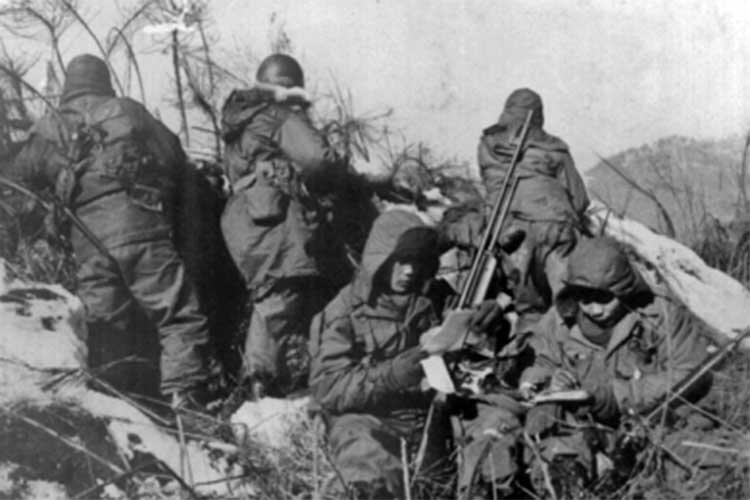
In the 1960s, Americans and Filipinos would find themselves together on the front lines against Communists in Vietnam. While no Filipino units would be involved directly in combat during this confrontation, the Philippine Civic Action Group-Vietnam would provide significant humanitarian aid to American and anti-communist, South Vietnamese forces throughout the war. Their efforts saved many lives in the form of medical care and provisions of other basic necessities. Unfortunately, the American effort was marred from the very beginning. With the war being started by a false flag, the Americans not coordinating well enough with anti-communist Vietnamese, and communist subversives beginning to take root in American society, darkness was able to keep its hold and push out all semblance of light.
The Cold War would continue with Communism and other Leftist offshoots spreading all over the world. In 1989, the Russian Communist regime out of Moscow suffered significant setbacks with the dissolution of the Soviet Union, forcing an eventual reorganization under what would become known as National Bolshevism, combining old Russian Communism with new ideas to revitalize the movement. However, the Chinese Communists were able to survive this period and make significant inroads in the Philippines and the United States. Meanwhile, Leftist denominations already seeded in America, the Philippines, as well as other parts of the world would continue to take root and grow. This would lead to enduring problems in both our countries felt to this day.
Lessons Learned Again
Despite the wealth of history between America and the Philippines, mistakes of the past were repeated during this era. The Americans made the mistake of disarming Filipino civilians during the Philippine-American War, only justifying the belief that Americans were enemies in the eyes of the people. Then, the government of Manila made the same mistake in expecting the people of Luzon to surrender their small arms.
Both cultures should have learned from the past. The Americans of that time should have known better from our history with the British. Likewise, the Filipinos in Manila should have known better from their history with Americans. Yet, so often people fail to learn the lessons they are supposed to from our history.
Also, we can learn from the failures of the Americans and Filipinos of the Cold War era to stop Communist subversion and infiltration into our current societies, as well as the complete overlooking of the Communist Chinese threat. Institutions of power across American and Filipino society were ceded by Christians to Leftists, eventually leading to a generation of professing Christians who were more catechized by a secular worldview than by the Word of God. Also, many leaders were foolish in their thinking they could work with Chinese Communists to counter the Soviet Union, fostering ties that would be used to undermine society after the fall of the USSR.
Forging Ahead Together
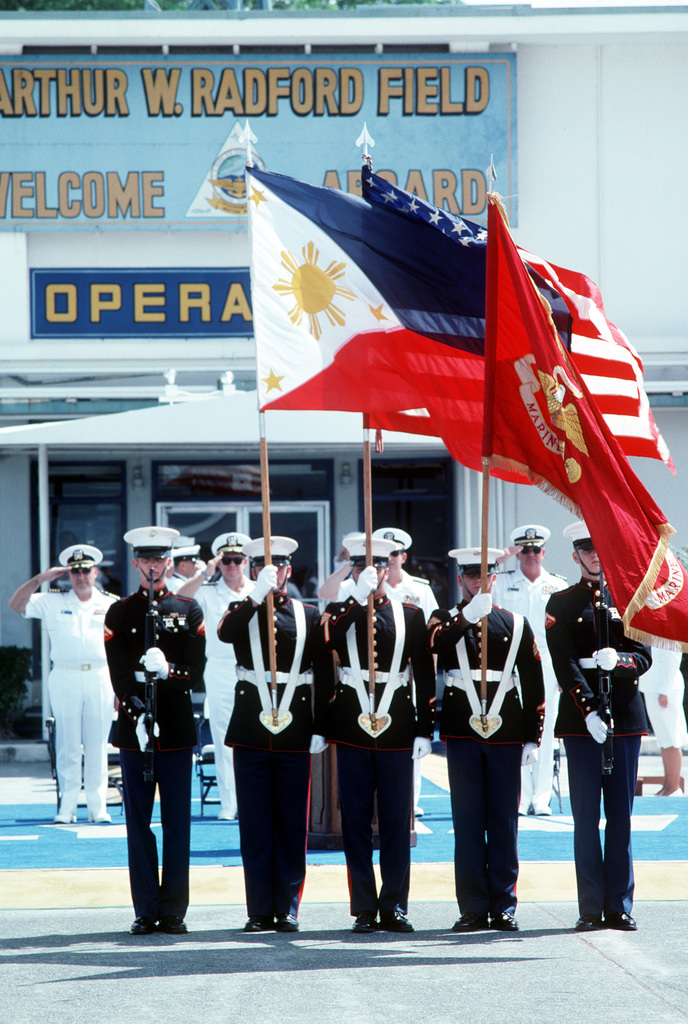
Today, America and the Philippines have an old, mature relationship. We have grown together for a long time across many generations. This provides us with a great foundation to work together, but as with any relationship, there is always the risk of strain and growing cold if we forget how God brought us together in the first place. Nefarious actors that we have allowed to take root in our societies, to the disobedience of God’s commandment to drive out the evil from among us, will also always try to use our past struggles as a reason to drive us apart rather than a reason to bring us closer together.
After the end of the Soviet Union, the threats our two nations faced from without and within did not end. However, many Americans and Filipinos put their guard down as if such threats had indeed ceased. A good Christian should know that such dangers shall never be at an end until the return of our Lord, and we must remain ever vigilant until then. Thus, as we press forward into this new era, we must carry with us a love for God, a love for one another, a love for our history, and a love for our future. Forgetting those things, we have already surrendered to the Adversary and his minions.
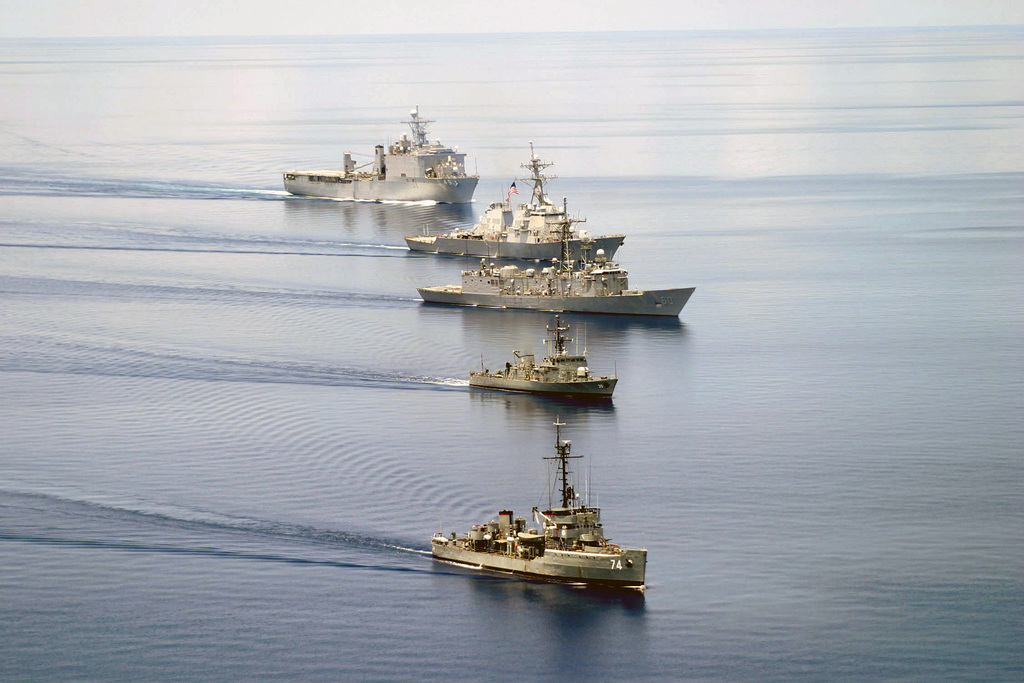
Looking back on the relationship between America and the Philippines, I cannot help but be inspired. We have struggled together and against one another, yet throughout all that time, there were Americans and Filipinos who tried to stay faithful to God and one another. Such unity is the mark of the Holy Spirit, and it is an ever-present reminder to me to endure with hope through all the struggles of this earth. That, and the several friendships I have had with Filipinos over the years, led me to write this poem a while back. I am glad to finally bring it to the Public Domain. This is “Family Found and Forged” by Louis Martinez.
A bond neither side asked for
Born by circumstance rather than choice
A brother and sister bound in war
A knot the world most surely did foist
And trouble comes for all such bands
Just as brothers clash and sisters claw
A house divided cannot stand
The wicked long for lines to draw
Yet family always comes back together
Growing stronger than ever apart
A new bond that God has tethered
Preparing as temples both nations' hearts
Strong ties prepare us for new foes
To serve God with fervor and love
To fight His enemies wherever they go
And give glory to our Lord above
Yet Satan never ceases his plans
Always scheming to break family away
New foes rise within as devil's hands
Yet faithful brothers always take the day
God bless America and the Philippines
We trust our Lord with all we are
Darkness of days past we have both seen
Yet the Lord has carried us both this far
Now Satan's agents rise once more
Preparing a new scourge upon the land
Yet the Lord's chosen shall triumph as before
Striking down our enemies at His command

The Pensive Warrior posts are licensed under a Creative Commons Attribution-NonCommercial-NoDerivatives 4.0 International License.
 The Pensive Warrior
One thought on “Family Found and Forged”