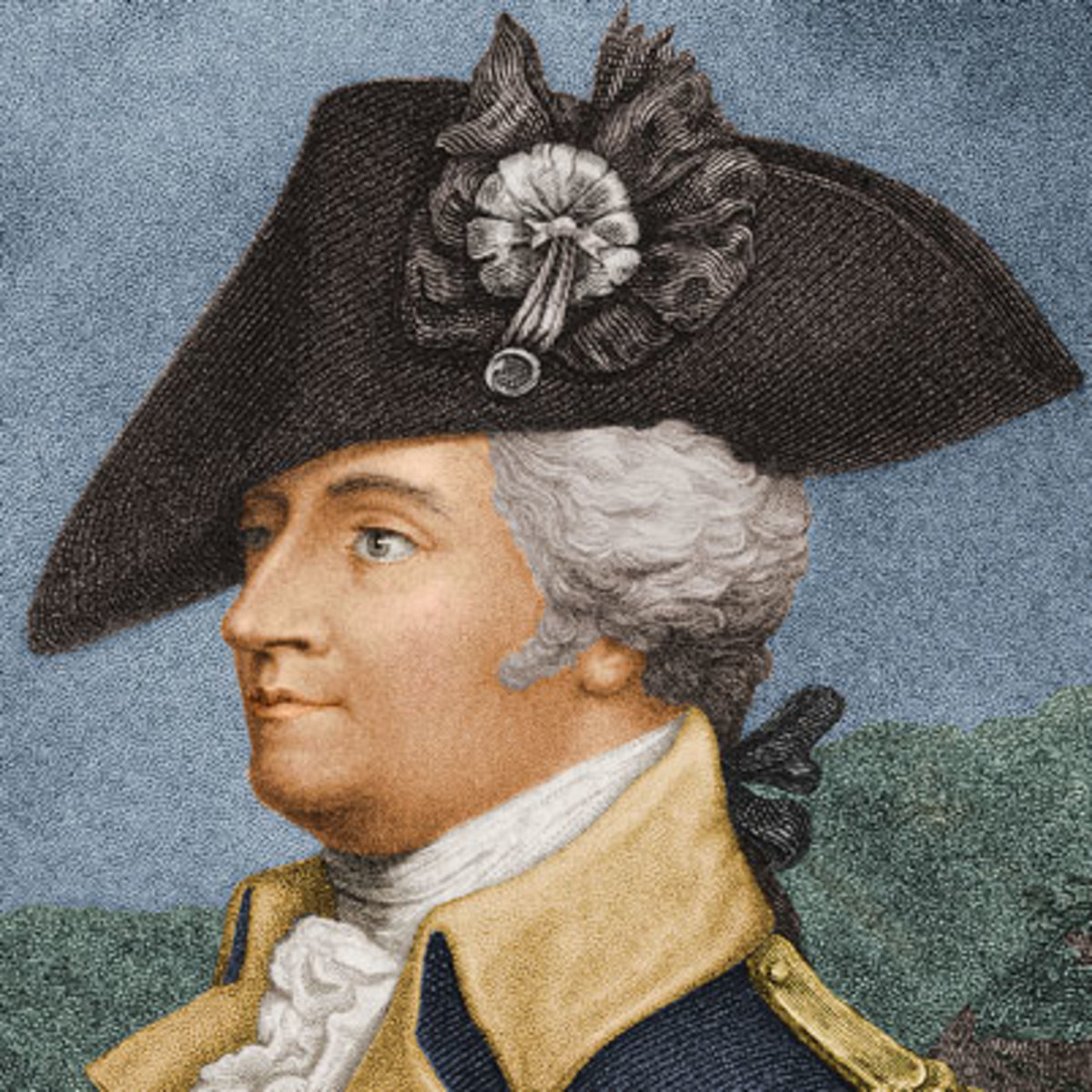
Anthony Wayne was a famous general in the Continental Army during the American Revolutionary War who was later appointed commander in chief of the United States Army by President George Washington. He was born in Waynesboro, Pennsylvania on January 1, 1745. Perhaps Wayne’s most notable accomplishments were his victory at the Battle of Stony Point during the Revolutionary War and his negotiation of the Treaty of Greenville, ending the Northwest Indian War.
Early Life and Service
Prior to the American Revolutionary War, Anthony Wayne was a surveyor. He was known for traveling to Nova Scotia, Canada to record a description of the land and natural resources there. Later, he returned home and founded both a tannery and a farm. Wayne supported independence and regularly advocated for separation from the British Empire. He briefly served in the Pennsylvania Legislature prior to being commissioned as a colonel in the Continental Army after the war began.
Anthony Wayne’s early military career was defined by several notable defeats. He was first deployed to assist the future traitor, General Benedict Arnold with his army in Canada. Quebec, the fourteenth colony, refused to sign the Declaration of Independence and remained loyal to the British Empire. During the Battle of Trois-Rivières on June 8, 1776, the troops under Wayne’s command successfully skirmished with enemy troops in the swampland. Nevertheless, the rest of the American forces were routed and began to scatter. Wayne quickly switched to supporting the Americans during their withdrawal to provide a fighting retreat. Despite the loss of the battle and the failure of the invasion of Canada, Wayne was commended for his efforts during the campaign. He was then put in command of Fort Ticonderoga and promoted to Brigadier General in 1777.
Anthony Wayne commanded troops at the Battle of Brandywine on September 11, 1777. His forces were tasked with holding the Brandywine River against Hessian troops, and they were successful for a time. However, the German General Wilhelm von Knyphausen eventually managed to flank the Americans and push them back. Wayne again managed to organize a fighting retreat and support the withdrawal. Later that month, he suffered one more defeat during what became known as the Paoli Massacre.

On September 20, George Washington sent Wayne to circle around the enemy and counterattack from behind. However, either deserters or captured American couriers informed the British of where Wayne and his men were camped. They lost 158 men when attacked by British General “No Flint” Gray. General Gray earned the name for ordering his men to attack the camp using only with bayonets and swords, or by using their firearms as clubs. In so doing, they managed to go through the camp without alerting the whole American force. General Wayne requested that he be court-martialed for the Paoli Massacre, the number of significant defeats under his belt beginning to weigh heavily on him. He was ultimately acquitted of all charges and commended once again for his leadership, despite the loss of men.
Wayne would quickly be put back into service and take part in the defeat of Continental forces at the Battle of Germantown on October 4, 1777. His troops were reportedly putting heavy pressure on the British and pushing them back. However, partway through the battle, they came under friendly fire. Thinking they were about to be encircled, Wayne ordered a retreat. This cost the Americans their momentum, and ultimately, the battle. Still, Wayne learned much from his early military career. By all accounts, his losses were due to factors outside his control including the overwhelming force of the British Empire’s international coalition and a bit of bad luck. This was something he may not have appreciated at the time, but others such as George Washington recognized his efforts and continued to press him forward.
Learning From Defeat
One of the first major victories of Wayne’s career involved taking over command of General Charles Lee’s troops after he was relieved of command by George Washington at the Battle of Monmouth. Lee was not confident in the Continental Army’s ability to push the British out of New Jersey, and the troops under his charge reflected this perspective. When Washington saw Lee’s troops fleeing from the battle, he removed Lee and split up the general’s forces between the reserve troops under the Marquis de Lafayette and Wayne’s men. Washington then pressed the attack against the British and eventually forced them to retreat to New York. Wayne wished to pursue right away on the following morning, but Washington denied that request in favor of giving everyone the much-needed rest.
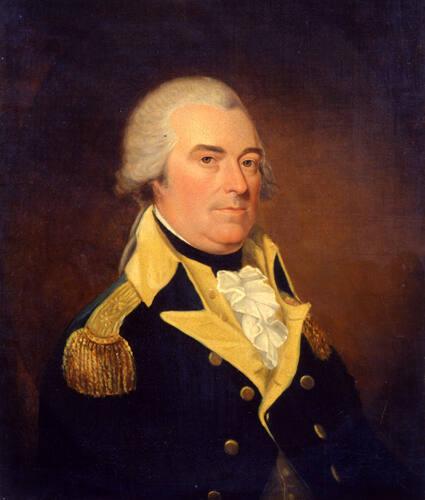
On July 16, 1779, Wayne was dispatched to recapture the fort at Stony Point which had been taken over by the British. He used the tactic General “No Flint” Gray had employed against him during the Paoli Massacre, ordering his troops to advance on the fort using only bayonets. This prevented the whole force from being alerted and putting up a defense. Wayne was shot in the head during the Battle of Stony Point, but he continued to fight and led his troops to victory. For this, he was awarded a gold medal by Congress. General Wayne’s nickname, “Mad” Anthony, had been catching on for some time now and eventually stuck due to his aggressive reputation. This was due in part to George Washington considering him to be rash and impulsive, yet somehow wildly successful. The name also probably first arose from Wayne ordering one of his spies who was arrested to be lashed as punishment, and rumors spreading that Wayne was “mad” about the whole affair.
Still not done, General Wayne had many more exploits throughout the war. He facilitated more fighting retreats and saved Continental troops which would have been routed without his leadership. He also helped foil Benedict Arnold’s plan to betray the Americans and turn over West Point to the British. Wayne was with Washington at the Battle of Yorktown where Cornwallis surrendered and the American Revolutionary War officially came to a close. Wayne achieved the rank of major general before retiring from military service in 1783.
The British Switch to a Proxy War

After General Cornwallis’s surrender officially ended the conflict with the American rebels, the British Empire continued to mobilize the Native Americans and Canadians against the United States. Intent on toppling the American government from the shadows, they unofficially supplied the Native Americans and Canadians with weapons and munitions using their network of military forts they retained across the American mainland. This led to the formation of the Northwestern Confederacy – an alliance between the Canadians and Native Americans with shadow support from the British Empire. Thus began the Northwest Indian War which saw the Americans lose many battles in the early days.
In 1792, Wayne was brought out of retirement and put in command of the U.S. Army. Washington hoped he would turn the conflict around which was going poorly, and he would not be disappointed. Wayne spent two years training an army and building forts around the frontier to challenge the British network. His troops came to be known as the “Legion of the United States.” On August 20, 1794, Wayne led the Legion against Native American and Canadian troops under the command of Blue Jacket at the Battle of Fallen Timbers. The result was a decisive victory, forcing the enemy to retreat to Fort Miami.
The Native Americans were not allowed entry to the British fort, and the situation briefly grew tense again when the Americans arrived. Wayne ordered the fort to be vacated, but the British were ready for a fight and refused. Unwilling to push further, the Americans retreated back to Greenville. From there, Wayne began negotiating a peace treaty with the Northwestern Confederacy. On August 3, 1795, the Native American tribes agreed to surrender and the conflict ended. The Americans took Ohio and parts of the surrounding region. The Northwestern Confederacy was a threat no more.

Death and Legacy
Anthony Wayne passed away on December 15, 1796. He died from complications with gout. He was originally buried at Fort Presque Isle in Erie, Pennsylvania, but his remains were later moved by his son to his hometown. He was remembered as an impulsive and overly-eager leader, but one whose skill earned him the respect of his peers nonetheless. Mad Anthony Wayne saved numerous American lives throughout his career and played a critical role in ensuring the survival of the young republic he loved so much.
His story also reminds us not to let our past setbacks prevent us from forging ahead. Wayne would have had many detractors in his day due to him presiding over many disastrous occasions, but he was recognized then and now for his valiant efforts in the face of terrible circumstances often outside his control. If we would all do likewise, always giving our best effort and letting happen what may, we may find ourselves remembered in a similar light in not too distant days.
All posts by The Pensive Warrior are licensed under a Creative Commons Attribution-NonCommercial-NoDerivatives 4.0 International License.
 The Pensive Warrior